
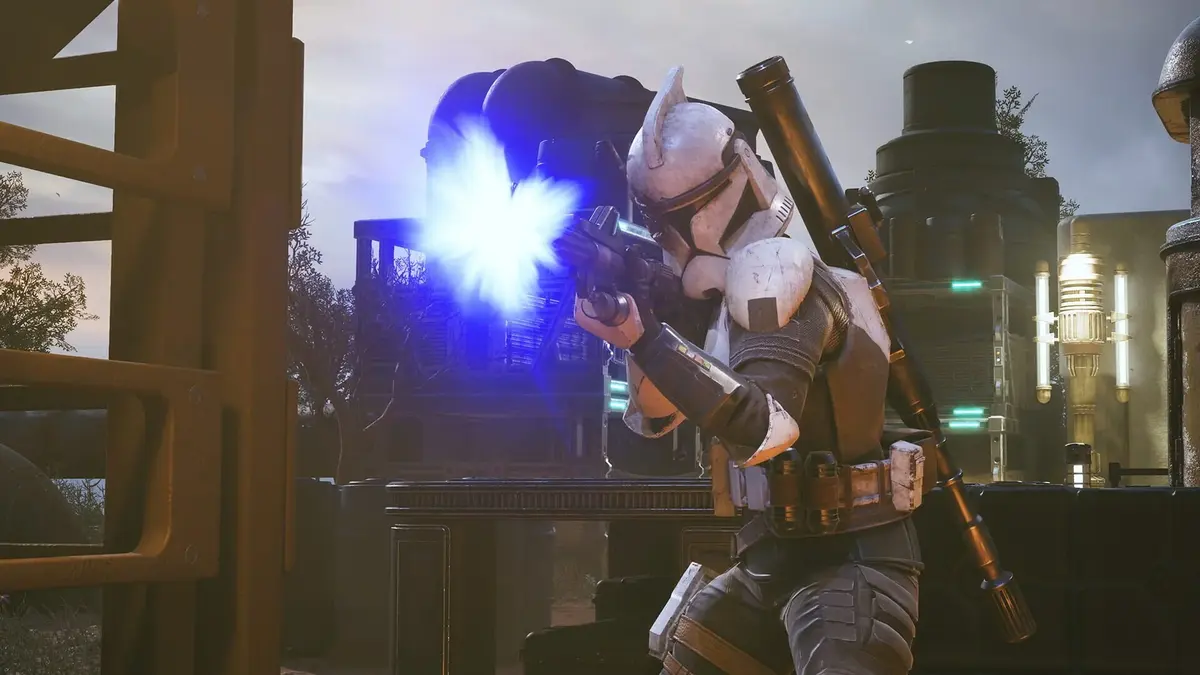
Hawks uses they/them pronouns. That is a meaningful creative choice for Star Wars Zero Company, and I refuse to dismiss it as trivial. A customizable lead in a major licensed Star Wars game who is addressed outside the male/female default gives nonbinary players something the biggest games still routinely deny them: language that makes room for them from the moment the story begins.
But the good news comes with a limit, and the corporate context makes that limit impossible to ignore. Bit Reactor is offering player expression through Hawks, while EA’s Saudi Arabia Public Investment Fund-backed majority ownership creates a long-term pressure point around queer themes, editorial scrutiny, and what becomes safe to say about either. There is no evidence of a direct order targeting Zero Company. That absence matters. It also does not erase the reality that controlling ownership changes what studios, marketers, and even games media may start treating as a risk.
Table of Contents (5)
Hawks Is a Step Forward, Not a Finished Argument
Bit Reactor’s approach has real value. Hawks is a former Republic officer leading a rough mercenary outfit during the Clone Wars, and the studio has framed the character around personal expression rather than a rigid default hero. Greg Foertsch has said there is no “canon Hawks,” with the stated aim of letting players represent whatever they want through their version of the commander.
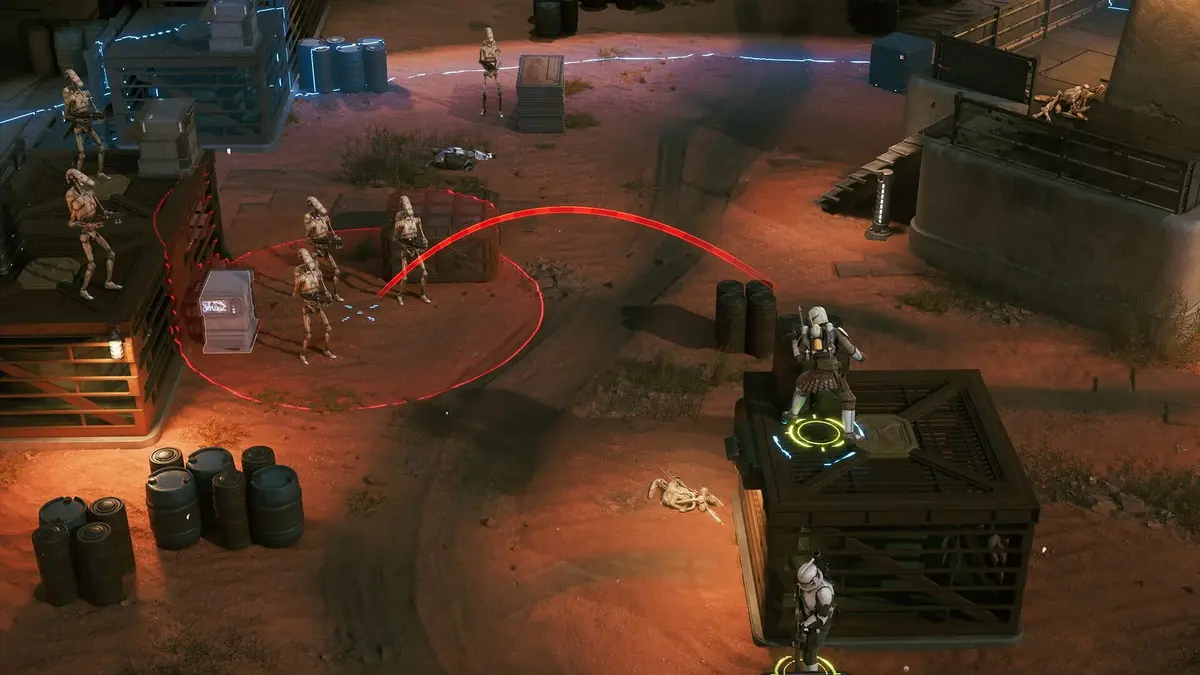
That philosophy fits a turn-based tactical RPG well. Star Wars Zero Company asks players to lead a squad, make choices, build relationships between specialists, deal with injuries, and expand a headquarters between missions. A commander built to accommodate different identities has the potential to make those systems feel personal. The player is meant to own Hawks, rather than borrow a fixed avatar who was designed for someone else.
I understand why that matters. Character creators have often been the place where players quietly made space for themselves when the script would not. Being able to shape a protagonist’s presentation, having a lead referred to with they/them pronouns, and avoiding a mandatory binary are concrete improvements. Those choices can make a game more welcoming before a single blaster shot is fired.
Still, player projection and authored queer storytelling are different achievements. One gives people room to bring themselves into a game. The other lets queer and trans people exist in the game’s world with emotional specificity, relationships, history, humor, vulnerability, and agency. Zero Company currently looks far closer to the first model.
That is where my mixed feeling lands. Hawks’ pronouns are explicit inclusion. The broader customization sounds genuinely thoughtful. Yet a protagonist with no single canonical identity can also become a very convenient way for a major studio to avoid writing anything difficult. If every possible version of Hawks must fit the same story, the safest route is to make the story itself neutral about identity. Neutrality can be comfortable for corporations. It can feel hollow for players who wanted to be seen rather than merely accommodated.
The Story Has to Carry the Weight of the Character Creator
Pronouns and sliders are only the opening test. The real measure of Star Wars Zero Company will be whether the game’s writing treats Hawks as a person rather than a flexible piece of interface design. A tactical campaign about a commander holding together a squad of specialists has plenty of room for that. Squad banter, base conversations, loyalty arcs, relationship framing, mission aftermath, and character reactions all provide opportunities for identity to register as part of social life.
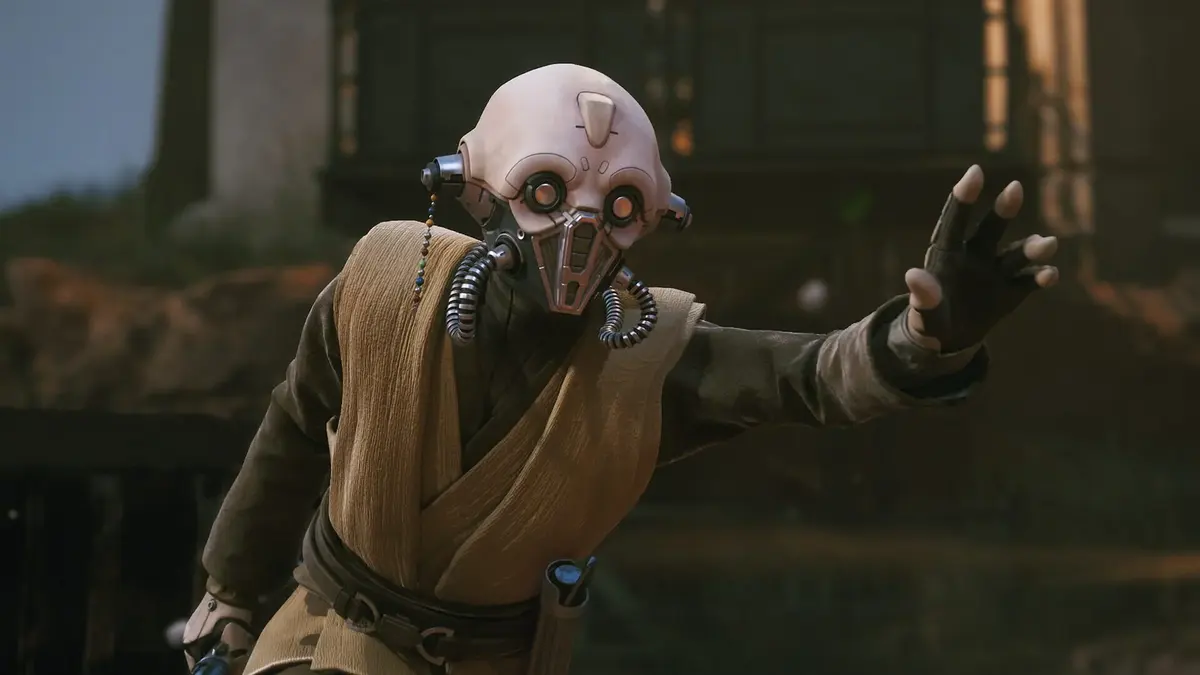
I am not demanding a misery plot where Hawks spends the campaign explaining their existence to every clone trooper, Mandalorian, Jedi, and mercenary they meet. Queer and trans storytelling deserves more imagination than suffering as proof of seriousness. The baseline should be far more ambitious: Hawks’ identity should be treated with ease, consistency, and genuine recognition by the people around them.
- Dialogue and cinematics should use Hawks’ pronouns naturally and consistently.
- Companions should feel written as people responding to a commander, rather than as interchangeable combat bonuses.
- Customization should extend beyond a surface appearance where possible, including voice, presentation, and relationship language.
- The game’s social scenes should avoid quietly snapping back to gendered assumptions after the character creator closes.
Those are not extravagant demands. They are the difference between inclusion that exists throughout a campaign and inclusion that peaks on the first menu screen. A game can let me build a Hawks who feels like me, then spend 30 hours acting as though that choice never happened. I have seen enough big-budget games treat customization as an escape hatch from actual writing. Bit Reactor has a chance to do better.
The frustrating part is that Zero Company seems built to support deeper character work. Its appeal is not limited to careful turn-based positioning. The game is leaning on meaningful decisions, squad bonds, a developing headquarters, and the cumulative consequences of keeping a company alive through a war. Those are narrative systems. If Bit Reactor uses them only to sell combat efficiency, it will leave some of the most human potential of its own premise on the table.
EA’s Saudi Ownership Changes the Conversation Around Inclusion
The Public Investment Fund’s controlling stake in EA does not mean someone has already removed a scene from Star Wars Zero Company or dictated Bit Reactor’s character writing. Pretending there is proof of a direct censorship order would be dishonest. Pretending ownership is irrelevant would be worse.
Ownership shapes incentives long before it produces a visible command. It can influence what executives view as reputationally risky, what marketing teams decide to foreground, what interview questions receive careful non-answers, and which subjects gradually become framed as distractions from the “real” conversation about a game. That is how pressure often works in entertainment. The loud ban is easy to spot. The quiet decision to stop emphasizing something, stop asking something, or stop funding something is harder to catch and far easier to normalize.
Queer representation is especially vulnerable to that softening process because the industry already loves treating it as optional decoration. A developer can be praised for a pronoun choice while everyone conveniently avoids asking whether the character is meaningfully represented in the script. A publisher can announce broad creative freedom while journalists decline to discuss the political reality of its ownership. The result is a polished kind of silence where every individual statement remains technically defensible and the whole conversation becomes less honest.
Games journalism has a responsibility here. Coverage should be able to praise Bit Reactor for giving Hawks they/them pronouns and still examine what Saudi-backed control of EA could mean over time. Those ideas belong in the same conversation because they concern the same practical question: how much room does a huge publisher leave for queer expression when its ownership structure changes around it?
Reducing the ownership change to a single sterile business sentence does players no favors. Reducing every Bit Reactor developer to a mouthpiece for an owner does them no favors either. The useful line is sharper than either dodge. Credit the people doing inclusive work. Keep watching the structure that may constrain them later.
The First Warning Sign Will Be Framing, Not a Grand Announcement
I do not expect the earliest warning sign to arrive as a dramatic press release declaring that queer themes are forbidden. The more likely shift would be a change in tone. Representation gets described as a minor customization feature. Hawks’ they/them pronouns become a quirky trivia item. Interviews about identity become shorter, vaguer, and relentlessly redirected toward combat systems. Articles discuss EA’s ownership as a neutral financial footnote while treating any connection to creative boundaries as impolite speculation.
That is exactly why Star Wars Zero Company matters beyond one protagonist. It is scheduled for August 27, 2026 on PC, PlayStation 5, and Xbox Series X, arriving as a high-profile tactical game set during the Clone Wars. Its squad management, headquarters progression, hard choices, and character-driven structure make it a useful test case for whether inclusive design can remain visible and substantive within a publisher entering a very different ownership era.
There is also a risk that players will be pushed into doing all the interpretive labor themselves. “No canon Hawks” can be liberating, but it can become a shield for every missing detail. If someone says the game lacks a clearly written queer character, the answer can become that every player is free to imagine Hawks that said they like. If someone says the story avoids gender variance entirely, the answer can become that the game is inclusive because its protagonist has they/them pronouns. That is a clever corporate loop, and it leaves the burden of representation on the audience.
Bit Reactor Deserves Credit, EA Deserves Scrutiny
I am glad Hawks exists in this form. A nonbinary default language choice in a Star Wars game of this scale has weight, and broad character expression is preferable to another rigid hero built around an old binary template. Bit Reactor has made a sincere design move that can give players a more personal stake in leading Zero Company.
I also refuse to grade the game on a curve because the industry’s baseline has been so poor. Star Wars Zero Company will earn its reputation for queer and trans representation through the full campaign: the dialogue, the squad writing, the relationships, the social reactivity, and whether Hawks remains recognizably themselves after the opening character setup. A menu can invite players in. A story proves they were wanted.
My verdict is simple. Treat Bit Reactor’s work as promising, treat EA’s Saudi-backed ownership as a serious ongoing editorial concern, and keep both facts visible at once. Hawks’ they/them pronouns should be celebrated. They should never become the final word on whether the game delivers meaningful representation, or on whether a newly controlled publisher remains willing to let that representation grow teeth.
FinalBoss // Gear
Level up your setup
01Top-rated gaming headsetson Amazon→02High-refresh gaming monitorson Amazon→03Gaming chairson Amazon→04Discounted game keyson Kinguin→
Affiliate links · As an Amazon Associate, FinalBoss earns from qualifying purchases.
Want to Level Up Your Gaming?
Get access to exclusive strategies, hidden tips, and pro-level insights that we don't share publicly.
Ultimate Gaming Strategy Guide + Weekly Pro Tips