
Table of Contents (8)
Stardew Valley’s humble prototype proves how close it came to being a simple Harvest Moon clone – and why that would’ve been worse
What changed Stardew Valley from “one more Harvest Moon” into a richer, longer-lived simulator wasn’t flashy tech or a big studio – it was Eric “ConcernedApe” Barone repeatedly cutting naive ideas and choosing hand-crafted systems over cool-but-broken concepts. The proof landed in his 10th-anniversary retrospective: six-minute footage of Sprout Valley, a working mid-2012 prototype that looks, in Barone’s words, “crap,” and plays like an SNES-era Harvest Moon knockoff. Watching it now is a reminder the game nearly stayed simple – and why that would have sunk it.
Key takeaways
- Barone showed mid‑2012 Sprout Valley footage: basic tilling, weeds, digging and clumsy pixel art — functional but shallow (anniversary video / Steam reports).
- Several ambitious ideas were cut — procedural mines, biomes, an underground goblin village — because they were buggy or didn’t feel fun.
- As part of the celebrations, Barone confirmed Clint and Sandy will become marriage candidates in the upcoming 1.7 update; no release date yet.
- The anniversary video doubles as a developer’s lesson: iterative cuts and hand-crafted content made Stardew what it is, not just nostalgic mimicry.
Why this matters more than nostalgia
Fans will enjoy the Sprout Valley clip for nostalgia. What matters to developers — and to anyone who cares about why a game endures — is the restraint on display. Barone openly calls the early art and the project name “an awful name,” and walks viewers through 2012-2015 pivots: art overhauls, ditching procedural mining in favor of hand‑designed caves, and adding the Community Center as a framing device. Those aren’t glamorous decisions; they’re the slow, ugly work of choosing playability over concepts that sound cool on paper.
What the anniversary video actually revealed
The footage shows basic farming actions: tilling soil, removing weeds and opening what look like crude interaction prompts. Barone says the prototype was about six months into development — a long way from the finished Stardew but functional enough to test systems. The video also lays out a development timeline: an art overhaul in 2013, the Community Center addition in 2014, and last-minute tightening before the 2016 launch. Barone emphasizes he risked 4.5 years as a solo dev with no safety net; early sales — roughly 40,000 copies on day one — validated that gamble, the video notes.
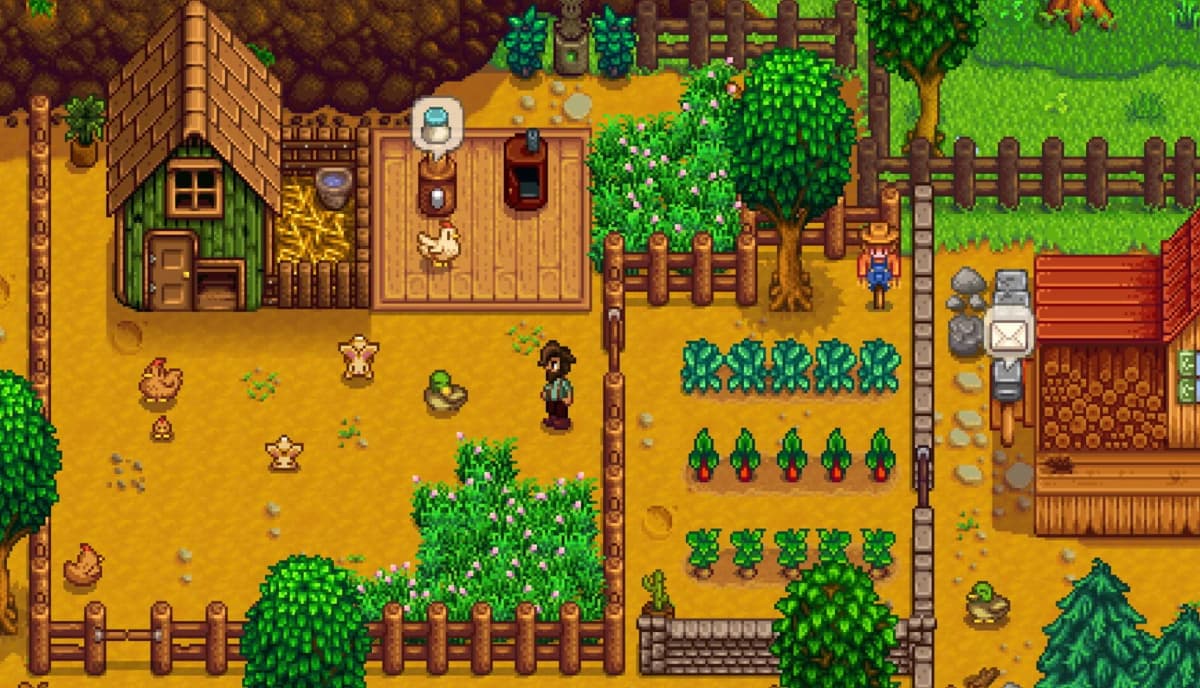
Crucially, Barone talks candidly about scrapped mine ideas from 2013: procedural generation, biomes, and an “underground goblin village” that kept breaking or failing to be fun. Those bits survived only as community daydream fodder; replaced instead by hand-authored mine levels and carefully paced progression that let players explore without getting lost in randomness.
The announcement you probably care about — and the one the video buries
Yes, the anniversary video also dropped fan-facing news: Stardew Valley 1.7 will let you marry Clint and Sandy. That was the headline many outlets took — and it’s real: Clint (the blacksmith) and Sandy (the Oasis manager) are joining the romance roster, expanding social content players have been asking for. But that reveal sits beside the more instructive material: a peek at how decisions to simplify, cut, or rewrite systems made room for the world players invest in today.

The question nobody’s asking (but I would)
If I had Barone on the line I’d ask bluntly: which of the scrapped ideas did you wish you could keep, and could any of them come back as optional content or mods? The anniversary video cheers the cuts — and it should — but it also shows clear seeds of ideas fans will now want recreated, whether officially or by the mod community (the goblin village concept already has people speculating online).
What to watch next
- Patch notes for 1.7 — specifically the Clint and Sandy romance arcs and what scenes or events they add.
- Any release window for 1.7 and whether Barone schedules more retrospective streams showing scrapped-content prototypes.
- Updates on Haunted Chocolatier from Barone; the anniversary was a good reminder he’s juggling both projects.
- Modder activity: expect quick attempts to recreate Sprout Valley features like the goblin village or procedural caves.
Barone’s 10th‑anniversary video is both a celebration and a developer’s masterclass in restraint. The Sprout Valley footage is cute, but its real value is as a control: it shows how choices to cut and refine — not fidelity to nostalgia — produced a game capable of growing with its audience for a decade.

TL;DR
Barone aired a mid‑2012 Sprout Valley prototype during Stardew’s 10th anniversary, proving the game began as a basic Harvest Moon‑style prototype before evolving into the deeper Stardew we know. The retrospective shows major scrapped systems and explains why hand‑crafted design beat procedural ambition. Also: Clint and Sandy become marriage candidates in the coming 1.7 update — patch notes pending.
FinalBoss // Gear
Level up your setup
01Top-rated gaming headsetson Amazon→02High-refresh gaming monitorson Amazon→03Gaming chairson Amazon→04Discounted game keyson Kinguin→Affiliate links · As an Amazon Associate, FinalBoss earns from qualifying purchases.
Want to Level Up Your Gaming?
Get access to exclusive strategies, hidden tips, and pro-level insights that we don't share publicly.
Ultimate Gaming Strategy Guide + Weekly Pro Tips