
Table of Contents (11)
“Would You Like to Know More?” – My First Night With Ultimate Bug War
I loaded up Starship Troopers: Ultimate Bug War on PC expecting a quick nostalgia hit – a couple of missions, a few chuckles at some low-budget FMV, and then back to whatever 100‑hour epic I’m meant to be working through. Three hours later I was still glued to the screen, covered in metaphorical bug ichor, and half-convinced I should reenlist for just one more deployment.
The game opens the way any self-respecting Starship Troopers tie‑in should: with propaganda. Grainy Federation logos, marching snare drums, and suddenly there he is – Johnny Rico, older, visibly carved up by years of war, staring dead-eyed down the lens and telling me there’s no greater honor than dying for the Federation. It’s cheesy, a bit stiff, and absolutely perfect.
Within the first 30 minutes I’d been whipped through a “Would You Like to Know More?”‑style info blast, met our new protagonist Sammy Dietz via FMV, and been dumped into basic training. It’s all framed like a recruitment tape you’d find in a high-school career office, except the career is “voluntary meat for the grinder.” The acting is deliberately wooden in that way where you can tell the characters have long since traded in their inner lives for a shiny badge and a rifle.
That first session set the tone for the whole game: this isn’t a straight nostalgia shooter. Ultimate Bug War is the propaganda. It’s a recruitment tool that just happens to be a surprisingly competent retro FPS.
The Shooting: A Boomer Shooter With Modern Bug-Swarm Chaos
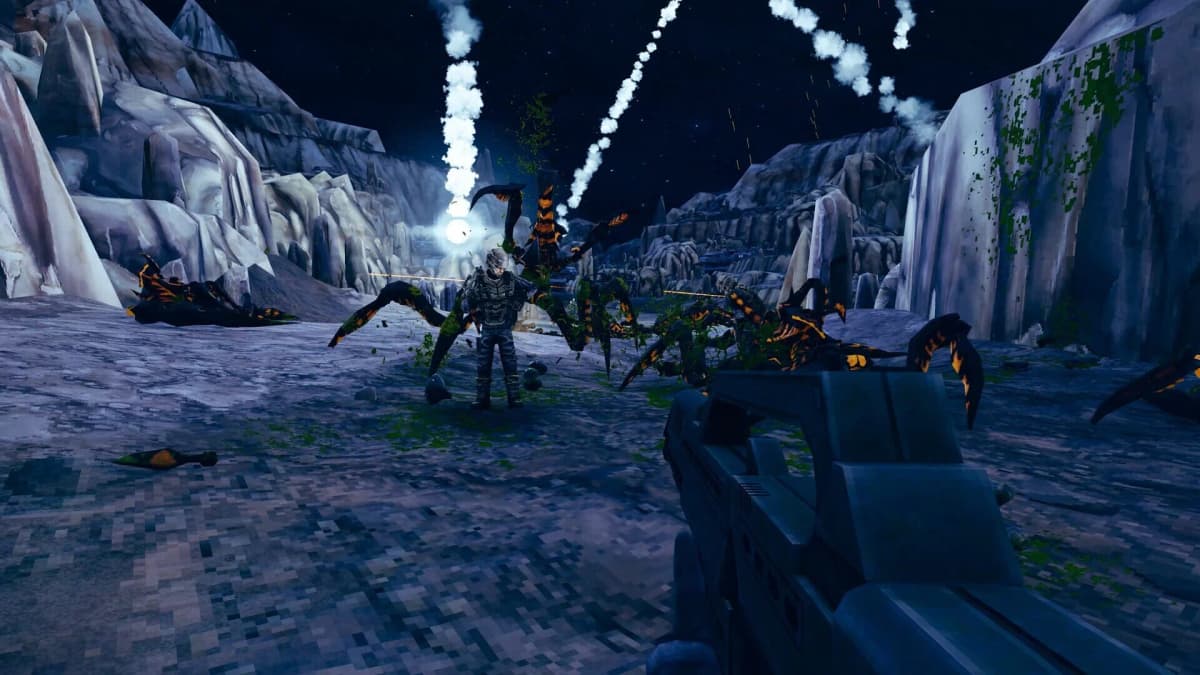
Mechanically, this is a classic “boomer shooter” in the most affectionate sense. Think Doom 64 or the old Build engine games: 2D sprite enemies moving in 3D environments, chunky pixels, circle-strafing around seas of monsters. But there’s a twist – the sheer number of bugs and the density of explosions feel way beyond what the 90s tech could have handled.
On my mid-range PC (RTX 3060, 1080p, keyboard and mouse), the game ran comfortably at high frame rates even when the screen was a rolling carpet of arachnids. At one point in a late mission, I climbed a ridge and looked down to see what honestly felt like hundreds of little chittering sprites pouring out of three different holes in the ground. It had the look of a retro game but the volume and effects of something far newer – dust clouds, gouts of bug gore, shockwaves from nukes rippling across the level.
The weapons lean hard into that satisfying, exaggerated boomer shooter feel. The standard Morita rifle barks with a throaty punch and sprays brass everywhere, and the shotgun is exactly the close‑range bug blender you want it to be. Later unlocks add heavier toys – grenade launchers, rocket launchers, and some very silly explosives – but what stood out to me after about five hours wasn’t just the firepower, it was how often I had to actually respect the swarm.
These bugs don’t mess around. They’re not particularly smart – this isn’t an AI showcase – but they’re aggressive and they come in waves. It’s easy to get overconfident, rush an objective, and suddenly realize you’ve aggroed half the map. More than once I found myself frantically backpedaling while mashing the call‑in key, trying to line up an airstrike marker as the screen filled with mandibles.
Helldivers Energy: Call-Ins and Open Battlefields
That panic is where Ultimate Bug War really clicked for me. Every mission drops you into a mostly open map – a dusty canyon, a half-built base, a train depot – and gives you a flyover at the start. The camera does a quick sweep, highlighting key objectives: a relay station here, a defensive position there, a crashed dropship that might have better weapons. You get a couple of vague priorities and then you’re left to decide the route.
This structure reminded me a lot of the original Starship Troopers RTS and the more recent Helldivers games. You can prioritize locking down forward outposts to give yourself safe respawn points, or beeline straight for the main objective and gamble on not needing fallback positions. There’s no minimap GPS line shepherding you; you learn the layout by doing, and by dying.
The call‑in system sits on top of this nicely. Over the course of the campaign you unlock a toolbox of off‑map support: strafing runs, artillery barrages, napalm, and, of course, tactical nukes. Each one is on a cooldown and requires you to physically throw or place a marker, which means you’re constantly weighing risk versus reward. Do you sprint into the open to tag a bug nest for a nuke, knowing that if you mistime it, you’ll just end up as fertilizer?
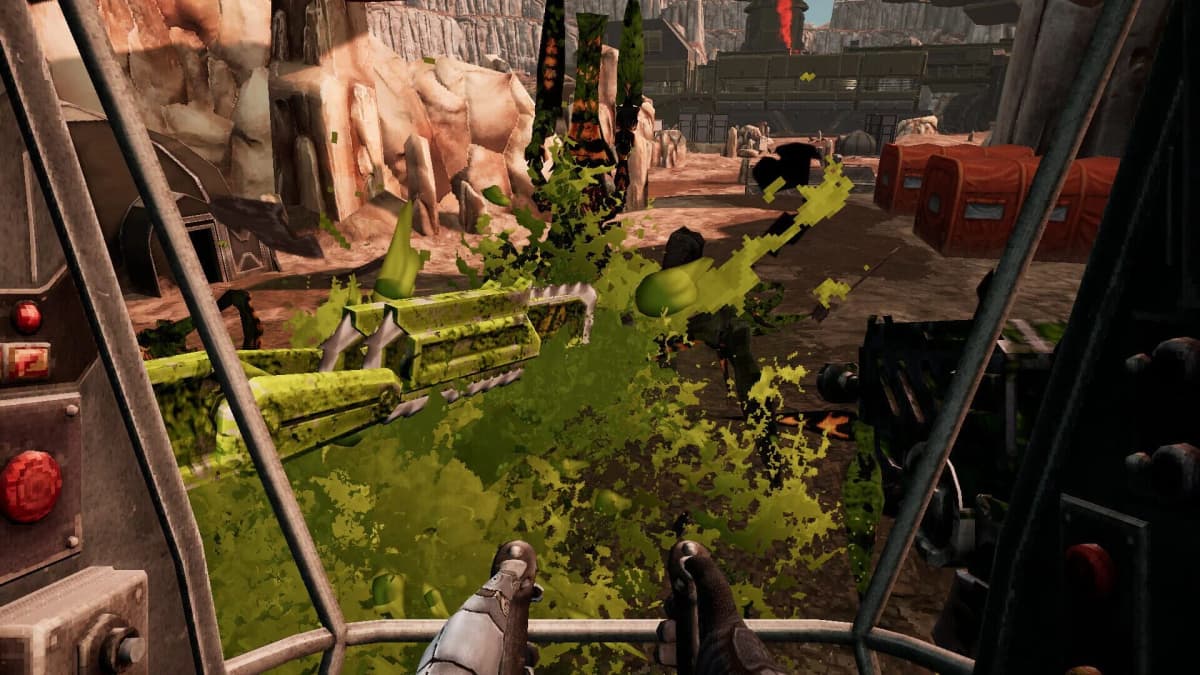
One of my favorite missions came about five hours in. I’d secured a little train station that acted as a choke point, and I was trying to hold it against wave after wave of arachnids while waiting for evac. I’d set up my squad at the two main entrances, dropped a couple of airstrike calls on the biggest clusters, and then watched as the minimap slowly turned into a wall of red. When my last squadmate went down because I mis‑timed a nuke and clipped our own barricade, the game cut to the “heroic sacrifice” FMV at the end of the mission and congratulated us for our glorious failure. It was both very funny and oddly grim.
Expendable Heroes: Squadmates, Death, and Dark Comedy
You don’t go into battle alone. Scattered across each map are other Mobile Infantry grunts, and you can recruit them into your squad with a simple key press. Most fights, I’d roll with three or four nameless troopers following my lead, occasionally popping shots and drawing some of the aggro.
I wish I could say they were reliable, but the squad AI is… let’s call it simple. They’re decent bullet sponges and occasionally manage to kill a bug, but they’re just as likely to wander into your line of fire or charge headlong into a swarm that you were very much not ready to engage yet. It’s frustrating in a modern tactical sense, but that clumsiness unintentionally reinforces the satire. These are not elite super soldiers; these are barely-trained kids thrown into an unwinnable war.
The game leans into that tonally. After one particularly chaotic defense where I accidentally fragged half my own squad while trying to clear a choke point, the post‑mission FMV didn’t scold me. It praised their “heroic sacrifice,” slapped a recruitment slogan on the screen, and immediately moved on. In another scene, a dead comrade’s photo springs to life and the guy cheerfully explains that it’s good he died, actually, and that everyone watching should buy Ultimate Bug War so they can have the same opportunity.
It’s pitch black humor wrapped in deliberately cheap production, and it works. After a while I stopped worrying about keeping everyone alive and started treating them as consumable resources in the same way the Federation clearly does. That little mental shift – from “my squad” to “my expendables” – is kind of the whole thesis of Starship Troopers distilled into gameplay.
FMV As Weaponized Propaganda
The FMV is the star of the show, and the developers know it. Missions are bookended by recruitment spots, debriefs, and in‑universe commercials. Rico pops in to hype up the war effort, Sammy Dietz sits in a studio recounting each operation like a veteran on a talk show, and various Federation talking heads spout barely coherent pseudoscience to justify the extermination campaign.
The scenes are short – usually under a minute – but they do a lot of heavy lifting. Instead of long cutscenes rendered in‑engine, Ultimate Bug War uses its FMV like a machine gun burst: quick, loud, on message. You’ll see a spot about how premium healthcare and birth licenses are only available to citizens who’ve completed military service, then the game dumps you into a mission where wave after wave of teenagers get butchered. Lose enough men and the post‑mission clip will calmly explain that this is a good thing for humanity’s future.
That mismatch – the cheery delivery over horrific content – is where the film’s satire lives, and the game absolutely gets it. I’ve seen a lot of licensed shooters shrug at their source material; this feels like it understands the assignment. It’s not subtle, but Starship Troopers never was. The best compliment I can give the FMV is that it made me feel itchy and slightly gross even while I was laughing at it.
That mismatch – the cheery delivery over horrific content – is where the film’s satire lives, and the game absolutely gets it. I’ve seen a lot of licensed shooters shrug at their source material; this feels like it understands the assignment. It’s not subtle, but Starship Troopers never was. The best compliment I can give the FMV is that it made me feel itchy and slightly gross even while I was laughing at it.
🎮 Get This Game at the Best Price
Compare prices instantly and save up to 80% on Steam keys with Kinguin — trusted by 15+ million gamers worldwide.
*Affiliate link — supports our independent coverage at no extra cost to you
Mission Structure and the “Shallow but Satisfying” Problem
Here’s where things get a bit more mixed. Across the eight or so hours I spent with the PC version, the fundamental mission structure doesn’t change all that much. You’re usually doing some mixture of:
- Securing outposts or relay stations
- Defending a location against waves of bugs
- Escorting or holding an evac zone long enough to get out
- Destroying bug hives or nests with explosives or call‑ins
The openness of the maps gives you some flexibility in how you approach those goals, but the actual objectives are pretty samey from start to finish. There’s no sprawling skill tree, no deep upgrade system, and no complex puzzle moments to break things up. You get a gradually expanding arsenal and slightly trickier enemy combinations, and that’s about it.
For me, that was mostly fine because the game doesn’t overstay its welcome. I finished Sammy Dietz’s main campaign in around six hours, then spent another couple picking at side missions and trying the shorter bug‑side levels you unlock later. As a self-contained, focused throwback, it hits that “just long enough” sweet spot. But if you’re expecting a modern single-player FPS with tons of systems to grind through, this is going to feel lightweight.
There were definitely moments during the mid-game where I felt the repetition set in. A flyover would highlight yet another radio tower and I’d think, “Okay, so this one is the same as the last two, just with more bugs and fewer ammo crates.” Usually the promise of a new FMV sequence at the end was enough motivation to keep going, but the mission design never really surprises you after the first couple of hours.
Bug Campaign: Fun Curiosity, Not the Main Event
Once you’ve chewed through enough of the human campaign, Ultimate Bug War lets you test-drive the other side: short, focused missions where you control the arachnids. These levels flip the script a bit – you’re directing hordes of bugs to overrun human positions instead of defending them – but they’re more of a bonus mode than a fully developed second campaign.
I had fun with them in a “palate cleanser between longer missions” sort of way. There’s something undeniably satisfying about watching human fortifications crumble under waves of chittering claws. But the control scheme and perspective aren’t quite as tight as the standard FPS play, and after an hour or so I drifted back to Sammy’s story. If you go in thinking of the bug missions as dessert rather than the main course, you’ll have a better time.
Presentation, Performance, and the Retro Aesthetic
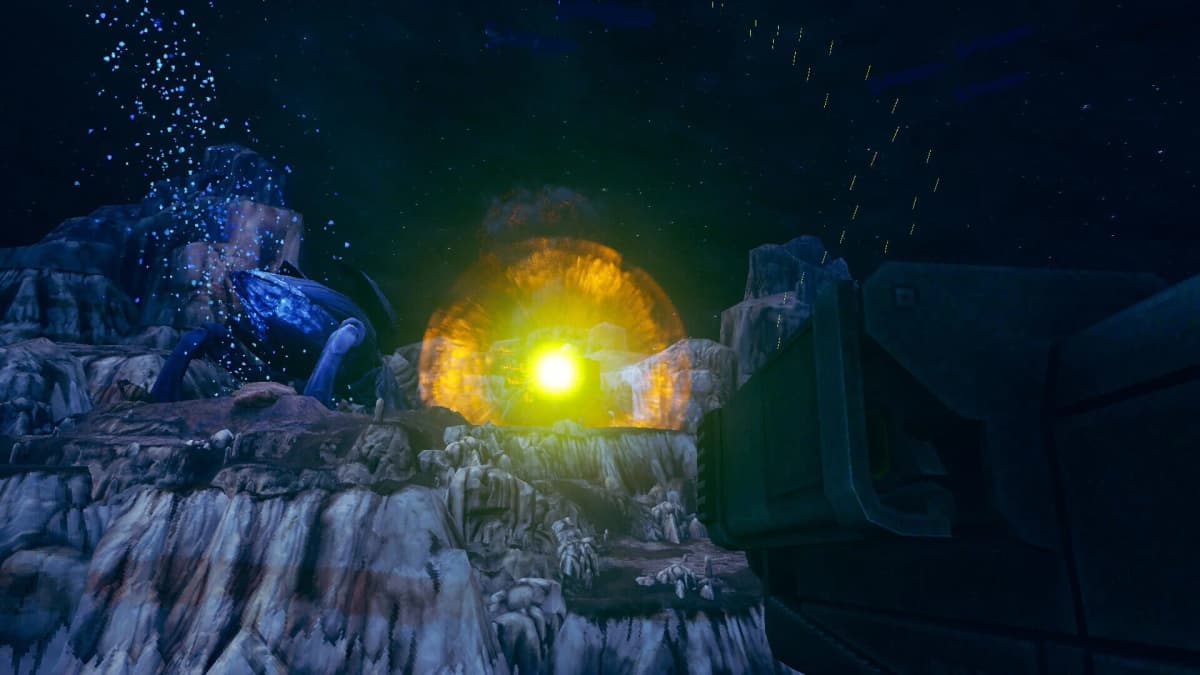
Visually, this is exactly the kind of retro-modern hybrid I love. The 2D sprites are crisp and readable, the environments have that slightly over-saturated late‑90s palette, and the effects layer on just enough modern flair – dynamic lighting, chunky particle systems – without breaking the illusion. Screenshots don’t quite communicate how busy it can get in motion, especially when the sky is full of dropships and the ground is absolutely writhing.
On PC, I didn’t hit any major technical issues. Frame pacing stayed smooth, even in the heaviest combat, and I didn’t run into crashes or progress-blocking bugs in my playthrough. The options menu is basic but functional: standard resolution and graphics toggles, FOV slider, separate volume sliders for dialogue and effects. Mouse and keyboard aiming felt tight right out of the box – I never felt like I was fighting the controls, which is crucial in a game that’s 90% shooting.
The audio is doing a lot of quiet lifting. Gunshots have weight, bug screeches sit right in the “I want to mute this but also it’s kind of perfect” range, and the music leans into bombastic militaristic themes without becoming outright parody. The soundscape during bigger set pieces – overlapping screams, propaganda messages, distant explosions – helps sell the idea that you’re just one tiny piece in a much bigger meat grinder.
No Multiplayer, No Padding, and Why That’s Okay
One thing that may surprise people in 2026: Starship Troopers: Ultimate Bug War is purely single-player. No co-op bug hunts, no PvP, no live-service progression track dangling cosmetics over your head. You get a campaign framed as a propaganda tape, a handful of optional missions, the bug side modes, and that’s your lot.
Would a co-op mode be fun here? Absolutely. The game’s structure practically begs for a couple of friends dropping in as fellow grunts, accidentally nuking each other while screaming about doing their part. But at the same time, there’s something refreshing about how unapologetically self-contained this package is. It knows exactly what it wants to be – a tight, FMV-laced, retro shooter – and doesn’t waste your time pretending it’s a forever game.
After a year of bloated campaigns and endless checklists, I appreciated that I could see everything meaningful Ultimate Bug War had to offer in under ten hours, then uninstall it feeling satisfied. It’s the videogame equivalent of a nasty, punchy B‑movie: in, out, leave a mark, roll credits.
Who Should Enlist (and Who Should Stay a Civilian)
If any of the following applies to you, you’re squarely in this game’s target audience:
- You love the original Starship Troopers film and its over-the-top fascist satire.
- You have a soft spot for 90s FPS design – fast movement, big enemy counts, 2D sprites.
- You miss FMV weirdness and want something that leans into it instead of apologizing for it.
- You’re in the mood for a shorter, focused shooter you can finish in a weekend.
On the flip side, you might want to skip it or wait for a sale if:
- You need deep progression systems, customization, or RPG elements to stay engaged.
- You’re craving a tactical, squad‑based shooter with smart AI and detailed command tools.
- You primarily play shooters for multiplayer or co-op.
- The idea of intentionally cheesy FMV makes you roll your eyes instead of grin.
FinalBoss // Gear
Level up your setup
01Retro consoleson Amazon→028BitDo controllerson Amazon→03Capture cards (Elgato & more)on Amazon→04Discounted game keyson Kinguin→Affiliate links · As an Amazon Associate, FinalBoss earns from qualifying purchases.
Want to Level Up Your Gaming?
Get access to exclusive strategies, hidden tips, and pro-level insights that we don't share publicly.
Ultimate Reviews Strategy Guide + Weekly Pro Tips