
Table of Contents (6)
Why this Steam Deck SSD roundup matters right now
This caught my attention because memory shortages and shifting vendor focus are making the little M.2 2230 SSD market weird and expensive – exactly when more Deck owners are thinking about upgrades. I bought and benchmarked six drives to cut through marketing numbers and answer what actually improves game load times on a Steam Deck, while also checking thermals and price metrics that matter in real life.
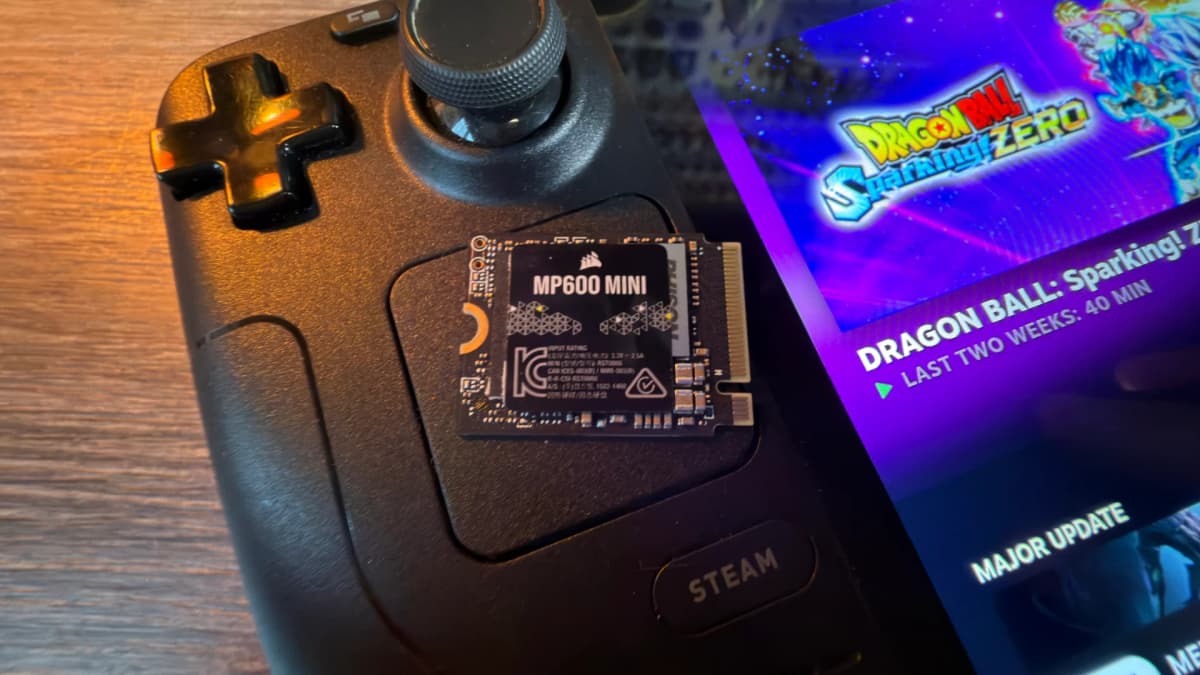
- Corsair MP600 Mini – overall best for load times
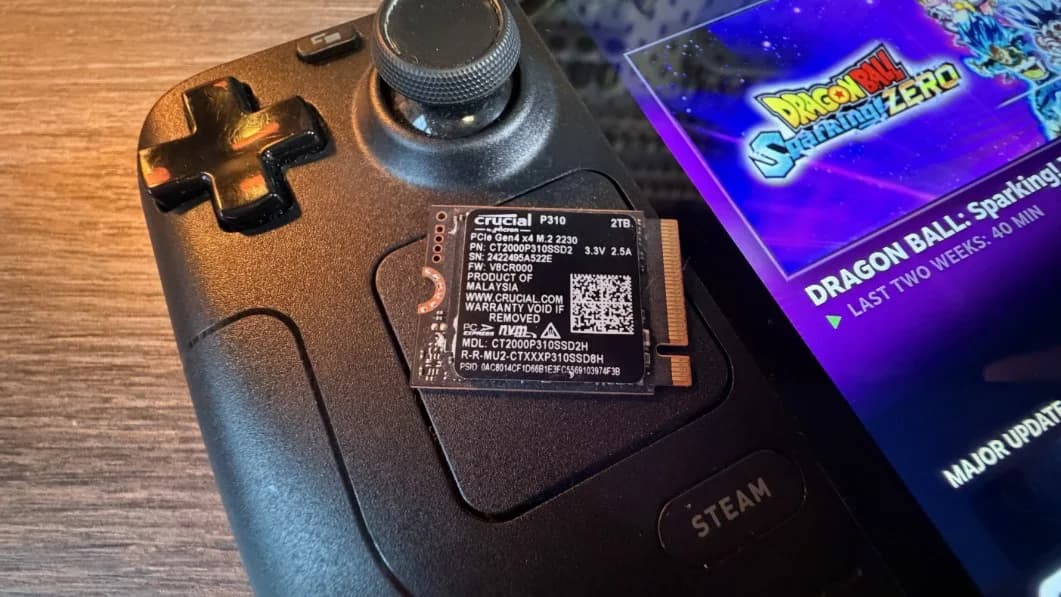
- Crucial P310 – best value, especially at 2TB
- Seagate FireCuda 520N — reliable, cool-running, similar to Valve stock
- WD Black SN770M — easiest to find when everything else is out
- Corsair MP600 Core Mini — best budget pick if you can find it
- Valve Steam Deck OLED stock SSD — surprisingly sensible if you’re buying a new Deck
Key takeaways — what actually affects load times
Game load times on the Deck correlate much more with random 4K read performance than with headline sequential speeds. That means sequential GB/s figures — the usual marketing bluster — are often irrelevant for gaming. Thermals matter too: a drive that runs hotter is more likely to hit throttling which pushes up load times in long play sessions. And finally, availability and price-per-GB are decisive right now because shortages are driving odd pricing swings.
Breaking down the winners
Corsair’s MP600 Mini earned the top spot thanks to some of the best random 4K figures in this M.2 2230 class and a solid in-game result: an average load time of 92.41 seconds across Cyberpunk 2077, Red Dead Redemption II and Dragon Ball Sparking Zero. It’s also competitively priced at around £0.18/$0.18 per GB and roughly £1.89/$1.89 per second of load time. Caveat: it was the hottest drive in my tests, so expect potential throttling in very warm conditions.
Crucial’s P310 is the value hero. Built on 232-layer QLC, it ran about 9°C cooler than some competitors while delivering top-tier load numbers, and the 2TB variant pushes price-per-GB to roughly $0.12/£0.11. Micron’s move away from consumer SSDs makes this feel like a last-chance buy, though — excellent performance now, uncertain availability later.
Seagate’s FireCuda 520N is interesting because its internals mirror Valve’s stock Steam Deck SSD — the Phison E21T controller and 176-layer TLC NAND — which gives you near-identical real-world performance but slightly better thermals (capped at ~54°C in testing vs the OLED’s ~56°C). It’s reliable, affordable in some regions, and comes with Seagate’s Rescue Data Service.
WD Black SN770M is a practical pick when choices are thin. It uses 112-layer TLC NAND and an older controller, so it’s not the fastest or coolest but it’s often in stock — a real advantage while supply is chaotic.
Corsair’s MP600 Core Mini is the budget pick: cheap per GB (about $0.11/£0.10) and cool-running thanks to QLC, but it can slow during long file transfers once its cache fills — a trade-off that’s fine if you primarily care about game load times rather than repeated large transfers.
Finally, Valve’s stock Steam Deck OLED SSD is the quiet surprise: near-top loading times, low temps, and the economic argument checks out — buying a higher-capacity Deck up front often costs less than swapping SSDs later once you factor labor, risk, and market prices.
How I tested these drives
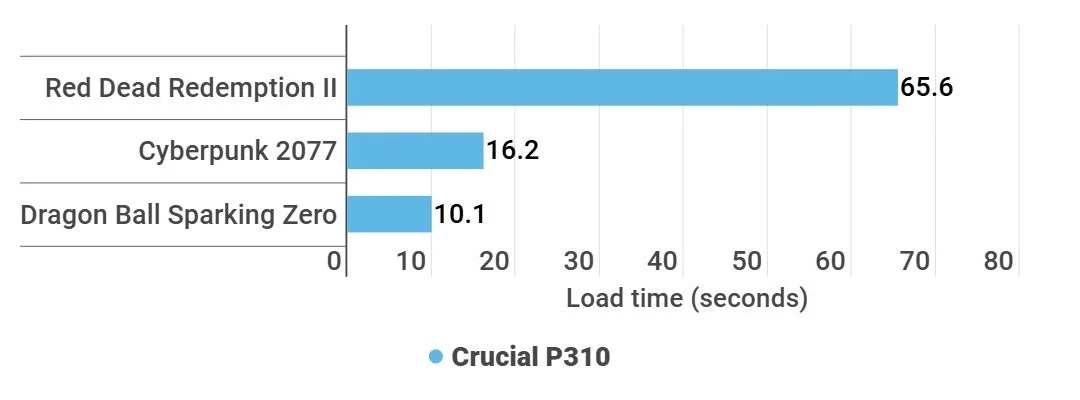
Primary metrics were real-world load times on a Steam Deck using Cyberpunk 2077, Red Dead Redemption II and Dragon Ball Sparking Zero with a stopwatch. I followed up with synthetic tests in Windows (CrystalDiskMark 9.0.1) and thermal logging via HWMonitor. Results were weighted by load-time improvement, random 4K performance, thermal behavior and price indexes (price-per-GB and price-per-second of load time).
What to buy, depending on priorities
- Bottom line performance: Corsair MP600 Mini (watch thermals)
- Big capacity for the money: Crucial P310 2TB
- Reliability and rescue service: Seagate FireCuda 520N
- Out of stock elsewhere: WD Black SN770M
- Strict budget: Corsair MP600 Core Mini
- Buying a new Deck now: Just grab the larger Valve SSD model — cheaper and hassle-free
TL;DR
If you want the fastest load times on a Steam Deck, prioritize random 4K performance and sensible thermals over headline sequential speeds. The Corsair MP600 Mini is the best overall performer but runs hot; Crucial’s P310 is the best value, while Seagate’s FireCuda and Valve’s stock SSD trade a little peak speed for better temps and reliability. With supply still tight and prices bouncy, availability can be as important as raw numbers — choose a drive you can actually buy and live with thermally.
FinalBoss // Gear
Level up your setup
01Graphics cardson Amazon→02Gaming laptopson Amazon→03High-refresh gaming monitorson Amazon→04Discounted game keyson Kinguin→Affiliate links · As an Amazon Associate, FinalBoss earns from qualifying purchases.
Want to Level Up Your Gaming?
Get access to exclusive strategies, hidden tips, and pro-level insights that we don't share publicly.
Ultimate Gaming Strategy Guide + Weekly Pro Tips