

Steam Game Allegedly Drains $32k During Charity Stream — The Real Story Gamers Need
Game intel
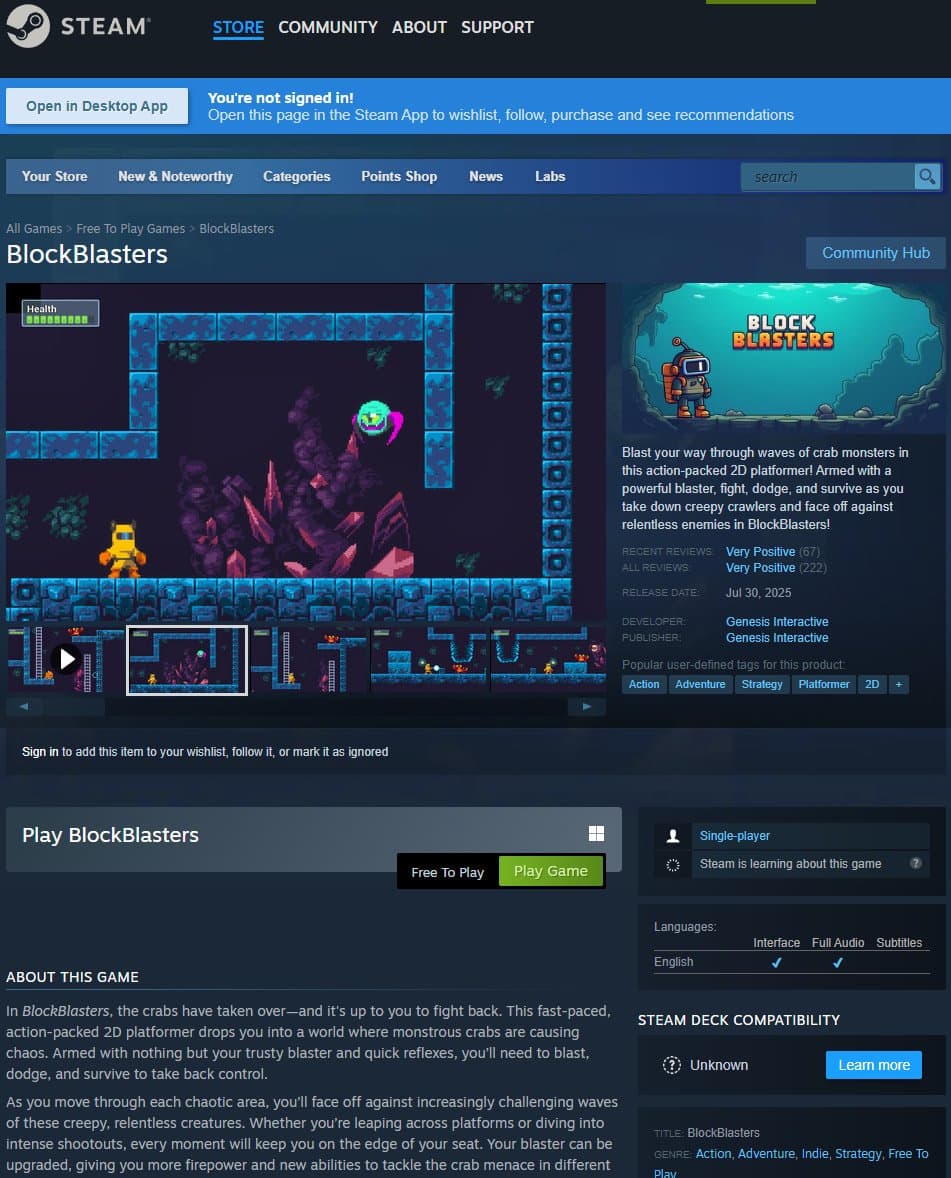
BlockBlasters
This game has been flagged as containing malware, and has since been delisted. Blast your way through waves of crab monsters in this action-packed 2D platform…
Why This Story Hit Hard
I love when indies break through on Steam. I hate when bad actors use that trust to hurt our community. The incident involving streamer RastalandTV – who’s battling stage 4 cancer – is the nightmare scenario: he downloaded a small Steam game called BlockBlasters during a charity stream and, according to his account and crypto commentators, watched roughly $32,000 vanish from fundraiser wallets while he was live. Valve has since removed the game after the claim went viral, as reported by outlets like PCGamesN and TechRaptor. It’s a gut punch, and it raises real questions about Steam safety, crypto security, and the tactics scammers are using to target creators.
Key Takeaways
- Reports allege BlockBlasters shipped (or was later updated) with malware tied to a crypto “drainer” tool.
- Trust signals can be faked: the game had 100+ “Very Positive” reviews that the community now suspects were bogus.
- Hot wallets on the same PC you game and stream on are a massive risk – especially with browser wallet extensions.
- Valve delisted the game fast, but Steam’s reactive moderation and weak review integrity are still a problem.
Breaking Down the Incident
The broad outline is depressingly familiar. An indie pops up on Steam looking harmless, racks up “positive” reviews, and circulates in streamer DMs. RastalandTV tried it on stream while fundraising via a crypto-friendly platform. Soon after, funds began moving — not to his wallets, but to unknown addresses. Crypto sleuths have suggested a “drainer” kit was involved; those tools are widely used on chains like Solana and Ethereum to whisk funds out of hot wallets. Reports claim the malicious code may have been added to BlockBlasters via an update weeks after release, which fits the old Steam playbook: clean build to pass light vetting, then push a dirty patch once the coast looks clear. Valve pulled the game after the outcry, and several high-profile donors moved assets to safer wallets while the community tries to trace transactions.
The Real Risk: Steam’s Open Door and Update Switcheroos
Steam’s strength is also its weakness. The platform’s open floodgates empower small devs, but we’ve seen this movie before — remember the Abstractism cryptomining fiasco? Bad actors exploit lightly curated storefronts, review farms to fabricate legitimacy, and post-release updates to slip in payloads. Most players (and a lot of creators) treat a “Very Positive” page and a legit-looking store listing as a green light. It isn’t. If a malicious executable is sitting on your machine, it doesn’t matter that it came through Steam; it can read clipboards, scrape browser data, watch for wallet activity, or trick you into approving malicious transactions.
“Drainer” or Stealer? Why That Difference Matters
Crypto commentators are calling this a drainer — that’s malware or a toolkit that automates siphoning funds once it finds a way in. In web attacks, drainers often rely on a bad signature you approve in a wallet pop-up. In native PC attacks, the more common route looks like classic info-stealers (think RedLine or Raccoon variants): they try to grab saved browser data, session cookies, or wallet extension storage; some swap clipboard addresses the moment you paste. On chains like Solana, where browser wallets are popular, leaving a hot wallet unlocked on the same PC you install random executables on is basically leaving your front door open. Whether this was a pure “drainer” kit or a broader stealer, the outcome’s the same: hot wallets are not safe on a gaming/streaming box you don’t harden.

What Gamers and Streamers Should Do Right Now
- Separate your money from your machine: keep funds in a hardware wallet or cold storage; only keep pocket change in hot wallets.
- Air-gap your workflow: use a second device for wallets and creator payouts. At minimum, use a separate OS user profile with no wallet extensions installed on your gaming/streaming account.
- Zero-trust new games: don’t install titles pitched via DMs during a live show. Test off-stream, scan with reputable AV, and watch for odd network behavior.
- Kill the easy vectors: remove browser wallet extensions from your gaming PC; disable auto-fill of passwords; lock down your clipboard with vigilance when copying addresses.
- Least privilege always: run games without admin rights; keep Windows Defender/SmartScreen on; update GPU drivers and OS; consider sandboxing or a VM for unknown indies.
- Operational hygiene: back up seed phrases offline; enable 2FA on exchange accounts; monitor wallet activity and set alerts for unusual transfers.
What Valve Needs to Fix
Valve acted after the story blew up, but reactive moderation isn’t enough. There are obvious upgrades the platform could make without strangling indies: stronger detection for review fraud; behavioral scanning and diff analysis of post-release updates; prominent “recently updated” flags for new executables; temporary quarantines for titles exhibiting suspicious network calls; clearer reporting flows; and automatic refunds when a game is removed for malware. Steam has the scale to build these guardrails — and the community deserves them.
The Human Cost, and Why This Matters Now
What makes this one hit differently is the target. A creator fighting cancer, doing a fundraiser, gets gutted live — it’s vile. The silver lining is how fast the community rallied: donors moving funds to secure wallets, crypto sleuths tracing addresses, creators amplifying safety advice. But copycats will notice the attention this got. Until platforms tighten the funnel and creators harden their setups, the safest assumption is simple: if it’s an unknown executable, it’s hostile until proven otherwise.
TL;DR
A Steam indie allegedly hid malware that drained about $32k from streamer RastalandTV during a charity stream. Valve delisted the game, but the bigger lesson stands: don’t keep hot wallets on your gaming/streaming PC, don’t install unknown indies mid-stream, and don’t trust “Very Positive” as a security badge. Harden your setup now, because scammers are already a step ahead.