
Table of Contents (10)
Why This Caught My Eye
As someone who’s watched countless indies grind through Steam Next Fest, burn money on wishlists, and still vanish at launch, this report hit a nerve. Rokky’s “The State of PC Distribution” surveyed 306 industry execs and, surprise: Steam runs the table. Also not a surprise: developers are nervous about betting the farm on a single store and are poking at alternatives-Epic, authorized e-stores like Humble and Fanatical, and even the controversial key marketplaces. The real story isn’t that Steam is big. It’s that the cost of being found on Steam keeps going up, while the outs are messy.
Key Takeaways
- Steam still dominates PC revenue for most studios, but discoverability and saturation are choking smaller releases.
- Developers are diversifying: Epic, e-stores, and even marketplaces are now part of the mix-warts and all.
- The gray market is muddy. Many devs conflate legit stores and shady resellers, and that confusion benefits bad actors.
- Free-to-play competition, not just store cuts, is the top threat to selling premium PC games in 2025.
Breaking Down the Findings (Minus the Spin)
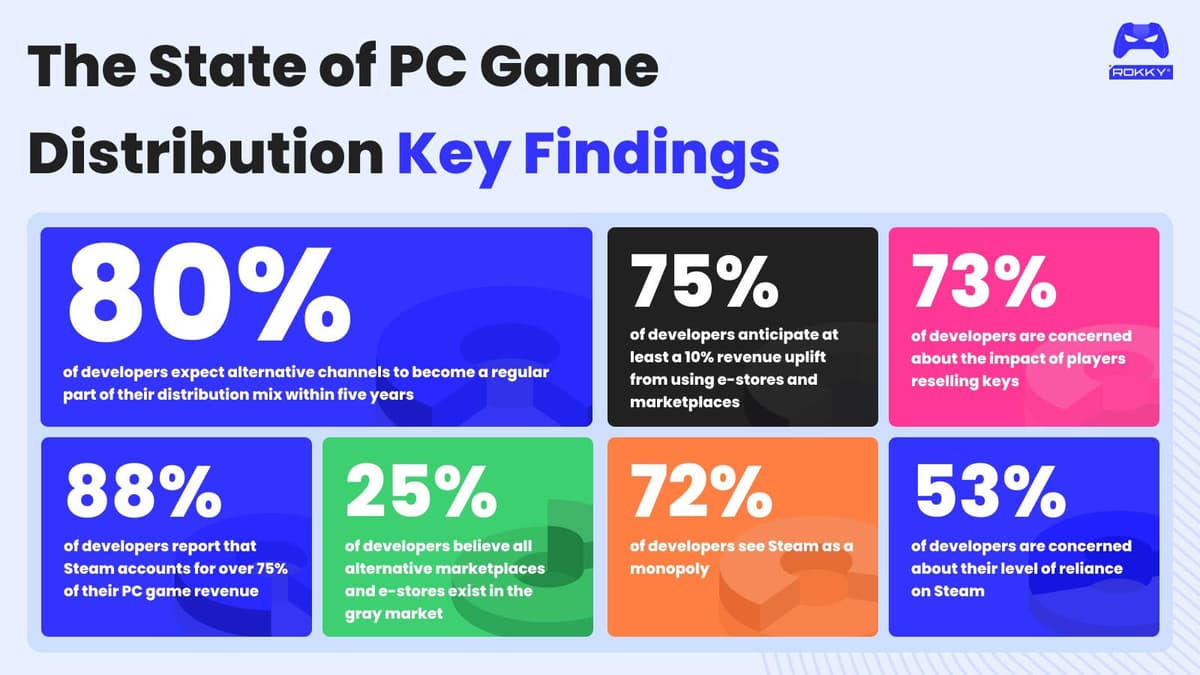
Rokky’s numbers line up with what devs have been grumbling about for years: 88% of studios say Steam accounts for over 75% of their revenue. A full 72% call Steam a monopoly, and 53% are worried about relying on it. With over 18,000 new titles hitting Steam in 2024, “post and pray” isn’t a strategy-it’s a funeral plan.
Developers are hedging. Nearly half (48%) have shipped on the Epic Games Store, which runs an 88/12 split and dangles timed exclusivity promos like Epic First Run. E-stores (38%) such as Humble or Fanatical and marketplaces (30%) like G2A or Kinguin show up because they sell keys that often still activate on Steam. That’s the clever bit: you can diversify revenue without fragmenting your player’s library—at least until you go Epic-exclusive.
But the wrinkle is the gray market. 73% of developers are worried about players reselling keys; many define the “gray market” as a place (marketplaces or e-stores) rather than a practice (unauthorized reselling, region arbitrage, or keys obtained via fraud). That muddle matters. Authorized e-stores run publisher-approved keys and proper accounting. Gray-market resellers often don’t, and the fallout hits devs with chargebacks and lost revenue while players risk revoked keys.
The Real Problem Isn’t Just Store Cuts
Steam’s baseline 30% cut (tiered down for mega-hits) is chunky, but the report’s biggest “today” challenge isn’t Valve’s rake—it’s free-to-play eating oxygen (40%), followed by saturation (35%) and discoverability (33%). Translation: even if Steam halved its cut tomorrow, it wouldn’t magically fix the attention economy. You’re not just competing with other premium indies; you’re competing with evergreen F2P staples that patch weekly and run events like clockwork.
I’ve seen this play out repeatedly: a $19.99 single-player gem launches into a quiet Steam week, lands some wishlist conversions, then gets nuked by a surprise free update to a live-service behemoth. Players only have so many hours, and the games that win are the ones they live inside. That’s why devs are chasing bundles, regional e-stores, and “everywhere you can buy keys”—not just for better margins, but for any incremental audience they can find.
Gray Market vs. Authorized Stores: What Players Should Know
Here’s the player reality. Authorized e-stores (Humble, Fanatical, and the like) are generally safe and legit. You get real keys, devs get paid, and you can snag regional deals and bundles without drama. Marketplaces are a mixed bag: some sellers are fine, some are flipping region-locked or ill-gotten keys. If a price looks absurd, there’s probably a reason—and yes, keys can be revoked later if they’re fraudulent.
The report shows developers appreciate e-stores and marketplaces for ease of use, pricing control, and international reach. That tracks. What also tracks: concerns about lost control and revenue, and the gray-market bleed that makes every discount feel suspicious. The confusing bit is the language; even in this study, devs blur lines between “where” you buy and “how” the key was sourced. Bad actors thrive in that fog. If publishers want players off the gray market, they need cleaner messaging about authorized partners and better global pricing to reduce arbitrage.
Follow the Incentives (Including Rokky’s)
Let’s be real: Rokky brokers publisher-approved keys across lots of stores. Of course their whitepaper highlights the upside of e-stores and marketplace reach. That doesn’t make the data worthless—it largely matches what devs and analysts have been saying—but it does mean you should read it with the business model in mind. The takeaway isn’t “ditch Steam.” It’s “don’t let Steam be your entire plan.”
What This Means for Gamers
- Expect more legit deals outside Steam. Bundles and authorized e-stores aren’t going away—and that’s good for your wallet.
- Storefront fragmentation will continue, but many “alternative” purchases still activate on Steam, so your library stays tidy.
- Epic timed exclusives will pop up to secure better rev shares. If you hate waiting, this won’t cheer you up.
- DRM-free options like GOG remain niche but valuable if you care about ownership and offline play.
- Be cautious with third-party key marketplaces. If a price looks too good, it may be gray for a reason.
Looking Ahead
Short term, expect more devs to seed keys across authorized partners, run region-specific promos, and lean on bundles to juice discovery. Long term, the only real fix for discoverability is outside the store: communities, creators, co-op hooks, and smart live updates that keep a game in the conversation. If Steam tweaks its algorithm or event cadence, it helps—but it won’t change the F2P gravity that’s pulling everything inward.
TL;DR
Steam still rules, but relying on it alone is risky. Developers are spreading out to Epic, e-stores, and even sketchy marketplaces to survive. For players, that means more deals—and more reason to buy from authorized shops if you don’t want your “bargain” key to vanish.
⚡ Related articles ⚡
FinalBoss // Gear
Level up your setup
01Graphics cardson Amazon→02Gaming laptopson Amazon→03High-refresh gaming monitorson Amazon→04Discounted game keyson Kinguin→Affiliate links · As an Amazon Associate, FinalBoss earns from qualifying purchases.
Want to Level Up Your Gaming?
Get access to exclusive strategies, hidden tips, and pro-level insights that we don't share publicly.
Ultimate Gaming Strategy Guide + Weekly Pro Tips