
Table of Contents (6)
Stellar Blade’s 60 FPS Output Starts From a 30 FPS Base
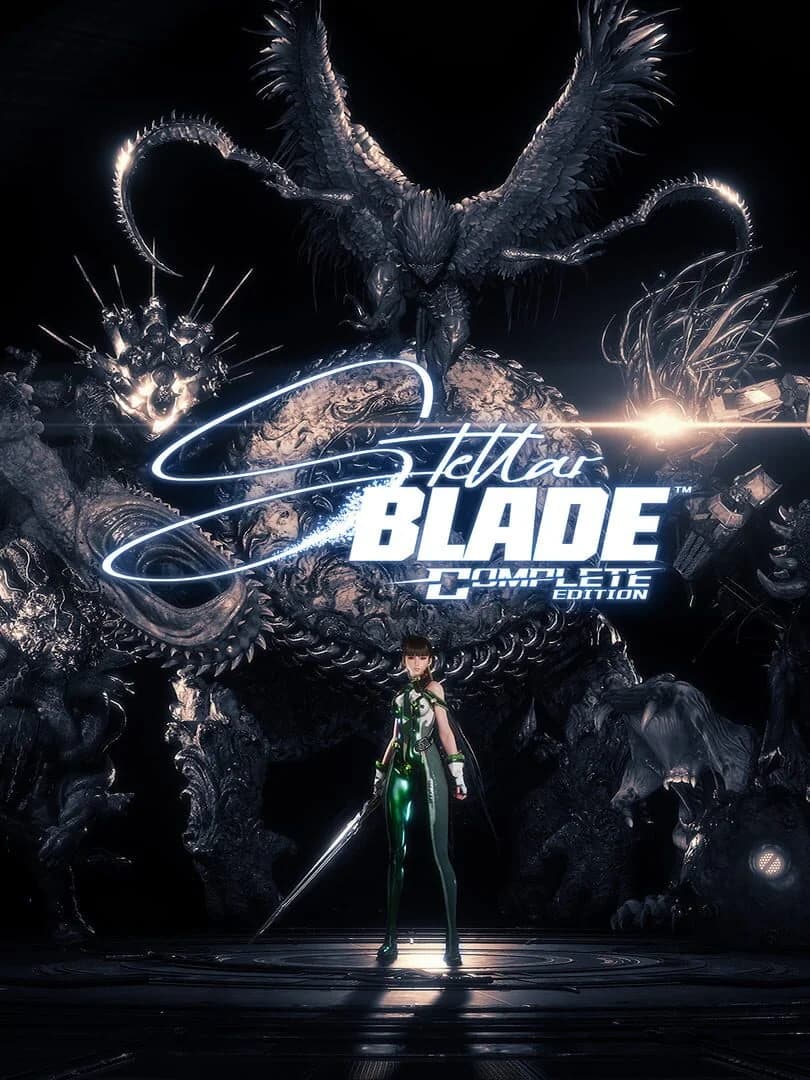
Shift Up’s Nintendo Switch 2 plan for Stellar Blade: Complete Edition is unusually specific: a 30 FPS rendered base, then frame interpolation to present a 60 FPS output in both handheld and docked play. That distinction determines what the port will feel like once it ships in 2026.
The game uses Nvidia DLSS for resolution reconstruction and an interpolation stage based on AMD FSR 3.1 features to create the intermediate frames. DLSS frame generation is not part of this Switch 2 implementation. The technical goal is clear enough: preserve a consistent 30-to-60 cadence rather than let performance swing between uneven native frame rates.
For a fast action game built around timing, dodges, parries, and camera tracking, that is a sensible compromise only if the final frame pacing is clean. The visual presentation can approach 60 FPS smoothness, while the underlying game logic still advances at 30 FPS. Those are related measurements, but they are not interchangeable.
Stellar Blade: Complete Edition Switch 2 Performance Plan
| Category | Confirmed Switch 2 target |
|---|---|
| Release window | 2026; no exact date announced |
| Handheld output target | Upscaled 720p |
| Docked output target | Upscaled 1080p |
| Simulation / rendered frame-rate base | 30 FPS |
| Presented frame-rate target | 60 FPS through interpolation |
| Upscaling technology | Nvidia DLSS |
| Frame interpolation | Approach based on AMD FSR 3.1 features |
| DLSS frame generation | Not used in this port |
| Graphics modes | No separate Quality or Performance mode |
| Switch 2-specific features | Gyro support for non-combat activities and HD Rumble |
DLSS Builds the Image; FSR-Style Interpolation Builds the Extra Motion
The two technologies have separate jobs. DLSS reconstructs the image for the 720p handheld and 1080p docked output targets. It gives the GPU more room by allowing Shift Up to render below the final displayed resolution, although the company has not disclosed the internal render resolution in either mode.
The FSR 3.1-style stage handles motion. It analyzes consecutive rendered frames and inserts an estimated frame between them. A simple 30 FPS sequence becomes a 60 FPS display sequence: rendered frame, interpolated frame, rendered frame, interpolated frame. The display refreshes twice as often, but only every other frame comes from a new simulation step.
That is why calling the Switch 2 version “native 60 FPS” would be inaccurate. A native 60 FPS path updates the game state every 16.7 milliseconds. A 30 FPS simulation updates every 33.3 milliseconds, then interpolation creates smoother motion between those updates. Shift Up CTO DongKi Lee’s stated priority is even latency through that fixed cadence, avoiding an unstable mix of different rendering rates.
DLSS does not solve that second problem. Its role here is image quality and GPU efficiency, not additional generated frames. The Switch 2 port combines DLSS with the FSR-derived interpolation method precisely because one handles resolution reconstruction and the other handles display-frame frequency.
The Handheld and Docked Resolution Targets Need Careful Reading
Handheld play targets a 720p image, while docked mode targets 1080p. Those are output targets, not disclosed native rendering resolutions. Since DLSS is part of both modes, the useful expectation is reconstructed 720p on the Switch 2 screen and reconstructed 1080p on a television or monitor.
The docked target is the more demanding presentation. Moving to 1080p increases the amount of final image detail that DLSS must reconstruct, while the same frame-interpolation system still has to process combat animation, camera movement, effects, and environmental motion. Handheld mode reduces the output resolution, which should give the hardware a more forgiving image-quality budget, but Shift Up has not provided a separate internal-resolution figure or a different frame-rate plan for it.
There will also be no graphics-mode toggle to separate image quality from frame rate. Players receive one rendering profile in each hardware state. That avoids the usual console-menu ambiguity, though it also removes the option of choosing a direct 30 FPS presentation with fewer interpolated-frame variables.
What Players Should Watch for in Final Performance Testing
The relevant test is not an FPS counter alone. A 60 FPS output can look fluid while still carrying the input response of a 30 FPS simulation base. Final testing needs to examine frame-time consistency, controller-to-screen response, camera turns, fast enemy movement, transparent effects, and the image around Eve during rapid animations. These are the situations where an interpolation system has the least room for error.
Interpolation can make panning and traversal appear substantially smoother than a standard 30 FPS presentation. It can also produce brief image mistakes when the algorithm must predict motion behind overlapping objects, particle effects, or sudden camera changes. Shift Up has not detailed the implementation’s artifact handling or measured latency, so the severity of those trade-offs remains a launch-code question.
The fixed 30-to-60 approach does carry one practical advantage over an unlocked performance target. Frame pacing has a defined rhythm. If the port sustains its 30 FPS base, each rendered frame receives one interpolated partner, keeping the display cadence consistent. A game that drifts unpredictably between 38, 44, and 55 native FPS may contain more real frames, yet can feel rougher when frame times are irregular.
Switch 2 Feature Work Extends Beyond the Renderer
Shift Up is also adapting input features rather than treating the Switch 2 release as a basic visual conversion. Gyro controls are planned for non-combat activities, while HD Rumble support is included. Keeping motion input outside combat is the correct limitation: precision action should remain tied to predictable stick and button inputs, especially when the game already relies on a 30 FPS simulation cadence beneath the interpolated output.
Stellar Blade: Complete Edition is the Switch 2 release of the existing PlayStation 5 and PC game, rather than a separate spin-off. It is scheduled for 2026, and the currently stated Complete Edition package includes previously released DLC. Shift Up has not announced an exact release date or price.
FinalBoss // Gear
Level up your setup
01Best-selling Switch 2 gameson Amazon→02Switch 2 accessorieson Amazon→038BitDo controllerson Amazon→04Discounted game keyson Kinguin→Affiliate links · As an Amazon Associate, FinalBoss earns from qualifying purchases.
Want to Level Up Your Gaming?
Get access to exclusive strategies, hidden tips, and pro-level insights that we don't share publicly.
Ultimate Tech Strategy Guide + Weekly Pro Tips