
Table of Contents (12)
Stellar Wanderer DX is a great space snack that keeps pretending it’s a meal
Stellar Wanderer DX is the kind of game that hits you with a rush of “oh wow, this is a bit like Freelancer” and then quietly reminds you, over and over, that it started life as a mobile title.
I played it on PC with an Xbox controller, bouncing between 1440p on a monitor and Steam Deck-style cloud streaming on the couch. In the first couple of sessions, I was happily blasting pirates, hoovering up loot with my tractor beam, and daydreaming about how this could be a low-budget spiritual cousin to the classic Microsoft space sim. By the time the campaign told me to do my first mandatory race, that illusion was very much over.
Stellar Wanderer DX absolutely captures the core space-sim loop: dogfighting, mining, trading, ship upgrades. If you just want to zone out to some pretty nebulae, shoot red triangles until they explode, and watch your credit balance creep up, it works. The problem is that everything around that loop feels too small, too shallow, and too repetitive to hold up against the games it’s clearly inspired by.
First impressions: Freelancer vibes in a bite-sized galaxy
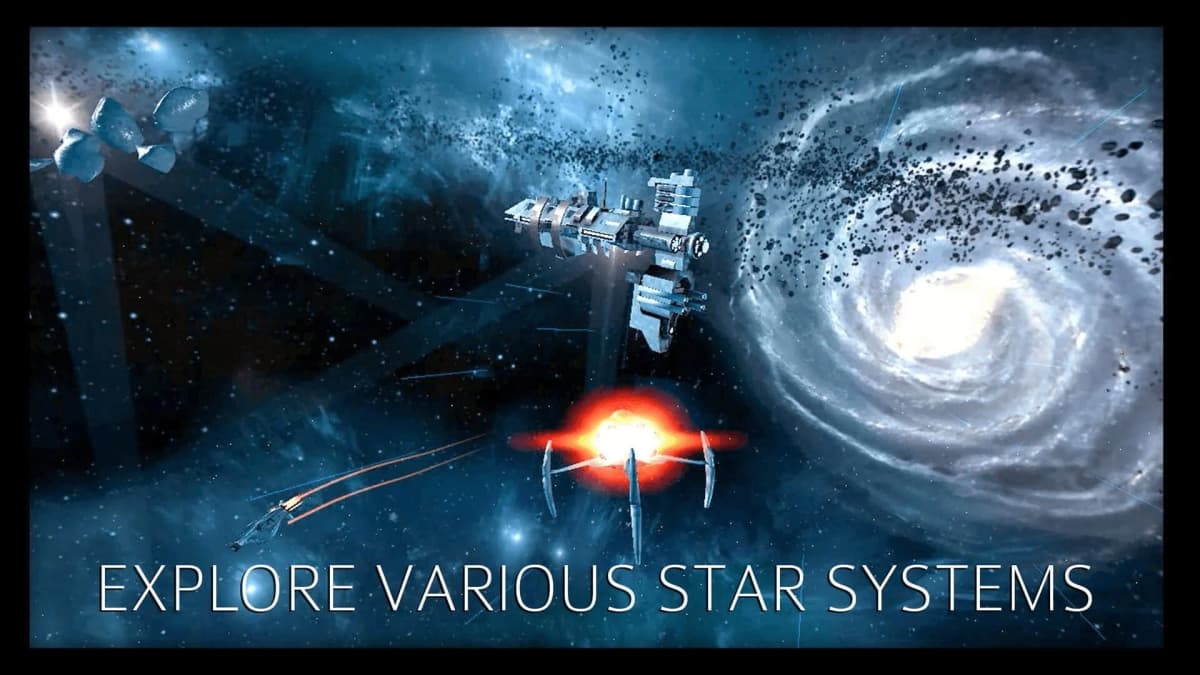
My first launch out of the starting station was a genuine “okay, I get it” moment. Your ship looks like it fell out of a WipEout concept art book, all sharp angles and glowing engines, and you’re immediately surrounded by chunky planets, colourful nebulae and bright starfields. There’s a nice sense of speed when you punch the afterburner and swing the camera into third-person chase view.
From a distance, the game is frankly gorgeous for something with mobile DNA. Each system has its own colour palette and lighting, with lens flares, dust motes and volumetric-ish clouds doing a lot of heavy lifting. Screenshots look great. As a “space screensaver you can actually play”, Stellar Wanderer DX really works.
Then you fly close to a station or an asteroid, and the illusion breaks. Textures smear into low-res mush, ship models reveal their low-poly bones, and the overall sense of scale collapses. Jump gates, which should feel like imposing bits of megastructure – think Mass Effect mass relays or Freelancer’s massive rings – are just little floating triangles you point at and press a button. It’s like admiring a city skyline, only to realise all the skyscrapers are cardboard cutouts.
Flying and fighting: the core loop actually feels good
Moment to moment, though, flying and fighting are where Stellar Wanderer DX is at its best.
You’ve got the classic space-sim toolkit: primary lasers, secondary missiles, a limited afterburner to boost out of danger, and a tractor beam to vacuum up the spoils afterward. Combat is light-sim rather than hardcore Newtonian physics – more Freelancer or Everspace than X4 – and that’s honestly the right call for what this game is trying to be. You line up the reticle, feather the afterburner to orbit your target, watch shields break, hull melt, and then scoop up the floating loot containers.
On a controller, the default flight model is comfortably arcadey. There’s just enough slide and drift to sell the fantasy of dogfighting in space, but never so much that you’re wrestling the ship. Aim assist is present but not obnoxious, and once you’ve tweaked the sensitivity a bit, shredding a pack of pirates feels snappy and satisfying.
The first time I warped into a system, got ambushed by a group of pirates, burned past them, whipped the ship around, dumped a volley of missiles into the formation and watched three of them go up in a chain reaction while nebula clouds lit up in the background – that was the moment I thought, “Okay, if this scales up, I’m in.”
It doesn’t really scale up.
Enemy types repeat fast. You’ll see “pirate” and “pirate veteran” so often they start to feel like old colleagues rather than threats. Their AI is serviceable but unremarkable: they boost straight at you, orbit a bit, maybe fire a missile, then pop. There’s not much in the way of interesting behaviours or emergent combat scenarios. No convoys with escorts behaving differently. No capital ships to pick apart. Just another cluster of small ships, another quick clean-up.
Travel, tiny systems and the 4x-speed frustration loop
The biggest structural problem is size – or rather, the lack of it.
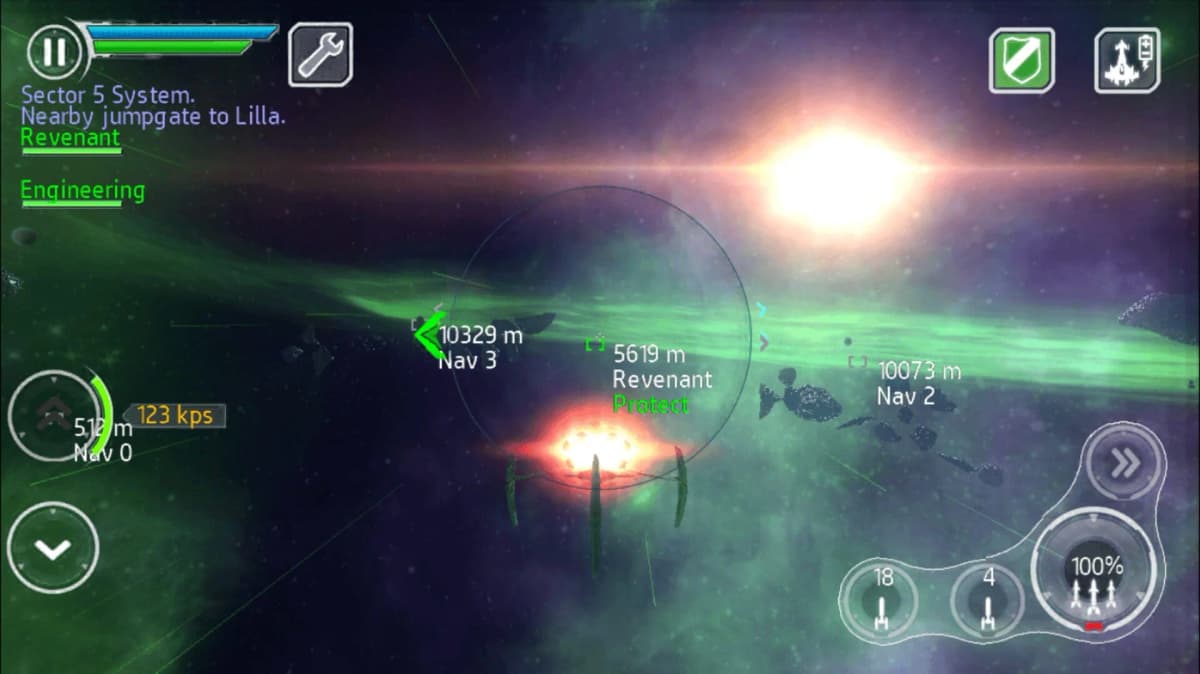
Each star system in Stellar Wanderer DX is shockingly small. You can literally boost in a straight line from one edge of the map to the other in a couple of minutes. There’s no separate “cruise speed” or trade lane network like Freelancer, no warp drive you manually engage. You just have normal engines, a short-burst afterburner, and a time-acceleration button that cranks everything up to 4x speed.
On paper, that 4x mode sounds like a nice quality-of-life feature. In practice, it turns long-distance travel into this annoying rhythm game:
- Point ship toward objective.
- Hit afterburner until it runs dry.
- Wait for it to recharge.
- Hit 4x speed.
- Get yanked out of 4x by an enemy spawn.
- Swat the two pirates that just warped in.
- Repeat. Endlessly.
The game almost never lets you cross a system without forcing a fight. Enemies spawn every time you use a jump gate and usually at least once while you’re travelling between points of interest. That would be fine if they were challenging or varied. They’re not. They’re trivial, they’re repetitive, and – worst of all – they disable 4x speed as long as they’re anywhere near you.
Instead of building tension or a feeling of danger, these ambushes just feel like space mosquitoes: persistent, low-effort, and there mostly to waste your time. When a game has to keep yanking you into mandatory micro-fights to pad out travel in systems this small, you really feel those mobile roots.
Mining, trading and ship upgrades: good bones, thin meat
On the economic side, Stellar Wanderer DX checks all the expected boxes. You can:
- Mine asteroids for minerals and sell them at stations.
- Buy low, sell high on a modest commodity market.
- Take combat or escort missions for steady cash.
- Upgrade your ship and individual components – weapons, shields, power core, hull, cargo space.
There’s a nice, immediate feedback loop here. Upgrade your power core, suddenly you can mount better lasers without overheating your systems. Slap on a bigger cargo hold, and mining runs or trade routes become more profitable. Over time you can buy entirely new ships, each with different base stats and slot layouts. The DX release adds more customization options than the original mobile version, and you can feel that in how quickly you start tinkering with builds.
The catch is that the economy doesn’t really evolve. Prices don’t fluctuate in interesting ways, factions don’t shape supply and demand, and stations don’t feel meaningfully different except for which items happen to be in stock. Some bases don’t even sell missiles, which is less a strategic quirk and more a quiet way of telling you “you picked the wrong place to refuel.”
A couple of hours in, I checked a stat screen and realised I’d already visited most of the systems and landed on most of the stations in the game. I’d already bought a new ship, fully upgraded most of my kit, and hadn’t seen fresh gear for several missions. My old ship now sits abandoned at a random base, quietly draining my funds in the background, with no real reason to go back to it.
There just isn’t enough variety – in equipment, in systems, in station layouts, in anything – to sustain that early excitement. The bones are good, but you feel the meat run out fast.
There just isn’t enough variety – in equipment, in systems, in station layouts, in anything – to sustain that early excitement. The bones are good, but you feel the meat run out fast.
🎮 Get This Game at the Best Price
Compare prices instantly and save up to 80% on Steam keys with Kinguin — trusted by 15+ million gamers worldwide.
*Affiliate link — supports our independent coverage at no extra cost to you
Campaign, missions and the cursed racing segments
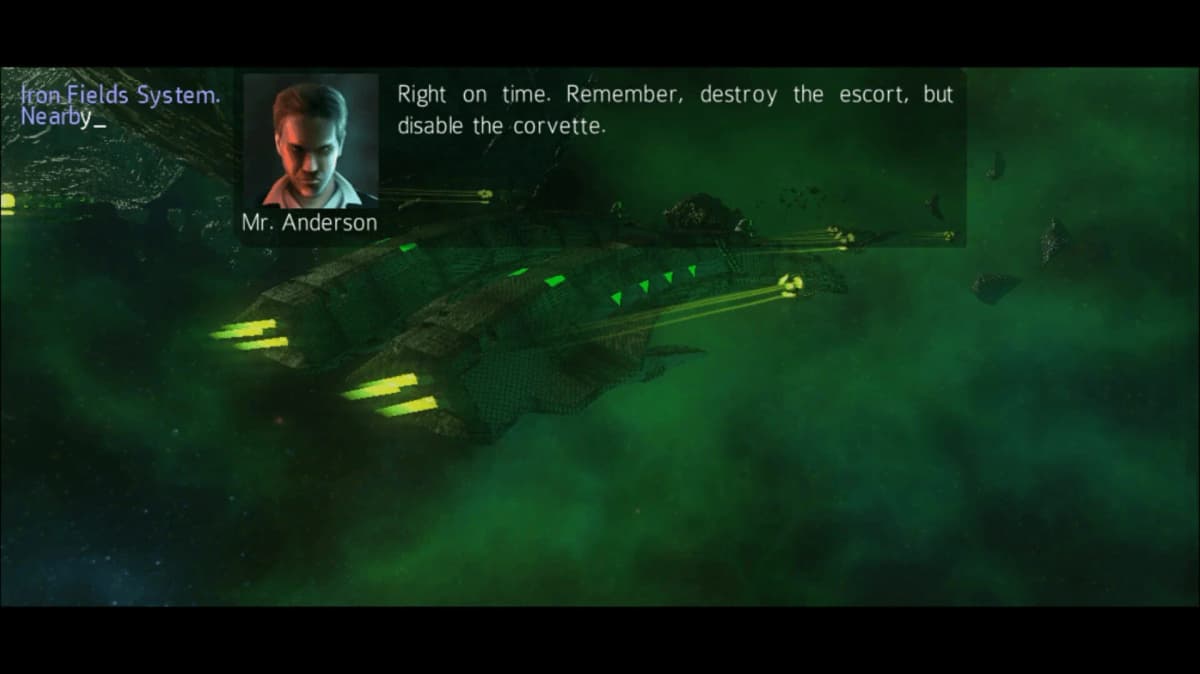
The campaign starts off… fine. You escort ships, chase pirates across systems, pick up some bounties, and try not to listen too closely to the voice acting, which ranges from “serviceable indie” to “please let this line end.” There are a few twists and surprises along the way, nothing mind-blowing but enough to keep you nudging the waypoint marker forward.
Then the game introduces racing.
I still don’t understand why open-world and sandbox-ish games keep forcing racing segments on players who clearly signed up for something else. In Stellar Wanderer DX, these races are mandatory parts of the main campaign. You’re thrown into checkpoint courses, dashing through glowing hoops in your combat ship, with the same handling model you use for dogfighting.
They’re not brutally difficult, just dull and out of place. It’s like pausing a space western to make the protagonist run a go-kart time trial. And because they’re tied to the story, you can’t just ignore them if you don’t vibe with that kind of content. You have to do them if you want to see where the plot goes.
Mission handling in general can be weirdly hostile. If you land on a base that has a main campaign mission available, it often auto-triggers the moment you dock. On one occasion, I touched down intending to refit and then go clean up a side contract. The story mission popped as a cutscene, I backed out mentally, undocked to do my side work… and when I came back later, the game decided I’d “failed” the campaign objective and kicked me to a game over reload.
That kind of brittle scripting is pure mobile-era design: assuming short, linear sessions where you do the one thing it tells you to do, in order, without wandering off. On PC and console, in a genre that usually thrives on player agency, it feels wrong.
A quiet galaxy that never feels truly alive
The thing that really separates Stellar Wanderer DX from its influences isn’t actually budget or visuals. It’s atmosphere – or the lack of it.
In Freelancer, space felt alive. You’d hear civilian chatter over the radio, catch snippets about trade lanes and patrol routes, see transports undocking and moving along fixed routes while you went about your business. There was a sense that you were just one pilot in a much larger ecosystem.
Stellar Wanderer DX doesn’t have that. Outside of the scripted missions and those constant pirate spawns, the universe feels eerily empty. No background radio chatter, no ambient traffic, no convoys passing through unless they’re explicitly part of a quest. With the systems being as small as they are, there’s no contrast between busy, protected space and dangerous, lonely frontier. It’s all just one or two points of interest, a handful of enemies, and a whole lot of nothing.
Docking and jump gates don’t help the immersion, either. Press a button anywhere near a gate or station, and you’re instantly snapped into a short cutscene. There’s no approach, no lining up, no chance for something dramatic to happen mid-dock. If hostile ships were chasing you, they effectively vanish from existence the instant you hit the button. It’s convenient, but it kills any sense of tension or simulated spacefaring procedure.
Port quality, UI quirks and where the mobile seams show
To its credit, Stellar Wanderer DX runs very well on PC. I didn’t hit any serious performance dips, even with everything cranked up. This is not a demanding game, and it should be perfectly comfortable on mid-range hardware and handhelds like Switch or a streaming setup.
The problem isn’t performance; it’s how obviously the UI and flow were born on touchscreens.
Menus are big, flat panels stacked on top of each other, and navigating them with a controller can feel imprecise. Sometimes the focus just doesn’t land where you expect. I kept nudging the d-pad around, watching the highlight jump past the button I wanted to the one next to it, like the cursor had a mind of its own. It’s not game-breaking, just a constant low-level annoyance every time you dock and try to manage your ship or inventory.
None of this is disastrous, but it reinforces a pattern: wherever Stellar Wanderer DX could have leaned into the strengths of a PC/console space sim, it stays safely within its mobile comfort zone.
Who is Stellar Wanderer DX actually for?
This is where the game gets tricky to recommend, because it absolutely has an audience – it’s just not the one the Freelancer comparisons might suggest.
If you’re craving a deep, sprawling successor to Freelancer, X3, or even something like Starfield’s new open “Free Lanes” travel, Stellar Wanderer DX is going to feel like a toy model. The galaxy is small, the systems are shallow, and the repetition sets in quickly. You’ll see almost everything it has to offer long before your inner space nerd is satisfied.
But if you want something lighter – a pick-up-and-play space sim you can dip into for 20–40 minutes at a time, especially on a handheld or a TV where you don’t want to manage a million subsystems – there’s real value here. The flight feels good. The combat is instantly understandable. The upgrade curve is gentle and gratifying. And the visuals, at least from a distance, are more than pretty enough to sell the fantasy.
Within its own small bubble, Stellar Wanderer DX is a decent little space power fantasy. The trouble starts when you compare it to the giants it’s nodding at.
Bottom line & score
Stellar Wanderer DX nails the basics: flying, shooting, mining, trading, upgrading. It looks nice in motion, runs well, and fills a gap on consoles and PC for a more approachable, bite-sized space sim.
But it also feels like a game that never fully escaped its original platform. The systems are too tiny, the universe too quiet, the missions too repetitive, and the design too eager to funnel you through short, discrete chunks rather than let you lose yourself in space. The forced racing segments and brittle campaign scripting are pure mobile-era design baggage.
For a weekend fling with some lasers and loot in a pretty skybox, 6/10 is enough. For anyone still chasing that elusive feeling of living in a big, messy, alive galaxy the way Freelancer once allowed, it’s harder to shake the sense that Stellar Wanderer DX is more of a teaser than a true return – and that tension is something I’m still chewing on even after I’ve parked my ship for good.
TL;DR
- Feels great in the cockpit: Fun, accessible dogfighting with satisfying lasers, missiles, and a handy tractor beam.
- Pretty space backdrops: Systems look gorgeous from a distance, with colourful nebulae and nice lighting.
- But the galaxy is tiny: Small systems, constant trivial pirate spawns, and heavy reliance on 4x time make travel feel cramped and repetitive.
- Shallow progression: Mining, trading, and upgrading are solid but run out of variety quickly; gear and systems dry up fast.
- Annoying campaign quirks: Auto-triggered story missions, forced racing segments and brittle fail states break the sandbox illusion.
- Obvious mobile roots: Low-res close-up assets, cutscene docking, and clunky controller-focused UI remind you where it started.
- Best for casual space fans: Great as a light, low-commitment space sim snack; not enough depth for players hunting the next Freelancer.
FinalBoss // Gear
Level up your setup
01Top-rated gaming headsetson Amazon→02High-refresh gaming monitorson Amazon→03Gaming chairson Amazon→04Discounted game keyson Kinguin→Affiliate links · As an Amazon Associate, FinalBoss earns from qualifying purchases.
Want to Level Up Your Gaming?
Get access to exclusive strategies, hidden tips, and pro-level insights that we don't share publicly.
Ultimate Reviews Strategy Guide + Weekly Pro Tips