
Table of Contents (7)
Why this patch actually matters (and why it made me sit up)
Paradox is finally doing the thing a lot of Stellaris players have been quietly asking for: bringing raw numbers back under control. But the way they’re doing it – a broad economic “stat squish” that lowers empire economies and fleet strengths while deliberately leaving Leviathans and other one-off threats at their old power – could make late-game disasters feel legitimately terrifying again. That, plus plans for biweekly open-beta updates starting in early 2026, means this isn’t just another balance pass. It’s a risk/reward redefinition for how you play long Stellaris campaigns.
- Key takeaways:
- 4.3 “Cetus” performs an economic stat squish to lower overall production and fleet power.
- Big threats (Leviathans, Space Amoebas) are intentionally unchanged – they’ll feel much stronger.
- Beta will be a rolling open build with updates every ~two weeks; some optimizations may temporarily worsen multiplayer stability.
- Paradox also targets performance, desync tracking, memory use, and a simpler rework of slavery and faction systems.
What’s changing — the stat squish explained
Stellaris 4.3 focuses primarily on economy and ship design. Paradox calls the main move an economic “stat squish”: a deliberate reduction of many of the game’s non-linear growth factors. Empire size modifiers, unemployment, base technology costs, upkeep, living standards, planetary ascension values, automation buildings — a long list of contributors to runaway numbers — are being rescaled so the game stops ballooning into absurdly large figures.
That sounds dry on paper, but for players it changes how you evaluate “good” numbers. Muray, the game’s director, warns explicitly that old fleet sizes and production expectations are no longer valid benchmarks. Paradox even reports the first round of econ + ship design changes gave a roughly 7% performance improvement — modest, but meaningful when you’re fighting tick-time slowdowns in century-long games.
Why making Leviathans unchanged is a provocative choice
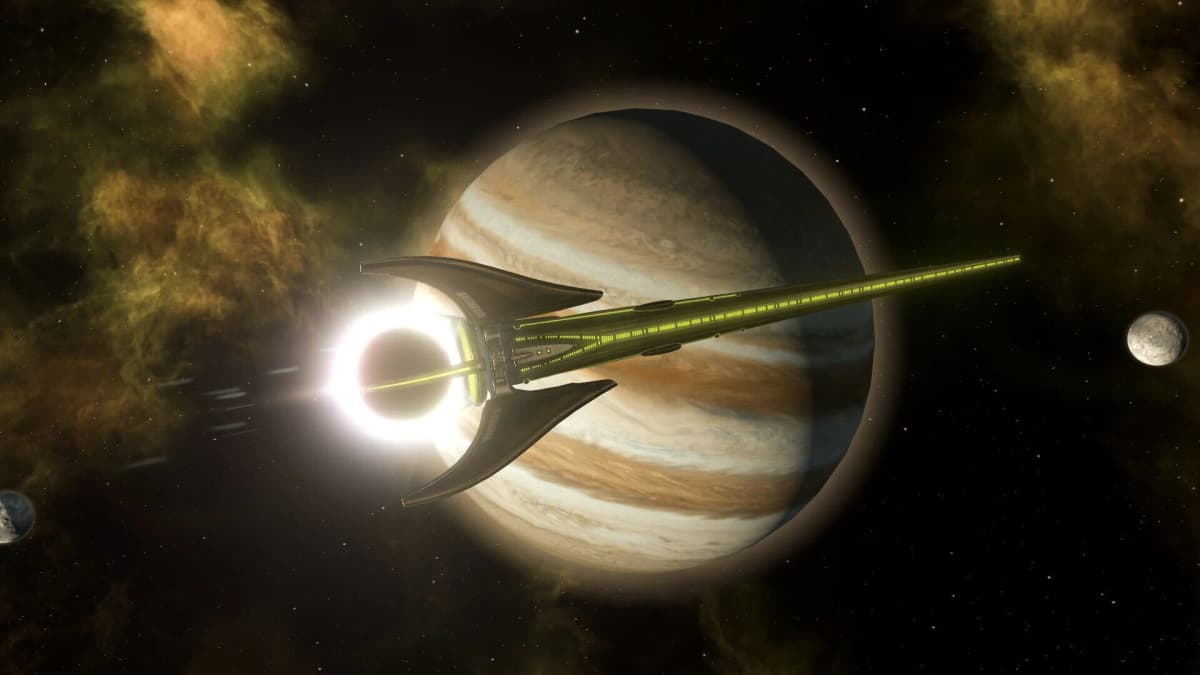
This is the part that made me raise an eyebrow. The team deliberately left powerful scripted threats at their current strength while lowering your baseline economy and fleet power. Paradox’s reasoning is clear: some of those creatures and late-game anomalies haven’t been a real threat in ages because players can throw armies and megastructures at them. But the practical effect is an immediate difficulty spike. Imagine your carefully-managed mid-game empire suddenly facing a Leviathan while your fleet numbers have been nudged down — those encounters will be riskier and feel “real” again, which I find exciting, but I can also see this infuriating players who prefer predictable scaling.
Multiplayer, performance, and the beta treadmill
Paradox is rolling the 4.3 beta out in a continuous patch train, updated roughly every two weeks. That’s good: developers can iterate quickly based on real feedback. It also means, as Muray admits, that some of the “dangerous” optimizations — like modifier consolidation across pops, fleets, triggers and espionage — could temporarily increase desyncs and instability in multiplayer. If you run long multiplayer campaigns or rely on heavy mods, expect rough patches. On the flip side, expanded telemetry and better desync tracking are on the roadmap, which should pay dividends long-term.

What this means for modders and long-game players
Stat squishes always carry collateral: mods that baked in previous numbers will need updates, and veteran players who gauge decisions by raw production values will have to relearn scaling. Paradox says pieces of the beta can be toggled individually, which is smart — they can yank a problematic change mid-beta instead of rolling everything back — but it still puts the onus on modders and players to test extensively before treating a save as “stable.”
The bigger picture: cleaning up 4.0’s baggage
Stellaris went through a major 4.0 overhaul and has been trudging through side-effects ever since: tick lag, multiplayer desyncs, and balance that stretched into absurd numbers. 4.3 looks like an honest attempt to reset expectations rather than keep slapping band-aids on top of inflated stats. Paradox pairing this with quality-of-life fixes — ethics/faction issues, a simpler slavery rework, better memory use — signals they’re trying to fix structural problems, not just tweak numbers.
TL;DR — Should you be excited or nervous?
Excited if you want the late game to feel dangerous again and appreciate a cleaner, less bloated economy. Nervous if you run big multiplayer campaigns, depend on mods, or hate sudden spikes in difficulty. Keep an eye on the open beta in early 2026: this will be an iterative sprint, and how quickly Paradox can tune multiplayer stability will determine whether 4.3 is a welcome course correction or a rocky reset.
FinalBoss // Gear
Level up your setup
01Top-rated gaming headsetson Amazon→02High-refresh gaming monitorson Amazon→03Gaming chairson Amazon→04Discounted game keyson Kinguin→Affiliate links · As an Amazon Associate, FinalBoss earns from qualifying purchases.
Want to Level Up Your Gaming?
Get access to exclusive strategies, hidden tips, and pro-level insights that we don't share publicly.
Ultimate Gaming Strategy Guide + Weekly Pro Tips