
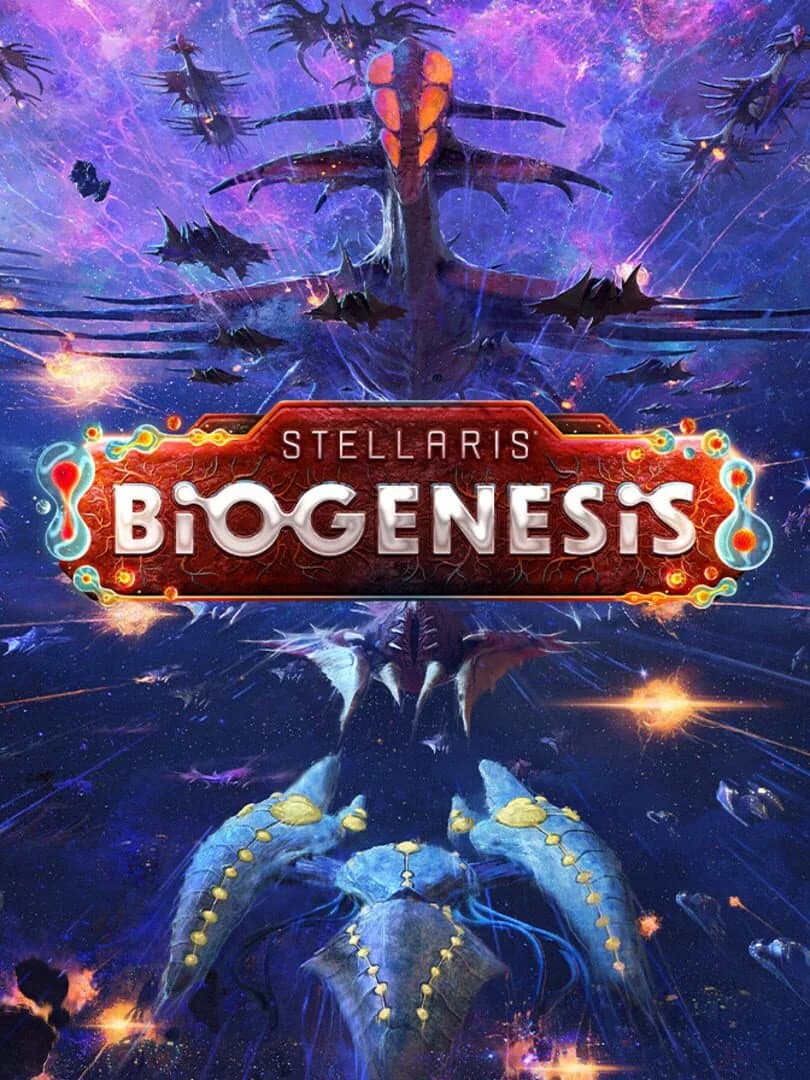
As a veteran Stellaris player, I’ve weathered countless expansions, from the Leviathans stir to Nemesis’s political overhaul. Yet few updates have upended both the meta and the community’s imagination like Biogenesis. Even after a rocky launch and spirited Steam review debates, this DLC has emerged as one of Paradox’s boldest experiments in its near-decade of galactic sandboxing. At its heart lies the Wilderness origin: a sentient biomass that spreads like cosmic fungi, signaling an era of rule-breaking design in Stellaris.
Table of Contents (8)
The Birth of the Wilderness Origin: Mechanics Deep Dive
Unlike traditional origins that simply tweak starting bonuses, Wilderness transforms the very nature of empire-building. You begin as a single biomass node—no cities, no pops, no conventional infrastructure. Over time, biomass “hyphae” extend into neighbouring tiles, consuming organic resources to form new biomass clusters. Each cluster acts like a colony, generating a unique Biomass Resource that converts into energy, minerals, and research points at a dynamic rate based on its size and environmental compatibility.
Key mechanics include:
- Spreading Hyphae: Controlled via a new UI overlay, you direct growth toward resource-rich biomes or strategic choke points.
- Biomass Conversion: Instead of pop growth events, your biomass responds to environmental modifiers—swamps yield extra food, volcanic fields boost energy production.
- Evolutionary Traits: Through the genetic ascension tree, you can develop specialized spores that grant temporary buffs, from metabolic bursts to psychic resonance.
- Planetary Devourer Crisis: When your biomass threshold hits a critical mass, random crisis events can trigger, unleashing “Behemoth Emergence” to challenge neighboring empires.
This radical shift forces players to think in terms of organic spread patterns rather than city placement or ship combat. It’s a gameplay loop that appeals to 4X veterans seeking something completely different.
Community Reaction and Metrics
The forums have been ablaze. On the official Paradox boards, Wilderness-origin threads have surpassed 5,200 replies since launch week. Reddit’s r/Stellaris subreddit shows a 150% increase in Biogenesis-related posts, with daily discussions peaking at 1,800 comments. Steam Workshop statistics reveal over 60 community mods enhancing Wilderness mechanics—from alternative hyphae visuals to balance overhauls.
Popular community influencer “GalacticSpore” reported over 25,000 views on their “Wilderness Mastery Guide,” while Discord servers have dedicated channels dissecting optimal spread patterns. Memes portraying your biomass as a cute but deadly blob are everywhere, demonstrating that Paradox achieved more than just a new origin—they sparked a cultural moment within the fanbase.
Developer Insights: Risk and Reward
Game Director Stephen Murray addressed the ambitious shift in a recent Dev Diary: “We wanted to challenge conventional 4X paradigms—take the idea of an empire as a living organism to its logical extreme. We weren’t sure if players would embrace a non-pop-based start, but early playtests had us all laughing at how absurd and fun it could get.”
Lead Systems Designer Marissa Kwan added in a Paradox Community Stream: “The Wilderness origin taught us a lot about modular design. If we can break the mold here, future origins can push boundaries even further—think nomadic fleets that physically reshape galaxies, or photo-synthetic races that thrive only in starlight.”
Comparing Biogenesis to Past DLCs
Stellaris has a history of iterative expansions. Leviathans introduced massive AI creatures and world events, Utopia focused on ascension perks and megastructures, while Nemesis let you play spy or executioner. Biogenesis, however, does more than layer new content over the base game—it overhauls a core gameplay pillar: empire management. The Wilderness origin stands as Paradox’s most ambitious attempt to redefine playstyles, rivaling only the subspecies mechanics introduced in Species Pack.
Balance Issues and Bug Fixes
No expansion launches without hiccups, and Biogenesis is no exception. At launch, players reported:
- AI Pathfinding Glitches: Biomass nodes sometimes failed to connect across tiles, stalling spread.
- Resource Overflow: Uncapped biomass yields led to runaway energy surpluses that broke early-game balance.
- Performance Drops: Late-game galaxies with dozens of biomass clusters caused framerate dips on mid-range rigs.
Paradox responded swiftly. Patch 2.7.1 addressed AI connectivity by rewriting the hyphae pathfinder. Patch 2.7.2 introduced a global biomass cap tied to galactic size settings, rebalanced resource coefficients, and optimized rendering for large cluster counts. According to Paradox’s public bug tracker, over 120 issues were closed within the first month.
Community Feedback and Ongoing Improvements
Beyond official fixes, modders have stepped in. The “BioRebalance” mod by user FungoidFanatics adjusts biomass production curves and offers an optional “Cluster Defense” mechanic to prevent easy exploitation. Paradox has acknowledged these mods in community roundups and signaled openness to integrating top community fixes into future updates.
On the Paradox forums, Senior QA Lead Jonas Richter noted: “We’re monitoring mod ecosystems closely. If a community solution proves stable and popular, our teams consider it as a basis for official features or toggles in upcoming patches.” This collaborative stance suggests a healthier feedback loop than in previous DLC cycles.
Drawbacks and Lingering Criticisms
Despite widespread praise, some players find the Wilderness origin too niche. Early adopters complain that focusing on a single origin can overshadow the base game’s diversity, making other origins feel underpowered by comparison. Competitive multiplayer matches featuring Wilderness runs have been criticized for unpredictability—some groups house-rule the origin to keep games balanced.
Additionally, smaller galaxies can feel cramped for biomass, and larger ones may dilute the crisis-threatening impact of Behemoths. Until Paradox fine-tunes galaxy-size multipliers for Wilderness, these edge cases will persist as talking points in community polls and livestream debates.
Conclusion
Stellaris Biogenesis is a triumph of creative boldness, anchored by the Wilderness origin’s radical reimagining of empire-building. With enthusiastic community metrics, direct developer commitment, and a clear roadmap for balancing, Biogenesis proves that Paradox Interactive still has a daring streak. If you’ve been waiting for a reason to jump back into Stellaris—or curious to see 4X conventions turned upside-down—make room for biomass. You’re about to become the galaxy’s most fearsome fungus.
FinalBoss // Gear
Level up your setup
01Top-rated gaming headsetson Amazon→02High-refresh gaming monitorson Amazon→03Gaming chairson Amazon→04Discounted game keyson Kinguin→Affiliate links · As an Amazon Associate, FinalBoss earns from qualifying purchases.
Want to Level Up Your Gaming?
Get access to exclusive strategies, hidden tips, and pro-level insights that we don't share publicly.
Ultimate Gaming Strategy Guide + Weekly Pro Tips