

Stellaris: Shadows of the Shroud Gives Psionics Real Bite — But Will It Break the Meta?
Game intel
Stellaris: Shadows of the Shroud
Shadows of the Shroud is an expansion for Stellaris, released as a part of the Season 09 Expansion Pass in 2025. The psionic plane holds untold power—but at w…
Mind Games, For Real This Time
Psionics in Stellaris have always felt like a flavorful wild card-cool stories, swingy outcomes, and a lot of praying to the RNG inside the Shroud. That’s why Shadows of the Shroud caught my attention: it promises structure and agency where psionics used to be vibes and dice rolls. With a dedicated Shroud tab, patrons to court (or fear), and a new faction-the Mindwardens-this expansion aims to make psychic play a strategic pillar rather than a roleplay detour.
- Psionic Ascension now plugs into a deeper Shroud system: patrons, Accords, and Aura techs.
- The Mindwardens offer a non-psionic counterplay path with protections like the Shroud Seal.
- New origins, civics, ships, advisors, and music justify the “expansion” label, not just a story pack.
- $19.99 DLC; Stellaris base game is 75% off for a limited time if you’ve been waiting to jump in.
Breaking Down the Announcement
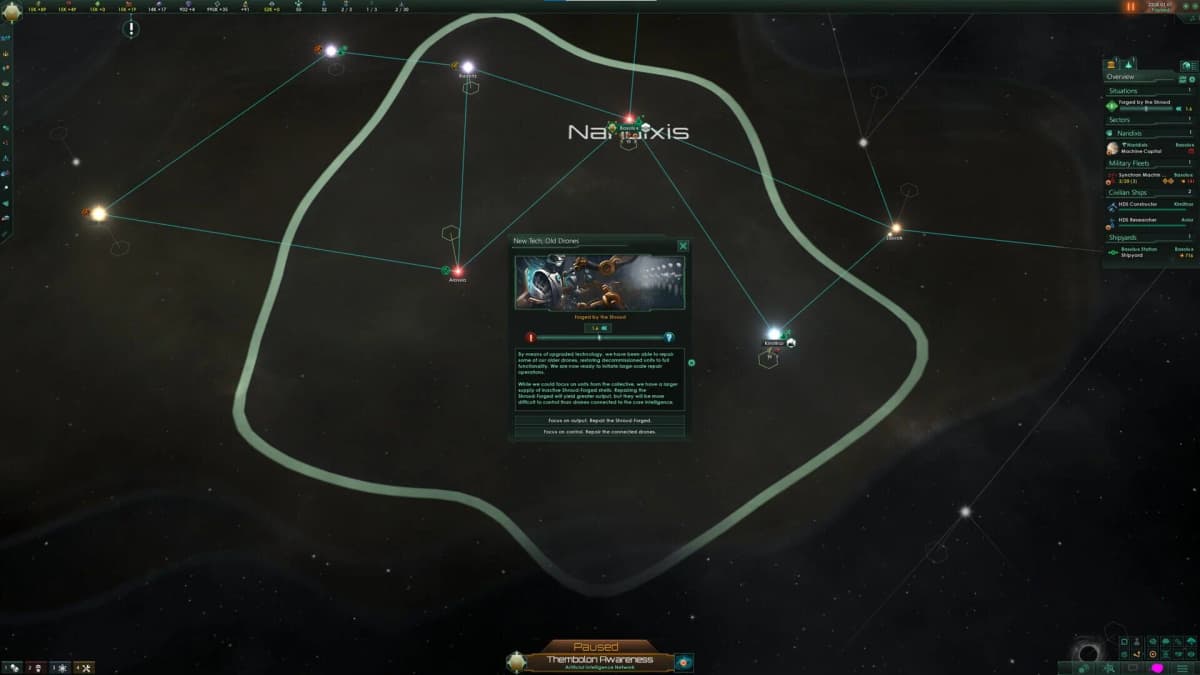
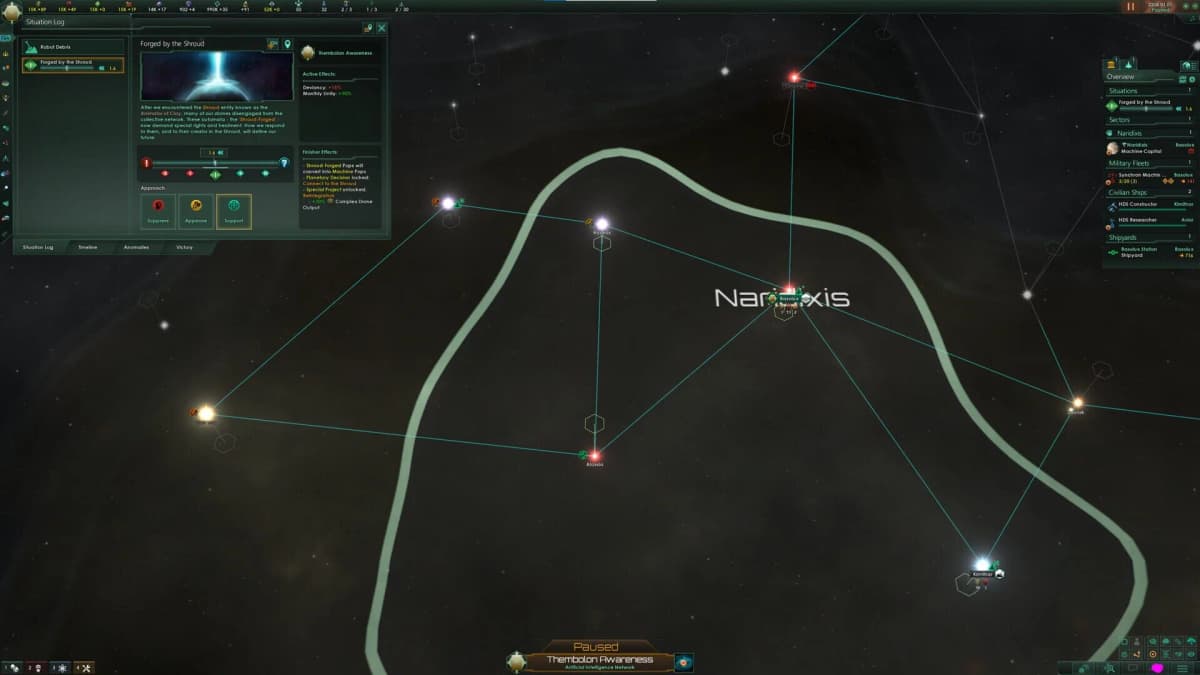
Shadows of the Shroud doubles down on psionics in a way Stellaris hasn’t before. Choose Psionic Ascension and you get a new Shroud interface that lets you align with patrons and domains, raising your Attunement to unlock Accords and Aura technologies. The headline additions include a new Major Patron—Cradle of Souls—and eight minor patrons tied to alignment. The pitch is clear: fewer random “deal with a cosmic horror” rolls, more targeted progression and passive bonuses that leak into the physical galaxy through Accords and Auras.
Not into mind-magic? Enter the Mindwardens, a psionic cult with fortified minds that effectively function as an anti-Shroud toolkit for empires that don’t—or can’t—go full Psychic. Their services read like hard counters: Thought Police to keep the brainwaves tidy, and the Shroud Seal to blunt psionic enemies. That’s good game design on paper: if psionics get stronger, the galaxy needs an answer that isn’t “reroll your empire.”
Beyond the systems layer, expect new origins and civics (for fresh empire fantasies), new ship sets, advisor voices, and additional tracks on the soundtrack. It’s the full Paradox package, not just a feature toggle.
Why This Matters Now
Veteran players know the Ascension triangle—Bio, Synth, Psionic. Synth has often dominated the efficiency conversation, Bio the pop optimization niche, and Psi the “cool if it pops off” route. Stellaris has been moving toward making each path feel like its own meta-game, and this expansion is the clearest statement yet for psionics: a defined progression, thematic power spikes, and strategic choices through patron alignment instead of pure RNG roulette.
I also like that Paradox is leaning into counters. Grand strategy is better when power creates friction. If psionic Auras can warp system-level fights and empire-level decisions, then Mindwarden tools like the Shroud Seal give materialists, machine intelligences, and secular federations a reason to hold their nerve rather than respec into crystal incense and prophecy.
The Real Questions: Power, Price, and Paradox
Let’s talk tradeoffs. At $19.99, this sits firmly in “expansion” territory, not a bite-sized story pack. If you love Spiritualist roleplay or you’ve been waiting for psionics to stop being a meme, that price feels fair. If you mainly min-max economy and crush multiplayer lobbies as Synth ascended materialists, this is a “wait and see” purchase.
Balance is the big unknown. Aura technologies sound potent—system-level warping effects can swing fleet battles if they stack or create oppressive area denial. If patrons grant strong passive empire buffs via Accords, Spiritualist runs might suddenly look like the new tryhard path. The Mindwardens help, but hard counters can make multiplayer messy if lobbies feel forced into “go psi or go Warden.” Expect a couple of hotfixes before the dust settles; that’s the Paradox cycle.
There’s also the classic DLC sprawl concern. Stellaris thrives because Paradox keeps layering systems, but it also means your experience depends on which boxes you own. If the Shroud rework meaningfully improves psionics only when you’re in the paid DLC, that’s a design win for depth but a miss for cohesion. It’s the same tension we felt with Nemesis (espionage/menace) and Overlord (vassal play): awesome if you buy in, less coherent if you don’t.
What Gamers Need to Know
- If you enjoy narrative-heavy runs, Shadows of the Shroud is a no-brainer. Patrons and Attunement give you story with purpose, not just random events.
- Competitive or co-op groups should monitor early balance. Watch how Auras affect chokepoints and doomstack engagements.
- Mindwardens sound perfect for xenophiles and materialists who hate being bullied by psi empires—and a great fantasy for “galactic thought police” roleplay.
- New origins/civics are the real replay fuel. If past DLCs are a guide, expect at least one standout combo that defines the patch’s meta.
Practical note: the expansion is out now for $19.99, and the base game is heavily discounted for a limited time. If you’ve been Shroud-curious but on the fence, this is the moment to start a Spiritualist campaign and see whether patrons and Auras finally make psionics sing.
TL;DR
Shadows of the Shroud turns Stellaris’ psionics from flavorful chaos into a guided power fantasy with real strategic weight. It’s exciting, but the true test will be balance—especially how Auras and Mindwarden counters land in multiplayer. If you love Spiritualist runs or big narrative swings, this DLC looks worth the price of admission.