

Stellaris’ Shroud DLC Is Sinking Under Lag — Paradox Puts Performance First
Game intel
Stellaris: Shadows of the Shroud
Shadows of the Shroud is an expansion for Stellaris, released as a part of the Season 09 Expansion Pass in 2025. The psionic plane holds untold power—but at w…
Stellaris expansions usually get me excited for weird space politics and broken builds, but Shadows of the Shroud landed with a thud: a brutal 43% positive on Steam, and not because the content is dull. The chorus is the same one longtime fans know by heart-desyncs, crashes, and a late game that crawls. Paradox has responded, saying performance is its “highest priority,” shipping a fresh 4.1.5 open beta and laying out what they’re targeting. It’s welcome honesty, but also an admission that there’s no quick fix coming.
Key Takeaways
- Paradox launched a 4.1.5 open beta after 4.1.4 “found some critical issues.”
- Dev says this will be a “long haul,” not a magic patch-focus areas include modifier calculation, fleet counts, UI, and the economy.
- Late-game ship bloat and stronger post-4.0 economies appear to be driving the worst slowdowns.
- Multiplayer desync fixes are ongoing; the team is asking for bug reports to help reproduce issues.
Breaking Down Paradox’s Plan
Game director Stephen “Eladrin” Muray says the team is prioritizing raw performance with help from a dedicated Custodian subteam. The 4.1.4 beta surfaced “critical issues,” so it’s being superseded by 4.1.5, which folds in more fixes. The blunt truth from Muray: “This is going to be a long haul and won’t be a ‘magic patch’ that fixes everything.” That’s not the line you want to hear when your new DLC is getting hammered in reviews, but it tracks with Stellaris’s history-the late game has always been where performance ambitions go to die.
There are concrete targets, though. The big one is how the game calculates modifiers—basically the math that touches “literally everything.” Muray calls the rewrite a “potentially dangerous change,” and he’s right to be cautious. Any systemic tweak to that layer risks odd behavior across combat, economy, and events. If it works, it should help most in the late game and on certain hardware, which might explain why some players report smoother runs while others still stutter.
Muray also points at fleet counts and the post-4.0 economy. Bug reports tipped the team to “an unusually large number of ships in late-game saves,” with more powerful economies reaching endgame ship totals “a hundred years earlier.” The AI is better at filling naval cap, but players push far beyond it. In other words, the simulation is drowning in ships. One experiment mirrors a community mod that multiplies ship cost and power by ten—fewer hulls, bigger stakes. That could be a clean way to reduce on-screen bloat while preserving the fantasy of leviathan fleets.
QA’s “Gosia” chimed in to address a familiar accusation—“Do they even test it?”—noting they track performance on 24/7 test rigs from low- to high-spec. I don’t doubt they test. The problem is Stellaris’s failure state hides in the compounding math: scaling economies, escalating ship counts, and UI overhead that all spike after 2300. The studio cites comparisons showing 4.1 is “marginally better than 3.14” until that point, then performance diverges hard. That lines up with what many of us feel: early and midgame feel okay; the endgame bogs down as the galaxy fills with ships and modifiers stack.
Why This Matters Beyond One DLC
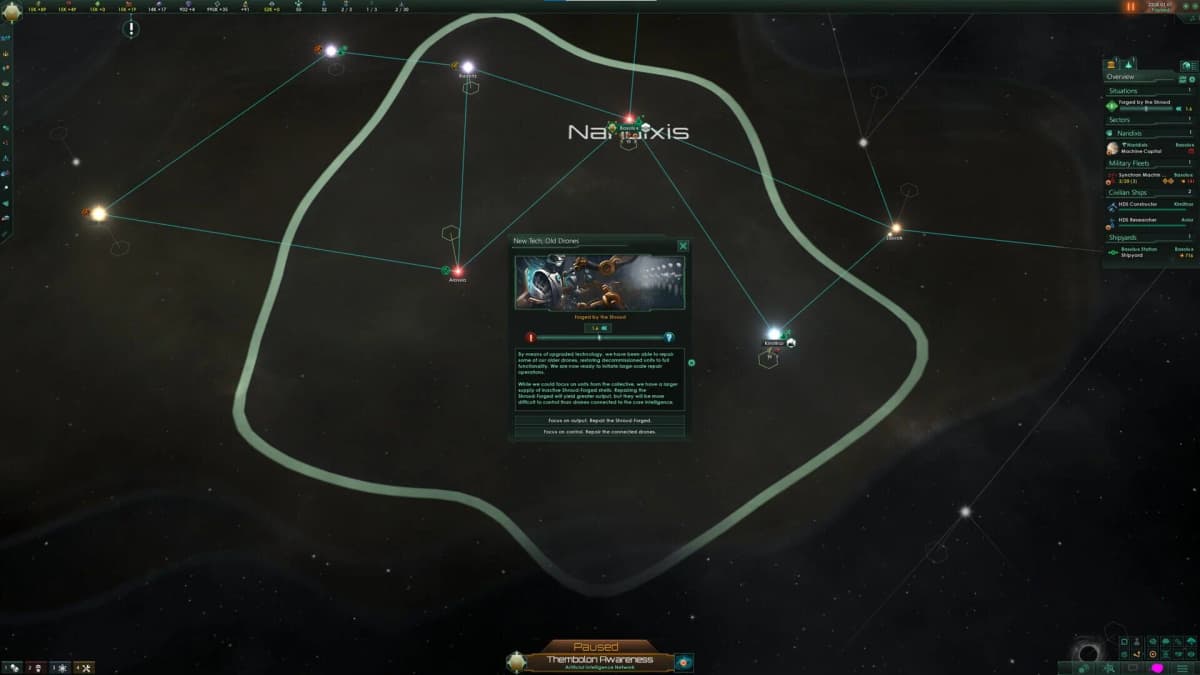
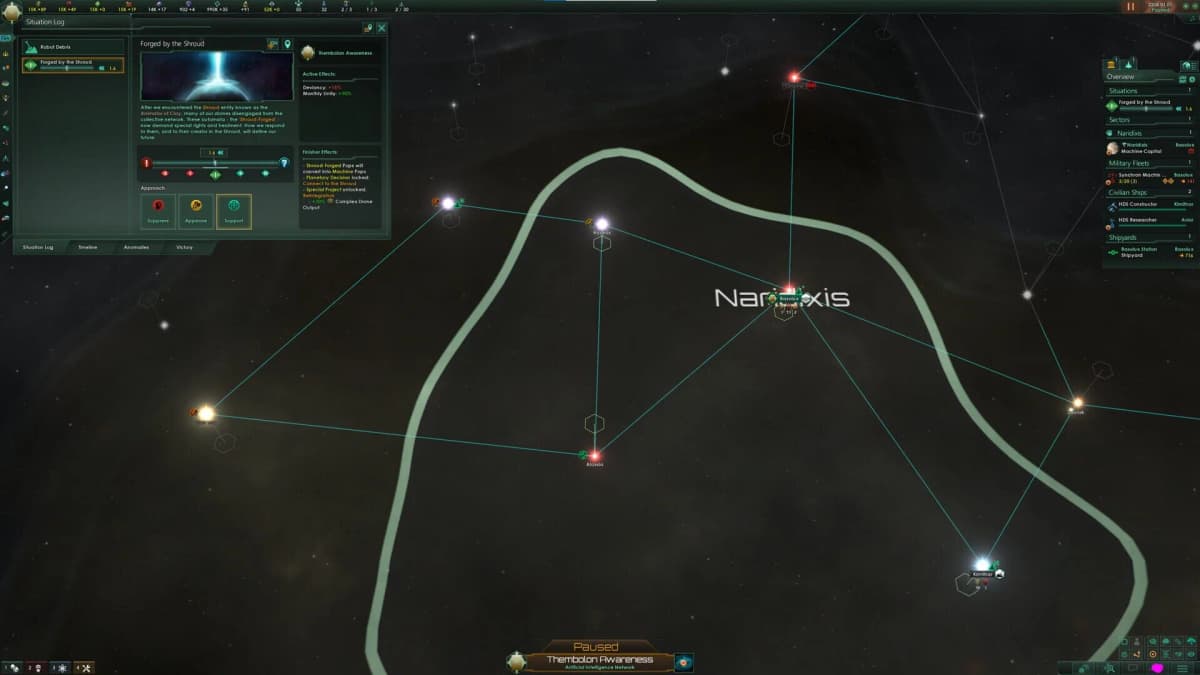
What makes the backlash sting is that players actually like the ideas in Shadows of the Shroud—factions and the spin on Psionic Ascension are getting praise. But content can’t shine if your monthly tick hitches every second and your co-op run desyncs after two hours. This isn’t a one-off; similar pain points cropped up around 4.0 and Biogenesis. That pattern suggests a deeper design headwind: each layer of complexity the game adds (economy, ships, pops, UI) multiplies the work the engine has to do late in a campaign.
Paradox’s talk of curbing “non-linear growth” is the right instinct. Rewarding planet design is great; runaway feedback loops that turbocharge mineral, alloy, and research output until armadas flood the map are not. Tuning the economy back to a baseline and encouraging fewer, more powerful hulls could preserve the power fantasy without wrecking performance. The risk is obvious: over-nerf and you suffocate strategies people love; under-nerf and you’re back to slideshow space wars.
Want to Level Up Your Gaming?
Get access to exclusive strategies, hidden tips, and pro-level insights that we don't share publicly.
Ultimate Gaming Strategy Guide + Weekly Pro Tips
The Gamer’s Perspective: Buy Now or Wait?
If you’ve already bought the DLC and you’re committed to a run, opt into the 4.1.5 beta and consider settings that tame scale: smaller galaxies, fewer AI empires, and an eye on midgame fleet caps. If you’re here for multiplayer, brace for desync whack-a-mole—Muray says they “actively fix desyncs with just about every version,” but new ones pop up. Filing bug reports genuinely helps; reproducible saves are gold for this kind of issue.
If you’re on the fence, the safe play is to wait. Paradox has set expectations that fixes will be incremental. I appreciate that transparency more than a rosy promise, but it means the best version of Shadows of the Shroud likely arrives over the next few patches, not this week.
Looking Ahead
Success here looks like fewer ships, saner economies, and a leaner modifier pipeline that keeps the late game responsive past 2300. If the team can land that without gutting the sandbox, Stellaris gets back to where it’s at its best: the ridiculous emergent stories that made so many of us put 500+ hours into it. But make no mistake—rewriting core systems while a live DLC cycle runs is risky. The smart move is measured changes, clear patch notes, and benchmarks that show real gains, not vibes.
TL;DR
Shadows of the Shroud isn’t sinking because of dull content; it’s drowning in late-game lag and instability. Paradox says performance is top priority and has pushed a 4.1.5 beta, but there’s no instant fix. If you hate stutter or play co-op, consider waiting while the team tackles modifiers, ship bloat, and economic runaway growth.