
Stop Killing Games deserves to win the moral argument. Paying for a game should not end with a publisher flipping a switch, erasing the thing players bought, built characters in, and formed communities around. That part is simple. The part that has become dangerously oversimplified is the proposed fix: “Just reverse engineer it.”
That phrase makes an enormous software-security job sound like a weekend mod project. It treats an always-online game as though the missing ingredient were one forgotten server executable sitting on a hard drive somewhere. For a modern live game, the server is usually the referee, the bank, the bouncer, the historian, and the rulebook all at once.
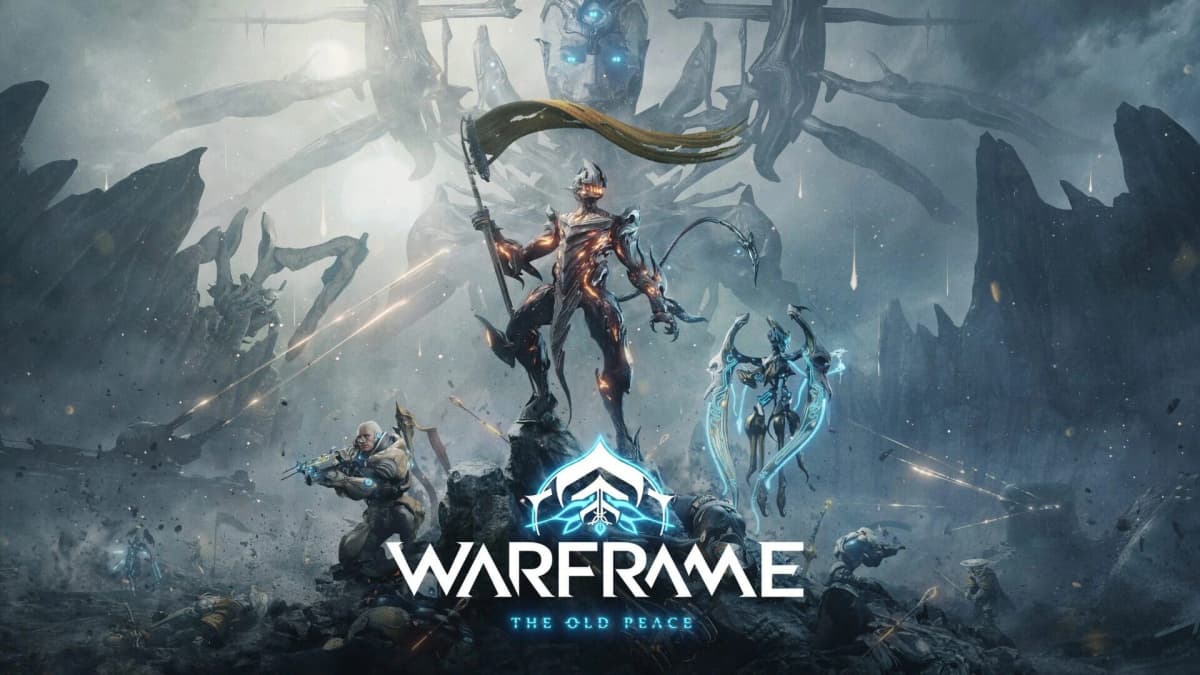
Warframe: The Old Peace is a useful reality check because Warframe remains a living example of what a mature online game actually contains. Digital Extremes has spent roughly 13 years piling quests, systems, locations, progression, player-made art, social features, and content updates onto that foundation. The game client players download is only the visible front door. Behind it sits a persistent ecosystem that has to recognize accounts, manage progression, validate player actions, deliver updates, and keep the whole thing from collapsing under abuse.
I am tired of publishers pretending this complexity gives them permission to destroy games. It does not. I am equally tired of preservation conversations pretending complexity disappears because the cause is righteous. Players need a serious demand: build end-of-life access into online games before they launch, fund it, document it, and make it legally possible. “Some volunteers will reverse engineer the whole service later” is a fantasy plan.
Table of Contents (6)
The moral case does not write the backend
The central Stop Killing Games principle is hard to argue with: customers deserve a usable product after support ends. A company can stop making new content. It can stop selling cosmetics. It can move its staff onto another project. Pulling the plug on every playable piece of a paid game is a far uglier decision.
But preservation goals and engineering deliverables are separate things. Saying “players deserve access” answers the question of obligation. It does not answer who rebuilds authentication, how old saves migrate, where the authoritative game state lives, which patch version remains supported, or how a legacy build survives the first wave of exploits.
That distinction matters because it changes where pressure belongs. The public should pressure publishers and platform holders while the systems still exist. They possess the source code, production documentation, server tooling, database schemas, build pipelines, deployment keys, and institutional knowledge. A volunteer group arriving after shutdown inherits compiled code, incomplete clues, and a legal minefield.
Those are wildly different starting points. Pretending otherwise lets the original owner offload its preservation responsibility onto strangers who are expected to reconstruct years of invisible engineering for free.
Warframe shows how much lives beyond the client
The Old Peace underlines the scale of a game like Warframe. A long-running online title carries years of content alongside persistent player accounts, inventories, progression, social systems, live updates, and interactions whose integrity depends on the backend. Even a stripped-down preservation version would require decisions about what remains authentic, what gets frozen, and what features must be retired for safety.
A player’s inventory is an easy example. In an online game, the client should not get to declare that it earned a rare item, completed a reward track, or doubled its currency. The server verifies the action, checks the account state, updates the database, and decides whether the result is valid. Move that trust to an unprotected local client, and the game suddenly has to live with save tampering, item duplication, manipulated movement, and spoofed messages.

That does not make offline preservation impossible. It means an offline mode is a new version of the game with different rules. A developer may choose to freeze progression, remove online economies, cut social features, disable cross-platform entitlements, or convert account-bound items into local data. Those can be sensible compromises. They are design and engineering work, with consequences for the experience players remember.
The same problem applies to community servers. The moment a public replacement server accepts outside connections, it needs to decide which client requests are legitimate. If it gets that judgment wrong, the result can be trivial duplication, speed manipulation, altered saves, packet spoofing, botting, and a community where honest players are asked to tolerate an economy built on exploits.
That is the bitter irony preservation advocates need to confront. Reverse engineering uses many of the same disciplines that cheat makers use: disassembly, dynamic debugging, memory inspection, protocol analysis, and runtime testing. A preservation team has the harder task. It must understand a hidden system well enough to recreate its behavior while closing every obvious hole the original service spent years learning to defend.
“Legacy servers” need actual operations, not a Discord announcement
People talk about legacy servers as though hosting begins and ends with renting a machine. A public online game needs far more than a box with an internet connection. It needs identity handling, session management, databases, APIs, account recovery, version compatibility, monitoring, moderation tools, logs, backups, deployment processes, and someone responsible when the service starts behaving badly.
It also needs a response when abuse arrives, because abuse always arrives. Public services attract bots, account fraud, automated farming, hostile traffic, exploit testing, and players who regard a discontinued game as an invitation to tear open every weak seam. An unsupported legacy service with no monitoring becomes a mess fast. Players who only want to run missions or preserve their builds are the ones who pay for that negligence.
Warframe is especially useful here because its 13-year lifespan reveals the danger of treating persistent games as a static artifact. The game has evolved through expansions, patches, systems, and content layers that depend on one another. A server emulator would have to decide what it supports, which client version it targets, how it handles old data, and what happens when a feature expects a service that no longer exists.
That is why developers connected to games such as Anthem and SpaceCraft have described reverse engineering an always-online title as a massive undertaking. They are describing the plumbing that fans rarely see until it disappears: the hidden services that turn a downloaded client into a functioning game.
| End-of-life approach | What players retain | What it requires |
|---|---|---|
| Official offline build | A self-contained version with local saves and a frozen content snapshot | Developer work to remove server dependencies, redesign progression rules, test saves, and support a secure local build |
| Licensed community server toolkit | Multiplayer access through approved fan-run servers | Server software or documented interfaces, legal permission, moderation tools, hosting, patch controls, and ongoing security work |
| Official legacy service | The closest match to the original online experience | Continued authentication, operations staff, infrastructure, abuse response, compatibility maintenance, and a funded retirement plan |
Each option has a cost. Each option is still better than making access vanish. The correct response to cost is planning, not surrender.
Physical media already proves ownership language is getting hollow
The preservation crisis reaches beyond games marketed as live services. Testing across thousands of physical releases has found that 27% required downloads for game-breaking fixes or missing core content. The figures climbed to 34% for tested PlayStation 5 discs and 50% for tested Xbox Series X discs.
That should embarrass an industry still happy to lean on the comforting image of a disc or cartridge sitting safely on a shelf. Physical media can be valuable, but plastic alone cannot preserve a game whose functional version relies on disappearing patches, centralized downloads, account checks, or remote services.
The gap between “I bought this” and “I can still use this” keeps widening. Stop Killing Games has forced that contradiction into the open. The campaign has done players a service by refusing to accept corporate expiration dates as a natural law of game ownership.
Legal permission determines whether preservation can become real
There is another part of the “just reverse engineer it” line that gets skipped: the people attempting the work may be taking legal risks while they do it. Bypassing technical protection measures, copying protected code, or intercepting network traffic can put a community project in dangerous territory. Even a team acting from pure preservation motives can find itself constrained by the rights holder’s code, network controls, and license terms.
This is why lawful pathways matter so much. A publisher that releases server binaries, technical documentation, protocol specifications, a limited community license, or an approved offline build gives preservation a foundation. A publisher that says nothing and leaves a dead client behind gives enthusiasts a locked room full of wires, traps, and missing blueprints.
I do not want preservation to depend on whether a handful of gifted reverse engineers can burn years of unpaid labor while hoping a legal threat never arrives. That is a romantic story right up until the maintainers burn out, the host bill rises, a serious exploit hits, or the project disappears because the people doing the work had jobs and lives.
Stop Killing Games needs demands that can survive contact with reality
The campaign should push for end-of-life plans at launch, with clear standards for how a game remains usable when official service ends. Developers should be required to identify whether a title will receive an offline mode, a self-hosting package, a licensed community-server route, or a funded legacy service period. Those promises should be visible before players buy in, not improvised during a shutdown announcement.
For games built around persistent economies and competitive multiplayer, a community-server option may be the honest answer. For story-driven games with online authentication stapled onto the experience, an offline patch should be the baseline expectation. For huge evolving services in the Warframe mold, the practical solution may involve a frozen build, carefully scoped self-hosting tools, and documentation that lets a community preserve a defined version without pretending it can reproduce every piece of the original live operation forever.
That approach is more demanding than shouting “give us the server files.” Good. It should be demanding. Publishers chose to sell games built around permanent infrastructure; they should bear the responsibility of making those games survivable after the business case for that infrastructure fades.
My verdict is blunt: Stop Killing Games is right about the obligation and wrongheaded whenever it treats reverse engineering as a universal escape hatch. Warframe: The Old Peace makes the real lesson impossible to ignore. A modern always-online game is a living stack of systems, trust relationships, and security decisions. Preserve it by forcing companies to plan for its ending while they still control the tools, the code, and the rights. Anything less leaves players with a dead icon in their library and a promise nobody bothered to build for.
FinalBoss // Gear
Level up your setup
01Top-rated gaming headsetson Amazon→02High-refresh gaming monitorson Amazon→03Gaming chairson Amazon→04Discounted game keyson Kinguin→
Affiliate links · As an Amazon Associate, FinalBoss earns from qualifying purchases.
Want to Level Up Your Gaming?
Get access to exclusive strategies, hidden tips, and pro-level insights that we don't share publicly.
Ultimate Gaming Strategy Guide + Weekly Pro Tips