
Table of Contents (16)
Why This Comparison Matters (And How I Finally Stopped Swapping Muzzles Every Raid)
After spending well over 60 hours in Arc Raiders swapping between Compensators and Muzzle Brakes on almost every gun I own, I finally sat down in the firing range and did proper testing. If you’ve been googling “arc raiders compensator vs muzzle brake – best attachment comparison” and still feel unsure, this is the breakdown I wish I’d had on day one.
The short version: Compensator II is the default meta pick in 2026 for most players and most weapons. But the Muzzle Brake still has a real niche, especially if you’re newer, on controller, or playing pure CQC builds. The rest of this guide shows you exactly when to use which, with real numbers and practical loadouts.
Compensator vs Muzzle Brake: What They Actually Change
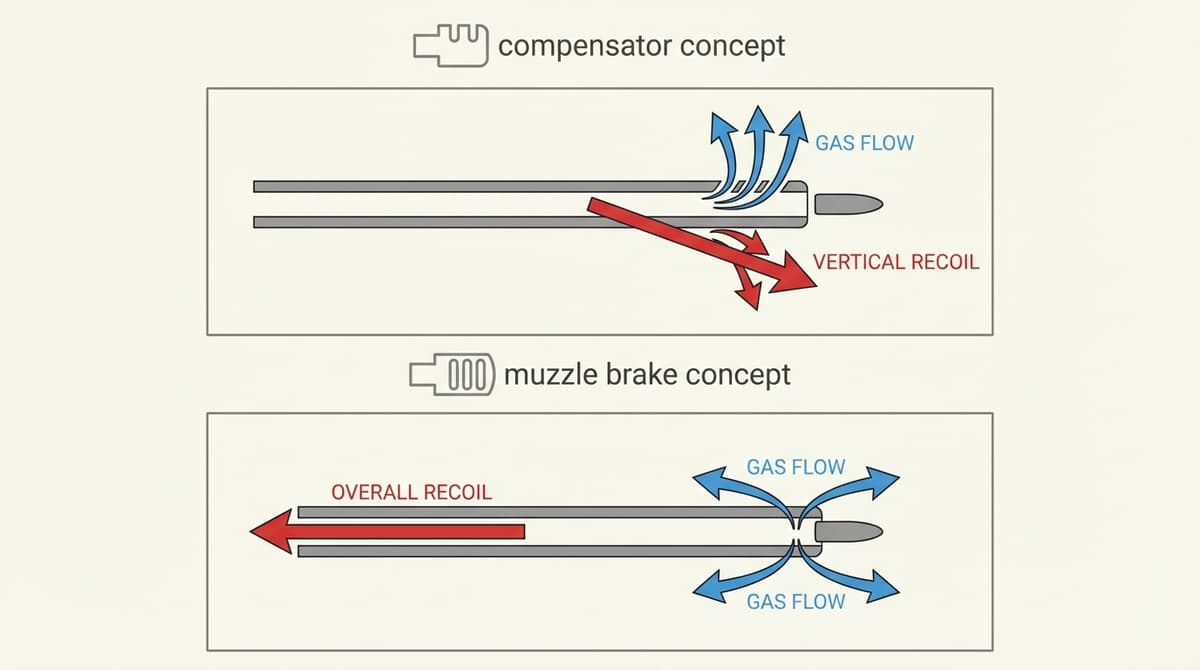
The biggest breakthrough for me was understanding that these two attachments affect different parts of the gun’s behavior:
- Compensator = controls dispersion (how wide your bullet cone gets, especially during sustained fire).
- Muzzle Brake = controls recoil (how much your sights jump each shot, vertically and horizontally).
Recoil is what you can fight by pulling your mouse or stick in the opposite direction. Dispersion is the random spread you cannot correct with aim; it’s the difference between “laser beam” and “I swear my crosshair was on him.”
Compensator – Tier Stats and Feel
Across my testing, the Compensator consistently did the same thing on every weapon: it tightened the cone and kept it tight deeper into a mag dump.
- Compensator I: ~20% reduced per-shot dispersion, ~10% reduced max-shot dispersion.
- Compensator II: ~40% per-shot, ~20% max-shot (the sweet spot).
- Compensator III: ~60% per-shot, ~30% max-shot, but about +20% durability burn on the weapon.
Per-shot dispersion is huge for semi-auto and controlled bursts; max-shot dispersion matters for full-auto guns like Stitcher, Bobcat, and Arpeggio when you hold the trigger down.
Muzzle Brake – Tier Stats and Feel
The Muzzle Brake, on the other hand, changes how “bouncy” the gun feels in your hands, without doing much about that invisible spread cone behind it.
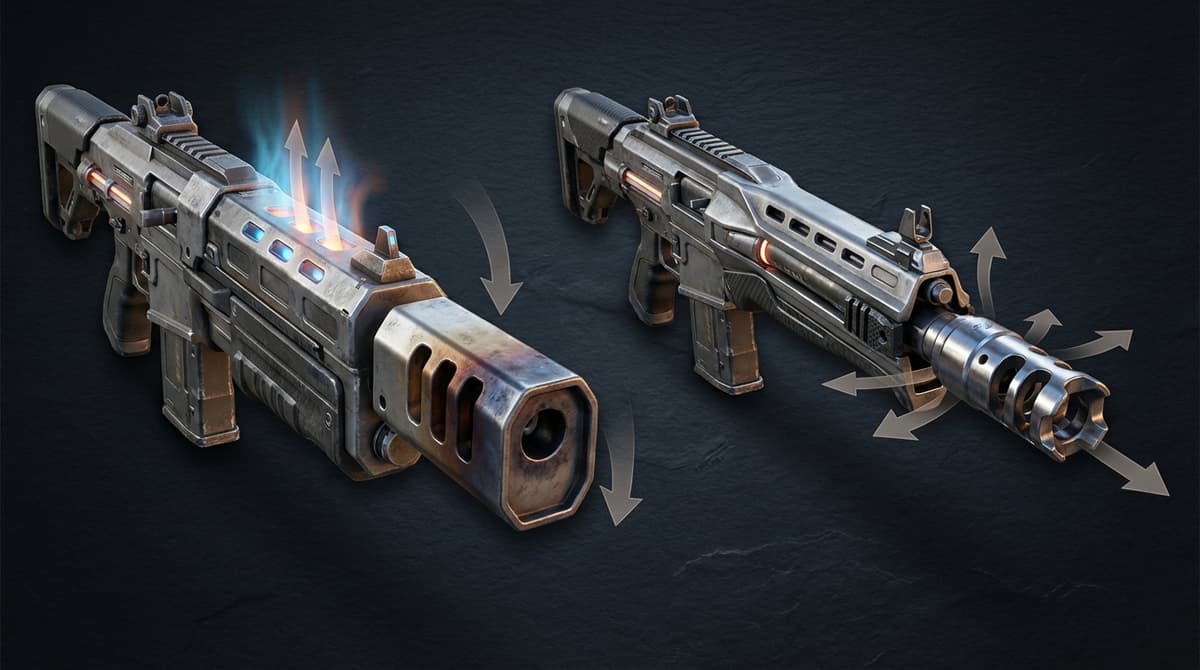
- Muzzle Brake I: ~15% less vertical recoil, ~15% less horizontal recoil.
- Muzzle Brake II: ~20% less vertical, ~20% less horizontal.
- Muzzle Brake III: ~25% less both ways, but again +20% durability burn.
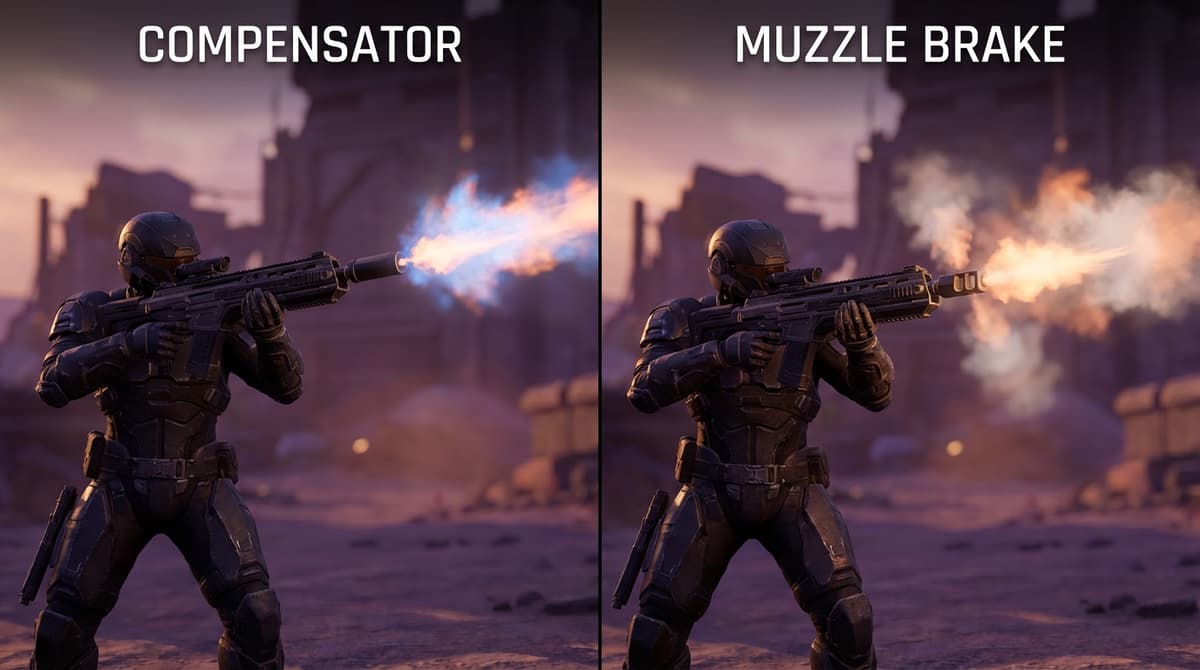
With a Brake equipped, the gun feels immediately easier to keep on target, especially in short bursts. But during long sprays, the spread still blooms out to the same ugly randomness unless something else is handling dispersion.
Firing Range Results: Numbers That Actually Changed My Mind
I did most of my testing on PC with mouse and keyboard, using the Stitcher at 15m and 30m in the firing range. Each setup was 10× full mag dumps into a torso-sized target, logging hits from the training overlay.
Stitcher – Compensator vs Muzzle Brake at 15m
- Compensator III: Average ~92% hit rate per mag. The pattern climbs mostly straight up in a tight column. Once I learned the pull-down, I could practically “staple” bullets to center mass.
- Muzzle Brake III: Average ~85% hit rate. First half of the mag felt amazing – very flat – but after ~25 shots the pattern started to wander left and right in a way I couldn’t predict.
Time-to-kill wise, during sustained fights the Compensator setups gave roughly 15–25% better effective DPS, because more bullets were actually landing. The Muzzle Brake only pulled ahead in very short CQC bursts where the fight was over before dispersion really kicked in.
What This Means in Real Raids
Out in actual raids, once I stopped swapping back and forth and just committed to Compensator builds on my full-auto primaries, I noticed:
- Mid-range duels (>25m) suddenly felt winnable even when enemies strafed.
- My mags lasted “longer” in the sense that I needed fewer bullets per kill.
- I died less to that classic “I opened perfectly and then my spray evaporated.”
Conversely, when I ran pure CQC builds in tight POIs with lots of corners, the Muzzle Brake builds felt snappier and easier to control for fast 6–10 round bursts at <10m. That’s the one place I still keep a Brake around.
When Compensator Is Just Better (Most of the Time)
If you’re comfortable doing a bit of manual recoil control, the Compensator wins in more scenarios than it loses. Here’s when I’d strongly recommend it based on my own runs:
- Weapons with high fire rate and noticeable spread growth:
- Stitcher – Compensator II turns this from a room-cleaner into a mid-range shredder.
- Bobcat – Becomes a reliable all-purpose rifle instead of a coin flip past 25m.
- Arpeggio – On LMG duty, the Compensator is the difference between “suppressing” and actually killing.
- Engagements beyond 20–25m where dispersion matters more than raw recoil.
- PC players with decent aim who are already used to pulling down to manage vertical climb.
- Sustained fights where you expect to hold the trigger for more than a quick burst.
With Compensator II on these guns, I typically see my sustained hit rate jump high enough that my effective TTK feels ~20% faster, even though the damage per bullet is unchanged.
When Muzzle Brake Still Makes Sense
I wasted a lot of time trying to force Muzzle Brake on everything just because the gun felt “nicer” to shoot. That was a trap. The Brake is situational, but it’s very good in those situations:
- New or casual players (under ~50 hours) who struggle to control recoil at all.
- Controller players where fine vertical control is harder, especially without high-end stick settings.
- Pure CQC builds that rarely shoot past 10–15m and rely on fast bursts:
- Burst AR builds without a grip yet.
- Early-game pistols and sidearms.
- Marksman rifles with annoying horizontal twitch.
- Guns with ugly horizontal recoil, where shaving 20–25% off horizontal kick makes ADS tracking much easier.
On console, several of my friends actually prefer Muzzle Brake II for their main rifle until they’re fully comfortable with the right-stick recoil compensation. Aim assist plus reduced kick is very forgiving up close.
Tier Choice and Durability: Why Tier II Is the Sweet Spot
Both Compensator III and Muzzle Brake III add roughly +20% durability burn to your weapon. I really felt this in long sessions: suddenly I was repairing way more often or risking my favorite guns breaking mid-run.
- Tier I: Cheap, but the benefit is small. Good for very early progression.
- Tier II: Massive performance jump over stock, no durability penalty. This is where most players should stop.
- Tier III: Best stats on paper, but the extra spread/recoil reduction rarely justifies the repair and resource costs unless you’re very endgame.
After burning through repair materials on several fully-kitted Compensator III LMGs, I settled on Compensator II and Muzzle Brake II as my go-to crafts. Tier II gives you ~80–90% of the benefit for a fraction of the long-term cost.
Sample Loadouts That Actually Work
1. Sustained Fire “Raid Sweeper” (Stitcher)
- Muzzle: Compensator II
- Underbarrel: Vertical Grip (extra vertical recoil control)
- Stock: Padded/Control stock (small dispersion + recoil buffs)
- Mag: Extended Mag
Equip it via Armory → Workbench → Stitcher → Muzzle. With this setup I can comfortably hold down the trigger at 30–35m and still keep most rounds on target. This is my default “I don’t know what the raid will throw at me” primary.
2. CQC Brawler (Bobcat or Similar AR)
- Muzzle: Muzzle Brake II
- Underbarrel: Angled Grip (for faster ADS and snappier handling)
- Optic: Low-magnification or holo sight
This build shines when you’re clearing tight interiors and choke points. You’re mostly taking 8–12 round bursts under 15m, where the lower recoil from the Brake lets you snap between targets and stay on head or upper chest with minimal practice.
3. LMG Anchor (Arpeggio)
- Muzzle: Compensator II (or III if you truly don’t care about durability)
- Underbarrel: Bipod / heavy grip
- Stock: Stability-focused stock
Here the Compensator is non-negotiable. Without it, long sprays turn into absolute chaos. With it, you can lock down lanes and shred advancing enemies without praying to RNG.
Common Mistakes I Made (So You Don’t Have To)
- Slapping Muzzle Brake on everything because it “felt” better. The gun will feel smooth but secretly miss more shots at range. If your bullets seem to vanish at 25m+, you probably need a Compensator, not more recoil reduction.
- Ignoring durability on Tier III. That +20% burn sneaks up on you. I had several runs cut short because my favorite rifle hit red mid-raid.
- Not pairing muzzles with grips/stocks. A Brake without a dispersion solution (or a Compensator without recoil help) leaves easy performance on the table.
- Never testing in the range. Spend 10 minutes before a session: go to the firing range, mag-dump at 15m and 30m with your current setup, and actually watch the pattern.
TL;DR: How to Choose in 10 Seconds
- If you mainly fight at mid-long range or use full-auto primaries → Run Compensator II almost by default.
- If you’re new, on controller, or play tight CQC maps → Use Muzzle Brake II until recoil feels comfortable.
- Avoid Tier III on both unless you’re rich in materials and don’t mind the repair tax.
- Always test your build in the range before committing it to raids.
Once I locked in this logic and stopped overthinking it, my loadouts got simpler, my guns felt more consistent, and my deaths from “random spray” pretty much vanished. If I can get comfortable with manual recoil and make Compensator my default, you can too.
FinalBoss // Gear
Level up your setup
01Top-rated gaming headsetson Amazon→02High-refresh gaming monitorson Amazon→03Gaming chairson Amazon→04Discounted game keyson Kinguin→Affiliate links · As an Amazon Associate, FinalBoss earns from qualifying purchases.
Want to Level Up Your Gaming?
Get access to exclusive strategies, hidden tips, and pro-level insights that we don't share publicly.
Ultimate Guide Strategy Guide + Weekly Pro Tips