
Stormgate was pitched as the big-budget RTS that might finally give StarCraft refugees a new competitive home. Now its online multiplayer is going dark at the end of April because a server startup got bought by an AI company and decided games weren’t worth the hassle.
Not because the client can’t run. Not because Frost Giant is sunsetting the game. Because the infrastructure middleman decided there’s more money in AI compute than in keeping a crowdfunded RTS online.
Table of Contents (8)
Key takeaways
- Stormgate’s online multiplayer is going offline at the end of April 2026 after server partner Hathora was acquired by AI firm Fireworks AI and is winding down game hosting.
- Frost Giant is rushing an offline patch so campaign, co-op content, and AI bot battles will still work without servers, but online multiplayer won’t be available.
- The shutdown exposes how fragile “live” games become when core systems depend on third-party startups instead of infrastructure the studio actually controls.
- With modest player counts and an RTS niche already under pressure, there’s no guarantee when – or if – Stormgate will get full online support back.
A crowdfunded “next StarCraft” kneecapped by a B2B pivot
Here’s the situation in plain terms. Frost Giant built Stormgate’s online backbone on Hathora, a multiplayer server orchestration provider. Earlier this year, Hathora was acquired by Fireworks AI, which is pivoting to selling AI compute orchestration instead of game hosting. As part of that pivot, Hathora is winding down its gaming services around the end of April (with some sources mentioning support trailing into early May).
Frost Giant relayed the news to players via its official Discord around March 31, explaining that Stormgate’s online multiplayer would stop working at the end of April 2026. Ranked, unranked, matchmaking, and any mode that needs their backend will be unavailable once Hathora shuts the tap off.
That would normally be the death sentence for a modern RTS. Frost Giant is at least trying to dodge that outcome by rushing an offline patch. The team says the update will let players access single-player, co-op content, and AI bot matches without needing Stormgate’s servers. In other words, the executable you bought will still play a game of RTS on your machine.
But there’s a clear line in the sand: the patch will not restore online multiplayer. Until Frost Giant finds a new partner and rebuilds that infrastructure, Stormgate as a competitive online RTS simply doesn’t exist.
That hits harder when you remember this isn’t some tiny experimental project. Stormgate raised over $3.5 million via crowdfunding on promises of a “social RTS” with long-term competitive support, and hit 1.0 in 2025 after a heavily marketed early access run. A year later, the online core is down not because the devs gave up, but because a vendor did.
This isn’t just bad luck – it’s an architectural gamble that didn’t pay off
The easy read is: “unlucky indie studio gets blindsided by corporate acquisition.” There’s truth there. Frost Giant isn’t the one pivoting to AI. They didn’t cancel their own infrastructure. A third party pulled the rug.
But the uncomfortable part the PR copy won’t highlight is this: outsourcing the spine of your game to a relatively small third-party startup is a calculated risk. It makes sense on paper — you avoid building your own matchmaking, scaling, and orchestration stack, you pay for what you use, and a specialist partner handles the messy bits.
The downside is what you’re seeing now. When that partner changes priorities, your game’s existence suddenly depends on how fast you can re-home a complicated live ops setup somewhere else. Every “as-a-service” dependency becomes another single point of failure between your players and the game they paid for.
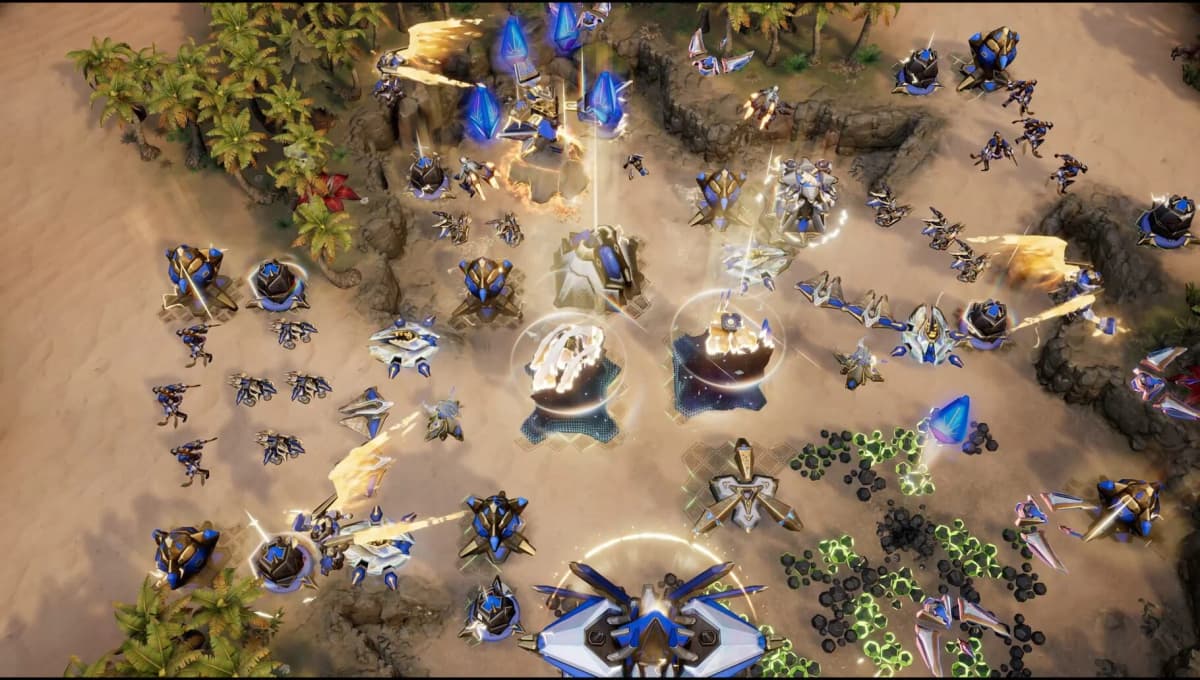
Big publishers mitigate this with redundancy, in-house tech, or long-term contracts with the Amazons and Azures of the world. Smaller studios like Frost Giant don’t have that leverage. They bet on specialists like Hathora to make serious online infrastructure affordable. The bill for that bet has just come due.
And it’s not just logins and match queues. Competitive RTS relies on solid netcode, synchronized game states, fair matchmaking, MMR tracking, replay storage, anti-cheat — most of it either runs or coordinates through that backend. You can’t just flip a switch and move it overnight. Migrating all of that safely, without data corruption or new exploits, is a non-trivial engineering project.
So when Frost Giant says online multiplayer is offline indefinitely until a new partner is in place, that’s not melodrama. That’s them being honest that rebuilding the plane mid-flight isn’t realistic with their team size and current player base.
AI’s gold rush just claimed a new kind of casualty
The other half of this story is Fireworks AI. From their perspective, this is a clean business move: buy a multiplayer orchestration platform with good distributed systems tech, repurpose it as an AI compute orchestrator, and focus on a hotter market. Games become “non-core,” so gaming clients get sunset timelines.
From a player’s perspective, it means this: an AI land grab somewhere in enterprise SaaS land just killed your online RTS ladder.
We’ve seen infrastructure pivots hit games before — cloud providers changing terms, networking middleware going under, licensing deals expiring — but the AI angle matters. Right now, every infra company is under pressure to “pivot to AI” to keep investors happy. That makes low-margin, spiky-load customers like mid-tier online games look expendable.
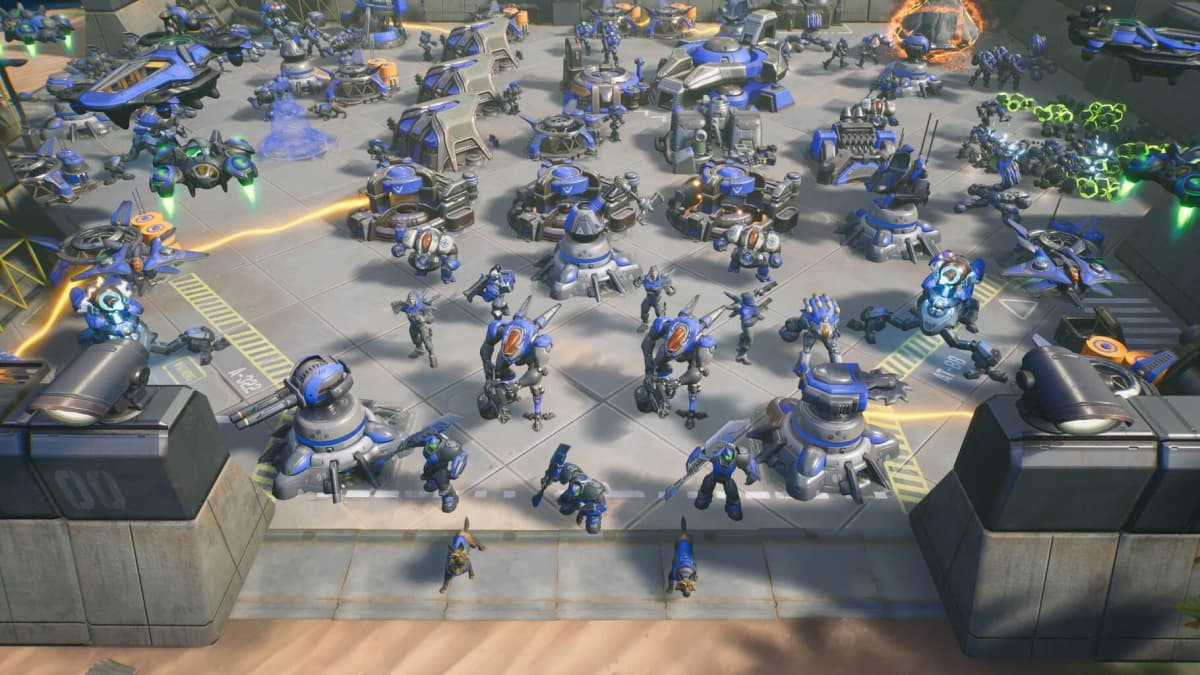
Stormgate is an RTS, not a battle royale with tens of millions of concurrent users. According to several reports, its player counts after 1.0 were modest and reviews mixed. That doesn’t mean the game was dead, but it does mean Frost Giant had less bargaining power and urgency in the eyes of a company suddenly chasing AI customers willing to burn cash on compute.
Put bluntly: if you’re Fireworks AI and you’re making a slide deck about “total addressable market,” keeping a few RTS ladders humming is never going to beat “foundational AI platform for the enterprise.” The incentives are misaligned from day one.
For players and smaller studios, that’s the real warning sign. As long as core parts of your game live inside companies trying to rebrand themselves as AI businesses, you’re one acquisition away from losing basic functionality, no matter how much you already shipped, promised, or crowdfunded.
What Stormgate players actually lose — and what the offline patch can really save
Let’s strip this down to what happens on your PC.
At the end of April 2026, Stormgate’s online modes — anything that requires Hathora’s backend — stop working. Expect the following to be affected:
- Online ranked and unranked PvP
- Online matchmaking for any mode
- Online co-op that relies on the central servers
- Account-based progression and ladders, at least in their current form
Frost Giant’s offline patch is meant to prevent the game from becoming fully unplayable. Based on the studio’s messaging so far, the patch should:
- Allow the single-player campaign to run without talking to remote servers
- Enable access to co-op content and scenarios, presumably against AI, locally
- Support skirmishes and bot battles without an online connection
That’s the bare minimum you’d hope for in any always-online RTS: that when the live service part dies, the executable still plays a complete RTS sandbox locally. Frost Giant deserves credit for moving quickly to make that happen instead of shrugging and calling it a day.
But it’s also a comedown from the original pitch. Stormgate was sold as a social, competitive RTS with long-term online support and modern matchmaking. The end-of-April cutoff leaves it, for now, as primarily a single-player and offline-co-op game with the competitive heart ripped out.
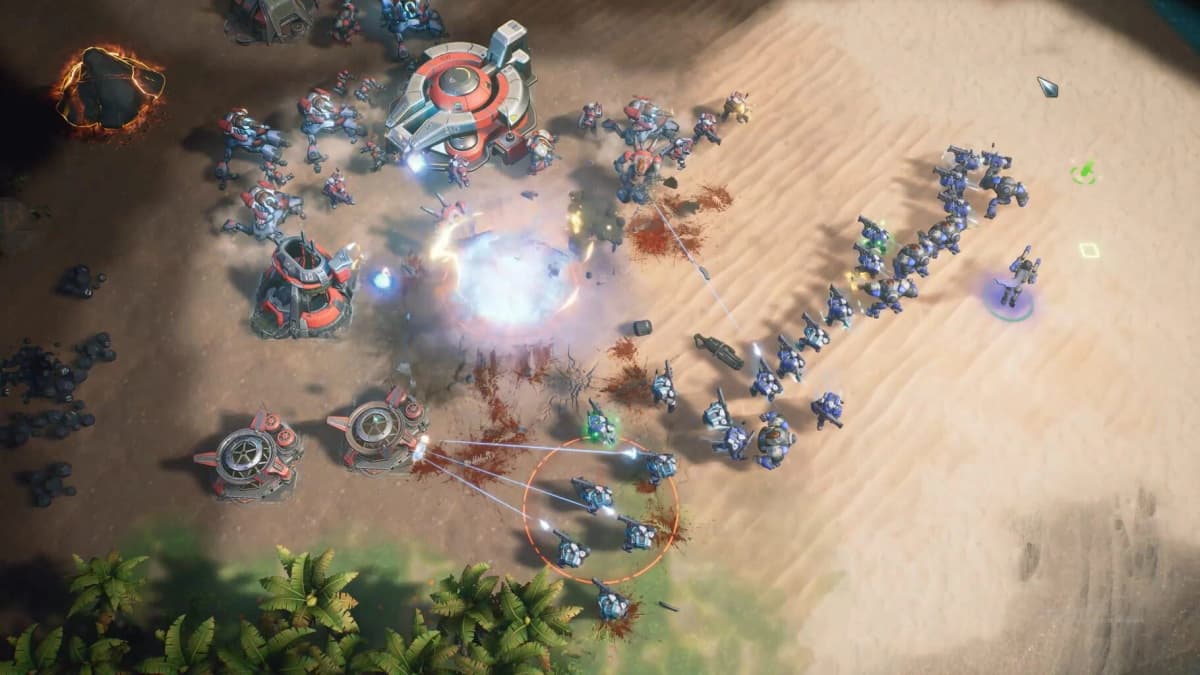
The awkward question hanging over all of this: even if Frost Giant finds a new host — alternatives like Nitrado and GameFabric are already being floated in coverage — will it be worth the engineering and migration effort if player numbers have already sagged? Crowdfunded or not, server bills and dev time don’t pay themselves, and RTS has always been a harsh genre for anyone not named Blizzard or Relic.
We’ve just seen other games, like Highguard, fail to clear investor retention thresholds even after strong launch numbers, with funding yanked weeks after release. In Stormgate’s case, the axe isn’t coming from retention charts, but the result for players — losing core online functionality far sooner than expected — feels uncomfortably similar.
The question Frost Giant needs to answer next
If I had one question to put to Frost Giant’s leadership, it wouldn’t be “when will servers be back?” They probably don’t know yet. It would be: what are you prepared to guarantee this time about Stormgate’s resilience, and how does your next infrastructure choice make that realistic?
Because that’s the trust gap they now have to bridge with their community and backers. This isn’t a balance patch that went sideways, or a content roadmap slipping a quarter. It’s the fundamental promise that the game’s defining feature — structured online competition — could be relied on for more than a year after 1.0.
Whatever partner they pick next, players are going to want specifics: contract length, migration plan, contingency if that provider folds or pivots, and how much of Stormgate’s core logic they can bring in-house so that a third-party exit can never again take the whole multiplayer stack with it.
Offline patches are good damage control. But the real fix is designing your online game so that when someone in another industry decides AI is the new gold rush, your ladder doesn’t evaporate as collateral damage.
What to watch next
- Exact shutdown timing: Frost Giant has framed the cutoff as end of April; Hathora has mentioned support into early May. When multiplayer actually stops working — and how clearly that’s communicated in-game — will show how coordinated this transition really is.
- Offline patch release details: The key test is whether the offline update lands before or at the very moment online dies, and how much of Stormgate’s content it truly preserves.
- New server partner announcement: Any deal with providers like Nitrado, GameFabric, or a major cloud platform — plus a rough timeline for restoring online modes — will tell us how serious Frost Giant is about keeping Stormgate competitive.
- Communication with backers and competitive players: Stormgate was crowdfunded and pitched hard to RTS diehards; how Frost Giant addresses those expectations will be a litmus test for trust going forward.
TL;DR
Stormgate’s online multiplayer is going offline at the end of April 2026 after its server partner Hathora was bought by Fireworks AI and is shutting down game-hosting services. Frost Giant is developing an offline patch so the campaign, co-op content, and bot battles will still work, but ranked and other online modes won’t return until a new infrastructure partner is found. Beyond this one game, it’s a sharp reminder of how fragile “live” titles become when their core systems sit inside startups that can be wiped out — or repurposed — by the next AI pivot.
FinalBoss // Gear
Level up your setup
01Top-rated gaming headsetson Amazon→02High-refresh gaming monitorson Amazon→03Gaming chairson Amazon→04Discounted game keyson Kinguin→Affiliate links · As an Amazon Associate, FinalBoss earns from qualifying purchases.
Want to Level Up Your Gaming?
Get access to exclusive strategies, hidden tips, and pro-level insights that we don't share publicly.
Ultimate Gaming Strategy Guide + Weekly Pro Tips