
Table of Contents (12)
A final-round scramble that told me everything about Street Fighter 6
The round shouldn’t have gone that way.
I was on my last sliver of health, Drive gauge bone-dry, cornered by a Juri who’d been bullying me for two games straight. She’d already conditioned me with Drive Impact in the corner, and my brain was screaming, “She’s going to do it again, just jump, idiot.”
Instead, something very Street Fighter 6 happened: I buffered Drive Parry, she flinched, I reacted with a desperation Drive Rush combo I’d labbed the night before, and the screen exploded into that neon ink-splash slow-mo as my Level 3 super closed it out. The commentary yelled about a “comeback for the highlight reel,” my hands were shaking, and for the first time in a long time, ranked in a fighting game felt fun instead of stressful.
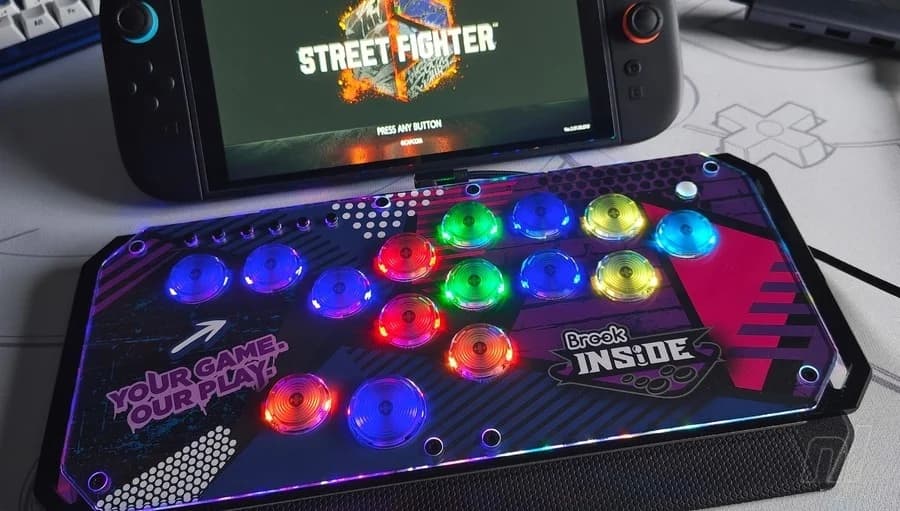
That little sequence sums up why Street Fighter 6 works so well. It’s chaotic, but not random. Flashy as hell, but underneath the paint and hip-hop swagger, it’s still about the same footsies and reads that made Street Fighter II arcade cabs feel like battlegrounds. It just gives you more tools, more safety nets, and more ways to express yourself-whether you’re on a stock pad or a fancy leverless controller like Brook’s Fighter Starburst.
First contact: style, swagger, and a surprisingly gentle onboarding
My very first boot of Street Fighter 6 wasn’t even a match. It was the menu theme thumping away, those thick paint-splash visuals filling the screen, and this subtle feeling that Capcom finally understood what “street” in Street Fighter should look like in 2020-something.
Character select is a vibe. The new cast members like Kimberly, Jamie, Manon, and Marisa don’t feel like afterthoughts hanging awkwardly next to Ryu and Chun-Li; they look like they belong on the same posters. The RE Engine’s chunky models and heavily stylised lighting give everyone this larger-than-life silhouette, which is important because when the screen turns into a fireworks show during Drive Rush and supers, you still need to see what’s going on.
But the thing that really surprised me was how quickly the game tried to calm me down instead of overwhelm me. Before my first ranked match, I’d already run into:
- Clear control presets: Classic, Modern, and Dynamic
- On-screen explanations of what the Drive system actually does
- Training trials that don’t feel like homework
- Optional real-time commentary that makes even casual sets feel like EVO pools
I started out on a pad with Classic controls out of pure stubborn pride. A few nights later I swapped to Modern on some characters, then spent a week playing on a compact leverless controller. Street Fighter 6 never fought me for any of that-its input leniency and clean visual language make it one of the easiest modern fighters to experiment in, without dumbing down the skill ceiling.
The fight itself: Drive system, honest footsies, and calculated chaos
The core of Street Fighter 6 is the Drive system: a shared, neon-green resource that powers most of the fun stuff-Drive Impact, Drive Rush, Drive Parry, and Overdrive specials.
On paper, Drive Impact looks like a scrub button. One input, armour through a hit or two, wall splat in the corner, enjoy your combo. In practice, once you and your opponents understand it, DI becomes a mini-psychology game. Are they terrified and quick-rising every knockdown? DI their wake-up. Are they fishing for one in neutral? Empty jump, throw, or DI them right back.
I spent the first 10 hours eating Drive Impacts on wake-up like it was my job. Around hour 15, I started punishing them on reaction half the time. Around hour 30, I was baiting them, and that arc from “this feels cheap” to “this is a dangerous but necessary tool” is the hallmark of a well-designed mechanic.
Drive Rush is where the real depth lives. Cancel a normal into Drive Rush and suddenly your character’s pressure and combo routes open up. With Marisa, it lets her bulldoze her way into plus frames; with Manon, it turns simple pokes into command grab terror. The fact that all of this is tied to one visible bar you both share keeps the game honest. Spend too greedily and you enter Burnout—no parry, no Drive tools, you even take chip damage.
That Burnout state creates some of the tensest moments I’ve ever felt in Street Fighter. One match as Luke, I greedily burned my meter on a flashy combo, wiffed the ender, and spent the next 15 seconds trying to survive in the corner against a J.P. player who suddenly had all the screen control in the world. I still lost, but it was the good kind of loss—“I did this to myself, and next time I’ll manage my Drive better.”
Underneath all the new toys, though, Street Fighter 6’s neutral still feels like Street Fighter. Walk speed matters. Whiff punishing matters. Spacing your buttons matters. The game doesn’t throw out its legacy; it wraps it in paint and gives everyone a boost button with consequences.
Three pillars: World Tour, Battle Hub, and Fighting Ground
Capcom essentially built three different games into Street Fighter 6, and whether that’s worth your time depends on what kind of player you are.
World Tour – janky, weird, and secretly brilliant training
World Tour is the single-player “RPG” mode where you create your own cursed little avatar and run around Metro City and beyond. The writing is goofy, the NPCs range from charming to extremely PS3-era, and the story definitely overstays its welcome—but as a teaching tool, it’s kind of genius.
Instead of a dry tutorial, World Tour asks you to learn from masters—literally. You train under Ryu, Chun-Li, Jamie, Kimberly, and the rest, unlocking their special moves and super arts for your avatar. The moment it clicked for me was when I mashed together Chun’s Kikoken zoning with Marisa’s armored charge. It looked ridiculous, but it forced me to think about what each move is for: space control, punishing jumps, blowing through projectiles.
I lost track of how many random fights I got into just walking down a street. Office workers, people in mascot suits, old dudes with briefcases—everyone wants to throw hands. These battles are short, snappy versions of the real fights, perfect for drilling muscle memory between online sets.
Is World Tour polished? Not really. The camera can spaz out in tight spaces, some side missions feel like padding, and the level-gated gear system is more clutter than compelling. But if you’re new or returning after a long break, it’s a far less intimidating way to absorb the basics than jumping straight into ranked and getting farmed by people who’ve been grinding since the beta.
Battle Hub – the closest thing to a real arcade we’ve had in years
Battle Hub is Street Fighter 6’s online social space, and it leans hard into that arcade fantasy. You walk your avatar around, sit down at virtual cabinets, and challenge people simply by plopping into the seat across from them. There are giant screens showing spectator matches, special events, and goofy Extreme Battles with gimmicks like a raging bull charging through mid-fight.
What impressed me most wasn’t the gimmicks, though—it was the netcode. Capcom’s rollback feels solid. I’ve played sets against people on different continents and, while you can tell you’re not on LAN, the game feels entirely playable. Inputs come out when you expect them to, anti-airs still work, and dropped combos usually feel like your fault, not the connection’s.
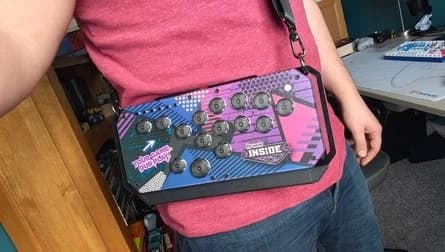
The crossplay helps, too. Being able to queue into matches whether I’m on PS5, PC, Xbox Series X|S, or Nintendo’s hardware is a massive shift from the fragmented player bases of past games. On Switch 2, being able to join the same Battle Hub lobbies and grind a few matches from the couch or on the go made the whole “arcade in your pocket” fantasy suddenly feel real—especially paired with a small leverless board that actually fits in a backpack.
Fighting Ground – the lab, the couch, and everything in between
Fighting Ground is where the traditional stuff lives: arcade ladders, versus, training, tutorials, character guides, and trials.
As someone who loses too many hours in training mode, SF6’s tools hit the sweet spot. You get frame data, hitbox displays, input history, and the ability to record and replay specific situations. Learning to punish Luke’s Sand Blast or reacting to Drive Impact gets way easier when you can script the dummy to mirror your nightmares.
The character guides are surprisingly digestible, too. They don’t just say “Ryu is a balanced fighter with good projectiles” and call it a day—they actually walk you through the gameplan: what ranges to play at, which normals control space, how your specials fit into pressure. If you’re the kind of player who usually bounces off fighting games because they never explain themselves, this is the best on-ramp Capcom’s ever built.
Controls, accessibility, and how leverless changed my game
Street Fighter 6 is the first mainline entry that feels built from the ground up for different input philosophies.
Classic is what it sounds like: full motion inputs, six-button layout, business as usual. If you’ve spent years grinding quarter-circles and DP motions, you’ll feel right at home.
Modern trims that down. Specials are on a single direction + button, supers live on shortcuts, and some normals are context-sensitive. You lose access to a few specific normals and damage is slightly scaled, but in exchange you get consistency and way lower execution tax.
I was skeptical at first. After a while, I realised Modern doesn’t “cheat” for you; it just shifts where the skill expression lives. With Modern Marisa, for example, I could focus more on spacing and mental stack, less on messing up crucial charge inputs. Running into high-ranked Modern Juri and Modern Dee Jay players online made it clear: if you lose, it’s not because the other person pressed an easy button, it’s because they outplayed you.
Then there’s Dynamic, which is basically party mode—great for showing the game to absolute beginners or for Switch 2’s more chaotic living-room sessions, especially with the new Joy-Con-based party modes like Gyro Battle and Calorie Contest. You won’t use it competitively, but it has its place.
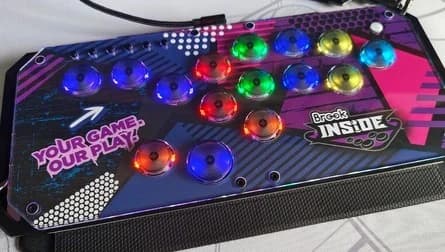
On the hardware side, Street Fighter 6 plays nicely with pretty much anything: pads, arcade sticks, and leverless boards. When I swapped from pad to a compact, Brook-style leverless controller, the difference in precision on anti-airs and instant backdash timings was dramatic. SF6’s clean input buffer and generous shortcut system meant I didn’t have to fight accidental overlapping directions, and proper SOCD cleaning on the hardware side kept it tournament-legal.
If you’ve been curious about going leverless—especially with all these portable, hot-swappable boards that work across PS5, Xbox, PC, and Switch 2—Street Fighter 6 is one of the easiest games to make that jump in. The game’s design doesn’t assume you’re on a stick; it just cares that you can consistently hit your confirms.
Roster and character identity: no dead weight
Street Fighter 6 launched with one of the strongest base rosters the series has had in years, and post-launch fighters only deepen it.
The returning legends feel updated without being unrecognisable. Ryu is back to his fundamentals-focused play, but his Denjin mechanics and new specials keep him from feeling stale. Chun-Li has more stances and technical routes than ever, rewarding lab time. Guile is still Guile—annoying, solid, terrifying if you let him set up shop.
The newcomers are the real highlight:
- Luke as the “new face” of Street Fighter actually works; his kit is honest, with strong buttons and simple confirms.
- Jamie is a style monster, building drink levels to unlock new moves and pressure options.
- Kimberly feels like a love letter to fast, setplay-heavy characters without being incomprehensible.
- Marisa is perfect if you just want to hit like a truck and scare people with plus frames.
- Manon turns every successful grab into a mini snowball with her medal system.
- J.P. fills the “tricky zoner” slot, forcing you to learn matchup knowledge or be slowly dismantled.
What matters is that there’s no obvious filler. Everyone has a clear gameplan, a distinctive visual identity, and a different way of interacting with the Drive system. Whether you like rushdown, zoning, grapplers, or weird stance characters, there’s someone here who will click.
With the “Years 1–2 Fighter Edition” bundling in the post-launch roster for the Switch 2 release, newcomers jumping in late aren’t left shopping for individual characters. From a pure value perspective, it’s a hefty package.
Visuals, sound, and performance across platforms
SF6’s art direction does a smart thing: it chases style over hyper-realism. The thick outlines, ink splashes, and colour-coded effects make it both beautiful and readable. A Drive Impact is that unmistakable orange-red shockwave; Drive Rush is a teal smear; supers bathe the screen in fireworks but always keep the opponent’s position visible.
On higher-end machines like PS5, Xbox Series X, and PC, that style shines. Stages are dense with detail, character models look almost sculpted, and 60fps is the norm in matches. On more modest hardware, including Nintendo’s latest, you’re obviously not getting the same pixel-perfect image quality, but the underlying style holds up. The most important thing—responsiveness during matches—stays intact.
Sound-wise, the game leans into bass-heavy, modern tracks with a lot of personality. Not every character theme is a banger, but enough of them are that I found myself humming Juri’s and Kimberly’s themes days later. Impact sounds have the right crunch; Drive Impact in particular hits like someone slamming a dumpster against a wall.
The optional real-time commentary is the cherry on top. Throw on Tasty Steve or Vicious and even your scrubby Gold-rank matches feel like Twitch highlight reels. I didn’t keep it on all the time—it can get repetitive—but as a way to hype up casual sessions or Switch 2 party modes, it’s brilliant.
Online experience and long-term grind
Ranked in Street Fighter 6 is the first I’ve stuck with since the Street Fighter IV days.
The game separates character ranks, which is a godsend. You can be a high-rank main and still experiment with a new character without immediately being thrown to wolves who’ve been maining that character since launch. The placement system feels decently accurate, and most of my climbs felt like steady progress rather than huge walls.
Being able to queue for ranked or casual matches while labbing or chilling in World Tour helps massively with downtime. I’d record a specific J.P. setup that had been giving me nightmares, queue for ranked, and then immediately test my answers in a live match. That feedback loop—lab, fight, lab, fight—feels baked into the game’s bones.
On the Switch 2 side, the extra local modes like Local Wireless One-on-One and Avatar Matches add a different flavour. Taking a setup to a friend’s place, syncing a couple of consoles, and running a mini-tournament with our cursed World Tour avatars felt closer to those old living-room gatherings than anything Street Fighter has done in a while. It’s not the “serious” way to play, but it gave the game a second life as a party staple.
Who Street Fighter 6 is actually for
After a few dozen hours across different platforms and controller setups, here’s how I’d break it down.
- New players to fighting games: This is the best entry point the genre has right now. Modern controls, World Tour, and strong tutorials give you tools instead of just feeding you to sharks.
- Lapsed Street Fighter fans: If V or even IV left you cold, VI feels closer to the footsie-heavy, “honest” Street Fighter roots, but with more expressive systems layered on top.
- Hardcore grinders: There’s enough depth in Drive management, matchup knowledge, and character-specific tech to last years. The netcode actually lets you practice against real opponents without screaming at your router.
- Party and couch players (especially on Switch 2): Dynamic controls, Extreme Battles, and the new Joy-Con-based party modes make it really easy to rope in people who don’t usually touch fighters.
- Cross-platform nomads with fancy controllers: If you bounce between PS5, Xbox, PC, and a portable setup with something like Brook’s compact leverless boards, SF6’s broad support and robust input system make it a great “always-bring” game.
FinalBoss // Gear
Level up your setup
01Top-rated gaming headsetson Amazon→02High-refresh gaming monitorson Amazon→03Gaming chairson Amazon→04Discounted game keyson Kinguin→Affiliate links · As an Amazon Associate, FinalBoss earns from qualifying purchases.
Want to Level Up Your Gaming?
Get access to exclusive strategies, hidden tips, and pro-level insights that we don't share publicly.
Ultimate Reviews Strategy Guide + Weekly Pro Tips