
There’s a certain kind of stealth game that pretty much vanished over the last decade. Not the “stealth is one button on your way to a big swordfight” kind, but the anxious, elbows-on-desk stuff where getting spotted is a disaster, not a suggestion. Styx: Blades of Greed slips right into that vacant space – then quietly locks the door behind you.
Table of Contents (8)
A goblin-sized answer to modern stealth bloat
Blades of Greed is the third Styx game and a direct follow-up to 2017’s Shards of Darkness. Styx himself is still the same foul-mouthed, quartz-addicted goblin assassin, but the structure around him has changed in a big way. Instead of a string of self-contained missions, the game revolves around three sprawling hubs – The Wall, Turquoise Dawn, and Akenash – that you revisit again and again as you unlock new traversal tools.
This isn’t “open world” in the bloated, icon-choked sense. It’s more like someone took a classic Metroidvania map, stretched it upward, and filled every balcony, gutter and vent with guards and nasty ways to die. Each hub is a tightly wound knot of shortcuts and secret routes. The loop is simple on paper: sneak in, nab quartz shards, unlock new skills, repeat. In practice, that loop is dangerously moreish – the “just one more shard” kind of design that keeps you prowling long after you meant to log off.
Quartz is the big obsession here, both narratively and mechanically. The human Inquisition uses it as a magical energy source to fuel their empire; Styx wants it because absorbing quartz mutates into new powers. It’s a neat convergence of story and systems: Styx’s greed is your progression bar, and every shard you drag out of a fortress expands the way you move and sneak.
The three playgrounds: The Wall, Turquoise Dawn, Akenash
The Wall is the game’s thesis statement. Imagine a medieval megastructure that’s half fortress, half slum, built straight up into the clouds and then retrofitted another dozen times. It’s filthy, noisy, packed with cramped staircases, dangling walkways, and blind corners. This is where you really feel the vertical design click; routes stack on top of each other like a Jenga tower made of murder opportunities.
Turquoise Dawn pushes in the opposite direction: an overgrown, alien-feeling forest-city where orc architecture and human colonial outposts collide. Here, you’re just as likely to die from misjudging a vine-laden leap as from a patrol spotting your ears in the grass. It’s visually distinct from The Wall, and the layouts lean more into winding, organic paths and environmental hazards that can be turned to your advantage.
Then there’s Akenash, the returning star from the first game, but twisted. The whole place feels like the aftermath of a magical catastrophe: floating fragments of the old tower, corrupted wildlife, Dark Elves sniffing around for relics. It’s one of those sequel tricks that only games can pull off – revisiting a familiar location years later and seeing what time (and disaster) did to it. What used to be straightforward courtyards and corridors now become broken platforms, impossible drops, and lateral routes you could only have dreamed of before the new traversal powers exist.
Across all three hubs, the design is remarkably consistent about one thing: almost every route has another route, and almost every “solution” has a quieter, cleverer version hiding behind extra risk. It’s that feeling of “I bet there’s a ledge up there I can reach if I chain these moves just right” – and more often than not, there is.
Traversal is the real headliner
Plenty of stealth games give you tools to avoid direct paths – vents, grapples, ziplines – but Blades of Greed leans into traversal in a much more deliberate, Metroidvania way. New quartz powers unlock things like air-dashing between anchor points, surfing up gusts of wind, or gliding across chasms that used to be hard stops. A lot of them are riffs on familiar ideas – there are shades of Batman’s grapple, Dishonored’s blink, and Zelda-style gliding here – but the way they’re layered onto these dense, multi-level maps makes them feel surprisingly fresh.
In the early hours, you’re skittering underneath tables, squeezing through drains and hugging low shadows, grateful for any safe nook. Later, the same spaces become launchpads. A balcony you could barely reach before becomes a pit stop in a wild parkour line that skirts an entire patrol route. Secret platforms and loose geometry start to look less like decoration and more like invitations. When the flow works, it’s incredibly satisfying – a high-speed, low-noise rhythm where you’re constantly a couple of bad jumps away from being smear-tested on the cobblestones far below.
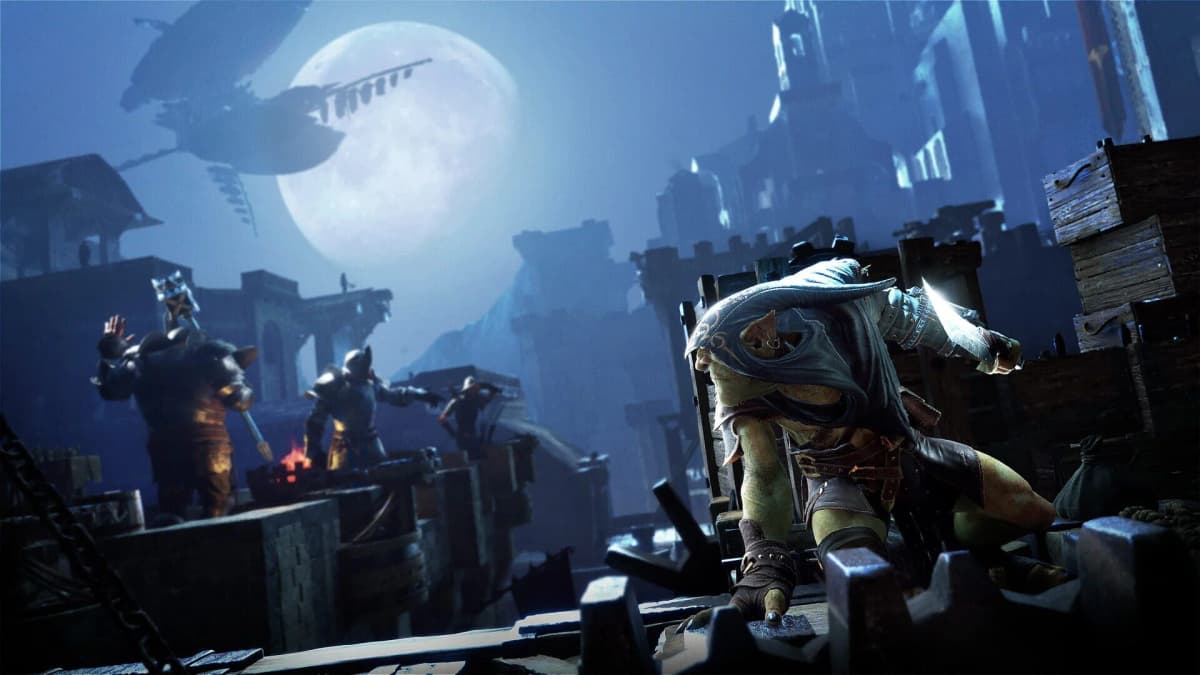
It’s not flawless. Movement can feel overly twitchy, and Styx has a habit of magnetising to the wrong ledge at exactly the wrong time. There are moments where the game clearly wants you to trust a leap, only for the grab detection to feel half a step off. When a 40-second climb ends in a whiffed mantle and a ragdoll plummet, it stings. The checkpoints are usually fair, but those slips are the one part of the traversal fantasy that occasionally snaps you back to “oh right, this is finicky game logic, not goblin Spider-Man.”
Stealth that actually commits to being stealth
Modern “stealth” games tend to hand you a silenced pistol, a few bushes to crouch in, and then shrug when you inevitably spin-kick half the base into a wall. Blades of Greed couldn’t be less interested in that approach. Styx is fragile. Getting seen is bad; getting cornered is fatal. There is a very simple message in how quickly guards will end you if you try to scrap your way out of a mistake: you were supposed to be smarter than this.
That uncompromising attitude is what makes the game feel like a genuine stealth experience rather than an action game with “eye” icons. Patrol patterns matter. Light sources matter. Elevation matters. You spend a lot of time simply watching: counting steps, testing the timing on doors, abusing noisy floorboards and sightlines. When a plan works – slip through a window just as a guard turns, pop out of a drain to yank someone into the dark, then vanish straight up a chimney of ledges before the alarm reaches your floor – it feels hard-earned rather than scripted.
The toolkit you build through quartz and amber opens things up even further. Clones that can pull levers or act as decoys, mind control that lets you puppet a heavy guard into walking off a tower, traps that turn the environment against your enemies – all of it feeds into that delightful “I have absolutely cheated the system” rush. The key, though, is that these tricks are not infinite. Amber, gadgets, and crafting components are scarce enough that you can’t just spam magic solutions through every single problem.
That scarcity is where Blades of Greed quietly outclasses a lot of bigger-budget games. You’re constantly weighing up whether to burn a precious resource or rely on fundamentals – the basic skills of just staying low, patient, and attentive. Some of the most tense, memorable sections arrive when you’re dry on amber and tools and forced to ghost a room the old-fashioned way. When everything clicks, it recalls the best of old-school Thief: fragile, improvisational, and utterly unforgiving of arrogance.
Metroidvania structure, backtracking, and that “one more shard” pull
Because the three hubs are built like giant, layered puzzles, progression is less about walking toward a marker and more about understanding the space. You’ll spot doors or ledges way above your pay grade in the early game, mentally bookmark them, then swing back hours later with a new traversal trick and feel almost smug about finally cracking them. The designers lean into this with tightly rationed fast travel and shortcuts that turn awkward routes into surprisingly elegant loops once you’ve done the hard work of mapping them out.
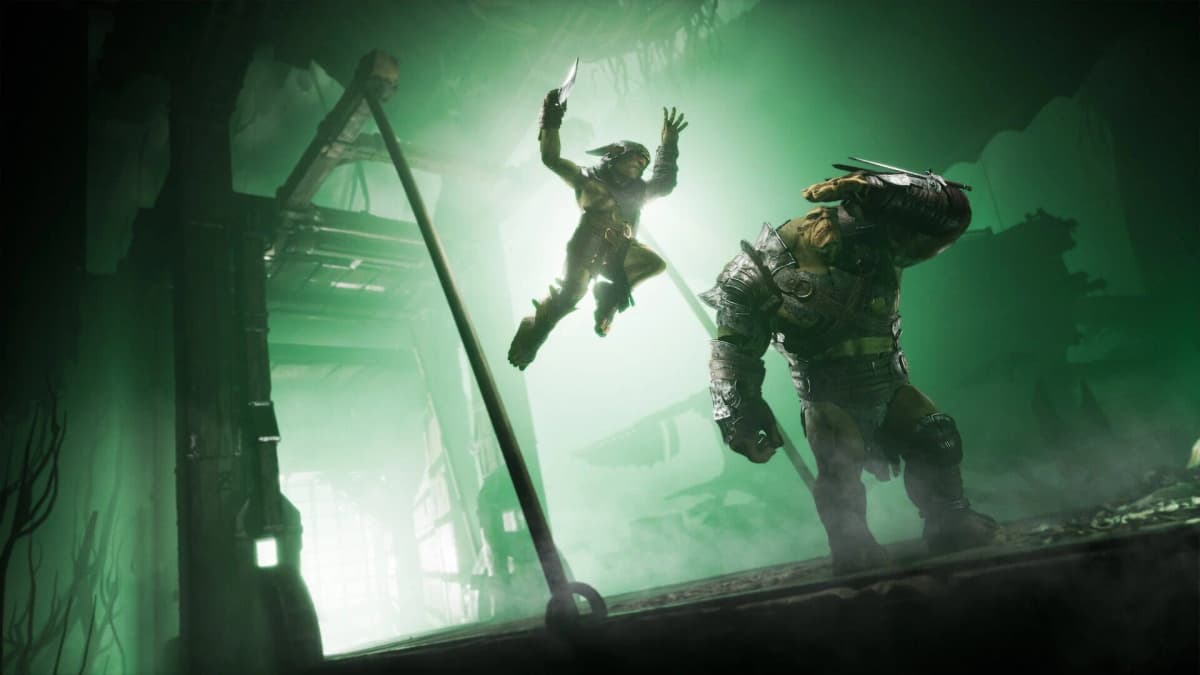
On the flip side, the structure does mean you’ll tread through certain choke points a lot. A few routes start to blur together after your fifth or sixth run in and out of a particular district. There are times when the game asks you to backtrack through familiar ground with only a slightly different objective, and in those moments the “Metroidvania stealth epic” thing edges toward “hub-and-spoke chores.” The level design mostly holds up under that repetition, but players who hate revisiting spaces on principle will feel the strain earlier than others.
To its credit, Blades of Greed gives you a fair amount of freedom about which shards to prioritise and which objectives to chase next. You rarely feel railroaded into a single path. Instead, there’s a constant low-level itch to see what’s hiding just a little higher, or a little further off the obvious route. The reward is often another chunk of quartz, another upgrade, another reason to tackle the same area in a different way next time.
Story, humour, and the rougher edges
Styx as a character is still a bit of an acquired taste: a foul-mouthed, deeply selfish little gremlin whose main motivations are survival and getting absolutely loaded on magical rocks. The broader framing – a crew of outlaws on a floating thieves’ ship, sabotaging an authoritarian Inquisition by nicking their power source – is functional enough to get you from one infiltration puzzle to the next.
The writing lands in a solid “fine but not exactly unforgettable” zone. There are a few decent jabs at human hypocrisy and empire-building, and some of Styx’s asides are genuinely sharp, but the script mostly exists to keep the campaign moving rather than to burrow into your brain. If you’re here for labyrinthine plots and emotional gut-punches, this isn’t that game; it’s unapologetically about heists and set-ups, not soul-searching.
The presentation around that story is where the budget shows the most. Cutscenes are stiffly framed, with camera cuts that feel abrupt and faces that struggle to sell the emotions the script is aiming for. Voice work is wildly inconsistent: some characters come across as perfectly serviceable, others sound like they’re reading stage directions out loud. None of it is bad enough to sink the experience, but it does take the wind out of supposedly big moments that should hit harder.
Performance, polish, and little annoyances
On the technical side, this isn’t a pristine showpiece. The visuals get the job done – sometimes better than that, especially in Turquoise Dawn’s dense foliage and Akenash’s eerie skyboxes – but they’re clearly working within limits. Guards share a lot of animations, textures repeat, and some interior spaces have that slightly flat, Unreal Engine “game dev default” feel in their lighting and composition.
More importantly, there are occasional hitches that sting more in a stealth game than they would in a brawler. A dipped frame rate at the wrong moment, a guard snapping from idle into fully aware a little too abruptly, or the camera snagging on scenery just as you’re trying to track a patrol – small issues, but ones that can make the difference between a clean escape and a reload. The underlying systems are robust enough that these moments rarely feel outright unfair, but they’re noticeable.
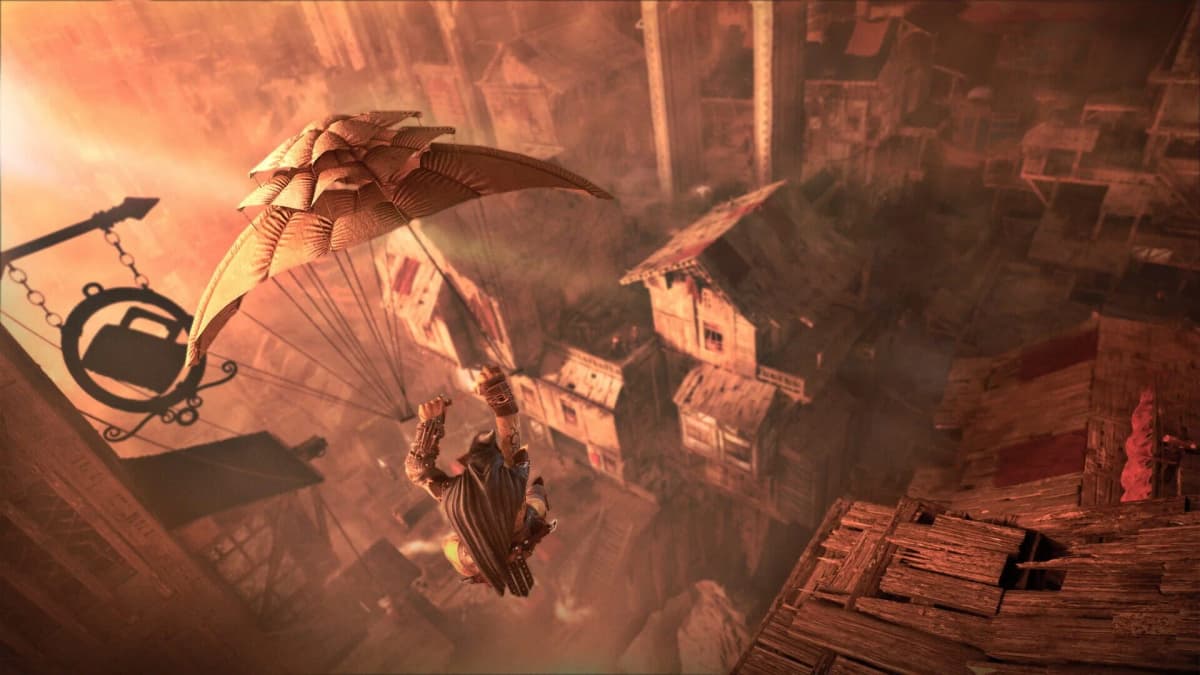
Combat, when it does happen, feels like the least refined part of the package. Styx is not built for straight fights, and the game knows it, so battles are clumsy and short. That reinforces the fantasy of being a fragile assassin, but anyone hoping to improvise their way out of a blown stealth run via slick parries and counters is going to be disappointed. Here, “you messed up” usually means “start again,” not “switch genres for five minutes.” Whether that’s a flaw or a deliberate line in the sand will depend on how pure you like your stealth.
Who Styx: Blades of Greed is really for
This is a game that respects your time in one sense and absolutely devours it in another. There’s no open-world bloat, no 120-hour checklist, but there is a constant pressure to replay routes, shave seconds off infiltrations, and see if you can make it through an entire fortress without so much as rustling a coat.
If you’ve been craving something in the vein of classic Thief, early Splinter Cell, or Dishonored’s quieter moments – but with a heavier emphasis on traversal puzzles and hub mastery – Blades of Greed is an easy recommendation. It’s also a strong pickup for fans of the earlier Styx games who were tired of recycled maps and wanted the series to stretch its legs without losing its sneaky soul.
On the other hand, if you bounce off backtracking, get frustrated by slightly finicky platforming, or want combat to be an exciting plan B rather than a punishment, this probably won’t convert you. The game is stubbornly, proudly built for people who think the ideal outcome is nobody knowing they were robbed until long after they’ve left the building.
FinalBoss // Gear
Level up your setup
01Top-rated gaming headsetson Amazon→02High-refresh gaming monitorson Amazon→03Gaming chairson Amazon→04Discounted game keyson Kinguin→Affiliate links · As an Amazon Associate, FinalBoss earns from qualifying purchases.
Want to Level Up Your Gaming?
Get access to exclusive strategies, hidden tips, and pro-level insights that we don't share publicly.
Ultimate Reviews Strategy Guide + Weekly Pro Tips