
If your first hours in Subnautica 2 feel cramped, short on oxygen, and constantly battery-starved, fix the loop in this order: secure a safe O2 route, set up one reliable power chain, keep your inventory lean, then follow scanner and NOA breadcrumbs for the unlocks that actually change survival. That order matters more than raw loot volume. The fastest progress comes from short, repeatable runs that end at a known refill point instead of gambling on one long dive with a full bag.
Table of Contents (8)
The short version
- You start with 20 inventory slots and 5 hotbar slots. Treat slots as survival tools, not trophies.
- Permanent inventory comes from biobeds inside abandoned colonist bunkers: Endurance biobeds add +3 inventory slots, Dexterity biobeds add +1 hotbar slot.
- The basic battery is 2x Copper + 1x Acidic Raion Pouch at a Fabricator. You need a Survival Multitool to harvest the pouch first.
- Stabilize oxygen and plan refill points before chasing deep materials.
- Follow
NOAprompts and black-box trails to reach the blueprints that matter, instead of wandering off-objective.
Inventory: carry less, finish more
Early inventory pressure is one of the biggest time traps. You start with a very limited 20 inventory slots plus 5 hotbar slots, so every “maybe useful later” item slows you down right now. Build your bag around the next recipe or the next route, not around hoarding.
A good early expedition loadout is simple: your scanner or core utility tool, one emergency air option if you have it, a small food and water buffer, and several empty slots reserved for the specific materials you are targeting. If you leave the pod carrying duplicates, decorative finds, or multiple fresh batteries “just in case,” you are paying an oxygen cost every time you stop to sort.
- Keep essential tools on your 5 hotbar slots so you are not opening menus underwater.
- Do not carry duplicate creature samples unless a recipe needs them.
- Do not bring multiple full batteries on short runs.
- Unload common materials the moment you return instead of leaving your inventory half-cluttered for the next dive.
If a cave network is rich but far enough to make repeated returns annoying, treat your nearby shelter as the transfer point. Two clean trips are safer than one overloaded trip where you ignore your O2 because you found one more quartz node.
Permanent inventory expansion is worth chasing once your basic loop works, and the upgrades come from biobeds inside abandoned colonist bunkers and outposts. There are two types, and they do different things. Endurance biobeds each add +3 inventory slots; Dexterity biobeds each add +1 tool/hotbar slot. In the current Early Access build there are seven biobeds in total, and clearing them all maxes you out at 35 inventory slots and 8 hotbar slots. That makes these sites far more valuable than random exploration in the first few hours. To reach them, follow NOA prompts, black-box coordinates, and base terminals that point you toward human structures rather than hoping to stumble onto an upgrade by chance.
O2 is a route budget, not a panic meter
The most useful mindset change is to stop treating oxygen like a warning that only matters when the bar turns scary. Oxygen is your movement budget. Before every dive, decide three things: where you refill, where you turn around, and what target justifies the trip. If you do not know those answers before you leave, the run is already inefficient.
Subnautica 2 gives you several ways to extend or patch O2, but none of them rescue bad routing. Environmental sources like air pockets and oxygen-producing flora stretch a run. Larger tanks, rebreather-style gear, and Air Bladders extend it further. Oxygen-focused biomods help too: Oxygen Control supports breathing, and Dash adds mobility so you cover more ground per breath. These are strong pickups, but they work best attached to a route you have already planned.

The safe early loop is usually smaller than new players expect. Pick one cave chain or resource lane near your starting area. Learn where the breathable breaks are. Make repeated runs until you know exactly how far you can push before turning. Only then should you stretch to the next layer of depth. This is why a compact powered shelter is so valuable early: it gives you a predictable reset point for crafting and recovery without turning your first base into an overbuilt infrastructure project.
New players often assume they need a complicated oxygen distribution setup immediately. The smarter early move is simpler: establish any functioning, powered shelter in a useful place, then optimize later. A basic outpost near the cave system you actually farm is more helpful than a fancy base in the wrong biome.
One more practical rule: return on your planned turnaround, not when the bar is nearly empty. If you keep surfacing only after a last-second scramble, you are using oxygen reactively, which means you will lose tools, loot, or time the moment something attacks you or terrain slows your ascent.
Batteries and power: prevent waste before you scale up
Battery problems in the opening hours are usually not caused by scarcity. They come from waste. Players overcraft, keep too many charged spares, or run powered tools and base pieces without a plan for recharging. Your goal is not “always have the most batteries.” It is “never let power failure interrupt the next important recipe, scan, or return trip.”

The basic battery recipe is 2x Copper and 1x Acidic Raion Pouch, crafted at a Fabricator. There is one prerequisite the recipe does not spell out: you need a Survival Multitool (crafted from 3x Titanium) to harvest an Acidic Raion pouch, because the plant yields nothing if you grab it with bare hands. Copper is easy: the cave directly beneath your starting lifepod is full of copper outcroppings that stick out of the walls, with more on the nearby seabed. Acidic Raion grows around cave entrances and in the early shallows. The recipe is accessible enough that the real mistake is not failing to craft a battery, it is crafting too many before you have charging support.
- Craft the first batteries you need for survival tools and your first outpost, then stop stockpiling.
- Use depleted batteries where a system accepts them instead of preserving full charge for no reason.
- Keep one reserve battery for emergencies, not an entire row of them.
- Prioritize any charger or charging-station blueprint you scan at old bases or human structures.
This is where inventory and power connect. Hoarding full batteries eats slots that could hold copper, quartz, or scan progress. Save your charged cells for active tools.
For base power, keep the starter setup modest. A small powered habitat with a fabricator and the minimum support pieces beats a sprawling base that burns resources and leaves you broke on essentials. Once your basic battery loop is stable, move to renewable power. The current-driven option is a single device, the Hydroelectric Turbine: place it in a natural underwater current and it produces about 12 energy per second. Thermal Plants (heat-based) and solar panels are the other renewable routes. These reduce babysitting, but they are only worth it after your battery loop already works.
Which unlocks to chase first
The best early unlocks are the ones that either extend your safe route or reduce return trips. Do not judge tech by how impressive it looks; judge it by whether it gives you more scan time, more oxygen range, or fewer wasted inventory slots.
Following NOA prompts and black-box trails is the in-game navigation system, and it routes you to the important tools and recipes. Wandering off the objective path still gets you resources, but it delays the exact blueprints that make the next several hours easier.
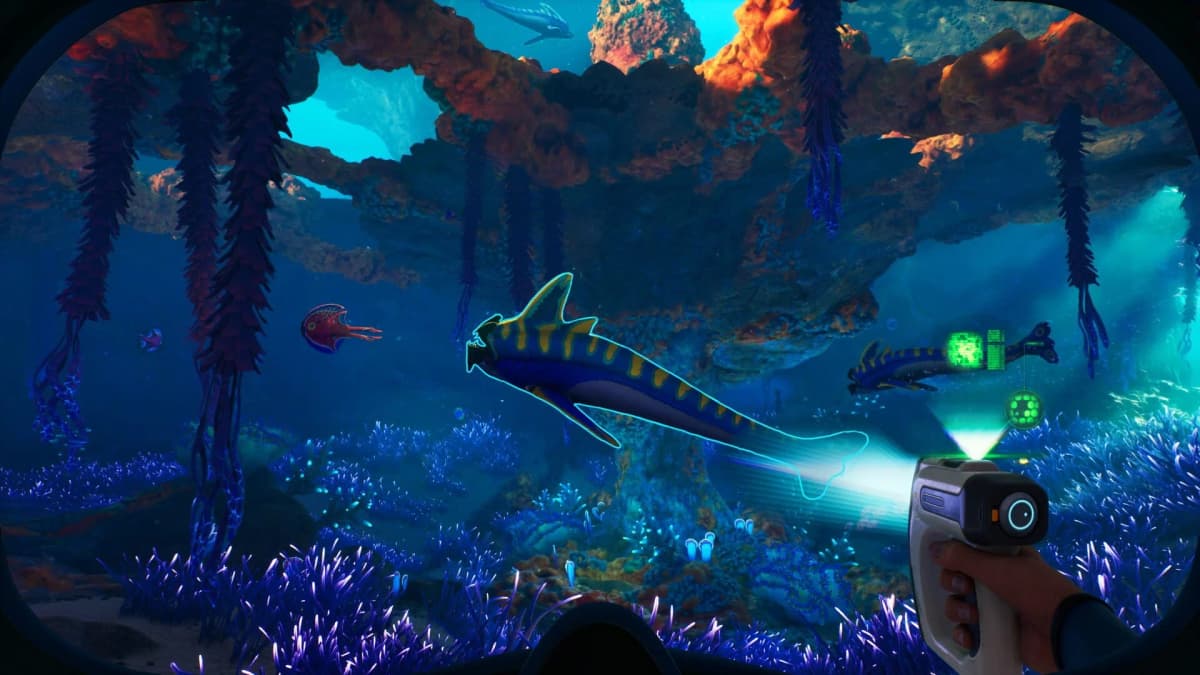
- Scanner: the sooner you can identify useful fragments and tech, the less time you waste on junk pickups.
- Habitat Builder: the unlock that turns exploration into a controlled loop by letting you place a practical shelter where it matters.
- Basic Battery: obvious but essential, because it powers both tools and the first real outpost.
- Oxygen Tank and Fins: pure efficiency upgrades that lengthen routes and cut travel friction.
- Digestion Adaptation: a high-value early pickup that lets you digest fish directly, which cuts the trips home you would otherwise make just for food.
- Air support tools and O2 biomods: Air Bladders, rebreather-style gear, and oxygen-focused biomods let you push deeper without making every dive a gamble.
If a scanned choice branches early, favor anything tied to oxygen, mobility, base function, or charging before niche utility tools.
Common mistakes
- Trying to harvest Acidic Raion with bare hands. Craft the Survival Multitool (3x Titanium) first, or you will leave the cave with no pouch.
- Overcrafting batteries before you have a charger, then watching them clog your 20 slots.
- Skipping biobeds because they look optional. Endurance biobeds are your only path to 35 inventory slots.
- Diving until the oxygen bar nearly empties instead of turning back at a planned point.
- Building a sprawling first base in a scenic but useless biome instead of a compact shelter next to the cave you actually farm.
Practical takeaway
Start by checking lifepod storage and crafting only the items that solve immediate survival needs. Turn easy resources, including Water Slugs, into drinkable water before thirst becomes the reason a dive ends. Make short runs for copper, quartz, and nearby scan targets, return on schedule, unload immediately, and craft toward the scanner and your first Survival Multitool and battery. Then push straight to the Habitat Builder and a compact powered shelter near a cave route you will revisit, and let NOA direct you to black boxes, abandoned bunkers, and terminals. Clear Endurance biobeds for permanent inventory, and scan any charging tech the moment you see it. That loop stabilizes the early game: lean inventory, planned oxygen, batteries used instead of worshipped, and progression routed through scanner and NOA objectives.
FinalBoss // Gear
Level up your setup
01Top-rated gaming headsetson Amazon→02High-refresh gaming monitorson Amazon→03Gaming chairson Amazon→04Discounted game keyson Kinguin→
Affiliate links · As an Amazon Associate, FinalBoss earns from qualifying purchases.
Want to Level Up Your Gaming?
Get access to exclusive strategies, hidden tips, and pro-level insights that we don't share publicly.
Ultimate Guide Strategy Guide + Weekly Pro Tips