
Why Mario Still Matters at 40: Blueprint for Timeless Fun
Game intel
Super Mario Bros.
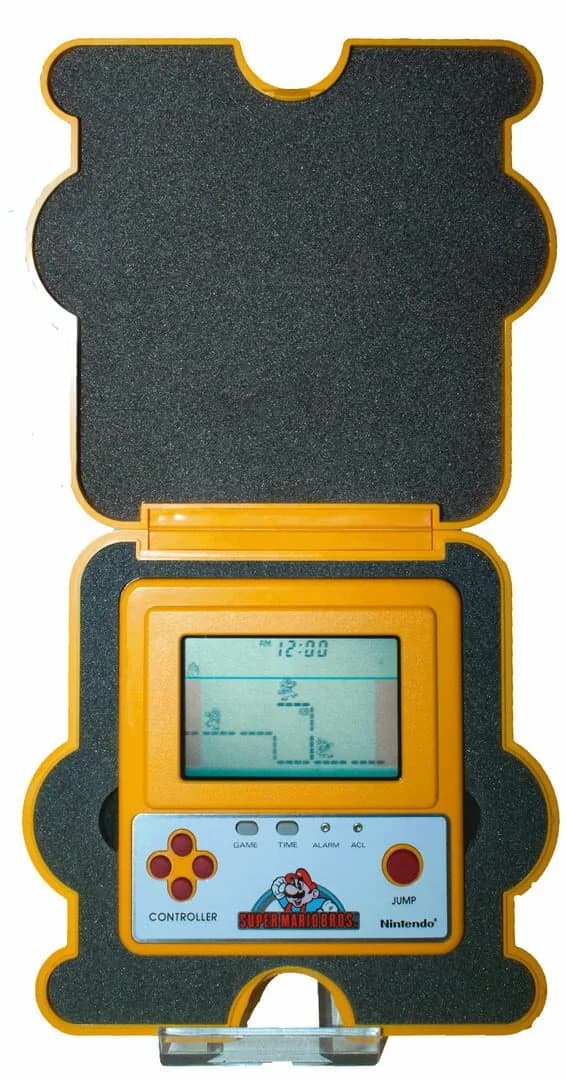
A special edition of Game & Watch Super Mario Bros. It was a prize for the Famicon's F-1 Grand Prix tournament on August 1, 1987 with the code YM-901-S. It is…
Mario at 40: not just nostalgia—this still matters
September 13, 2025 marks 40 years since Super Mario Bros landed on Famicom and rewired the medium. The anniversary got my attention because Mario’s popularity isn’t just coasting on warm memories—it’s built on design choices that still feel modern, a smart spin-off strategy, and a pop-culture footprint most game characters can’t touch. As someone who grew up learning platforming from World 1-1 and later watched friends who “don’t game” sink nights into Mario Kart, I don’t see a mascot; I see a blueprint that the industry keeps trying to copy. And four decades in, that blueprint still shapes how I—and millions of others—expect games to feel.
Key takeaways
- Super Mario Bros arrived at the perfect moment post-1983 crash with a readable, tutorial-free design anyone could pick up.
- Accessibility is the franchise’s core religion: clean inputs, bright readability, and mechanics that scale from kids to speedrunners.
- Spin-offs—especially Mario Kart—turned Mario into a social ritual, not just a single-player icon.
- Movies, parks, and merchandise made Mario cross-generational, while Nintendo’s “evergreen” support kept him in the conversation.
The right game at the right time
Context matters. After the 1983 market crash, consumer trust was dust. Nintendo brought the Famicom/NES to the West as a “toy,” not a “console,” and needed a killer app that proved games could be intuitive and polished. Super Mario Bros (1985) did exactly that. World 1-1 is still taught in design classes because it teaches the rules without a wall of text: Mario looks right, so you move right; a Goomba ambles in, you learn to jump; you hit a block, a mushroom pops, surprise turns into empowerment; a flagpole ends the level, and you’ve learned the grammar of platforming simply by playing. That’s elegant pedagogy baked into pixels.
It sold over 40 million copies worldwide and, bundled or not, cemented the idea that a console could be a family device again. If you felt the snappiness of Mario’s run-up to a jump and the micro-adjust mid-air, you felt the difference: responsive controls and clear feedback looped you into flow. That’s not nostalgia talking; that’s good input engineering. Four decades later, studios still reverse-engineer World 1-1’s pacing when teaching new players.
Accessibility as a design religion
Nintendo didn’t just make easy games. It made games that are easy to start and rewarding to master. That’s a big difference. From Super Mario Bros 3 refining power-ups and level variety to Super Mario World layering secrets in every corner, the series kept the front door open while hiding depth in the walls. 3D entries like Super Mario 64 and Odyssey did the same with camera breakthroughs, permissive movement, and collect-what-you-want structures that let kids roam at their own pace and speedrunners break physics in search of glitches.
Super Mario 64 sold over 11 million units and rewrote expectations for 3D design, showing that analog stick control could handle platforming in full camera freedom. Super Mario Odyssey, with over 20 million sold, doubled down: every capture ability felt intuitive, and the kingdom hub design melded simple objectives with hidden moons for absolute completionists. Even the 2D revival avoided pure retreads. Super Mario Maker handed the keys to the community; Super Mario Bros. Wonder brought playful chaos back with badges and stage-warping Wonder effects. Are these reinventions wild by modern “live service” standards? No. But they preserve the series’ speed of understanding: one glance and you know what a coin, pipe, or block will do. In an era of bloated tutorials, Mario remains refreshingly legible.
Diversification done right: the Mario Kart effect
Spin-offs are where the mascot became a culture anchor. Dr. Mario, Golf, Tennis—these broadened the audience. But Mario Kart changed the social math. The original Super Mario Kart (1992) built on Mode 7 tech born from F-Zero, then asked a simple question: what if anyone could drift and laugh in two minutes? That idea has carried through every generation, and Mario Kart 8 Deluxe stands as the Switch’s definitive “everyone plays” game—selling nearly 50 million copies and regularly surfacing on friend-group playlists.
Let’s be honest: for a lot of self-described non-gamers, “Mario” means “that kart game at parties.” That’s power. It binds the character to positive social memories and keeps him in households that don’t follow Directs or spec sheets. It’s also where Nintendo sometimes stumbles: mobile experiments like Mario Kart Tour flirted with gacha mechanics and timers the console games smartly avoid. Credit where it’s due—the mainline Mario titles stay premium and self-contained, a choice many publishers walked away from. But when social mechanics overshadow pure gameplay loops, you feel the tug of compromise.
FinalBoss // Gear
Level up your setup
01Best-selling Switch 2 gameson Amazon→02Switch 2 accessorieson Amazon→038BitDo controllerson Amazon→04Discounted game keyson Kinguin→Affiliate links · As an Amazon Associate, FinalBoss earns from qualifying purchases.
Beyond the cartridge: merch, movies, parks—and pricing
Mario didn’t jump from consoles to culture by accident. Nintendo moved early on merchandise in the late ’80s and ’90s, and that pipeline never slowed. The 2023 animated film crossed $1.3 billion worldwide, making it the highest-grossing video-game adaptation ever. Super Nintendo World parks—Osaka in 2021, Hollywood in 2023—turned nostalgia into concrete and steel.
That cross-media saturation matters because it keeps Mario intergenerational: kids meet him on pajamas and popcorn buckets, parents remember flagpoles and warps. Yet there’s a trade-off. Nintendo’s “evergreen” pricing means Mario games hold value—but also rarely get real discounts. And the company’s habit of artificial scarcity (looking at you, 3D All-Stars’ limited availability in 2020–21) still leaves a bad taste. Preservation should be part of celebration. If you’re planning a 40th-anniversary victory lap, give players robust, permanent, and accessible ways to experience the classics, not countdown timers or region-locked bundles.
Want to Level Up Your Gaming?
Get access to exclusive strategies, hidden tips, and pro-level insights that we don't share publicly.
Ultimate Gaming Strategy Guide + Weekly Pro Tips
Sales and cultural impact by the numbers
- Super Mario Bros (1985): ~40 million units sold; taught design classes worldwide.
- Super Mario 64 (1996): ~11 million; pioneered analog 3D platforming.
- Super Mario Galaxy (2007): ~12 million; introduced gravity-based level design.
- Super Mario Odyssey (2017): ~20 million; set a new standard for player agency.
- Mario Kart 8 Deluxe (2017): ~50 million; became Switch’s best-selling racer.
- The Super Mario Bros. Movie (2023): $1.3 billion box office; highest-grossing game adaptation.
These figures underline a simple truth: Mario’s formula scales. Whether in pixels or polymerscape, his universe wins by respecting player learning curves and rewarding curiosity.
Nintendo’s missteps: scarcity and monetization
Even Mario’s magic isn’t bulletproof. Nintendo’s penchant for limited editions—NES Classic, 3D All-Stars—created FOMO victories but frustrated preservation advocates. Fans hoard systems, scalpers smile, and some classics vanish from stores. Likewise, mobile efforts like Super Mario Run (a one-time paywall) and Mario Kart Tour (gacha timers) diluted Mario’s promise of premium, self-contained experiences. These missteps remind us that convenience and community goodwill can evaporate if monetization feels predatory.
What to watch next: clear recommendations
Forty years on, Mario remains relevant because the formula isn’t sacred; the philosophy is. Here’s what I hope to see:
- Permanent classic collections: Make every core Mario entry available year-round, with enhanced emulation, rewind options, and developer commentary—no timers, no limited runs.
- Switch Online expansions: Include spin-off gems (Super Mario Land 2, Mario Paint) and quality-of-life filters that respect original frame rates and controls.
- Community tools: A Mario Maker 3 on Switch—complete with online sharing, leaderboards, and challenge-mode templates—to keep the series participatory.
- New mainline entry: A surprise within familiarity—a Wonder-style twist or a return to 2D/3D hybrid levels—but absolutely no live-service tethers or battle passes.
- Evergreen pricing strategy: Occasional sales to welcome new players, coupled with a clear preservation roadmap for hardware and software.
These moves would honor Mario’s legacy of accessibility, variety, and polished gameplay. After all, the simplest jump mechanics are often the hardest to perfect.
Strong finish: designing the next decade
Mario taught us that game design can be a conversation between developer and player—one where every sightline, every sound cue, and every hidden block speaks with clarity. As we toast four decades of that dialogue, let’s ask Nintendo to extend the run-up, not cut the track short. Let’s demand preservation alongside celebration. And let’s remind them that groundbreaking doesn’t require breaking faith with players.
TL;DR
Mario is still universal at 40 because Nintendo protects the on-ramp, diversifies how you meet him—from platformers to karts to parks to films—and constantly refines the learning curve. Celebrate the legacy, fix preservation missteps, avoid artificial scarcity, and steer clear of live-service pitfalls. That’s how you keep a mascot timeless for the next 40 years.