
This caught my attention because Nintendo’s console narrative has long been defined by slow-burn hits and surprise resurgences – and the Switch 2’s opening run changes that script. A new generation moving this fast alters platform economics, third-party strategy, and Nintendo’s product roadmap in ways that matter to players and industry watchers alike.
Table of Contents (4)
Switch 2 Has Beaten The Wii – Rapid Sales, Real Consequences
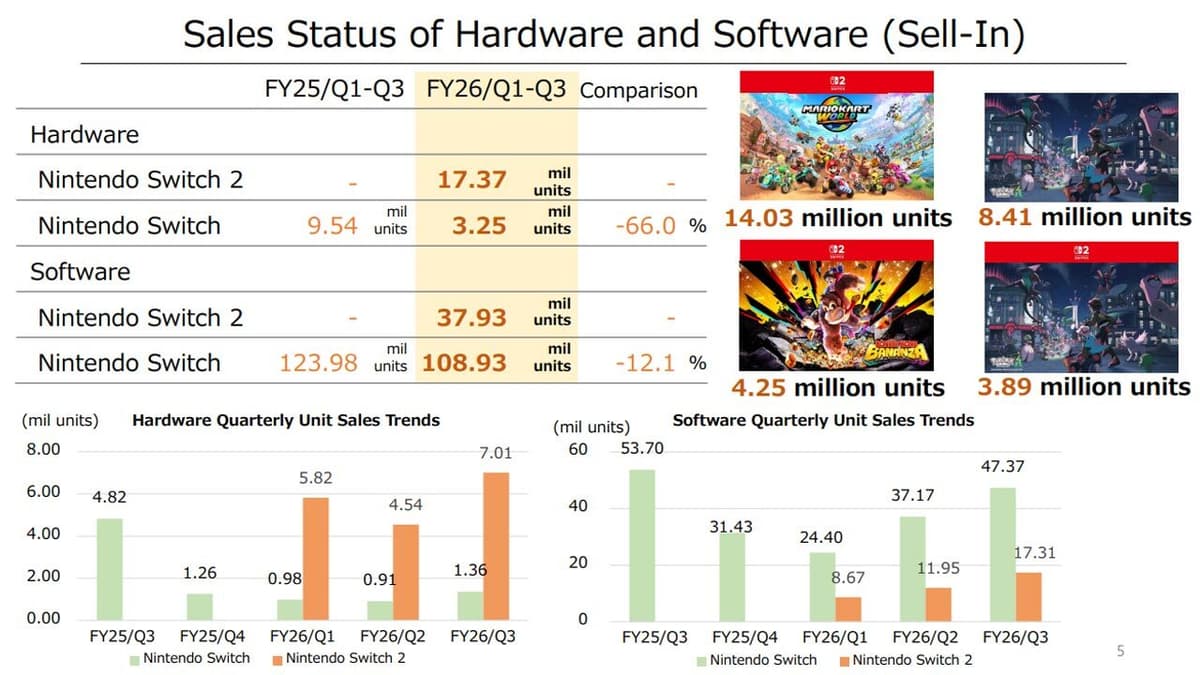
- Switch family milestone: Nintendo reported 155.37 million lifetime Switch sales as of Dec 31, 2025, making it the company’s best-selling console.
- Switch 2’s fast start: Switch 2 sold 17.37 million units in seven months – enough to surpass legacy hardware like the Wii U and outpace several older consoles’ lifetime totals.
- Near-term headwinds: Nintendo expects only 750,000 more Switch sales this fiscal year and warned that these sales patterns could pressure profitability.
- Significance: Strong hardware demand creates opportunities for software and services, but the profitability warning signals trade-offs — launch subsidies, marketing, and supply-chain investments are likely factors.
{{INFO_TABLE_START}}
Publisher|Nintendo
Release Date|Dec 31, 2025
Category|Console hardware sales / Corporate results
Platform|Nintendo Switch family
{{INFO_TABLE_END}}
Main analysis — why these numbers matter
Nintendo’s nine-month results to December 31, 2025 do two things at once: they confirm the Switch family as Nintendo’s dominant platform (155.37M lifetime units) and they spotlight a generational shift that arrived faster than most expected. Switch 2 selling 17.37 million units in seven months is a striking launch cadence — it erased the Wii U’s entire lifetime in less than a year and surpassed multiple legacy consoles’ lifecycles.
From a product and community perspective, rapid hardware adoption resets the addressable market for first-party titles, indie developers, and third-party publishers. A larger install base in the first year shortens the time-to-profit for game teams and makes aggressive live-service or DLC strategies more feasible. It also raises expectations: devs will expect clearer SDK stability, predictable OS updates, and reliable certification timelines after such a big early install.
But Nintendo’s caution about profitability is notable and deservedly front-page. High-volume launch periods often come with deliberate margin sacrifices: trade promotions, supply-chain premiums to meet demand, marketing blitzes, and platform-holder investments in developer support or exclusive content. Switch 2’s hardware bill of materials, logistics costs, and any console-subsidizing tactics (bundles, discounts, or trade-in programs) can compress margins even as units climb.
There’s also timing to consider. Nintendo is balancing two hardware lines: the legacy Switch base (which still sold enough to merit a 750k forecast) and Switch 2 momentum. Managing inventory, channel returns, and software scheduling across that transition will be delicate. If Nintendo leans into steep launch discounts to maintain headline unit momentum, investors and analysts will rightly question near-term earnings even if the medium-term story — large install base and stronger software revenue — looks robust.
What this means for players and indie developers
- Players: A booming install base means more gated content will find an audience quickly — expect more remasters, platform-first releases, and service experiments targeted at Switch 2 owners.
- Indies: A faster-growing market lowers discoverability barriers for standout titles but increases competition for attention and marketing dollars.
- Third parties: Publishers will re-evaluate release timing: an early-scale console invites more third-party launches in year one if dev tools and certification are stable.
- Buyers: Keep an eye on bundles and short-term discounts — strong early demand sometimes leads to later price consolidation as Nintendo optimizes profitability.
My take: this is an unequivocally strong start for Switch 2 and another validation of Nintendo’s platform design philosophy — innovation that prioritizes unique play experiences and a broad casual/portable audience. Still, the profitability warning is a healthy reminder that high unit sales don’t automatically equal higher short-term profits. Investors, developers, and consumers should watch next few quarters for how Nintendo balances growth with margin recovery.
TL;DR
Switch 2’s seven-month, 17.37M sales sprint and the Switch family’s 155.37M lifetime milestone rewrite Nintendo’s hardware story. It creates immediate upside for games and services but brings short-term margin pressure — Nintendo’s profitability warning is real and reflects launch economics, not demand failure. Over the medium term, a larger install base should pay off for first-party software and platform partners if Nintendo manages costs and developer support sensibly.
FinalBoss // Gear
Level up your setup
01Best-selling Switch 2 gameson Amazon→02Switch 2 accessorieson Amazon→038BitDo controllerson Amazon→04Discounted game keyson Kinguin→Affiliate links · As an Amazon Associate, FinalBoss earns from qualifying purchases.
Want to Level Up Your Gaming?
Get access to exclusive strategies, hidden tips, and pro-level insights that we don't share publicly.
Ultimate Gaming Strategy Guide + Weekly Pro Tips