
Table of Contents (11)
Pragmata on Switch 2: DLSS saves the image, but not the frame-rate
The first time I saw Pragmata running on Switch 2, my brain did a double-take. This is Capcom’s big, shiny sci‑fi showcase, originally built to push PS5 and modern PCs, running on a handheld – and the image wasn’t the blurry mess I expected. DLSS really is doing work here. But the longer I watched, the more obvious the cost became: simplified lighting, chunkier shadows, softer textures, and a frame-rate that just refuses to sit still.
That tension — sharp-looking image thanks to DLSS upscaling, but clear cuts to fidelity and stability — is exactly why Pragmata is such an important early tech case for the Switch 2. It’s the first “OK, let’s really see what this NVIDIA+DLSS setup can do” moment. And the answer is: it can absolutely keep ambitious games playable and readable, but it can’t magically turn a portable into a PS5.
If you want the short version: DLSS rescues clarity, but it doesn’t erase the fact that Pragmata is often rendering around 540p docked and roughly 360p handheld, with an unlocked frame-rate that bounces anywhere from the low 30s to the 50s. That’s the story in one sentence. The rest of this piece is about why, how, and what that tells us about Switch 2’s hardware limits.
What Pragmata is actually doing on Switch 2
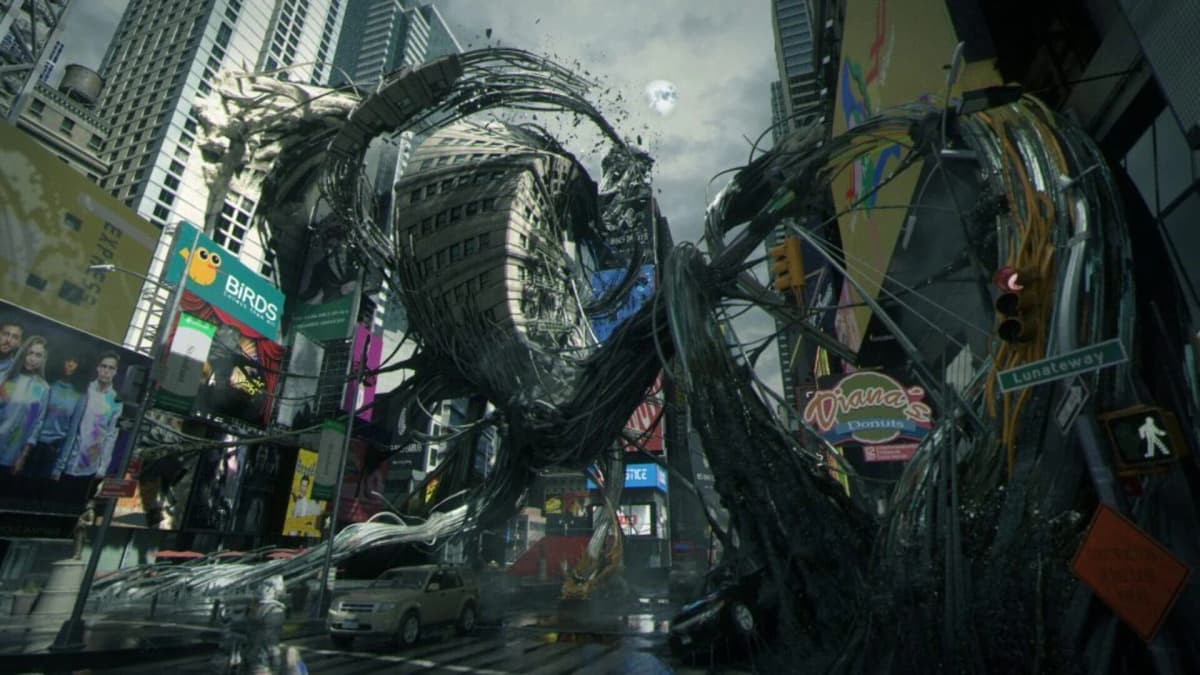
Capcom’s new Aria Engine game is heavy. On PS5 you’re looking at a stable 60fps target with higher-end effects, better lighting, and ray-traced options, according to the available analyses. Xbox Series S already trims some of that ambition. Switch 2 goes a step further: it keeps the overall art direction and composition, but rebuilds the rendering strategy around aggressive upscaling.
Based on the current tech breakdowns:
- Docked mode: Outputs 1080p, but internally often renders at roughly 540p, then uses DLSS to reconstruct the image.
- Handheld mode: Drops the internal resolution again, down to something in the ~360p region, then upscales to the 1080p-ish handheld panel.
- Frame-rate: Instead of a fixed 30 or 60fps, Pragmata runs with an unlocked frame-rate. Outdoors, you’re often in the 30-40fps range; indoors, it can climb into the 50s.
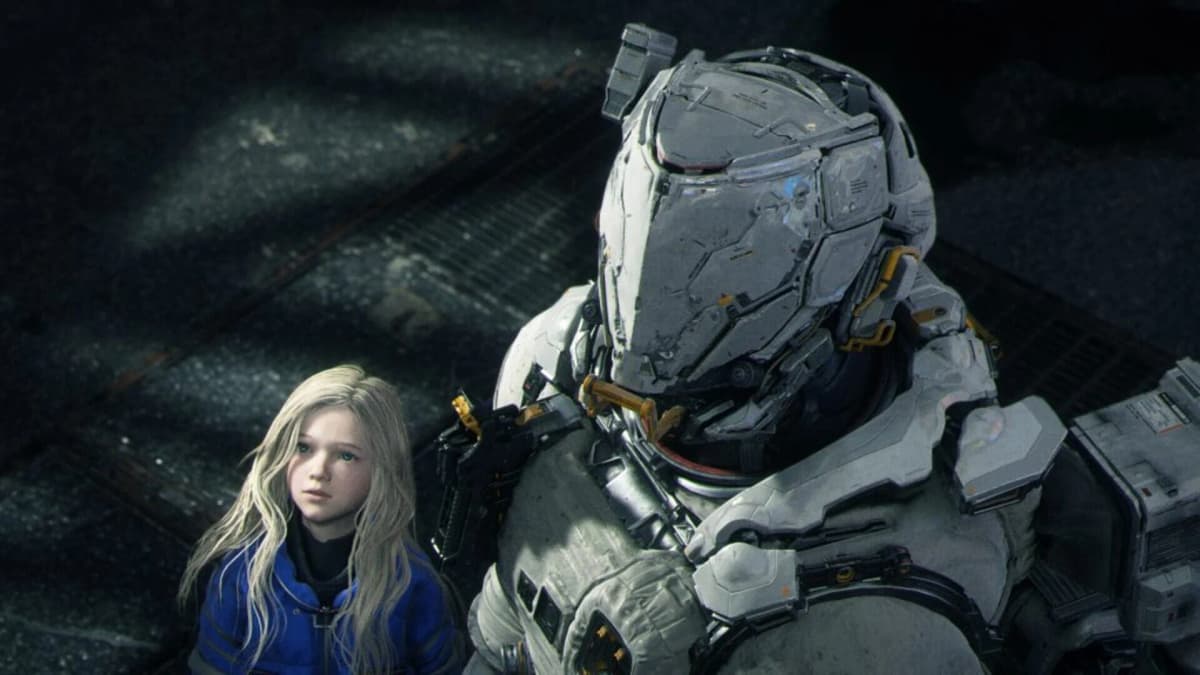
The image on a TV at 1080p looks much better than “540p” makes it sound, and this is where DLSS really earns its paycheck. The handheld view at ~360p internal is the part that surprised me most: my first instinct was “this has to be native 720p or something close,” and it took slowed-down breakdowns and pixel peeping to actually see how low the base render really goes.
But the performance instability is equally obvious. If, like me, you’re the type who locks PC games to a clean 30 or 60 just to avoid judder, the constantly shifting frame-time on Switch 2 is going to bug you. DLSS keeps the pixels sharp; it can’t stop the camera from stuttering when the GPU gets hammered.
Switch 2 hardware in a nutshell: why DLSS is doing the heavy lifting
It helps to zoom out and look at what Nintendo actually built this time. On paper, Switch 2 is a huge leap over the original:
Specifications
The key bit is that this is an Ampere-class NVIDIA chip with Tensor Cores. That means proper, hardware-accelerated DLSS 2. Nintendo isn’t relying on blurry bilinear scaling or homegrown temporal tricks; it’s the same family of tech PC players have been using for years on RTX 20/30-series cards.
But this also locks Switch 2 to DLSS 2 features only. Ampere doesn’t support the full DLSS 3 Frame Generation pipeline you see on RTX 40-series GPUs, so we’re talking about image reconstruction and anti-aliasing, not “fake” interpolated frames. In other words, Pragmata can use DLSS to turn a 540p internal frame into a credible 1080p image, but it cannot conjure a smooth 60fps out of a struggling 40fps base.
DLSS 2 works by rendering the game at a lower resolution, then feeding that low-res image plus motion vectors (and a history of previous frames) into a neural network running on the Tensor Cores. That network was trained offline at much higher resolutions, so it has a good idea what a “sharp” version of this frame should look like. In practice, the Switch 2 can choose between different DLSS modes — think Quality vs Performance — which are basically different render scales:
- Quality often renders at around 66-67% of the output resolution each way (so ~720p for a 1080p output).
- Performance can drop to 50% scale (so ~540p for a 1080p output).
Pragmata is clearly leaning towards the more aggressive settings, especially handheld. That’s how it hits those 360p‑ish internals while still looking acceptably clean: the underlying hardware gets fewer pixels to chew through, DLSS tries to fill in the missing detail, and the player gets something that still looks like a modern sci‑fi game instead of a Vaseline smear.
Where the visuals take the hit: lighting, shadows, textures, and hair
Resolution isn’t the only lever Capcom is pulling. To make Pragmata run at all on a portable machine, they’ve gone down the usual checklist and turned a lot of the expensive dials down — or off.
Compared to PS5 and higher-end platforms, tech analyses show the Switch 2 version cutting back in several obvious areas:
- Lighting and GI (global illumination): The moody sci‑fi lighting that gives Pragmata a lot of its atmosphere is simplified. You still get the overall tone and colour, but fewer bounce lights, less convincing indirect light, and a flatter look in many scenes.
- Shadows: Shadow maps are lower resolution and update less frequently. This is one of those things you stop noticing after an hour, but in side‑by‑side comparisons, shadows on Switch 2 look chunkier and less stable.
- Ambient occlusion and contact shadows: Those little pockets of darkness where objects meet — under debris, in character creases, in corners — are toned down or missing. The scene reads, but the sense of depth suffers.
- Reflections: High-end techniques (like ray‑traced reflections on PS5) are gone. You’re leaning much harder on cheaper screen‑space tricks or just simple static probes. Futuristic metal and glass look less alive.
- Textures and asset detail: Texture resolution is reduced, and some geometry is simplified. If you’re used to peering at tiny details on a 4K screen, you’ll notice; on the handheld, it’s less of a crime.
- Hair and fine alpha effects: Pragmata uses strand-based hair and other expensive effects on bigger machines. On Switch 2, that’s dialed back heavily, because these are basically performance black holes.
This is where it finally clicked for me what Nintendo and NVIDIA are really selling with Switch 2: DLSS isn’t here to eliminate compromises — it’s here to make the compromises less painful. You still cut lighting quality, AO, shadow resolution, and texture detail to fit into a much smaller power and thermal budget. But instead of ending up with a smeary, low-res mess, you get something that holds together surprisingly well at a normal viewing distance.
On a TV, you can absolutely see where the money has been saved if you’re coming from a PS5 or a decent PC. On the handheld screen, though? This is where the Switch 2 feels more impressive. Take the image out of “pause on a 4K capture” mode and put it in your hands, and the blend of lower-res assets and DLSS reconstruction mostly just reads as “a big modern game, but portable.”
The real problem: frame-rate instability and the lack of a proper performance mode
If the story ended with “fewer effects, but a sharp and stable 30fps,” I’d be pretty upbeat. That’s not what Pragmata is doing on Switch 2 right now.
Instead of locking to 30 or aiming hard for 60 with a quality toggle, Capcom has gone for an unlocked frame-rate. In practice, that means:
- Busy exterior areas hovering around the 30–40fps range, sometimes dipping lower when things really kick off.
- Interior areas often running in the 40–50fps band, occasionally spiking closer to 60 when the engine gets some breathing room.
On paper, more frames is good, right? The problem is frame-time consistency. Our eyes are incredibly sensitive to changes in pacing. A rock-solid 30fps can feel smoother than a wild 35–55fps swing, because each frame arrives at the same interval. When the game is unbounded, you get constant micro-stutters as the GPU speeds up and slows down based on the scene complexity.
On PS5, pragmatically, you pick your poison: a 60fps performance mode, perhaps with ray tracing disabled or trimmed; or a higher-fidelity mode that still targets a stable frame-rate. The key word there is target. On Switch 2, Pragmata currently feels more like: “we’ll just push as hard as we can and show you whatever the GPU manages.” It’s flexible, but it’s not elegant.
As someone who obsessively caps PC games at 40, 50, or 60fps just to keep frame pacing clean (VRR helps, but I still prefer caps), this is the one thing that really makes the Switch 2 version feel rough around the edges. I don’t mind lower resolution or missing reflections nearly as much as I mind that slight, constant judder when the game can’t settle.
It also has knock‑on effects for input latency. When your frame-time is bouncing, your button presses don’t feel as consistent as they do at a locked 30 or 60. You can get used to it — and a lot of players absolutely will — but if you care about the “feel” of a game as much as the look, this is the part that stings.
What this tells us about Switch 2’s real-world capabilities
None of this should be read as “Switch 2 is weak.” In raw terms, this thing is around ten times more capable than the original Switch on the graphics side, which is a massive jump. The fact we’re even talking about a current-gen Capcom showcase running on a portable is wild if you remember where handhelds were ten years ago.
But Pragmata is a useful reality check for the marketing numbers. Yes, Nintendo and NVIDIA can say “up to 4K in TV mode” and “up to 120fps at 1080p handheld.” In the real world, a dense, modern AAA game is achieving those targets via extreme resolution scaling and significant visual cuts, and still can’t maintain a fixed frame-rate.
The pattern that’s emerging looks something like this:
- DLSS lets developers push way lower internal resolutions than they ever could on the original Switch while still keeping text, HUDs, and silhouettes readable.
- Big cross‑gen and next‑gen titles will almost always ship with notable cutbacks in lighting, shadows, GI, reflections, texture quality, and particle effects.
- Performance stability is going to come down to developer priorities: do they chase higher average FPS with an unlocked cap, or do they bite the bullet and lock to 30 for cleaner delivery?
- Handheld play is where Switch 2 will shine the most, because the smaller screen hides a lot of the ugliness of those deep resolution cuts.
I initially assumed DLSS would mostly be used in a more conservative way — think 720p to 1080p or 900p to 1440p style scaling. Pragmata made it very clear, very quickly, that on a 15W‑ish handheld profile, studios are completely willing to drop all the way to 540p or even 360p if the reconstruction holds together. On a TV you can tell; in portable play it’s kind of genius.
The flip side is that no amount of upscaling saves you when the GPU is simply overloaded. Heavy scenes, complex materials, dense effects: these are still going to drag frame-rate down. DLSS buys you headroom, but it doesn’t rewrite physics. When you’re this far below PS5/Series X silicon, the cuts have to come from somewhere.
Who Pragmata on Switch 2 actually makes sense for
So is this a good version of Pragmata, or just a proof-of-concept for DLSS on Switch 2? Weirdly, it’s both.
If you own a PS5 or a decent PC and you care deeply about image quality and frame-rate, this port is a tough sell. You’re trading away stable 60fps, nicer lighting, better materials, and advanced effects for the ability to play in bed, on the train, or on the couch without monopolising the TV. You’re also swallowing an inconsistent frame-rate to do it.
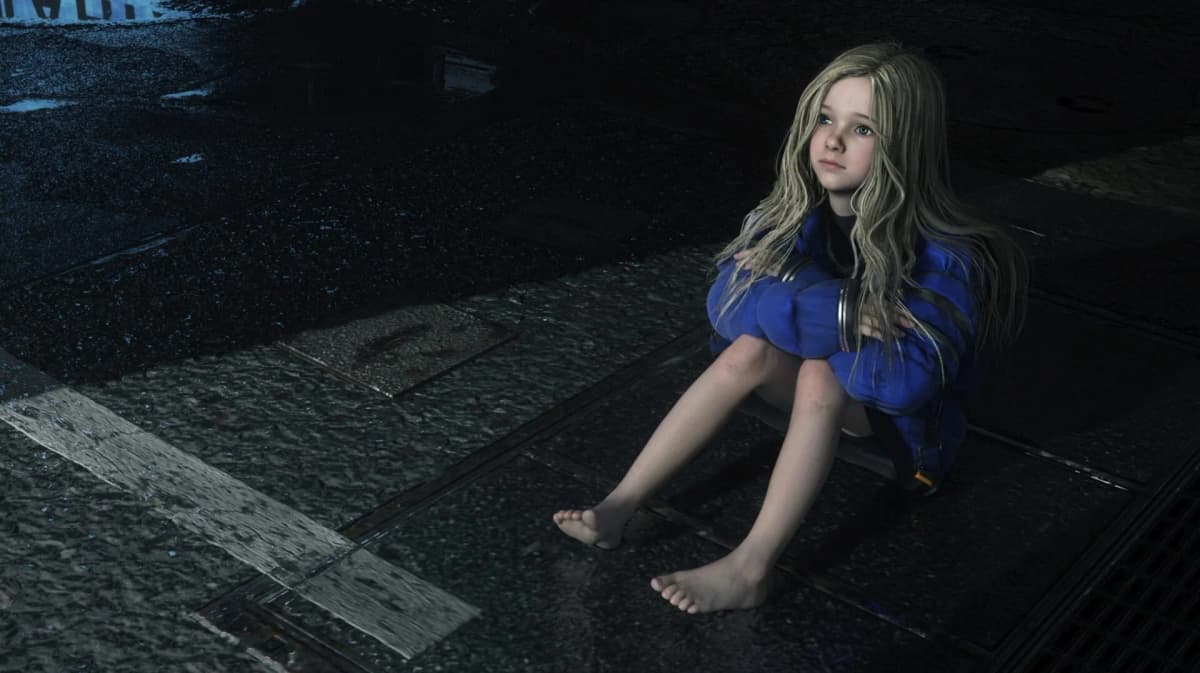
But if your main console is a Switch 2, or you’re the type who values portability more than raw fidelity, the calculus flips. The core game is intact: the environments, level layout, overall mood, enemy behaviour, combat systems — all of that survives the trip. In handheld mode specifically, the DLSS image reconstruction is impressive enough that most of the heavy compromises fade into the background once you’re actually playing.
I kept having the same thought watching different captures: “If I’d only ever seen the Switch 2 version, I’d probably just think ‘this is a slightly messy but good‑looking portable game.’” It’s only when you put it side‑by‑side with PS5 footage that the missing detail really jumps out. That’s both a compliment to DLSS and a reminder that comparison culture can skew perception.
✓ PROS
+
Surprisingly sharp image for 540p/360p internals thanks to DLSS
+
Core visual style and atmosphere mostly preserved
+
Big, ambitious sci‑fi game running portably
+
Handheld presentation hides many of the cuts
+
Shows the real potential of NVIDIA’s DLSS on Switch 2
✗ CONS
–
Unlocked, unstable frame-rate with frequent 30–50fps swings
–
Noticeable downgrades to lighting, shadows, GI, reflections, and textures vs PS5
–
Strand hair and fine effects heavily simplified
–
No clear 30fps “stability” mode or 60fps “performance” option
–
Docked on a large TV makes the compromises more obvious
My verdict on this first big Switch 2 DLSS test
The moment it really clicked for me was this: Pragmata on Switch 2 isn’t a failure of the hardware — it’s a very honest demonstration of what “10x the Switch” actually looks like when you point it at a PS5‑class game. DLSS makes the resolution problem feel almost magical, especially handheld. The rest of the rendering equation is still very much grounded in reality.
I wish Capcom had shipped a rock-solid 30fps cap option. I’d happily take that over the current “sometimes 50, sometimes 32” behaviour. I can live with downgraded lighting and hair; I struggle more with inconsistent frame pacing. That’s fixable in patches, though, and it’s more a design decision than a hard limit of the machine.
As an early technical showcase for Switch 2, Pragmata leaves me cautiously optimistic. The fact you can drop as low as 360p internally and still have a game look this coherent on a portable is wild. But it also tells me that, for truly high-end third-party games, Nintendo’s new box is going to live and die by how smart developers are about their settings, caps, and trade-offs. DLSS is a powerful tool, not a magic wand.
7/10 (as a Switch 2 tech showcase)
VERDICT
Pragmata on Switch 2 proves that DLSS can keep a demanding, PS5‑class game playable and surprisingly sharp at extremely low internal resolutions. The price is paid in lighting, texture quality, and — most of all — an unstable unlocked frame-rate. If you value portability and can tolerate fluctuating performance, it’s an impressive, if messy, glimpse of what this NVIDIA‑powered hybrid can do.
FinalBoss // Gear
Level up your setup
01Best-selling Switch 2 gameson Amazon→02Switch 2 accessorieson Amazon→038BitDo controllerson Amazon→04Discounted game keyson Kinguin→Affiliate links · As an Amazon Associate, FinalBoss earns from qualifying purchases.