
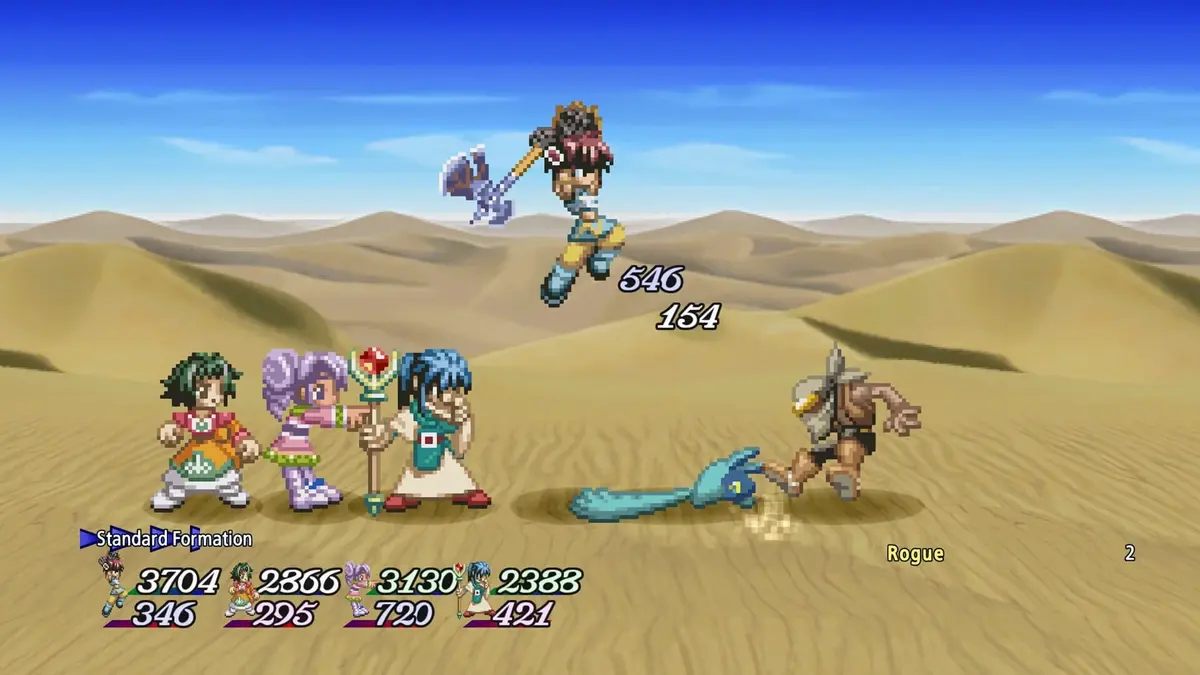
The original Tales of Eternia arrived on PlayStation in 2000, followed by a PSP version in 2005 that forms the basis of this remaster. That history sets the right expectations: the underlying adventure belongs to an earlier era of action RPGs. My measure of this revival is how effectively its changes help that adventure communicate its strengths without disguising its limitations.
Published by Bandai Namco, Tales of Eternia: Remastered launched worldwide on October 16, 2026 for PS5, PS4, Xbox Series X|S, Nintendo Switch, Nintendo Switch 2 and PC via Steam. For the PS5 buying decision, the most important improvements concern language, character interaction and control over the journey’s interruptions.
Table of Contents (5)
A two-world adventure with a human centre
Reid Hershel is a hunter from Rashuan in Inferia, and Farah Oersted is his childhood friend. Meredy arrives from Celestia speaking a language the party cannot understand. That communication barrier gives the world-spanning premise an immediate, personal dimension: understanding another person matters before understanding the larger crisis.
The central threat is Grand Fall, a collision between Inferia and Celestia that the party seeks to prevent by finding the Greater Craymel. The scale supplies momentum, but the relationships give the journey its staying power. I find the adventure most compelling when its enormous stakes remain connected to the people carrying them.
This is why the story holds up better than the surrounding technology. Its appeal does not depend on contemporary spectacle. The two-world structure creates curiosity, while the cast provides a reason to care about what lies beyond the next destination. The remaster’s strongest decisions support those qualities.
The localisation is the meaningful restoration
The remaster introduces a new English script and new English voice acting, alongside the original Japanese performances. Earlier Western versions lacked that Japanese audio option. For returning players who value the original performances, restoring that choice is a substantial reason to revisit the game.
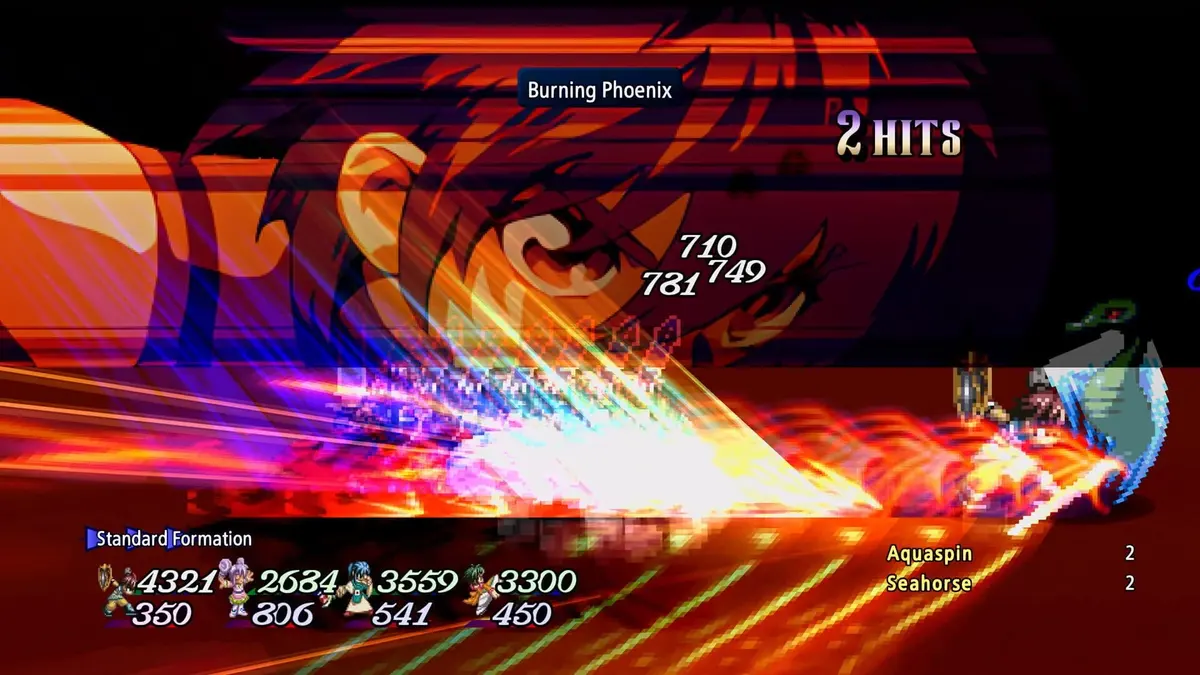
The optional party conversations known as skits are restored, fully voiced and subtitled. These informal exchanges supplement the main plot with more of the party’s personality. Their importance is structural: an adventure asking for investment in its characters benefits from letting those characters exist outside the demands of the central crisis.
I put more weight on that restoration than on the graphical improvements. Better access to the cast changes the substance of the journey, particularly for an English-speaking audience whose earlier experience omitted those conversations. The new English performances are more expressive than the earlier English track. Choosing English therefore has its own appeal, while Japanese audio preserves access to the original acting.
Encounter controls help more than intrusive markers
Turning off random encounters is the most valuable convenience change here. It gives exploration and story progression room to take priority when another interruption would contribute little. Use that setting when the immediate goal is reaching a destination or examining the route, rather than accepting every journey as another series of battles.
Destination icons point towards the next story location and identify the NPC needed for a quest; they can also be disabled. Multiple markers can appear on screen at once, and I find that visual insistence excessive. My preference is to leave them off during exploration and enable them when locating a particular objective becomes the task. Their usefulness is strongest as a navigation aid, not as a permanent layer over the world.
Difficulty options and fast battle provide additional ways to adjust the experience. Together, these settings make the older design easier to accommodate, but their effects have limits. Reducing interruptions or accelerating battles changes the rhythm of play; neither addresses how clearly the combat itself communicates what is happening.
The combat and environments carry their age
Combat remains real-time action on a single 2D plane, with the party moving along a straight battlefield to use Artes and spells. Reid fights with melee weapons, while Farah uses her fists. There is an appealing directness to that arrangement, but the restricted movement gives the battles a rigidity that the remaster’s convenience options cannot remove.
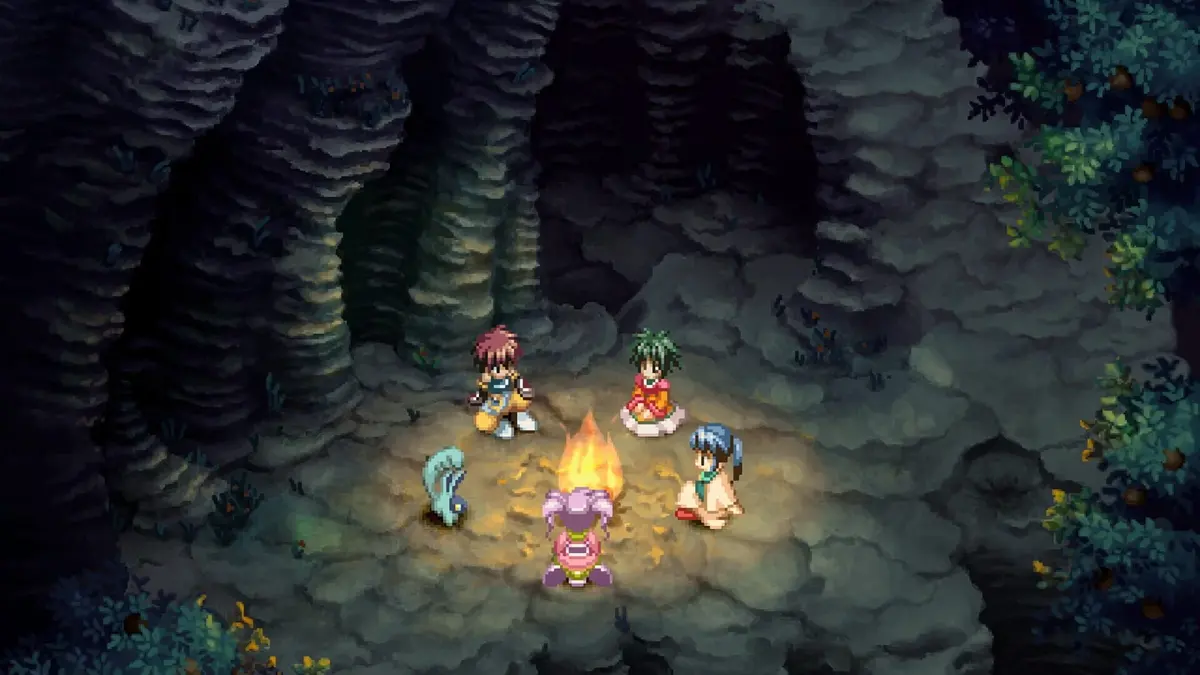
Overlapping sprites can make positioning difficult to read. That is a meaningful weakness in an action system: judging where a character stands should be part of making a decision, rather than an obstacle to understanding it. I can appreciate the combat’s immediacy while still finding its readability too uneven to make fighting the main attraction.
The graphical options include a choice between remastered and original dot art. Environments still look dated, and the additions concentrate on presentation, localisation and convenience rather than a substantial expansion of the adventure. The dot-art choice is welcome for preservation, but changing the presentation does little for players whose objection is the age of the spaces themselves.
That distinction determines the value of the package. A returning player seeking better access to the existing adventure gets changes that matter. Someone seeking a comprehensively rebuilt action RPG will encounter the same underlying reasons to hesitate, even with fewer interruptions and a stronger English-language presentation.
The PS5 buying decision
The PS5 version supports offline play. I recommend buying it for the character-led story, restored Japanese performances and voiced skits, especially if the earlier Western presentation was a barrier. Wait for a discount if those improvements interest you but dated environments and restrictive combat remain serious reservations. Skip it if a rebuilt world and substantially redesigned fighting are requirements.
Verdict: 7/10. Tales of Eternia: Remastered makes its strongest material easier to appreciate without resolving its weakest systems. For a story-first player, the localisation and restored conversations justify the return; for a combat-first player, the convenience toggles do not change the recommendation.
FinalBoss // Gear
Level up your setup
01Top-rated gaming headsetson Amazon→02High-refresh gaming monitorson Amazon→03Gaming chairson Amazon→04Discounted game keyson Kinguin→Affiliate links · As an Amazon Associate, FinalBoss earns from qualifying purchases.
Want to Level Up Your Gaming?
Get access to exclusive strategies, hidden tips, and pro-level insights that we don't share publicly.
Ultimate Reviews Strategy Guide + Weekly Pro Tips