
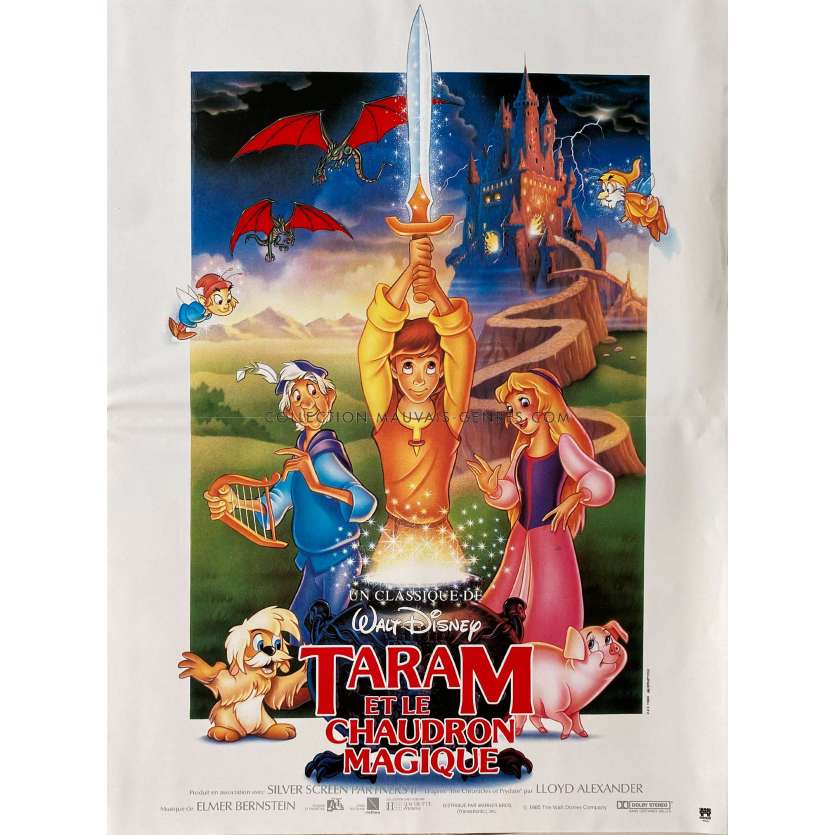
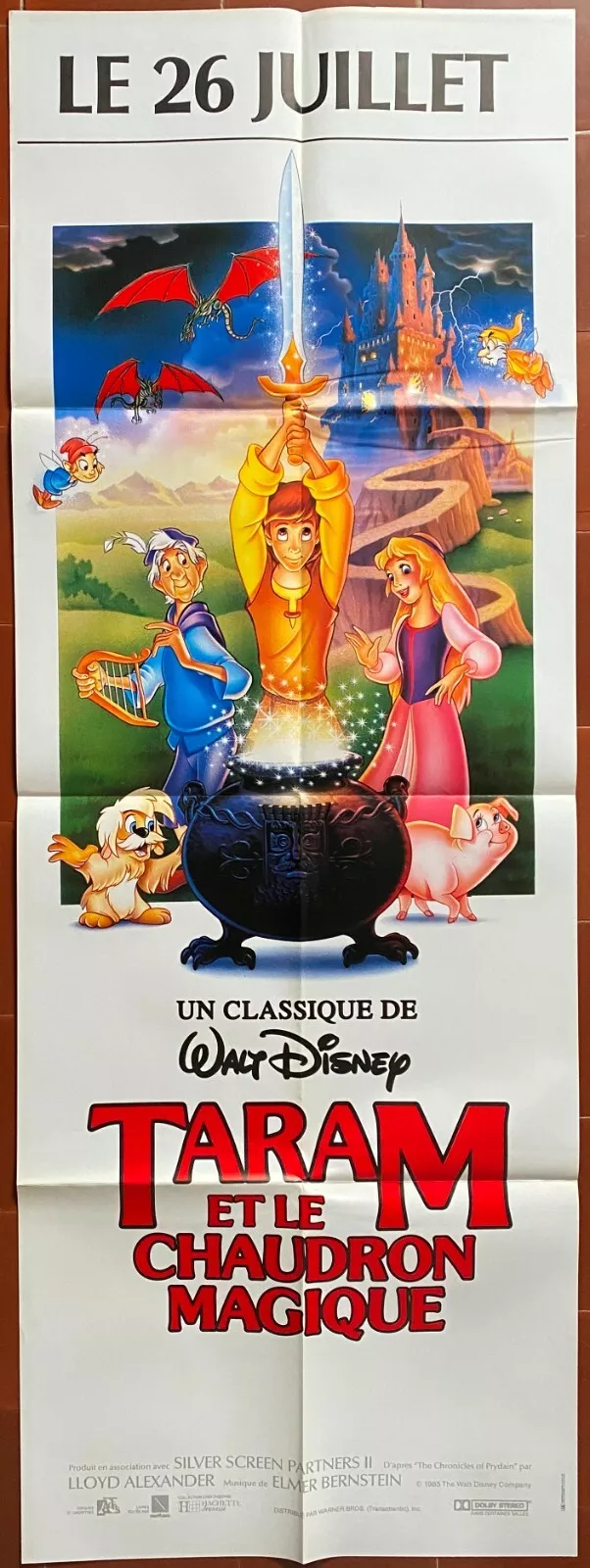
As a lifelong animation fan and someone obsessed with the behind-the-scenes drama that shaped Disney as we know it, I’ve always been fascinated by moments when big studios nearly crash and burn. The story around “Taram et le Chaudron Magique” (The Black Cauldron) is a prime example—an epic misstep from an “untouchable” giant that, for a few scary years, shelved the future of Disney animation. With its 40th anniversary reminding us just how high the stakes once were, let’s look back at how this could-have-been catastrophe shaped the modern Disney we all know.
Table of Contents (7)
The Black Cauldron: Disney’s Risk That Almost Ended the Magic
- Released in July 1985, it was Disney’s most expensive animated feature to date—and a notorious box office flop.
- Its failure nearly prompted a shutdown of Disney’s storied animation department, just before the dawn of the Disney Renaissance.
- After more than a decade in the vault, it earned cult-classic status among dark-fantasy buffs and animation historians.
- Just four years later, The Little Mermaid would pull Disney back from the brink and launch a new era of success.
It was 1985, and Disney’s legendary animation arm was stuck in a creative rut. Hits like Snow White and The Jungle Book were distant glories, while recent releases struggled to find an audience. Enter The Black Cauldron, adapted from Lloyd Alexander’s gritty fantasy novels—a far cry from the studio’s comfort zone of singing animals and fairy-tale romance. With a then-jaw-dropping $44 million budget, Disney took a gamble on sweeping shadows, ruthless villains, and an older hero’s coming-of-age arc. In gaming parlance, imagine your favorite childhood dev suddenly dropping a gritty M-rated reboot on day one of E3—and blowing the entire stockpile of development resources.
The result? A domestic haul of just $21.2 million—an outcome so disastrous it left execs pondering whether animation was worth the risk. Industry observers at the time whispered that Disney might shutter its entire feature animation unit, redirecting budgets toward live-action and theme parks. Yet there was more than box office drama at play: Disney artists were experimenting with early computer effects, hand-painting frames over new digital ink-and-paint systems, and pushing the envelope on color palettes. Those technical seeds would later flourish in films like The Rescuers Down Under and Beauty and the Beast.
Dark Themes and Complex Characters
Beyond its tech ambitions, The Black Cauldron dared to explore darker narrative territory. Its protagonist, Taran, wrestles with questions of identity and duty; Princess Eilonwy defies the damsel-in-distress mold with sharp wit; and the Horned King epitomizes the film’s theme of unchecked power. These elements foreshadowed the nuanced heroes and villains of later Disney hits—think Quasimodo’s moral quandaries in The Hunchback of Notre Dame or the psychological depth in Elsa’s journey from Frozen. Animation historian Dr. Jane Thompson points out that The Black Cauldron’s approach to moral gray zones rippled through Disney storytelling, encouraging writers to tackle more mature emotions in family films.
Industry Ripples and Comparative Flops
Disney wasn’t alone in grappling with animated risks. In 1978, Ralph Bakshi’s Lord of the Rings adaptation also stumbled under budget overruns and tonal uncertainty. Meanwhile, Don Bluth broke away from Disney to find moderate success with The Secret of NIMH in 1982, earning a niche following among animation aficionados. These contemporaries highlight how the mid-80s were a turning point: studios had to decide whether to play it safe or innovate. For Disney, The Black Cauldron’s failure prompted a harsh lesson—push storytelling as much as technology, or face oblivion.
From Vault to Cult Classic
After its lukewarm reception, Disney effectively buried The Black Cauldron. Unlike any other animated release, it sat off the home-video roster for over ten years. In France, it attracted roughly 3 million cinemagoers, but elsewhere it was largely ignored—until animation buffs rediscovered its offbeat charms on late-night VHS screenings. Today, the film’s bold use of shadow, its atmospheric score, and willingness to kill off characters resonate with fans of darker fantasy. It’s not a flawless masterpiece, but it’s undeniably a milestone in Disney’s evolution.
The Little Mermaid: Disney’s Lifesaver
Just four years after The Black Cauldron’s release, The Little Mermaid washed away Disney’s doubts in a tidal wave of success. It racked up $569 million worldwide, won two Academy Awards, and signaled the studio’s first major victory of the Renaissance era. But the lessons from the earlier flop were clear: invest in memorable characters, anchor your story in universal emotions, and blend innovation with familiar storytelling beats. Those principles paved the way for hits like Beauty and the Beast, Aladdin, and The Lion King—each carrying forward a strand of narrative ambition first tested in The Black Cauldron.
Why This Nearly-Forgotten Misfire Still Matters
Why revisit this dusty corner of Disney lore? Because flops can be as illuminating as blockbusters. The Black Cauldron forced Disney to reevaluate its approach, modernize production pipelines, and recommit to heartfelt storytelling. If you’re a game developer who’s experienced a high-stakes launch gone wrong, the parallels are clear: failure can crush morale, but it can also spark ingenuity. Disney rebounded by hiring songwriters Howard Ashman and Alan Menken, streamlining creative workflows, and embracing audience feedback—moves that echo today’s iterative game-design cycles.
TL;DR: From Legendary Flop to Renaissance Rock
The Black Cauldron stands as a testament to the perils of ambition without audience alignment. It nearly undid Disney’s animation legacy, yet its tech experiments and narrative risks sowed seeds for the studio’s most beloved classics. If you’ve got a soft spot for production backstories or dark-fantasy oddities, give it a watch. Just remember: without this cautionary tale, Disney’s great comeback—with mermaids, teapots, and singing street rats—might never have happened.
FinalBoss // Gear
Level up your setup
01Top-rated gaming headsetson Amazon→02High-refresh gaming monitorson Amazon→03Gaming chairson Amazon→04Discounted game keyson Kinguin→Affiliate links · As an Amazon Associate, FinalBoss earns from qualifying purchases.
Want to Level Up Your Gaming?
Get access to exclusive strategies, hidden tips, and pro-level insights that we don't share publicly.
Ultimate Gaming Strategy Guide + Weekly Pro Tips