
Table of Contents (9)
The sick day that dragged me back to the Future War
I did not plan to spend part of my precious vacation in bed, full of cold medicine, with a busted voice and a backlog staring at me like Skynet’s red eyes. Yet that is exactly how I ended up reinstalling Terminator: Resistance in 2026, years after bouncing off it the first time.
Back at launch in 2019 I tried it, shrugged, and moved on. The critics were unimpressed, Metacritic hovered in the “meh” zone, and the consensus sounded about right: janky visuals, dull AI, gunplay that felt like shooting nerf darts at chrome skeletons. Classic 60-70% license game energy.
But Steam told a different story. Around 90% positive user reviews, people calling it the “best Terminator game ever” and swearing by it as a must-play for fans. Then the Complete Edition landed in 2023, bundled with DLC and quality-of-life fixes, and the praise kept rolling in. The disconnect started to bug me. As someone who grew up rinsing the original Deus Ex and obsessing over movie tie-ins, I needed to know what everyone else was seeing that I clearly missed.
So there I was, tissues on the desk, tea going cold, firing up a game I had mentally already filed under “generic B-tier shooter”. And within a few hours, I realised I had been very wrong about which part of that description actually matters.
A janky shooter that quietly turns into a sandbox
Here is the thing about Terminator: Resistance: as a straight shooter, it is average at best. The guns sound fine but rarely feel punchy. Enemy AI is static, scripted, and frequently brain-dead. Animations and faces look two console generations behind. If you come in expecting the crisp combat of a modern AAA FPS, you will bounce hard.
But buried under that unimpressive surface is something I miss desperately from most modern shooters: actual freedom to solve problems in creative, slightly broken ways. Not the Ubisoft version of “play your way” where you still follow waypoints in the same order with the same outcomes, but genuine sandbox systems that collide in unexpected ways.
The campaign runs about eight to ten hours, split between two mission types. The first is completely forgettable: linear corridors that wish they were Call of Duty, where stuff explodes on cue and enemies spawn from obvious doors. You endure those chunks rather than enjoy them.
The second mission type is where it clicks. The game opens up into broad, semi-open maps that feel almost like compact Deus Ex hubs. Each one scatters objectives, side quests, patrol routes, loot stashes, locked doors, turrets, crafting materials, and multiple approach vectors. Then it more or less steps back and leaves you alone.
That last part is crucial. Most shooters act like anxious tour guides, constantly yanking your sleeve toward the next “intended” solution. Terminator: Resistance mostly does not care what you do, and the lack of handholding becomes a feature. It feels like the designers quietly stuffed the level with toys and walked out of the room.
The villa, the lasers, and the moment it won me over
There is one mission that flipped the switch in my brain from “okay, fine” to “oh, this game actually gets it”. You have to move through an old villa crawling with T‑800s. On higher difficulties, those things shred you in a heartbeat. The straightforward approach is obvious: fight your way room to room, wasting half your ammo and all your crafting materials trying to out-DPS murder skeletons that do not flinch.
Stealth is the second obvious route. The game has vents, line-of-sight, detection cones, basic but serviceable sneaking. You can creep through the corridors, hug shadows, slip past patrol patterns, and get out with no loot but all your limbs intact. Perfectly valid, slightly dull, totally plausible approach.
I ended up doing neither.
From the basement entrance, I noticed the place was laced with laser mines like some budget sci-fi heist movie. You can disarm them if you really want to play nice. Or you can do what I did: leave every single mine active, weave through them like an idiot trying not to sneeze, and basically turn the whole house into a deathtrap waiting to be sprung.
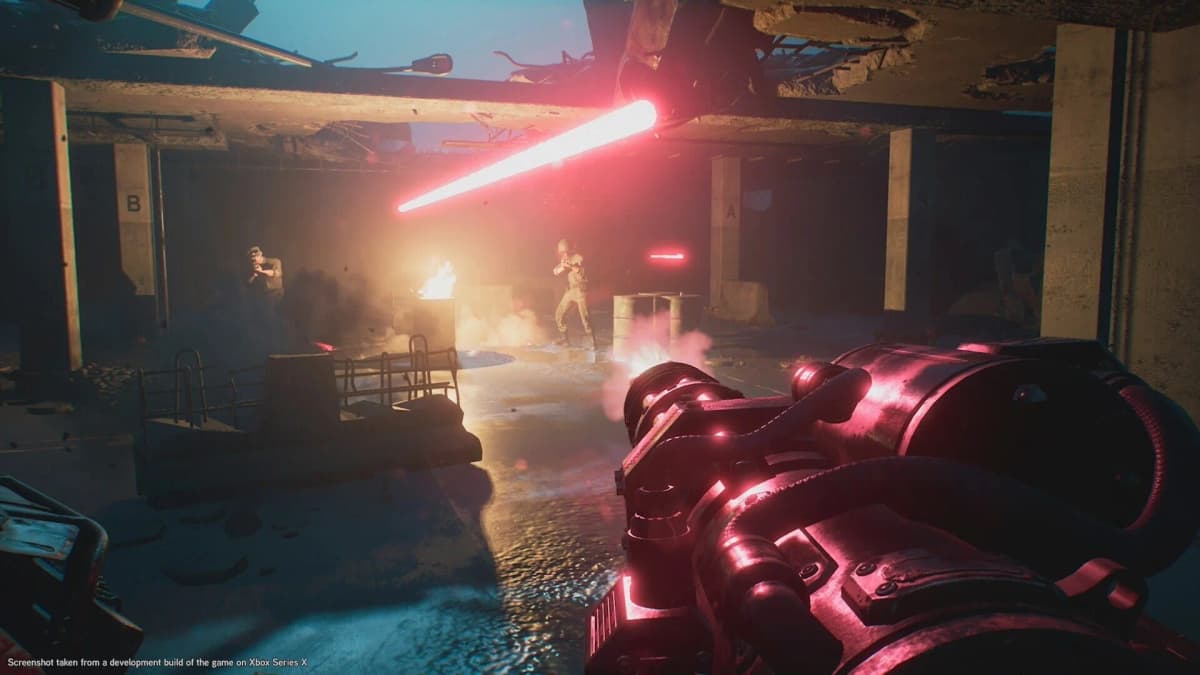
Once I reached the ground floor, I made noise on purpose. Shots into the ceiling, a loud misthrown grenade, sprinting in front of patrol routes with all the subtlety of a drunk T‑800. One by one, the machines noticed and started chasing. I bolted back down the stairs, through the laser web I had memorised, and listened to the beautiful chain reaction behind me.
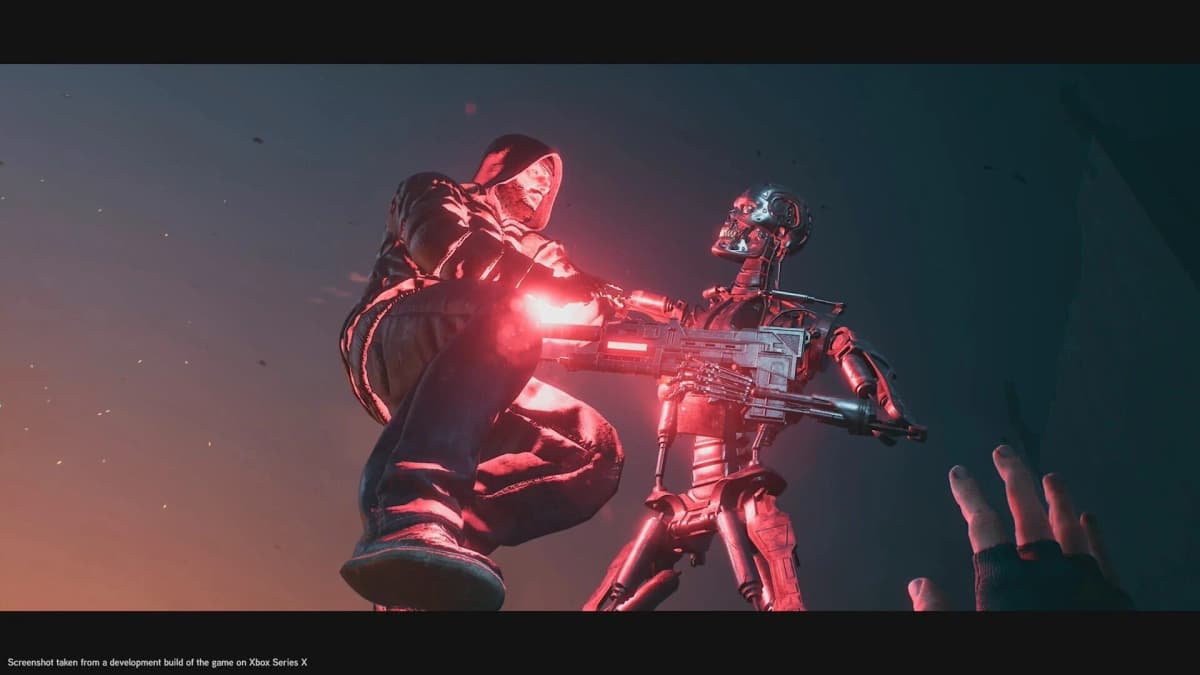
Metal clanging, explosions, damage numbers stacking, alarms wailing, the whole villa lighting up as Terminators blundered into a minefield I never technically “set up” because the level designer had already done the work. All I did was weaponise their own layout against them.
The game never tells you to do that. There is no pop-up saying “lure enemies into traps for bonus XP”. It simply has consistent rules: mines blow up whatever steps on them, enemies pursue line of sight, noise attracts attention. That small combination of systems handed me a solution that felt completely mine, even though the designers obviously anticipated it in some meeting years ago.
That is when it clicked. This is not really a movie shooter in the Modern Warfare sense. It is a lo-fi immersive sim wearing a licensed skin.
Pulling a Deus Ex on Skynet’s war machines
The villa stunt was not a one-off fluke. The more I leaned into the game’s skills and gadgets, the more it started to resemble a diet version of classic Deus Ex.
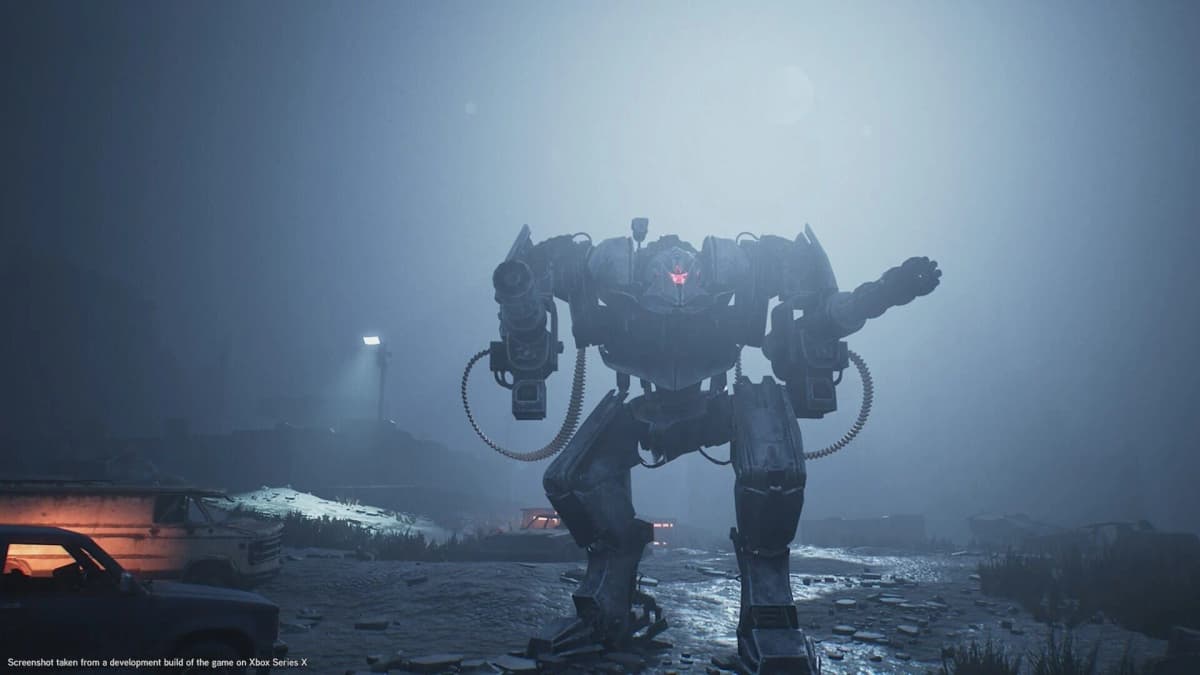
One highlight involved a massive Hunter-Killer tank trundling through a ruined landscape at night. At that story point, your weapons barely scratch its armor. The obvious intention is crystal clear: sneak close enough to photograph the thing, then get the hell out. Do not engage, do not waste ammo, survive and report back.
Except I had sunk points into hacking. A nearby fortification housed automated turrets that you can either ignore or reprogram. Standard immersive sim bait. My brain started connecting dots the moment I saw the layout. If I hacked those turrets, pulled the HK tank into their line of fire, and let the AI do the heavy lifting, maybe this supposedly invincible monster would not be so invincible after all.
So I slunk across the warzone, hacked each turret one by one, then stepped out of cover long enough for the tank to notice me. Red eyes, searchlights, that iconic engine roar, then plasma blasts chewing up the ground as I sprinted for my life toward my little nest of reprogrammed guns.
What followed looked like a glitch and felt like cheating, but it was completely legit. The turrets unloaded, the tank staggered, exploded into glorious scrap, and then they casually swatted a passing Skynet aircraft for dessert. Loot rained down; an achievement popped up for killing the tank early. The game quietly nodded and said, “Yes, you were not meant to do this now, but since you figured it out, fair play.”
What followed looked like a glitch and felt like cheating, but it was completely legit. The turrets unloaded, the tank staggered, exploded into glorious scrap, and then they casually swatted a passing Skynet aircraft for dessert. Loot rained down; an achievement popped up for killing the tank early. The game quietly nodded and said, “Yes, you were not meant to do this now, but since you figured it out, fair play.”
🎮 Get This Game at the Best Price
Compare prices instantly and save up to 80% on Steam keys with Kinguin — trusted by 15+ million gamers worldwide.
*Affiliate link — supports our independent coverage at no extra cost to you
That sense of “getting away with something” is the core immersive sim hit. It echoes that legendary subway hostage situation from the first Deus Ex, where explosives, hacking, stealth, and brute force all intersect. Terminator: Resistance is not as deep or intricate, yet the philosophy is recognisable. You are dropped into a sandbox with just enough overlapping mechanics-hacking, mines, turrets, stealth, crafting, multiple entrances-that your own weird ideas stand a real chance of working.
Modern shooters rarely allow that. The big franchises either lock you into rollercoaster corridors or pad out their “open worlds” with copy-paste outposts that all solve the same way. Experimentation becomes pointless because you already know the outcome. Terminator: Resistance does the opposite. It routinely throws you into areas where enemies outclass you and basically shrugs. Sink or swim; break the game if you can.
Why the tech jank honestly does not bother me
This is where I start disagreeing with old reviews. The criticisms about weak AI, stiff animation, dated visuals, and floaty shooting still hold. None of that magically fixed itself in the years since launch, even with the Complete Edition improvements. It is absolutely a B-game, built on a modest budget by Teyon, the same studio that once unleashed Rambo: The Video Game on the world. That track record does not inspire confidence.
However, a game does not need to be the best in its genre to be perfect for a specific itch. When you play it like a straight shooter, Terminator: Resistance is underwhelming. When you accept it as Eurojank immersive sim lite, the rough edges fade into the background because the decisions you make become more interesting than the way bullets feel leaving the barrel.
Enemy AI being a bit simple actually helps the fantasy of outsmarting Skynet rather than out-aiming it. The stiff character models accidentally feed into the whole bleak, synthetic future war ambience. The low-fi presentation frees the game from the exhausting need to be a spectacle and lets it just be a playground. That does not excuse bad FOV options at launch or creaky performance on some rigs, but it reframes the stakes.
What matters more is that the rules are consistent. Mines detonate reliably. Turrets behave predictably once hacked. Stealth works the same way in every level. Crafting is simple but dependable. Once you understand the systems, you can trust them. In a sandbox-heavy game, that trust means more than perfect motion capture or volumetric fog.
The best Terminator game ever… which says more about the franchise than the game
I have seen people call Terminator: Resistance the best Terminator game ever made, and they are not wrong. The part nobody likes to say out loud is that the bar is painfully low. This license has been abused for decades with forgettable shooters, clumsy action games, and mobile junk.
Resistance rises above that pile not because it is flawless, but because it actually understands what makes the films tick. The future war sequences in T1 and T2 were not about mowing down endless waves; they were about desperation, improvisation, and underdogs trying to outthink a machine god that outguns them in every way.
When you are cowering behind burned-out cars, watching HK drones sweep searchlights over rubble while that Brad Fiedel-inspired synth score pounds away, the game nails that atmosphere. You hear plasma fire in the distance, see red eyes scanning for survivors, and realise you really are just another resistance grunt scraping by. That authenticity hits harder than any fancy particle effect.
Character interactions are corny, but the smaller-scale, personal stories work: scavengers clinging to life, families hiding in basements, bitter soldiers who have seen too much chrome. Side missions where you decide who gets scarce resources feel more in line with the first movie’s grungy horror vibe than the bombast of later sequels.
So yes, calling it the “best Terminator game” oversells how polished it is. What it really means is that, for once, someone used this license to build an actual game with systems worth poking, rather than a quick cash-in. As a lifelong fan of both the franchise and immersive sims, that already puts it in rare company.
Modern shooters could learn from this humble B-game
The thing that sticks with me after revisiting Terminator: Resistance is not nostalgia. It is how quietly rebellious the design feels compared to today’s blockbuster shooters.
Instead of endlessly chasing live-service engagement or open-world bloat, it delivers a focused, single-player campaign that ends before it outstays its welcome. Instead of squeezing you through cinematic corridors for 90% of its runtime, it regularly opens up into sandboxes where your toolkit actually matters. Instead of over-tutorialising every mechanic, it trusts you to experiment and occasionally face-plant.
Even the structure encourages tinkering. Difficulty settings can be dropped if you just want to see the story, or cranked up so that every resource matters and any direct firefight feels suicidal. Skill points force you to pick a style: better at hacking, more lethal with explosives, sneakier, or more durable. Those choices reshuffle the solution space of each open level in small but meaningful ways.
It reminds me of a time when shooters were allowed to be a little scruffy and systemic instead of pristine and overproduced. Games like the original Deus Ex, Thief, Project IGI, even the jankier stuff on PC that felt like it was one patch away from falling apart but still produced incredible stories precisely because it left room for player chaos.
No one is going to write design textbooks around Terminator: Resistance. But the fact that a modest licensed game from 2019 is still being reappraised positively on Steam in 2026 says something uncomfortable about how risk-averse mainstream shooter design has become. When the “janky Terminator game” is one of the better recent examples of player-driven sandbox combat, bigger studios clearly left some ideas on the table.
So, should you play it now?
After playing through the Complete Edition on PC, including its DLC side stories, I have landed in a place I did not expect: I genuinely recommend this thing, with caveats.
If you live and die by razor-sharp gunfeel, bleeding-edge graphics, or competitive multiplayer, this will not convert you. The weaknesses the critics flagged at launch are real and visible within the first hour.
But if you care about single-player shooters that let you think, improvise, and occasionally break the script; if the phrase “lightweight Deus Ex sandbox in a Terminator skin” makes your ears perk up; if you are happy to embrace a bit of Eurojank in exchange for genuine systemic freedom, then Terminator: Resistance becomes far more than a disposable license tie-in.
On sale, it becomes an easy recommendation. You get an eight-to-ten-hour campaign, some surprisingly replayable open maps, a tone-perfect future war atmosphere, and enough room to pull off stupid, brilliant stunts with mines and turrets to keep you grinning through the rough spots.
Revisiting it while sick, half-dazed and wrapped in a blanket, I expected comfort junk food. What I found instead was a reminder that even scrappy B-games can carry the torch for design ideas the big hitters have quietly abandoned. Terminator: Resistance is not the best shooter I have played in the past decade. For the specific itch of “let me outsmart killer robots in a janky immersive sim sandbox”, though, it is damn close to perfect.
FinalBoss // Gear
Level up your setup
01Top-rated gaming headsetson Amazon→02High-refresh gaming monitorson Amazon→03Gaming chairson Amazon→04Discounted game keyson Kinguin→Affiliate links · As an Amazon Associate, FinalBoss earns from qualifying purchases.
Want to Level Up Your Gaming?
Get access to exclusive strategies, hidden tips, and pro-level insights that we don't share publicly.
Ultimate Gaming Strategy Guide + Weekly Pro Tips