
A Steam achievement percentage is one of the easiest numbers in gaming to misuse. It looks objective. It looks clean. It gives everyone a tidy little headline. In Crimson Desert’s case, the headline was that only about 6.8% of Steam players had finished the main story two months after launch. That sounds brutal if you want it to sound brutal, and it sounds weirdly triumphant if you want to spin it as proof that players are “doing open-world games correctly.” I do not buy either lazy reading.
The number is plausible. It is also narrower, messier, and more platform-specific than people pretend. Public Steam achievement data can tell you something real about player behavior, but it is not a sacred industry benchmark. It is a snapshot of one ecosystem, one achievement setup, one moment in time, and one particular kind of game. Treating “6.8% finished the story after two months” as a universal statement about engagement is sloppy.
What the stat actually does, if you read it with any discipline at all, is expose a familiar problem with oversized open-world design: players do not simply “choose freedom.” They get stalled by pacing, distracted by system density, and buried under optional tasks that look equally urgent until the main narrative loses all momentum. Crimson Desert is not the first game to do this, and it will not be the last. But the 6.8% figure is a useful signal because it points straight at where these games start bleeding narrative commitment.
Table of Contents (6)
Why the 6.8% figure matters, and why it should not be worshipped
The first correction is basic but necessary: Steam achievement percentages are not a perfect count of everyone who meaningfully played a game. They reflect owners within Steam’s ecosystem and depend on achievement tracking actually being active. That already excludes or distorts some cases: offline play, disabled achievement syncing, refunds, family sharing oddities, and people who never launch far enough for meaningful tracking. Even before anyone starts building a grand theory around Crimson Desert, the denominator is fuzzier than the headline implies.
The second correction is timing. Steam’s public achievement percentages are live and cumulative. They can move materially as more players buy in, as sales expand the owner base, as patches change progression flow, or as late adopters finally push through the campaign. A two-month figure is useful as a launch-window snapshot, not as a permanent verdict engraved in stone. If the game hits a discount, joins a bundle, or receives a major update, that percentage can shift again for reasons that have nothing to do with the original launch cohort.
The third correction is the most important one: completion rates are shaped by the chosen achievement, not just by “quality” or “difficulty.” Story-complete achievements in long narrative-heavy games often live in the single digits or low tens on Steam. Console trophy ecosystems can show noticeably different results for similar milestones because the player base, tracking behavior, and platform habits are not identical. So when people throw around 6.8% as if it proves some universal truth about attention spans or game quality, they are overselling the metric.
That said, dismissing the number completely would be just as dumb. Even a noisy signal is still a signal. If only a small slice of the tracked Steam population has seen the credits after two months, something is happening between the opening hours and the end of the main quest. The productive question is not whether the stat is perfect. It is what kind of friction it points to.
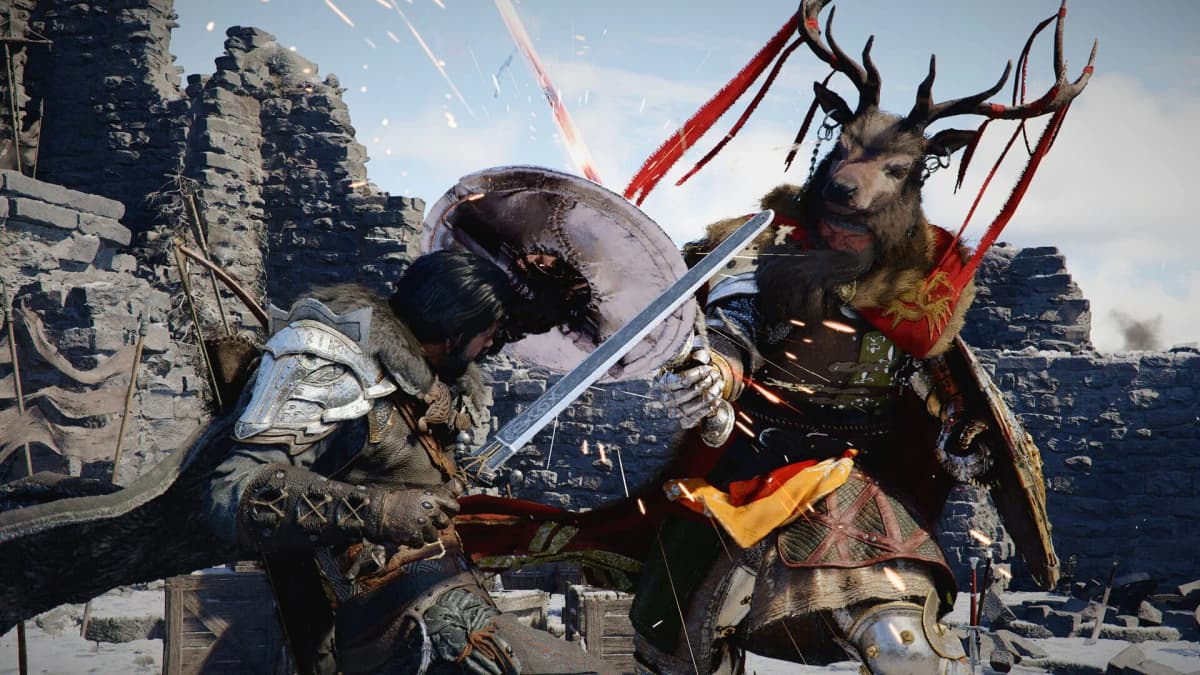
Crimson Desert has the exact structure that causes this kind of stall
Long games do not automatically produce low completion. That excuse gets repeated because it feels intuitive, but the evidence is weaker than fans of giant maps want to admit. A widely cited community analysis combining HowLongToBeat data with SteamDB and PSNProfiles found only a weak negative correlation between game length and completion rate, around r = -0.24. In plain English: length matters, but only modestly. Other factors matter a lot more than raw hours.
Crimson Desert’s real issue is not simply that it is big. It is that it appears designed to scatter your attention before its central narrative loop becomes indispensable. Reporting around the game’s first two months suggested that a large share of players remained stuck in early progress milestones, while many others had reached midgame chapters without actually pushing through to the ending. That pattern is revealing. It suggests congestion points, not just slow play. Players are not marching in a clean line from chapter to chapter. They are pooling in certain bands of progress, which usually means the game keeps giving them reasons to stop advancing the plot.
This is where open-world praise often turns into camouflage for bad pacing. People say, “Players are just enjoying the world.” Sure, some are. That is obviously part of it. But “enjoying the world” and “losing narrative traction” are not mutually exclusive. In fact, big-budget open worlds are now experts at creating that confusion. They flood the map with side contracts, crafting hooks, collectible trails, upgrade loops, faction errands, and combat detours before the player has developed a strong narrative habit. The result is freedom on paper and diffusion in practice.
If the early game is slow, system-heavy, or overloaded with information, that problem gets worse. Players do not only bounce because they are bored. They also bounce because they cannot yet tell which activities are meaningful, which are filler, and which are secretly required for the game to feel good later. When a game with Crimson Desert’s scale fails to make those priorities obvious, a lot of players do what completionists always do: they start cleaning the map too early, turn the first region into a full-time job, and quietly burn themselves out before the main plot has earned that level of commitment.
The worst spin around this story is that everyone unfinished is “playing it right”
I understand the instinct behind that argument. Open-world games are often at their best when you stop speedrunning the objective marker and start poking at the edges. A low story-completion rate can absolutely coexist with a healthy, active player base. Some people buy these games specifically to roam, fight, experiment, and ignore the credits for weeks. That is normal.
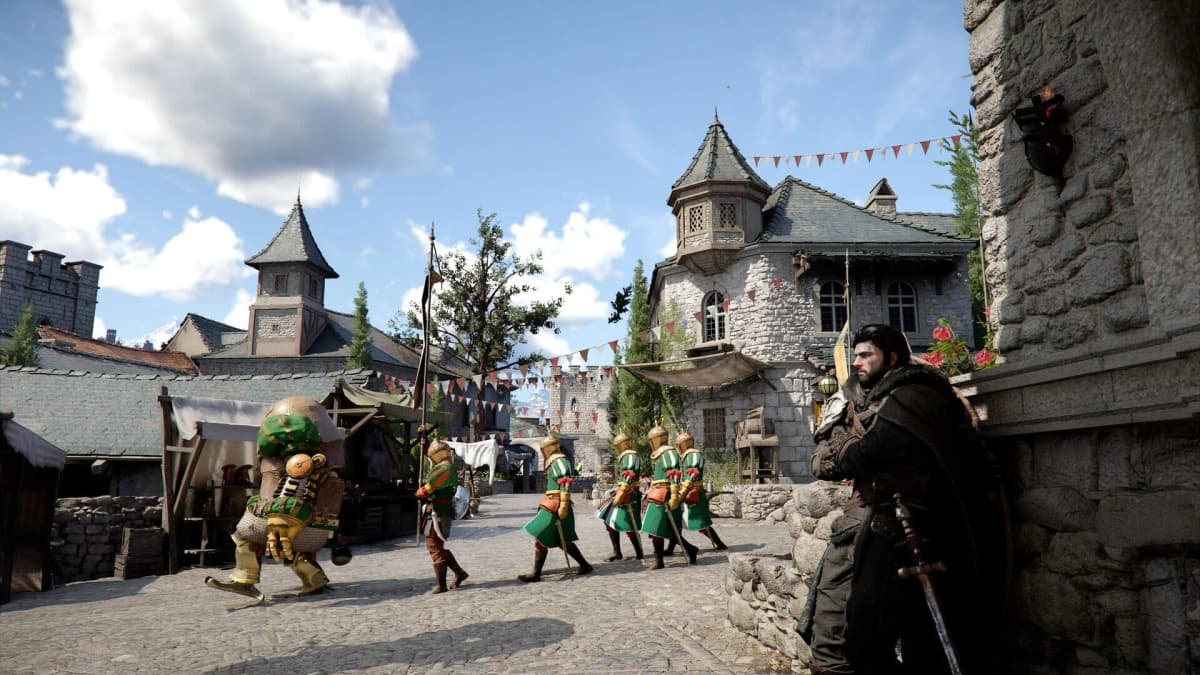
But there is a difference between saying the stat is not automatically alarming and saying the other 93.2% are therefore “doing it right.” That is sentimentality disguised as analysis. Some unfinished players are happily immersed. Some are waiting for patches. Some are halfway through and taking their time. Some have quit. Some are overwhelmed. Some meant to come back and never will. Flattening all of that into a single celebratory narrative is no more honest than flattening it into a doomsday narrative.
What bothers me is the way that spin lets design off the hook. If a game has enormous scope, opaque progression, and an early structure that encourages players to overinvest in side content before the story really tightens, then a low completion rate is not just a cute sign of abundance. It is also evidence that the game is not managing player attention especially well. Not every player who stalls is a failure. Sometimes the game is the one failing to establish hierarchy: this matters now, this can wait, and this activity actually supports your build instead of wasting your evening.
Where players usually get trapped in games like this
The early chapters are the first danger zone. This is where open-world games tend to overexplain systems and under-explain priorities. You get mechanics, vendors, currencies, regions, side chains, upgrade materials, traversal gimmicks, and little map pings everywhere. A disciplined campaign can survive that if the story is urgent enough or the onboarding is clean enough. A sprawling one often cannot. Players mistake exposure for obligation and start doing everything because the game has not yet taught them what can safely be ignored.
The midgame is the second danger zone. By then the player knows the rules, but the narrative stakes often loosen right when the world opens even wider. This is where the main quest starts competing with the player’s own admin work. Inventory management, build tuning, mount upgrades, crafting loops, bounty hunting, resource routes, and region cleanup all begin to feel productive, even when they are only adjacent to actual progress. The player is active, but not advancing. Steam achievements are blunt instruments, yet they still catch the outline of this behavior because the chapter milestones stop moving.
The completionist layer makes it worse. Community impressions around Crimson Desert’s broader achievement hunt suggest a lot of opaque requirements and niche objectives that push players toward guide dependency and long-tail cleanup. That is fine for the tiny percentage chasing 100%. It becomes a problem when the game communicates in a way that makes ordinary players behave like amateur completionists long before the story is done. Once that happens, exhaustion arrives faster than satisfaction.
If you are playing Crimson Desert now, pick a lane early
This is the part of the 6.8% story that actually matters to players. The stat is not just trivia. It is a warning about run management. If a large open-world game is showing a low story-finish rate and obvious chapter clustering, the smart move is to stop pretending every session needs to serve every goal at once. Decide what kind of run you are doing.
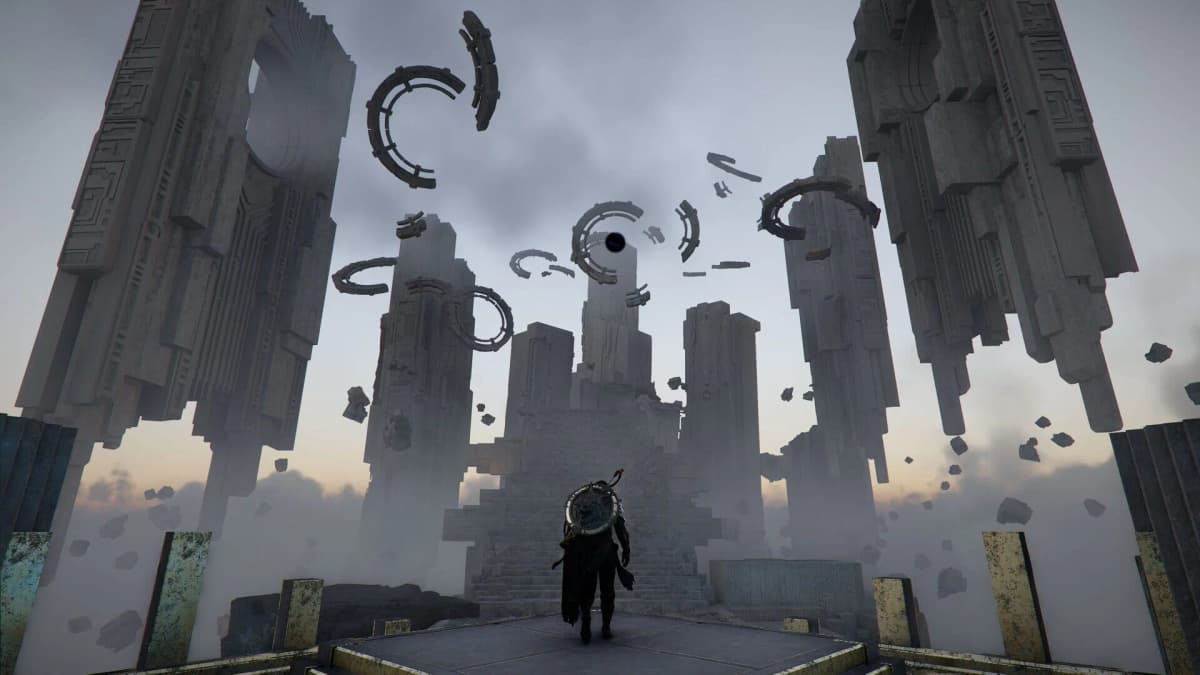
- Choose a story run or a completion run. A hybrid approach sounds efficient, but in games like this it is where momentum goes to die. If your real goal is to see the ending, treat side content as support, not as equal priority.
- Do not fully clear the first major region. Sample it. Learn the systems. Take the side content that teaches combat, funds upgrades, or unlocks mobility. Leave the rest alone until the game has properly opened up.
- Push the main quests until your core toolkit is settled. Open-world combat and traversal usually feel better after a handful of key unlocks. Many players burn out because they linger before the game has even shown its best verbs.
- Prioritize side activities with direct returns. Gear materials, money, skill resources, mobility tools, and faction progress tied to useful rewards are worth your time. Low-yield collectathons are not.
- If a chapter starts feeling sticky, stop tidying the map. That urge to clean every icon is usually the exact moment pacing breaks. Advance the plot, then loop back if you still care.
- Do not confuse time spent with progress made. Ten hours of chores in one zone can feel productive and still leave you less engaged than two focused story missions.
None of this means “skip all side content.” That would miss the point of a game built around exploration. The point is that side content needs a job. It should sharpen your build, deepen your understanding of the combat, or improve your movement through the world. If it is merely keeping you busy, it is probably contributing to the exact behavioral pattern that the Steam achievements are exposing.
What developers should be reading in this data
If I were looking at Crimson Desert’s achievement page from the developer side, I would care less about the final 6.8% than about the gaps between chapter milestones. That is where pacing failures reveal themselves. A finish-rate number alone is crude. A pattern of players clustering in early or intermediate chapters is far more useful because it tells you where narrative momentum weakens, where information density spikes, and where optional content starts cannibalizing the campaign.
That kind of data should lead to concrete adjustments: clearer signaling on high-value side activities, better separation between flavor content and progression-supporting content, faster access to the game’s most satisfying movement or combat tools, and less early pressure to engage with every system at once. Open-world design does not need to become smaller to become sharper. It needs to stop assuming the player’s attention is infinite.
That is why the 6.8% figure is worth taking seriously without turning it into mythology. It is not a final judgment on Crimson Desert. It is a platform-specific, moving snapshot that still manages to illuminate a real structural issue. When a massive game asks players to improvise their own hierarchy of goals from the opening stretch onward, a lot of them will not reach the ending quickly, and plenty will not reach it at all. Not because they hate the game, and not because they are all leisurely connoisseurs of sandbox design, but because the path of least resistance in a game that large is often drift.
That is the part worth remembering. The most dangerous thing in an open world is not difficulty, and it is not even length. It is the moment the game stops telling you what deserves your attention now. Once that hierarchy collapses, the credits start feeling optional in the worst possible way.
FinalBoss // Gear
Level up your setup
01Top-rated gaming headsetson Amazon→02High-refresh gaming monitorson Amazon→03Gaming chairson Amazon→04Discounted game keyson Kinguin→Affiliate links · As an Amazon Associate, FinalBoss earns from qualifying purchases.
Want to Level Up Your Gaming?
Get access to exclusive strategies, hidden tips, and pro-level insights that we don't share publicly.
Ultimate Gaming Strategy Guide + Weekly Pro Tips