
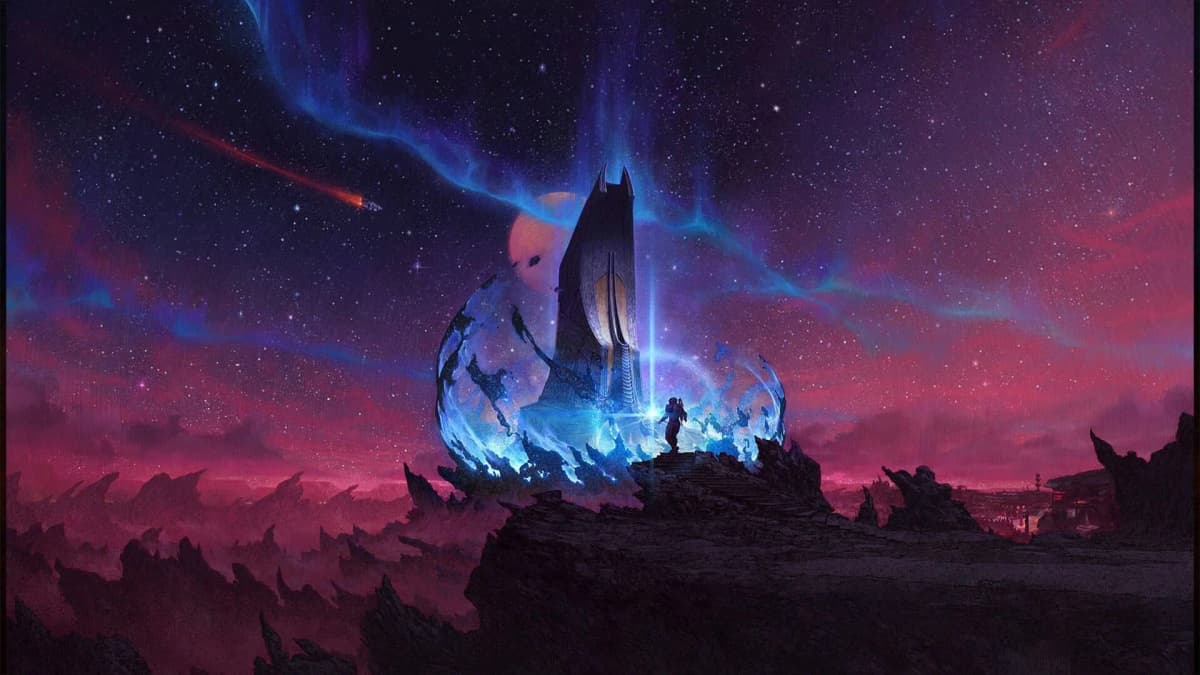
Why Starfield’s Vast Cosmos Feels Hollow—and How to Fix It
Why This Breakdown Matters
Starfield is one of those rare games that can feel both exhilarating and empty at the same time. Bethesda’s first new IP in 25 years delivers slick shipbuilding, punchy gunplay, and sprawling systems—but it also lays bare how scale without soul can hollow out a space epic. That tension is exactly what veteran designer Bruce Nesmith confronted in his recent postmortem, where he admitted that, in trying to build 1,000 planets, the team leaned too heavily on procedural tools and skimped on the connective tissue that makes worlds sing. I’m a longtime Bethesda fan who lost hours tinkering with Starfield’s ship editor and still enjoyed its best questlines, yet even I felt that disconnect. Understanding exactly where the dream unraveled helps explain why many players walked away feeling more “checklist” than “grand adventure.”
Key Takeaways
- Procedural generation gave Starfield scale but sacrificed emotional payoff.
- Wildlife feels decorative instead of dynamically woven into systems.
- Menu-driven space travel undercuts the thrill of piloting your own adventure.
- The “Skyrim in space” expectation spotlighted every design compromise.
Procedural Generation: Scope vs. Substance
Procedural generation isn’t intrinsically bad—No Man’s Sky used it to spark genuine wonder, and Diablo’s endless dungeons thrive on randomized loot. In his Bethesda blog post, Nesmith pointed out that Starfield’s proc-gen “built breadth but not depth,” creating thousands of planets that look different yet feel the same. You touch down, scan the horizon, punch out a few rock samples, clear a modular enemy camp… rinse and repeat. The tally of “discovered” worlds is impressive on paper but devoid of narrative hooks.
Contrast that with Mass Effect’s Omega station or the Normandy’s shore leave quests, where each location was hand-crafted with unique characters, moral tension, and environmental storytelling. Even when exploration is optional, those authored moments reward curiosity. Starfield’s planetary clusters could have adopted a hybrid approach—small handcrafted zones embedded inside procedural rings. Instead, too many worlds felt mathematical, not meaningful.
Fauna: From Wallpaper to Worldbuilding
Nesmith bluntly described wildlife as “pretty puzzle pieces” in a checklist, rather than catalysts for emergent encounters. In Starfield, a rabbit-like beast scuttling across a taiga planet rarely changes your plans. What if instead:
- Biome-Specific Resources: Only certain creatures carry rare reagents—mutant beetles for biofuel, crystal-scaled lizards for heat shields—forcing you to chase ecosystems and risk hostile predators.
- Dynamic Predator-Prey Chains: Harvest too many herbivores and apex hunters descend on your skiff, triggering firefights or offer-for-danger deals with local factions.
- Environmental Mutations: Fauna exposed to radiation zones mutate over time, granting high-risk, high-reward crafting materials—and unpredictable behavior that tests your readiness.
Imagine a micro-story: you crash-land on a desert world, scavenging water from prickly cacti when a pack of neon-striped sandwolves tracks your biolabs. You must decide: lure them into a canyon ambush, negotiate with an outpost engineer for tranquilizer darts, or abandon your samples and sprint to your ship. That kind of moment transforms background critters into living threads in the tapestry of exploration.
Ship Fantasy: Breaking the Menu Chains
Starfield’s menu-driven hop between stars—click, load, warp, land—plays more like an Excel pivot than an interstellar odyssey. Nesmith confessed he “loved moments piloting at low orbit,” but admitted the final build prioritized stability over seamless drama. Yet other space sims show what’s possible:
- Seamless Transitions: No loading screens between hyperspace and atmosphere. Imagine slamming out of ballistics to dodge an asteroid field, with the entire sequence unfolding in real time.
- Emergent Interdictions: Pirate ambushes that bleed into on-foot missions: your shields fail, you eject, and the same raiders hunt you on the planet below—bridging space and ground in one pulse-pounding beat.
- Fuel and Maintenance Tensions: A risk-reward loop where skipping ship repairs boosts speed but raises hull breach odds, encouraging you to scavenge or trade for rare parts instead of clicking “auto-refuel.”
These tweaks wouldn’t just add crunch; they’d fulfill the fantasy of being “at home” in a cockpit. Right now, Starfield’s space travel feels like ordering takeout: efficient, predictable, but oddly unsatisfying.
Want to Level Up Your Gaming?
Get access to exclusive strategies, hidden tips, and pro-level insights that we don't share publicly.
Ultimate Gaming Strategy Guide + Weekly Pro Tips
Lessons from Peer Sci-Fi RPGs
Looking back at the genre’s landmarks underscores where Starfield stumbles. Mass Effect’s loyalty missions deliver character arcs that ripple across the trilogy. Elite Dangerous sells the thrill of risk—smuggling, bounty hunting, deep-space mining—all in a fully simulated economy. No Man’s Sky pivoted mid-life to weave handcrafted story quests into a procedural framework. Each found a way to marry systems and authorial vision.
Starfield sits at a crossroads: it feels half procedural RPG, half hand-curated shooter, and never quite marries the two. The ship designer is one of the richest I’ve seen, but once your vessel hits orbit, it seldom participates in the narrative beyond serving as a loading screen. Quests like “Where the Heart Falls” show Bethesda’s knack for intimate, character-driven storytelling, but they’re islands in an ocean of checkboxes.
The Path Forward: Concrete Fixes
Nesmith reminds us that Starfield shipped in a good place—strong core combat, a deep skill wheel, and moments of genuine wonder. The next step is focus, not more planets. Here’s how Bethesda could tighten the loop:
- Fewer, Richer Planets: Curate galaxy clusters around key themes—industrial worlds rife with orbital skirmishes, lush garden planets threatened by terraforming experiments, or outlaw moons that shift power between rival gangs.
- Fauna with Purpose: Integrate creatures into faction economies, crafting chains, and emergent events. Imagine a “bounty” on a runaway super-predator that requires teaming up with a rival corporation’s mercenary wing—complete with dynamic tracking and high-stakes risk.
- Earn the Ship Fantasy: Embrace optional seamless flight, treat the universe as a single sandbox, and layer in maintenance decisions that tug at resource management and player agency.
- Micro-Stories Over Templates: Swap cookie-cutter outposts for 10- to 20-minute vignette quests: a distress call from a stranded scientist, a clandestine heist on a high-security lab, or a moral quandary aboard a quarantined space station.
Modders have already taken initial steps—mods like “Frontier Cities” toughen up urban density, “Encounter Expansion” injects new enemy spawns, and “Seamless Warp” cuts down loading. If Bethesda channels that grassroots creativity into an official “Systems Overhaul” expansion, Starfield could quickly gain the narrative depth and mechanical bite it currently lacks.
Why This Matters Beyond One Game
In the post-Baldur’s Gate 3 era, players demand more than endless decks of cards to draw. They want systems that carry narrative weight and make every second matter. With Xbox Game Pass lowering the barrier to entry, millions will judge your first hour before clicking “Play Again.” If Bethesda’s next universe hinges on spectacle, it risks becoming the next big “maybe.” But if it sweats the little moments—where fauna, planets, and ship controls all speak the same language of adventure—it can reassert itself as an industry leader in open-world RPG design.
TL;DR
Bruce Nesmith’s frank postmortem zeroes in on Starfield’s biggest miss: scale without narrative glue. Its procedural planets, decorative wildlife, and menu-bound space travel undermine the sense of genuine discovery. The cure isn’t more content—it’s deeper systems, richer micro-stories, and seamless transitions that make every landing feel like the start of something epic.