
The hourglass beside a dialogue choice is the moment The Blood of Dawnwalker asks for a real commitment. The headline deadline of 30 days and 30 nights is a finite story resource for saving Coen’s family from Brencis before the coronation, but it does not drain while you explore Vale Sangora. The practical rule is simple: the clock advances when you confirm a marked, time-costing action, and the hourglass tells you the segment price before you spend it.
That makes the system far less punishing than a constant open-world timer. You can walk, climb, fight, loot, inspect the map, browse menus, speak to most NPCs, and leave the game idle without burning through the deadline. Save your attention for quest resolutions, major choices, shrine waiting, and any interaction that shows the sand timer.
Table of Contents (7)
The 30-Day Deadline Is a 480-Segment Budget
The full run is divided into 30 daytime phases and 30 nighttime phases. Each day contains eight segments, and each night contains eight more, giving Coen up to 480 time segments across the main narrative. The bar in the top-right corner shows the eight segments remaining in the current day or night phase.
Think of every segment as quest currency. You are not racing a real-time clock; you are deciding which story beats, investigations, detours, and phase changes deserve part of that budget. A time-costing action spends whole segments, so there is no value in trying to shave a few seconds off a conversation or sprinting across the map.
The trap: players see “30 days” and start rushing through exploration. That is the wrong response. Free exploration is where you gather information, locate routes, unlock travel points, and decide which objectives deserve a time payment. The pressure starts when an hourglass appears.
What Actually Advances Time
Use the hourglass as the final authority. If the interaction displays it, the action will move the clock by the number of segments shown. If there is no hourglass, it generally leaves the global deadline alone. Some quest steps can trigger time movement during a mission or immediately before a major decision, so pause long enough to read the confirmation rather than confirming dialogue on autopilot.

| Activity | Time effect | What to do with it |
|---|---|---|
| Walking, climbing, swimming, scouting, map use, menus, ordinary loot, and combat | No story segments spent | Use this freedom to fully inspect an area and prepare before committing to objectives. |
| Already unlocked fast travel points | No story segments spent | Fast travel between available shrine points instead of manually crossing familiar ground. |
| Main quest milestones and major quest resolutions | Consumes the marked number of segments | Finish nearby free exploration first, then commit when the route and phase suit Coen. |
| Selected dialogue choices and key NPC conversations | Consumes segments when an hourglass is shown | Check the icon and its number before confirming; dialogue can be a time spend, not filler. |
| Waiting at wayside shrines | Advances time and spends segments | Use it deliberately to change Coen’s form or access a phase-gated objective. |
| Astral Planes within Haunted Sites | Consumes time segments | Do not treat these special-area explorations like ordinary free-roaming. |
| Some ability learning, perk purchases, location interactions, and world events | May consume segments when marked | Read the prompt every time; the exact exhaustive list of edge-case costs is not fixed by one universal checklist. |
How to Read the Hourglass Warnings
The hourglass icon does more than say “time will pass.” Its number shows how many segments the action costs. A one-segment choice is a modest payment; a larger number can erase a meaningful part of the current day or night. This is why it is worth comparing available quest leads before accepting the first major commitment in an area.
Some hourglass warnings also point toward a sun or moon. That arrow matters because it warns that the action will push Coen across the day-night boundary. Treat it as a route-planning signal, not cosmetic UI: a phase flip can change the abilities available to you, alter a quest’s approach, and put phase-sensitive content at risk.
The game also reinforces looming jumps with ticking audio and greyed-out clock segments. When those signals appear around an interaction, stop treating the prompt as routine dialogue. Check the current phase, review whether you still have nearby quest business, and decide whether the cost is worth taking now.
Plan Around Coen’s Day and Night Forms
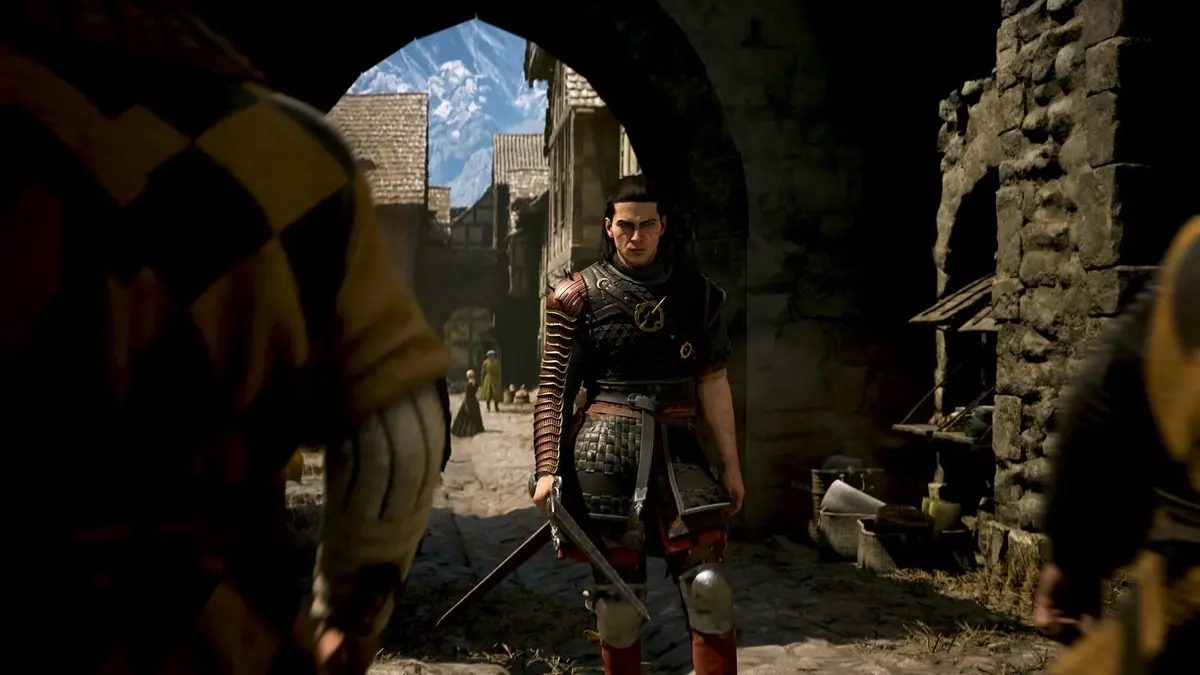
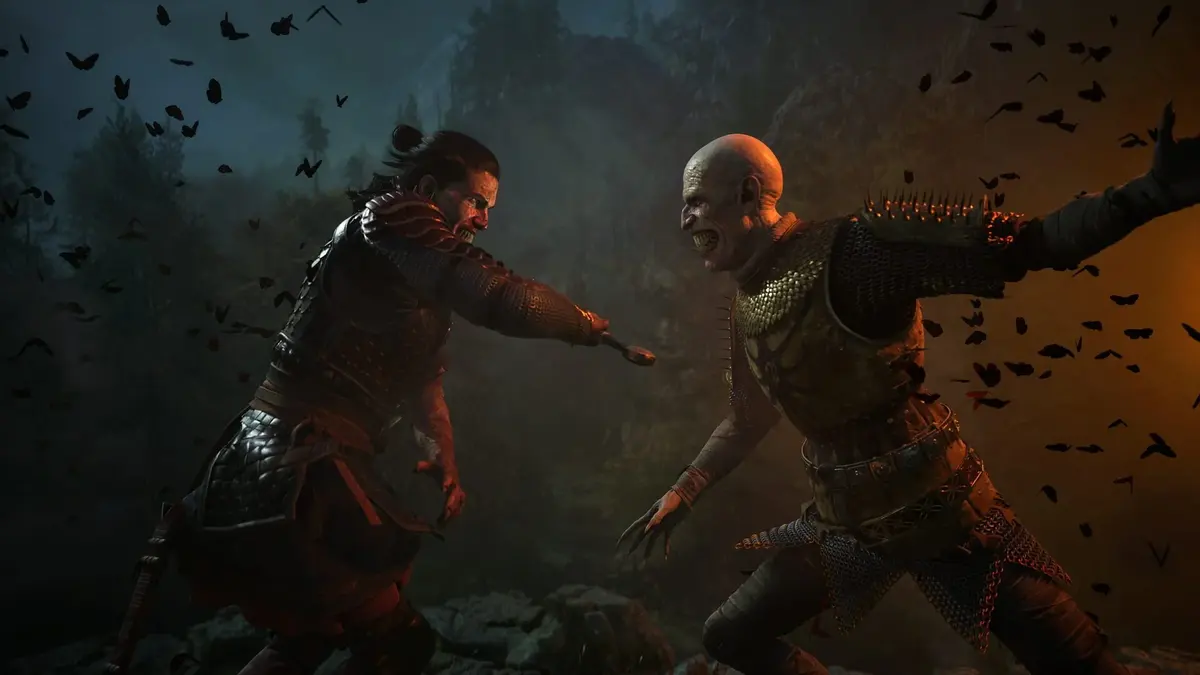
Time is tied directly to Coen’s identity. During the day, Coen is human and uses Witchcraft abilities. At night, he becomes a vampire and gains Vampiric powers, including teleportation, wall climbing, and claw attacks. A time jump can so change more than the lighting: it can open a different route through a quest or remove the approach you were about to use.
Nighttime also changes survival rules. Human healing methods such as potions and healing food do not work for vampire Coen. He restores himself through blood items or by feeding on enemies. Keep that in mind before spending segments to move into the night, particularly if you were relying on daytime supplies to stabilize after a difficult encounter.
Hunger can make the night route far messier. If Coen is at one health segment or lower during nighttime dialogue, an option to “Give in to the hunger” can appear. Choosing it makes him attack and kill the target. Avoid arriving at important conversations in that state unless that violent outcome is part of the route you intend to take.
A Safe Time-Management Routine
- Clear free exploration first. Scout the immediate area, collect ordinary resources, unlock travel points, and identify quest entrances before taking any hourglass action.
- Check the top-right bar before major dialogue. Count how many of the eight current-phase segments remain. A costly decision near the end of a phase may force a day-night swap.
- Read every hourglass number. The cost is displayed before you commit, so there is no reason to guess whether a mission step will eat one segment or several.
- Watch for sun and moon arrows. A phase flip should be intentional, especially when a quest needs Coen’s human or vampire form.
- Use shrines to wait only with a purpose. Waiting is the clean way to force a phase change, but it spends the same limited resource as story progress.
- Fast travel freely once points are unlocked. Shrine-to-shrine travel does not consume story time, making it the efficient way to revisit leads.
- Prioritize journal warnings. Expiring quest icons and phase-gated quest icons matter more than distance. A nearby activity can be safely postponed; a marked deadline may not be.
Why Some Quests Need Immediate Attention
The global 30-day structure is only one layer of pressure. Individual quests can have their own deadlines, and some objectives are available only during a particular day or night phase. That means a cheap time cost is not automatically safe: spending one segment on a side activity can matter if it pushes an expiring lead into the wrong phase.
The best habit is to separate objectives into two groups. First, handle quests flagged as expiring or phase-gated. Second, leave open-ended exploration, resource hunting, and ordinary NPC conversations for the gaps between story commitments. The game gives you enough UI information to make these decisions; ignoring the warning symbols is where avoidable misses happen.
Can You Run Out of Time or Turn the System Off?
The clock cannot be disabled or adjusted through the in-game options. It is a central part of The Blood of Dawnwalker’s intended structure, and the game expects you to choose where its segments go. On PC, unofficial mods can increase available time or remove individual costs; those options are unavailable on PlayStation 5 and Xbox Series X/S.
Reaching the end of the 30-day deadline does not immediately delete the save or force a restart. The game also continues after the main quest. The consequence is narrative and route-based: the pressure concerns what can be achieved for Coen’s family before Brencis’s coronation, along with the quest outcomes and phase-sensitive opportunities you preserve along the way.
FinalBoss // Gear
Level up your setup
01Top-rated gaming headsetson Amazon→02High-refresh gaming monitorson Amazon→03Gaming chairson Amazon→04Discounted game keyson Kinguin→
Affiliate links · As an Amazon Associate, FinalBoss earns from qualifying purchases.
Want to Level Up Your Gaming?
Get access to exclusive strategies, hidden tips, and pro-level insights that we don't share publicly.
Ultimate Guide Strategy Guide + Weekly Pro Tips