
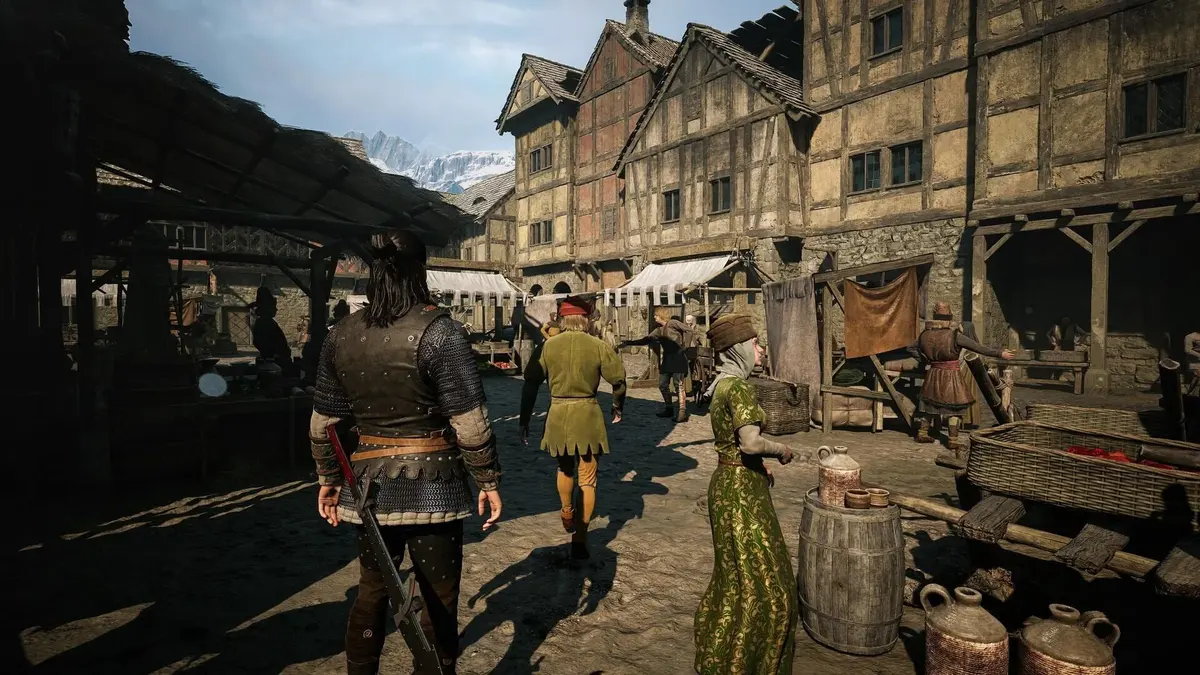
The Blood of Dawnwalker’s 30-day limit does not drain while you explore. Coen loses time when he commits to marked story actions, quest objectives, certain dialogue decisions, deliberate waiting, and other progression gates. Check the hourglass before confirming anything: it shows the segment cost up front, making the 30-day/30-night system a route-planning resource rather than a real-time countdown.
The key trap is treating every combat encounter, trip across the map, or long looting session as a hidden time loss. Free-roam exploration, standing still, ordinary travel, menus, looting, and unlocked fast travel do not consume the campaign clock. Your real budget disappears at committed narrative moments.
Table of Contents (9)
How the 30-day clock is divided
After the prologue, Coen has 30 days and 30 nights to save his family. Each daytime period is split into eight segments, and each night has eight more. That creates 16 segments per full day-night cycle and a planning budget of 480 segments across the full 30-day window.
The segment bar is more important than a normal RPG clock. It tells you how much of the current day or night remains, while the hourglass symbol appears before an action that will spend time. If a choice costs more segments than remain in the current phase, the cost can push through the day/night boundary and spend segments from the next phase.
This matters because day and night are functional states for Coen, not only visual lighting changes. During the day, he is human and relies on human abilities and witchcraft. At night, he becomes a vampire with claws, wall climbing, teleportation, and generally stronger combat mobility. Some routes, entrances, encounters, and quest solutions are easier or only available in one form.
Reading the hourglass and time bar
Use the UI as the final authority before spending time. A sand-clock or hourglass icon means the action will advance the current phase. The game shows the number of segments that will be consumed before you commit, so there is no reason to spend a costly quest branch blindly.
The time bar can also display greyed-out segments before a proximity-triggered time jump. Those grey sections show how much time the approaching event will take. If you are close to a day/night change, count the remaining bright segments before accepting the action; a multi-segment cost may move Coen into the next form immediately.
In the journal, a blue clock icon identifies a time-sensitive quest. That quest can disappear if you delay it long enough. A blue-clock objective deserves attention before you spend segments on optional investigation branches, shrine upgrades, or another major questline.

What consumes time and what stays free
The clean rule is simple: ordinary play is free, while actions that commit Coen to meaningful progression can cost one or more whole segments. The exact list of every individual quest step is not universal, so follow the hourglass rather than trying to memorize a rigid checklist.
| Action type | Time result | How to handle it |
|---|---|---|
| Free exploration, looting, idling, and menus | Does not consume segments | Use this time to clear the map, collect resources, inspect routes, and prepare before a commitment. |
| Ordinary travel and unlocked fast travel points | Does not consume segments | Fast travel freely between unlocked points when arranging day or night routes. |
| Major quest objectives and quest completion | Can consume one or more segments | Check the hourglass before progressing, especially when a blue-clock quest is active. |
| Dialogue decisions tied to a narrative commitment | Can consume segments | Routine conversations are safe; choices with an hourglass are the actual spend point. |
| Incidental exploration combat | Does not consume time by itself | Fight freely when necessary. Do not confuse combat duration with a clock cost. |
| Marked fights, special activities, and progression events | May consume segments | If the event has an hourglass, treat it as a story transaction rather than ordinary combat. |
| Waiting at shrines and unlocking certain shrine abilities | Consumes time | Wait only when you need a specific form, route, or encounter window. |
| Area or district transitions | No universal segment cost is established | Do not assume a loading gate costs time. Watch for the hourglass on the specific transition or event. |
The combat and investigation mistake to avoid
Combat itself is not a tax on the 30-day budget. Clearing enemies during exploration does not advance the counter simply because the fight took several minutes. A combat encounter can still be attached to a marked quest event, however, and that larger commitment may spend segments. The distinction is the hourglass, not whether Coen draws his weapon.
Investigation works the same way. Searching an area, reading clues, looting containers, and moving around a quest space are safe unless the game marks a next step with the hourglass. The time cost comes when you commit to the plot-relevant action: advancing an investigation, completing a larger task, choosing a consequential response, or triggering a special event.
This is why it is efficient to fully scout an objective area before selecting a marked branch. You can locate alternate entrances, identify enemies, collect supplies, and check whether night powers would open a better route without draining a segment. Then spend time only on the outcome you want.
Route quests around day and night instead of rushing them
Plan around Coen’s form first, then around the hourglass costs. Daytime works best for objectives that expect a human approach, daylight access, or witchcraft. Nighttime is stronger for vertical routes and hostile spaces where teleportation, climbing, and claws create an alternate solution. Guarded entrances can produce different opportunities depending on which form you bring to them.
- Explore and collect everything in the current region before paying for a major quest step.
- Prioritize blue-clock journal quests when they align with the current day or night form.
- Check the remaining segment bar before choosing a dialogue branch that carries an hourglass.
- Use unlocked fast travel points to reposition without spending the story budget.
- Wait at a shrine only when changing the phase gives a concrete route, quest, or form advantage.
- Keep optional multi-step quests for periods when no urgent blue-clock objective is competing for segments.
The system rewards deliberate sequencing. A quest branch with a visible cost is not automatically a bad choice; it is a purchase from a finite pool of days and nights. Spend segments when the reward, relationship outcome, route unlock, or story result is worth the loss.
Deep Down shows why segment timing matters
The prologue quest Deep Down has a direct timing consequence. If five time segments have passed by the relevant point, Lazar is dead. At four segments or fewer, Lazar remains alive, changing the Daenerius reward. It is an early example of the game using discrete segment totals rather than real-world playtime to determine an outcome.
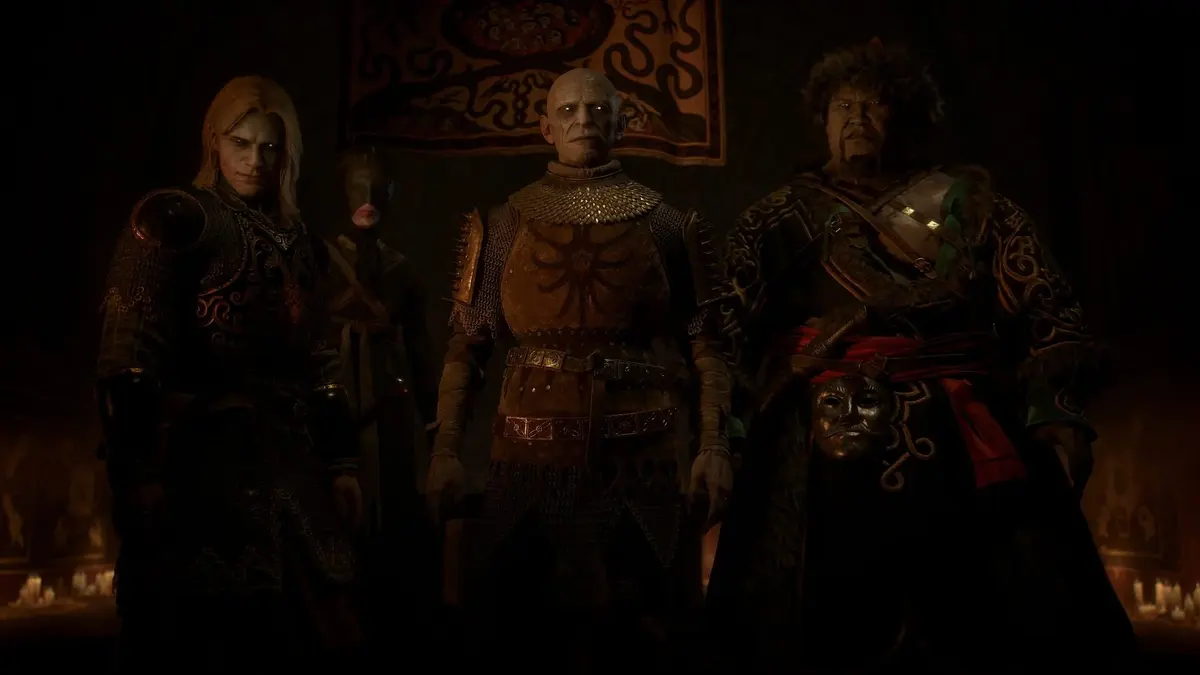
Apply that lesson to later quests. A choice can matter because of its story result, its time price, the form it forces Coen into afterward, or all three. When a quest has a blue clock in the journal, handle its important branch before spending a string of segments elsewhere.
Night healing and hunger can change dialogue outcomes
Night routing has a second cost beyond the segment bar: human healing items do not work after Coen transforms. Potions and healing food are for his daytime human form. At night, he must restore himself with blood items or by drinking blood from enemies.
Keep Coen healthy before opening a major nighttime conversation. At one health segment or lower during the night, erratic dialogue options can appear, including “Give in to the hunger.” Choosing it makes Coen attack and kill the person he is speaking with. That can turn a carefully budgeted quest route into an unwanted outcome even when you have preserved plenty of time.
What happens when the 30-day deadline ends
Missing the 30-day deadline does not delete your save or force an immediate campaign restart. You can continue exploring and finish remaining side content, but Coen can no longer achieve the outcome where he saves his family in time. The story reacts to that failure state.
If you want to see different endings, create several manual saves during the final days instead of relying on one late-game file. That preserves room to test costly quest choices, dialogue outcomes, and final route decisions without replaying the entire campaign.
The time system cannot be fully disabled through the regular settings. Unofficial PC mods may offer extra time or remove selected time costs, but that is not an option on PlayStation 5 or Xbox Series consoles and changes the intended quest-pressure structure.
Practical takeaway for the 30-day system
Treat the hourglass as your spending prompt and the blue clock as your priority warning. Explore, loot, travel, and fight ordinary encounters without worrying about hidden clock drain; then slow down before quest completions, marked investigations, shrine waiting, and committed dialogue choices. With eight segments per day and eight per night, The Blood of Dawnwalker gives you room to pursue side content — provided every visible time cost is a deliberate one.
FinalBoss // Gear
Level up your setup
01Top-rated gaming headsetson Amazon→02High-refresh gaming monitorson Amazon→03Gaming chairson Amazon→04Discounted game keyson Kinguin→
Affiliate links · As an Amazon Associate, FinalBoss earns from qualifying purchases.
Want to Level Up Your Gaming?
Get access to exclusive strategies, hidden tips, and pro-level insights that we don't share publicly.
Ultimate Guide Strategy Guide + Weekly Pro Tips