

Coen’s early power curve in The Blood of Dawnwalker is deliberately uneven. Swordmastery works in every fight, Witchcraft only works in daylight, and Vampirism comes online at night behind Corruption requirements and Blood Hunger pressure. The clean opening plan is to establish dependable Swordmastery defense first, raise Corruption through controlled feeding away from important NPCs, then spend early vampiric progress on movement and sustain before chasing damage.
That order gives you a build that survives both halves of the day-night cycle. It also prevents the most expensive early mistake: spending limited time and XP on a night-only damage tool, then entering a daytime quest or a multi-direction boss encounter without a reliable answer to basic pressure.
Table of Contents (7)
Use Swordmastery as Coen’s First Reliable Manual
The three skill trees are better treated as different combat manuals than as one conventional all-purpose stat sheet. Swordmastery is the foundation because its abilities remain available both during the day and at night. Early upgrades should make Coen harder to interrupt, more efficient with stamina, and more capable of converting a successful defense into safe damage.
| Tree | When it works | Early priority | What can go wrong |
|---|---|---|---|
| Swordmastery | Day and night | Blocking, Perfect Block follow-ups, stamina control, dependable melee options | Ignoring it leaves Coen exposed whenever a day-only or night-only kit is unavailable. |
| Witchcraft | Daytime only | Use it for investigation, defense, Burning Blood pressure, and Feral Mind crowd disruption | A Witchcraft-heavy opening loses much of its value after dark. |
| Vampirism | Nighttime only | Traversal, bite sustain, and lower-tier defensive perks before expensive damage | Higher nodes need Corruption as well as XP and time, while Blood Hunger can disrupt an unprepared night run. |
The first Swordmastery pages worth prioritizing are the ones tied to basic combo control, block improvements, counters, and stamina management. These tools are relevant whether Coen is using daylight swordplay and Witchcraft or switching to claws after sunset. Damage-only choices can wait until the defensive loop feels automatic.
Practical rule: if a manual choice improves only one flashy attack but another improves blocking, stamina, or a counter window, take the universal combat improvement first. Bosses test consistency far more often than they test maximum burst.
Build Around Perfect Block Before the First Major Boss
The Blood of Dawnwalker does not give Coen a separate traditional parry button. Its key defensive mechanic is directional blocking: hold the omniblock input, read the incoming direction, and choose the matching guard direction shortly before the strike lands. The four possible directions are left, right, top, and bottom.
On PC, hold Left Mouse Button to omniblock, then use WASD toward the incoming strike. On controllers, hold LB on Xbox or L1 on PlayStation and use the left stick for the direction. The direction cue shifts from gold to red just before impact, while the targeting reticle’s shield cue turns orange at the strongest counter timing.
A Perfect Block leaves an attacker open for a counter and can interrupt an enemy’s sequence. That matters more than raw survival: it creates the safest window for a Swordmastery combo, a Witchcraft cast in daylight, or a costly vampiric ability at night.
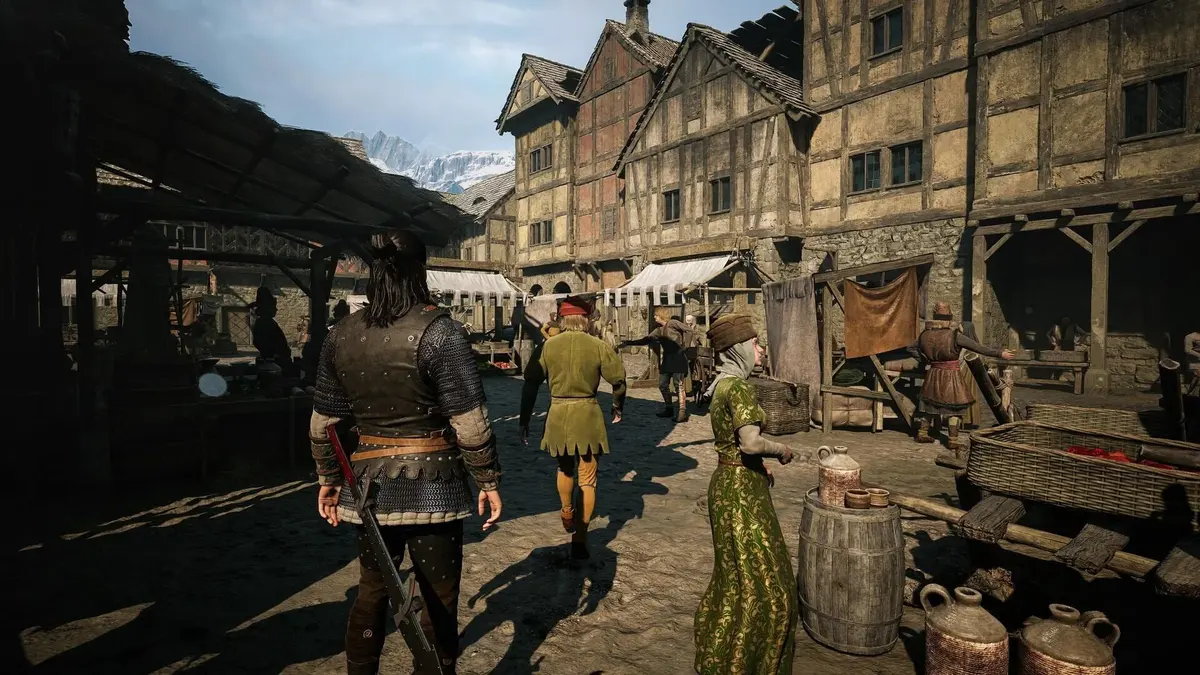
- Train the timing on ordinary enemies before using it in a story fight.
- Read the strike direction first; trying to react to the impact alone is too late for consistent Perfect Blocks.
- Counter once or twice after a successful Perfect Block, then reset your position instead of extending into an unknown enemy string.
- Use the Untouchable achievement condition as a readiness target: five consecutive Perfect Blocks is a useful proof that the core defense is becoming reliable.
Perfect Block also supports the best early perk loop. Walking Fortress restores some Activation Charge after a Perfect Block, Scarlet Shield can restore health after a Block or Perfect Block, and Swiftness increases attack speed after a Perfect Block. Together, those perks turn defense into healing, resource recovery, and offensive tempo.
Raise Corruption Safely, Then Unlock Night Mobility
Vampirism does not unlock purely through XP. Higher Vampirism nodes require increasing Corruption, which rises when Coen feeds on humans and animals. Feeding is therefore part of build progression, but it carries a real cost: Blood Hunger can spiral into loss of control, and feeding in a populated quest hub can remove NPCs who matter to quests and relationships.
Use the opening nights to feed deliberately on animals, hostile targets, or isolated non-critical people outside settlement centers. Do that before committing to a dungeon, a long rooftop route, or a major combat sequence. Entering a hard encounter while Blood Hunger is climbing risks turning a combat problem into a loss-of-control problem.
Early Vampirism should favor access and survival over a pure claw-damage package. Shadowstep improves short-range repositioning and can reach routes that are otherwise awkward. Clawride creates traversal lines across surfaces and structures. Planeshift and vertical wall-walking open rooftops, bypass locked approaches, and create safer angles for stealth drops.
- Shadowstep: take it for repositioning, escapes, and reaching short inaccessible gaps.
- Clawride: use it to turn environmental routes into fast descents or approach paths.
- Planeshift and wall-walking: prioritize them when exploration routes begin demanding nighttime access.
- Bite: treat it as sustain, not an excuse to trade damage carelessly.
- Scarlet Shield: becomes more valuable the longer a night expedition or boss sequence runs.
Death From Above is a strong example of why mobility comes before damage. It can instantly kill regular enemies when Coen drops onto them from above, but bosses only take damage from it. Use it as an opener or a punish after a Perfect Block; it will not erase a boss health bar or replace learning the fight.
Keep Activation Points for Confirmed Openings
Vampiric abilities consume Activation Points, which are earned through effective combat. The resource system rewards clean engagement: landing attacks, blocking accurately, and using counters keeps Coen active. Throwing out expensive abilities at the first sign of danger can leave him unable to use the tools that matter when an elite enemy begins a longer attack string.
Spend Activation Points after you create an opening. A Perfect Block, a stagger, a separated target, or a high-ground drop are all reliable moments. This is especially important at night, when claws, Shadowstep, and other vampiric actions tempt players into spending resources simply because they are available.
The same restraint applies to time. Skill unlocks consume time slots alongside their other requirements, so every early purchase has an opportunity cost. Exact Corruption thresholds, Activation costs, and Blood Hunger rates are not useful fixed planning numbers at launch; build around repeatable behavior instead: safe feeding, efficient defense, and abilities used only when they will connect.

Use Daytime and Nighttime for Different Jobs
Coen’s two forms create two different expedition styles. Daylight is the safer window for investigation, social interactions, and quests where Witchcraft can solve combat or control groups. Burning Blood adds damage over time, while Feral Mind can make an enemy attack nearby units and fracture a crowded encounter.
Night is the window for vampire-locked access. Save rooftop scouting, vertical routes, wall-walking shortcuts, stealth drops, and claw-heavy encounters for after Coen’s Blood Hunger has been handled. Separating those jobs keeps the time system from dictating every decision in the middle of a quest.
- Day: investigate, speak to key NPCs, pursue complex quest chains, use Witchcraft, and spend time where a stable human form is an advantage.
- Night: feed safely first, then use Vampirism to reach alternate routes, collect hidden rewards, and engage targets where bite sustain or mobility has value.
- Any time: practice Swordmastery, learn directional attacks, manage stamina, and improve the Perfect Block-to-counter rhythm.
Use the Prologue as a Build Check, Not a Rush Section
The early cave and church-flashback sequence is designed to introduce the skills the wider Carpathian Mountains will expect from you. Focus Mode matters for reading environmental and narrative clues, the church sequence tests whether you are following those clues in the correct progression, and the route involving a red glowing tree stump and Clawride descent to the river confirms that vampire traversal is more than a cosmetic movement trick.
Completing that opening leads into the open world and an encounter with an enemy carrying a legendary item drop. Treat the section as a systems check: Focus Mode, route awareness, Clawride, and basic combat all need to be understood before the game starts combining them under more pressure.
As new regions such as The Silts, Boar’s Back, Eerie Knoll, Briar Sloughs, Maragir Wealds, and St. Tyna’s Grove become relevant to your route, clear them as contained loops rather than burning time on unfocused cross-map travel. Search elevated paths at night once the required movement powers are available, then return during the day for NPC-heavy objectives and Witchcraft-friendly investigations.
Boss Readiness Checklist
Early bosses punish rushed builds because they combine multi-direction attack strings with long fights. Coen is ready when the following checks are true before entering the arena.
- Blood Hunger is under control, with no need to feed during the fight.
- Swordmastery has at least one meaningful defensive or stamina-focused improvement.
- Perfect Block timing is reliable against several consecutive ordinary attacks.
- Activation Points are being saved for stagger windows, not drained on panic casts.
- A sustain layer such as Bite, Scarlet Shield, or a comparable recovery tool is available.
- Night bosses are approached with a movement option ready for repositioning or high-ground access.
- Death From Above is being treated as burst damage against bosses, not an assassination shortcut.
The key distinction is that a strong early build does not specialize Coen into a single form too soon. Swordmastery carries the universal combat load, Witchcraft gives daylight control, and Vampirism gradually adds mobility, sustain, and night pressure as Corruption rises. Build that base first, and the earliest bosses become tests of execution rather than checks against an unfinished skill tree.
FinalBoss // Gear
Level up your setup
01Top-rated gaming headsetson Amazon→02High-refresh gaming monitorson Amazon→03Gaming chairson Amazon→04Discounted game keyson Kinguin→
Affiliate links · As an Amazon Associate, FinalBoss earns from qualifying purchases.
Want to Level Up Your Gaming?
Get access to exclusive strategies, hidden tips, and pro-level insights that we don't share publicly.
Ultimate Guide Strategy Guide + Weekly Pro Tips