
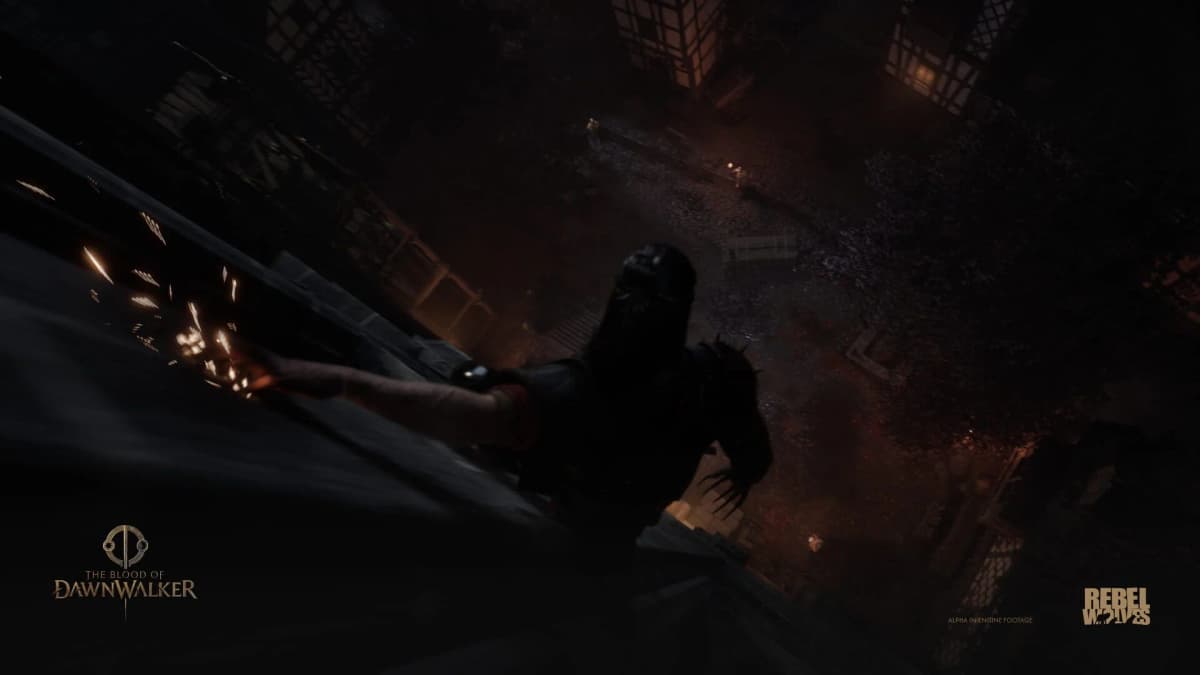
The Blood of Dawnwalker Review: Great Writing, Repetitive Combat, Rough Launch
The Blood of Dawnwalker is asking players to forgive too much friction for the privilege of reaching its best material. Rebel Wolves has built a dark fantasy RPG with a nasty, atmospheric hook: save Coen’s family before 30 days and 30 nights run out, while surviving a plague-ravaged Carpathian valley ruled by vampires. That is a premise with teeth. The problem is that the game keeps putting those teeth behind combat encounters that grow stale and technical issues that make its most demanding moments feel worse than they should.
My recommendation is blunt: players who care most about writing, mood, vampire role-playing, and consequential quests can buy in on September 3, 2026. Everyone else should wait until the day-one performance patch is out in the wild and the launch version has had time to prove it can carry a full RPG campaign without irritating them every hour.
That is not a dismissal of The Blood of Dawnwalker. It is a refusal to pretend a strong setting automatically excuses a combat loop that runs out of ideas and a release build that has visible rough edges. A game built around urgency, danger, and player choice needs every major system pulling in the same direction. Here, the story does the heavy lifting while the fighting repeatedly grabs the controller and asks for patience.
Vale Sangora gives this RPG its real identity
The part of The Blood of Dawnwalker worth celebrating is its commitment to making time matter. Vale Sangora is a 14th-century valley in the Carpathian Mountains, battered by the Black Plague and controlled by the Vrakhiri vampires under Brencis. Coen begins as a human in daylight and becomes a vampire at night, and that split gives the world a stronger identity than the usual “grim medieval map full of icons” routine.
Human Coen has ordinary survival concerns. Food, medicine, and healing have a place in his daytime life. Vampire Coen has different needs entirely: blood restores health, night opens up a stronger power fantasy, and the character’s capabilities shift around that transformation. Rebel Wolves makes players maintain separate human and vampire builds that automatically toggle with the day-night cycle. That is a smart RPG decision because the transformation changes how you approach the world instead of functioning as a flashy cooldown.
The 30-day-and-30-night deadline is the game’s best systemic idea. Every day and night is divided into eight segments. Walking around, exploring, and soaking in the valley does not burn that resource. Quests, activities, and certain dialogue choices do. The clock therefore functions as pressure with purpose. It forces priorities without turning the game into a constant real-time panic sprint.
That design also makes the role-playing feel personal. Coen cannot vacuum up every task, chase every lead, and clean every corner of the map with zero consequence. Choosing whose crisis matters most becomes part of the story. The writing, characters, branching outcomes, and grounded vampire politics all benefit from that pressure. I want more RPGs willing to make players leave some content behind because a choice mattered.
There is a catch, though. Skill progression also consumes time alongside perk points. Some human abilities require books or manuals, while vampire powers depend on consuming blood. The result can be a double restriction: the player spends a limited resource to advance a build, then heads into combat that too often asks them to repeat the same solution against another recycled group of enemies. A system designed to make choices meaningful starts feeling miserly once its action layer loses momentum.
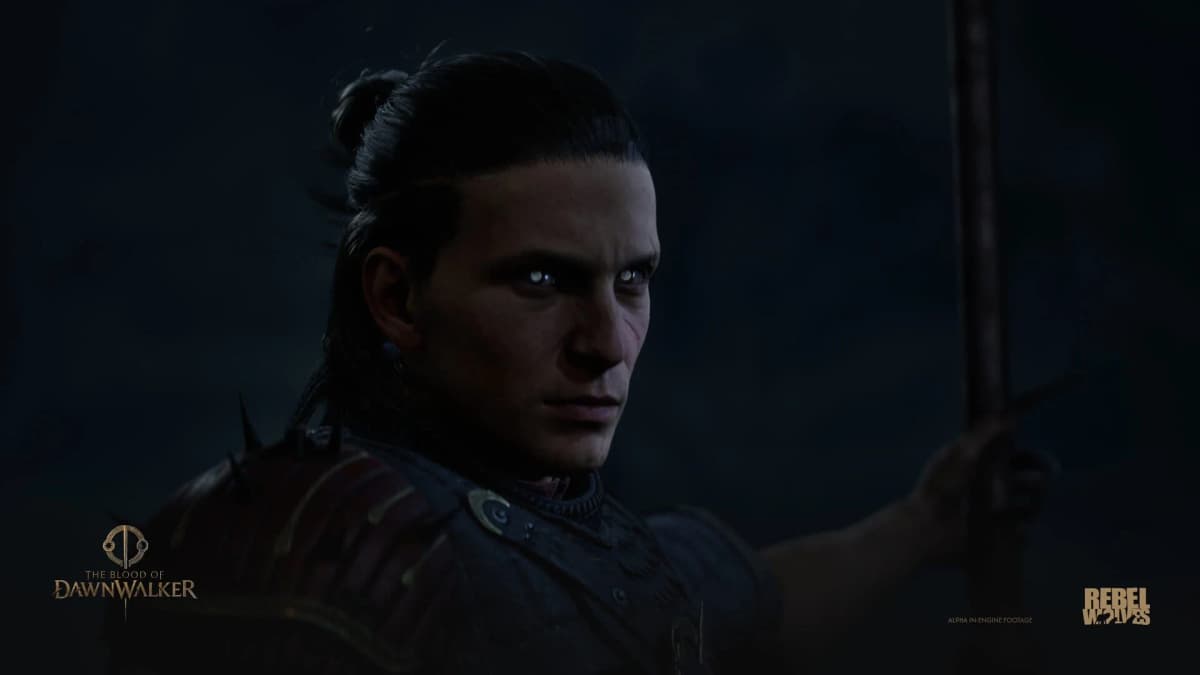
Directional combat has a shelf life, and Dawnwalker reaches it early
The central combat idea is easy to understand. Coen attacks and defends from different directions, using the left stick to match the angle of an incoming swing. A correctly timed directional block creates a stun window and opens a counterattack. There is also an omni-block that can deflect blows at a stamina cost. On paper, that is a satisfying foundation for a melee RPG because it rewards attention instead of mindlessly mashing light attack.
For the opening stretch, it works. Reading an enemy’s body language, catching the correct line of attack, and punishing a failed swing delivers the tactile snap that a vampire action RPG needs. Unlockable abilities add some flair, and night-time powers give Coen a more forceful toolkit than his vulnerable human form.
Then the enemy roster starts showing its limits. Similar humanoid opponents and animals keep coming back with cosmetic changes rather than meaningful tactical escalation. Once the timing is learned, the player is still matching directions, blocking, parrying, and countering through fight after fight. The mechanic remains understandable. It simply stops developing.
That distinction matters. Combat does not need to be complicated to stay compelling, but it needs fresh pressures. New enemy combinations, different attack rhythms, encounters that make spacing matter, or late-game mechanics that challenge mastered habits would have protected the system from repetition. The Blood of Dawnwalker leans too hard on one good idea and mistakes familiarity for depth.
Lock-on trouble compounds the issue. Directional combat depends on clarity: the player needs to know who they are facing, where the attack is coming from, and whether their input has registered against the correct target. In crowded spaces, awkward targeting and battlefield geometry turn a deliberate duel system into a messy scrum. Getting stuck against level geometry or watching enemies behave strangely during a fight drains the satisfaction out of a parry mechanic faster than any balance patch can fix.
Coen also lacks a stealth system to create a reliable third lane of interaction. Encounters generally come down to direct combat, avoiding trouble through dialogue, or using the game’s RPG choices to alter the situation. Dialogue is often excellent. The fighting has to carry far more of the moment-to-moment burden when diplomacy runs out, and that is exactly where the game starts repeating itself.
FinalBoss // Gear
Level up your setup
01Top-rated gaming headsetson Amazon→02High-refresh gaming monitorson Amazon→03Gaming chairson Amazon→04Discounted game keyson Kinguin→Affiliate links · As an Amazon Associate, FinalBoss earns from qualifying purchases.
Want to Level Up Your Gaming?
Get access to exclusive strategies, hidden tips, and pro-level insights that we don't share publicly.
Ultimate Gaming Strategy Guide + Weekly Pro Tips
Performance friction makes repetitive fights feel even worse
Frame rate is not a cosmetic argument in a game built around directional reactions. If combat asks the player to read swings and make precise defensive inputs, a smoother presentation improves the feel of every block, counter, dodge, and camera adjustment. That is why the pre-launch console situation matters so much.
On PlayStation 5, the pre-release build offered a quality mode capped at 30 fps and a balanced mode that ran at 40 fps with a 120 Hz display. PlayStation 5 Pro handled those modes far more consistently, while the base PS5 suffered more frequent drops during city exploration. Rebel Wolves has said the day-one patch will add a performance mode targeting 60 fps on PS5, PS5 Pro, and Xbox Series X.

That performance mode is welcome, but a target is not a clean bill of health. The exact state of base PS5, Xbox Series X, and PC performance after the patch still needs retail testing. Xbox Series S has no confirmed 60 fps target in the available launch information. Players who treat smooth combat and stable exploration as non-negotiable should let the patch prove itself before committing.
The rest of the technical baggage is equally relevant: pop-in, animation hitching during conversations, finicky hit boxes, platforming slips, geometry collisions in crowded combat arenas, lighting bugs, and environment reloads during cutscenes. None of those flaws erase the writing or the atmosphere on their own. Together, they create a game that repeatedly interrupts the exact immersion its world works so hard to earn.
Players have become far too willing to treat this kind of friction as the normal price of an ambitious RPG. It should not be. A long, choice-driven game gets one chance to establish trust. If a quest breaks, a checkpoint is poorly placed, or a fight turns into camera wrestling, the player does not merely lose a few minutes. They lose confidence that the next big narrative decision is worth pushing through another technical headache.
The buy-or-wait call is straightforward
The right decision depends on what players expect to carry the experience. The Blood of Dawnwalker has enough character, world-building, and narrative pressure to satisfy a specific kind of RPG fan immediately. It also has enough combat repetition and technical uncertainty to frustrate anyone looking for a polished action game first.
- Buy at launch if story, atmosphere, branching dialogue, vampire role-playing, and the 30-day time system are the main draw.
- Buy at launch if directional parries and deliberate melee sound appealing even when the enemy variety is limited.
- Buy at launch if playing on PS5 Pro or if a day-one 60 fps mode is enough reassurance for your setup.
- Wait if every major action RPG encounter needs to feel mechanically fresh across a long campaign.
- Wait if base PS5 performance is a deciding factor, especially for players sensitive to frame-rate drops in dense areas.
- Wait if launch bugs, hit-box weirdness, cutscene reloads, and rough platforming immediately poison an otherwise strong game.
- Wait if a 60 fps target means nothing until it has been tested under real combat pressure rather than listed in patch notes.