
The Blood of Dawnwalker vs Onimusha: Which Action RPG to Buy?
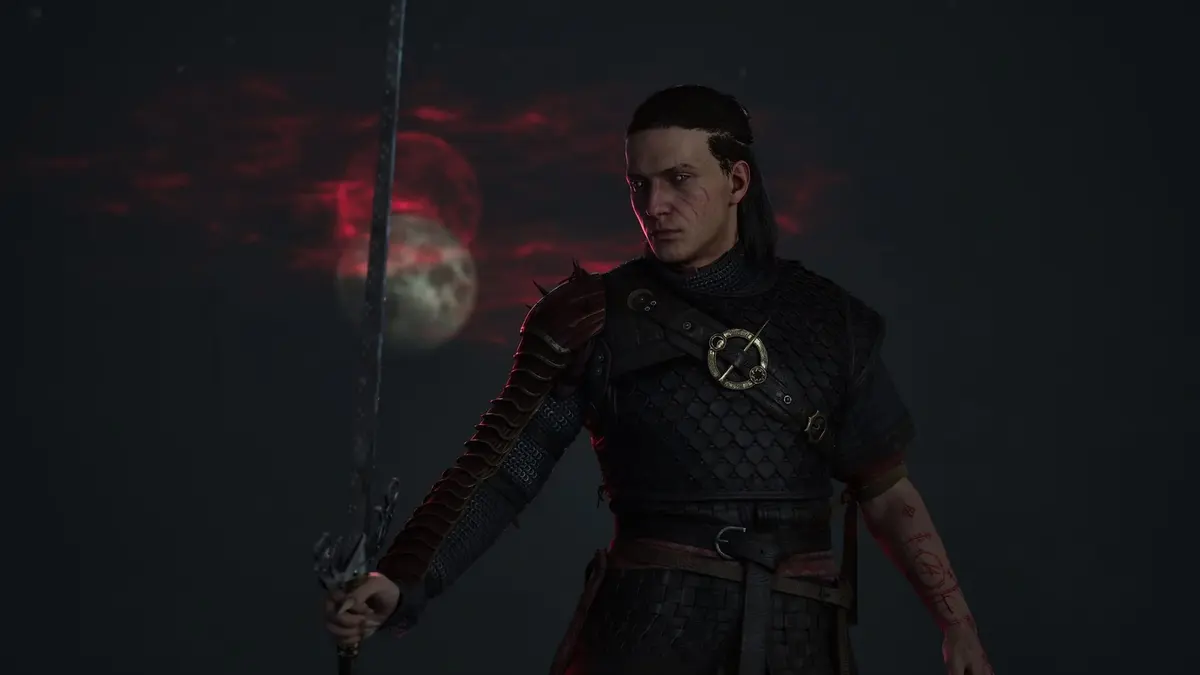
The Blood of Dawnwalker earns its strongest praise and its sharpest criticism from the same source: it puts a hard limit on an RPG built to make you curious. Vale Sangora invites detours through ruins, caves, villages, side stories, and supernatural opportunities, yet Cohen has only 30 days and 30 nights to rescue his family before Brencis’s coronation. The game makes that contradiction central rather than incidental. I admire the nerve of it, even when the structure threatens to turn exploration into a calculation.
That is why The Blood of Dawnwalker is the more interesting purchase beside Onimusha: Way of the Sword, even if it is not the more immediately disciplined action game. Rebel Wolves has built a dark fantasy RPG that asks for appetite, planning, and tolerance for rough edges. Capcom’s rival sword-fighting game stakes its case on a tighter defensive rhythm. One puts pressure on every major commitment; the other puts pressure on every enemy swing. My preference lands with Dawnwalker’s ambition, but the caveats matter enough to shape the recommendation.
The buying decision in five points
- Buy The Blood of Dawnwalker for systemic role-playing. Its 30-day and 30-night deadline turns quests, training, skill unlocks, and narrative decisions into competing priorities.
- Expect two distinct combat identities. Human Cohen uses swords and witchcraft, while his vampire form fights with claws, vampiric powers, and movement abilities unavailable during the day.
- Take the time pressure seriously. Exploration itself does not drain the clock, but quests and activities consume disclosed segments from day-and-night cycles split into eight parts.
- Choose Onimusha: Way of the Sword for concentrated defense-first action. Its core appeal is mastering dodges, parries, deflects, and high-risk Issen counters in a focused Kyoto campaign.
- Do not overlook Dawnwalker’s rougher side. Limited enemy variety, camera and lock-on trouble, and broader technical issues blunt an otherwise excellent RPG foundation.
The clock gives every choice teeth
The Blood of Dawnwalker understands that a deadline only works when it affects more than the final mission. Here, time is a resource woven into character growth, quest selection, exploration routes, and the story’s branching structure. A task tells you how many of the eight available segments it will consume. Real-time wandering remains free, so the game does not punish simple curiosity with an invisible countdown, but important commitments always have a cost.
That distinction saves the system from becoming pure irritation. The game leaves room to look around Vale Sangora, but it refuses to let every interesting thread become a free errand. Training and perk unlocks use time, while some skills demand manuals or books before they can be learned. Vampire abilities add another demand through blood consumption. Character building therefore becomes part of the same moral and strategic economy as the story, rather than a separate menu exercise.
I find this far more compelling than an RPG that throws endless objectives onto a map and treats all of them as equally urgent. Brencis holds Cohen’s family under the shadow of his approaching coronation, and the design makes that threat felt through decisions rather than repeated warnings. The cost is real: completion-minded players will feel the friction whenever a promising lead competes with a more urgent obligation. Dawnwalker wants that discomfort. It gives the setting its sense of consequence.
Its best role-playing decisions also refuse a clean division between narrative and mechanics. Side-quest outcomes can shift according to whether Cohen approaches them as a human or a vampire. Alternate endings depend on specific meetings and actions, and later runs can expose supporting characters and story material left unseen during an initial route. Expect around 30 to 35 hours for a focused first playthrough, while a more thorough run can stretch much closer to 50. The replay value comes from genuine exclusions, not from asking players to repeat the same checklist.
That last point matters more than it first appears. Plenty of RPGs advertise branching, then quietly arrange things so that most roads still pass through the same sightseeing stops. Dawnwalker is harsher than that. If you spend time training, reading, feeding, or chasing one political thread through Vale Sangora, you are giving something else up. The design does not flatter the player with the illusion that everything can be saved for later. Sometimes later never comes, and the game is better for accepting that.
Human restraint and vampire power make a useful contrast
The day-and-night split is more than visual flavor. In human form, Cohen relies on swords and witchcraft. Vampire form replaces that approach with claws, vampiric powers, and movement options that open different paths through the world. Healing follows the same divide: food and medicine sustain the human form, while blood restores the vampire. Hunger carries consequences beyond a health bar, because failing to feed can trigger feral behavior against the nearest entity and alter the story’s course.
This is where The Blood of Dawnwalker earns its vampire fantasy. Night does not simply mean stronger attacks. It changes how Cohen travels, heals, fights, and relates to the people around him. Lookout towers require vampire mobility to reveal nearby locations, while rituals tied to blood magic remain part of the human side of the toolkit. The push and pull has a practical texture. Power opens one route, restraint opens another, and neither state is treated as the universally correct answer.
The combat itself has more thought behind it than a simple dodge-and-strike loop. Directional blocks and parries ask Cohen to meet an enemy’s swing from the appropriate direction, with directional inputs affecting stamina consumption and recovery. Magic charges can be spent on hexes, meaning spell-like offensive or debuff abilities, and the selection of available magic changes across the day-night cycle. That gives encounters a welcome sense of preparation and adaptation, especially for players who enjoy managing tools rather than relying on one dominant attack pattern.
The equipment game supports that split as well. Armor, swords, and accessories can be tuned toward one form or the other, and day- or night-focused sets reinforce the idea that you are not merely swapping costumes. You are changing priorities. One setup can lean into human durability and spell efficiency; another can emphasize vampiric aggression, lifesteal, or claw damage. Even when the systems show a little padding, the underlying idea is strong: buildcraft in Dawnwalker is not detached from identity. It is identity.
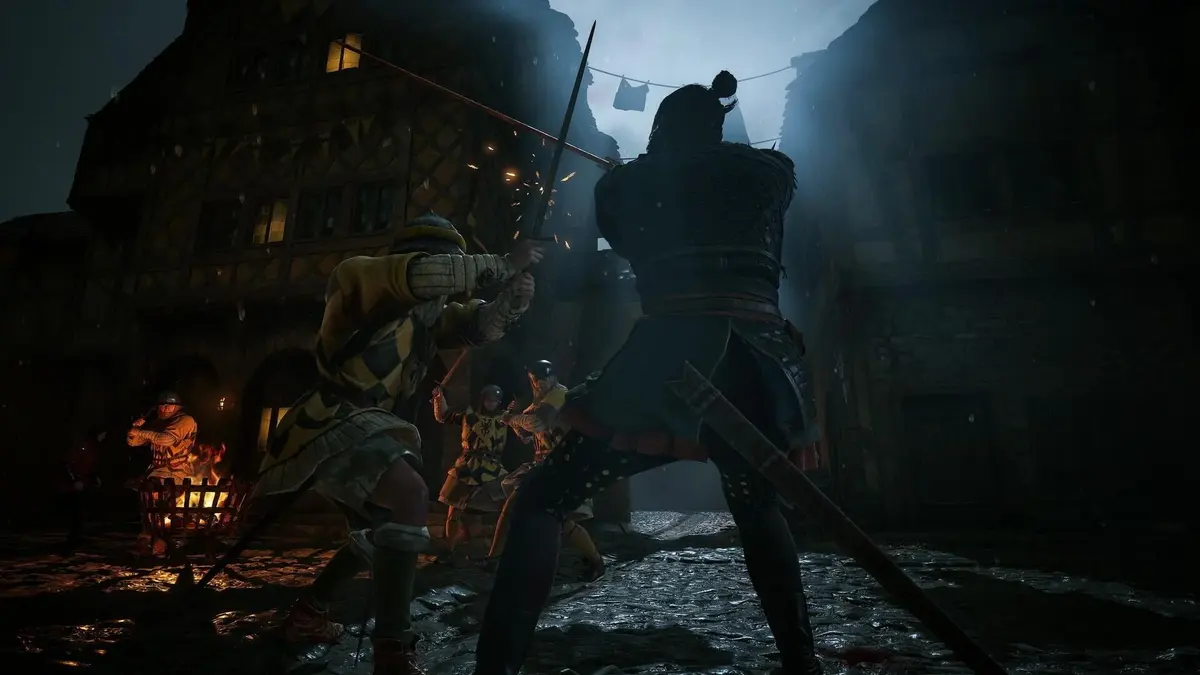
Still, this is the area where the game’s ambitions become uneven. Once the directional defense is understood, combat can lose tension, particularly against familiar humanoid opponents and recurring wildlife such as wolves and boars. Blocking and parrying remain satisfying, but the enemy roster does not always ask enough new questions of the system. A combat model built around adapting to dangerous swings needs adversaries capable of sustaining that pressure.
There is also a subtle mismatch between the fantasy and the follow-through. The game gives you two forms, multiple progression hooks, and meaningful preparation, so you expect escalating tactical variety to match. Instead, some encounters start to feel like slightly altered rehearsals. That does not ruin the combat. It does mean the brightest parts of the design peak earlier than they should.
Vale Sangora is dense enough to reward restraint
The world works because it favors density over empty scale. Vale Sangora packs villages, ruins, caves, encounters, and quests into a comparatively contained region in the Carpathian Mountains. That makes the time system easier to accept. The game does not ask players to spend the bulk of their deadline crossing miles of vacant terrain; it places opportunities close enough together that route planning becomes a meaningful part of the RPG.
This is a smarter fit for the premise than a giant map would have been. Dawnwalker wants you to weigh options, not spend half the experience on horseback wondering where the evening went. Because the region is dense, even small detours feel tempting. A cave is rarely just a cave. A village can hide a quest line, a book, a reputation shift, or a resource problem that spills into the next day. The game is constantly asking whether this stop is worth the time, which is exactly the question the structure needs the player to feel.
Reputation gives that space further texture. Higher infamy attracts extra patrols, taxes, curfews, and harsher guard responses in Svartrau. Shopkeepers can recognize Cohen as well. Brencis tightening his control is therefore visible in daily movement through the world, which reinforces the larger story without reducing morality to a light-side or dark-side meter.
That social pressure is one of the game’s best tricks. Instead of treating consequence as a cutscene-only reward, Dawnwalker lets the world answer back in routine play. Guards behave differently. Navigation changes. The mood of a place hardens around your choices. That makes even mundane travel feel connected to the larger political and supernatural struggle, which is no small achievement for an action RPG with this many moving parts.
The writing’s grounded tone and its willingness to let choices branch give this setting weight. The revenge framework is familiar, but the game uses form-specific outcomes, infamy, missed encounters, and divergent endings to keep the story from feeling preordained. Its narrative sandbox holds up because decisions have enough mechanical and social fallout to register after the dialogue ends.
FinalBoss // Gear
Level up your setup
01Top-rated gaming headsetson Amazon→02High-refresh gaming monitorson Amazon→03Gaming chairson Amazon→04Discounted game keyson Kinguin→Affiliate links · As an Amazon Associate, FinalBoss earns from qualifying purchases.
Want to Level Up Your Gaming?
Get access to exclusive strategies, hidden tips, and pro-level insights that we don't share publicly.
Ultimate Reviews Strategy Guide + Weekly Pro Tips
Onimusha offers the sharper alternative
Onimusha: Way of the Sword is the cleaner recommendation for players who want their action games built around one essential discipline: defense. Capcom’s Japanese-inspired dark fantasy takes place in Kyoto at the beginning of the Edo period, and its sword-fighting identity centers on reading attacks, dodging danger, parrying, deflecting, and committing to Issen-style counters. For anyone new to the term, Issen is the series’ signature high-risk counter concept: wait, read the strike, and punish at precisely the right instant. It is a more focused proposition than Dawnwalker’s RPG sprawl.
The difference is less about quality than about where each game places its demands. Dawnwalker asks players to learn how time, hunger, forms, social standing, and build progression affect one another. Onimusha asks players to learn enemy behavior and meet openings with confident timing. The former makes planning part of the action; the latter puts the action itself under a microscope.
That distinction should decide the purchase. Players who want readable patterns and a strong defensive skill check should lean toward Onimusha: Way of the Sword, which launches September 4, 2026 for PlayStation 5, Xbox Series X|S, Nintendo Switch 2, and PC. Players who want a broader adventure where every major choice comes with an opportunity cost should choose The Blood of Dawnwalker, arriving on September 3, 2026 for PlayStation 5, Xbox Series X|S, and PC.
I do not say that to diminish Onimusha. There is a real pleasure in a game that strips the pitch down to steel, spacing, and nerve. If your favorite action systems are the ones that become cleaner the more you understand them, Capcom’s game has the stronger elevator pitch. Dawnwalker wins my interest because it is willing to let combat be only one piece of a larger machine, but there is nothing wrong with preferring the machine built around the blade.
The rough edges are too visible to ignore
The Blood of Dawnwalker’s flaws are not minor footnotes. Lock-on and camera problems cut directly against a combat system that depends on directional awareness. Frame-rate drops, screen tearing, crashes, graphical issues, and cutscenes that can shift between 30 and 60 frames per second weaken the mood of a game so dependent on atmosphere and precision. The frustration is greater because the foundation is worth protecting.
Some skill trees also carry more padding than purpose, and time-gated progression can feel punitive when the desired unlock is separated from the player by another required commitment. Those systems are defensible in concept; they are less persuasive when paired with repetitive encounters and technical instability. Dawnwalker asks for patience in several different places, and the game does not always reward it evenly.
There is an important difference between friction and texture. The best parts of Dawnwalker use friction to create texture: hunger forces ugly decisions, missed opportunities shape role-playing, and the calendar makes every commitment feel costly. The weaker parts simply slow the experience down. Bad checkpointing, awkward saving behavior, and frustrating late-game platforming do not deepen the theme. They interrupt it. When players call this game rough, that is the roughness they mean.
Even so, I would rather criticize a game for reaching too far than praise one for never taking the risk. Dawnwalker occasionally stumbles because it is trying to join vampire fantasy, branching narrative, build management, and time pressure into the same body. Sometimes the seams show. The achievement is that the body still lives.
Who should buy The Blood of Dawnwalker
Buy The Blood of Dawnwalker if a role-playing game becomes more appealing when its world pushes back. The best fit is a player who enjoys living with missed possibilities, managing a finite schedule, building around different combat forms, and seeing social or narrative consequences carry forward. Vale Sangora has enough density and branching material to make those restrictions feel meaningful rather than ornamental.
It is also the better fit for players who miss dark fantasy RPGs that trust the audience to live with discomfort. The game does not always let you be efficient, righteous, and fully informed at the same time. Sometimes you act with partial knowledge. Sometimes you feed the system one resource because you cannot spare another. Sometimes you finish a run knowing a whole thread stayed closed. If that sounds exciting rather than annoying, Dawnwalker is speaking your language.
Skip it, or choose Onimusha: Way of the Sword instead, if your priority is a more concentrated combat test with a defense-first identity. Dawnwalker’s directional parries are engaging, but its limited enemy variety, softer late-game challenge, and technical flaws make it a less consistent showcase for pure action mastery. The Blood of Dawnwalker is the stronger RPG; Onimusha is the more direct action recommendation.
Was this review useful?