
Open-world RPGs usually promise freedom, then quietly bury you under 80 hours of chores. The Blood of Dawnwalker is trying a riskier fix: give players a hard narrative horizon, then decide very carefully when the clock is actually allowed to move. The release date is now effectively locked for early September 2026, but the more important development is that Rebel Wolves seems to understand the difference between urgency as story flavor and urgency as design poison.
The release date itself is mostly settled. The consensus across publisher and platform messaging points to September 3, 2026 on PS5, Xbox Series X|S, and PC. Some storefronts have shown September 2, which looks less like a real contradiction and more like the usual time-zone mess around digital unlocks. Unless Bandai Namco says otherwise, September 3 is the date that matters.
What matters more is the structure wrapped around that launch pitch. Rebel Wolves’ vampire RPG gives protagonist Coen 30 in-game days to save his family and deal with the larger threat. On paper, that sounds like the kind of mechanic that makes players panic, ignore side content, and Google “best ending route” before the game is even out. In practice, the studio says time advances only in meaningful narrative moments and major decisions, while free exploration and much optional content do not keep draining the counter. That one distinction changes the whole conversation.
Table of Contents (5)
This is not a survival timer, and that distinction matters
A 30-day limit in an open-world RPG triggers some very old player trauma. Gamers have been trained to hear “time pressure” and assume one of two outcomes: either the mechanic is fake and can be ignored, or it is real in the most annoying possible way and turns exploration into inefficiency. Rebel Wolves is aiming for a third option. The timer appears to function less like a constantly ticking bomb and more like a chapter budget tied to actions with narrative weight.
That makes Dawnwalker less comparable to a pure survival game and more comparable to systems-driven RPGs that use calendars, windows, or campaign clocks to force trade-offs. The obvious shorthand is “Persona-like,” but that undersells the risk here. Persona is highly scheduled. Dawnwalker sounds looser, more freeform, and willing to let players sequence-break. Rebel Wolves has reportedly said it is possible to push forward aggressively and finish very quickly if you are skilled enough. That is not normal marketing talk for a big-budget action RPG, and it suggests the studio wants the timer to create route-planning, not obedience.
There is a cynical read, of course. A visible 30-day limit is also a very good trailer mechanic. It communicates stakes fast. It makes the game sound different in a crowded genre. It gives previews an easy hook. But even if the number is partly branding, it still points at a real design choice: this game does not want to be consumed like an all-you-can-eat content buffet.
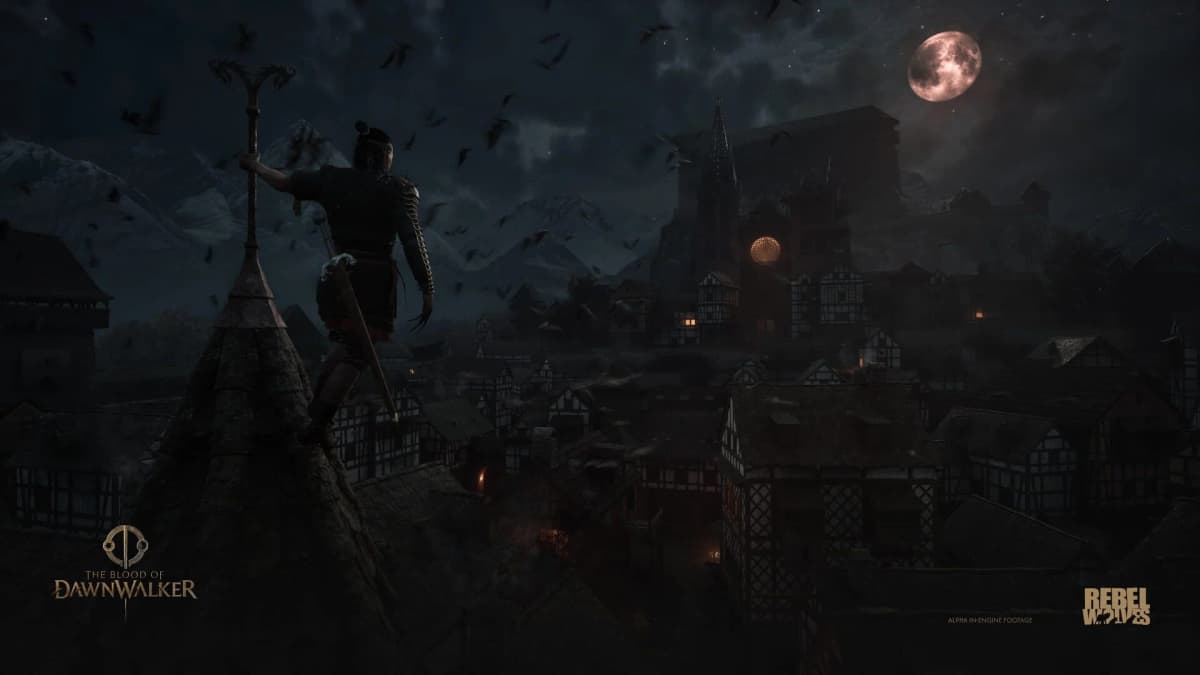
The real bet is anti-bloat, not artificial urgency
If Rebel Wolves sticks the landing, the 30-day system could become the game’s best argument against the worst habit in modern RPG design: mistaking volume for value. Too many open worlds are built around compulsion loops, checklist density, and the assumption that “more map markers” equals “more game.” That works for engagement dashboards. It does not always produce memorable role-playing.
The Blood of Dawnwalker is instead framing time as scarcity. Not every thread will be followed. Not every problem will be solved. Not every build path will be exhausted in a single run. That is a healthier premise for replayability than the standard promise that players can technically do everything if they just keep clearing icons for another 40 hours. The uncomfortable observation here is that many RPGs are terrified of letting players miss content, because missed content can look like reduced value on a store page. Dawnwalker appears willing to gamble on the opposite idea: what you cannot do may be exactly what makes your run feel personal.
There is a historical anchor for that. RPGs used to be more comfortable with failure states, locked branches, and irreversible choices. Then big-budget design drifted toward safety. Studios started building games as completionist theme parks where every ride waits politely for you. That is consumer-friendly in one sense. It is also dramatically less interesting. A 30-day campaign frame, if implemented honestly, reintroduces friction in a way the genre has spent years sanding down.
The obvious risk is balance. If the game is too generous, the timer becomes decorative. If it is too strict, players will treat experimentation as a trap. The sweet spot is difficult: enough pressure to make choices meaningful, not enough to make curiosity feel stupid.
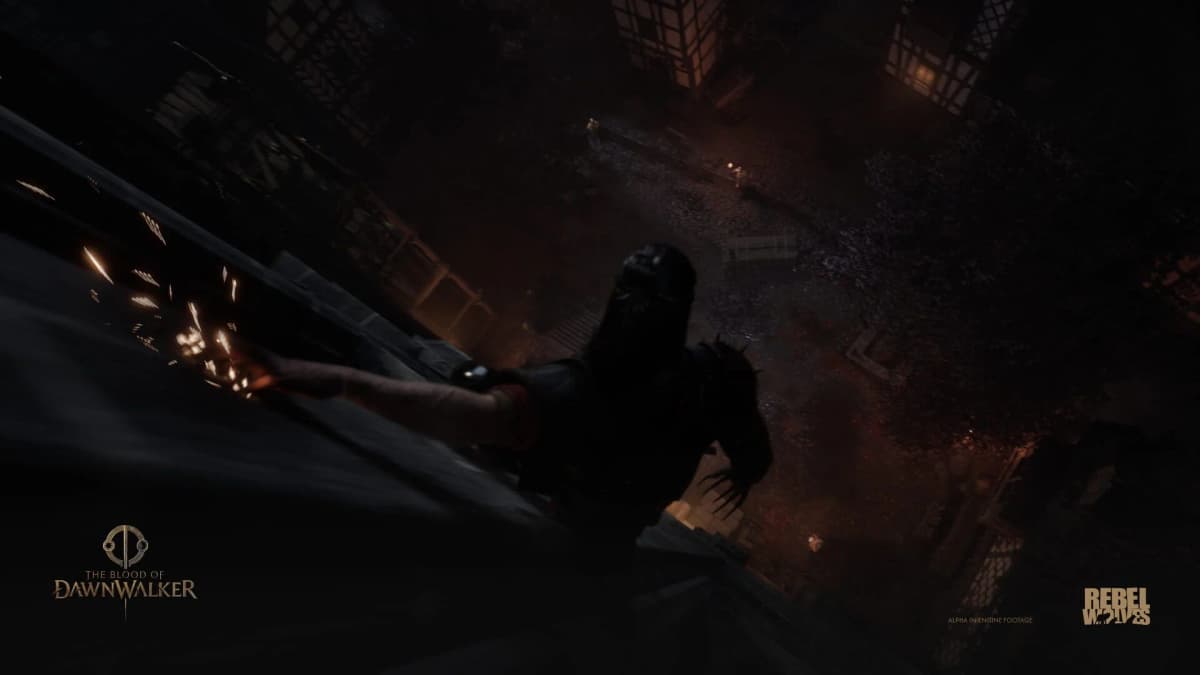
Coen’s day-night split is doing more than combat variety
The other headline mechanic is Coen himself. By day, he fights as a human with swordplay and magic. By night, he leans into his Dawnwalker nature with vampiric strength, mobility, and more monstrous options. That sounds like a standard “two stances, two skill sets” pitch until you place it next to the time system. Then it starts looking like the actual backbone of the game.
Day and night are not just aesthetic moods here. They appear to determine how you move through the world, how you approach encounters, and possibly how much risk you absorb in pursuit of power. Background details around feeding, corruption-style progression, and infamy systems point in the same direction: Rebel Wolves is building an RPG where power has social and structural consequences, not just bigger damage numbers. If that holds up, it will matter more than any individual flashy vampire ability.
This is also where the Witcher comparison becomes useful and dangerous at the same time. Yes, Rebel Wolves includes veterans from CD Projekt Red, and yes, a dark fantasy RPG built around moral trade-offs will inevitably invite that comparison. But Dawnwalker does not look like “The Witcher 3, but with vampires.” The day-night duality and the 30-day structure suggest a more systemic game, one less interested in sprawling quest tourism and more interested in mutually exclusive paths.
That difference could be the project’s biggest strength. It could also be where expectations snap. Plenty of players hear “open-world RPG from ex-Witcher talent” and mentally pre-order another gigantic narrative sandbox. If Rebel Wolves instead delivers something tighter, more conditional, and more willing to tell players “no,” some people are going to call that bold design. Others are going to call it missing content. Same game, different expectation management.

The question PR would rather leave blurry
The biggest unanswered question is simple: how much does one major decision actually cost? “Time advances during important moments” is a smart reassurance, but it is still vague. Does finishing a main quest consume one day? Several? Do failed attempts cost time? Can investigation branches burn the clock before combat even starts? How does the game communicate those trade-offs before you commit?
Those details are not minor UI trivia. They determine whether the timer feels legible or manipulative. Players can handle pressure. What they hate is hidden math dressed up as role-playing. If Rebel Wolves wants this system to be seen as elegant rather than punitive, it needs to be brutally clear about cause and effect.
The same goes for sequence-breaking. Early reports and developer comments suggest it may be possible to skip large amounts of content and push toward the ending quickly. That is interesting. It is also the kind of promise that sounds better in interviews than in a shipped game. There is a meaningful difference between “the critical path is genuinely flexible” and “speedrunners found one weird exploit route three weeks after launch.” If the studio means the former, it should show what that looks like in practical terms.
What to watch before September
There are four concrete things worth monitoring as the launch date approaches.
- Final clarification on the release date: if September 2 keeps appearing on storefronts while official messaging sticks to September 3, expect a regional unlock explanation rather than a delay. It is housekeeping, but it matters for preloads and embargo timing.
- A full UI demonstration of the 30-day counter: not just a narrated promise that time only advances at key moments, but an actual screen-level breakdown of how the game tells you what a decision will cost.
- A longer uncut quest demo: this is the only reliable way to see whether the “freeform” pitch is real or just carefully edited marketing. One quest, multiple approaches, visible consequences. Anything less is still trailer logic.
- How harsh the game is about missed content: if preview coverage starts stressing replayability, that is a good sign. If it starts reassuring players that they can comfortably do nearly everything in one run, the timer may be more cosmetic than structural.
For now, the cleanest read is this: The Blood of Dawnwalker is scheduled for early September 2026, and its most important feature is not “vampire powers” or “ex-Witcher 3 developers.” It is the attempt to make an open-world RPG where urgency is allowed to mean something again. That is the part worth paying attention to, because if Rebel Wolves gets it right, the game will not just launch as another dark fantasy hopeful. It will take a swing at one of the genre’s most stale assumptions-that bigger always means better-and that fight is overdue.
FinalBoss // Gear
Level up your setup
01Top-rated gaming headsetson Amazon→02High-refresh gaming monitorson Amazon→03Gaming chairson Amazon→04Discounted game keyson Kinguin→Affiliate links · As an Amazon Associate, FinalBoss earns from qualifying purchases.
Want to Level Up Your Gaming?
Get access to exclusive strategies, hidden tips, and pro-level insights that we don't share publicly.
Ultimate Gaming Strategy Guide + Weekly Pro Tips