
Most open-world RPGs treat time like set dressing. Day turns to night, shops close, NPCs move around a bit, and none of it really matters because the world is politely waiting for the player to feel ready. The Blood of Dawnwalker is trying something much harsher and much more interesting: making time the resource that everything else bends around.
That 30-day in-game limit is the headline, sure, but the real story is not “vampire RPG has a timer.” It’s that Rebel Wolves is building a reactive open world where quest progression spends time, missed opportunities keep moving, and the usual RPG fantasy of doing every side activity before the apocalypse is deliberately being broken. For a genre addicted to abundance and terrified of consequence, that is a real design swing.
Table of Contents (5)
This is not Majora’s Mask panic mode
The first thing worth clearing up is the part that sounds scary in the worst possible way. No, this is not a real-time countdown constantly breathing down your neck. According to the available details, time in The Blood of Dawnwalker advances when you complete specific quest stages and meaningful actions, not because you spent too long staring at a blacksmith menu. Rebel Wolves has also clarified that players are not being hard-rushed by a live clock.
That distinction matters. A real-time timer in a giant RPG usually feels like punishment. A progression-based timer is a very different beast. It turns time into a strategic currency. Every major commitment has an opportunity cost. If you choose one thread, another may evolve without you. If you spend part of your 30-day window pursuing power, investigating politics, or solving a local crisis, you are also choosing what not to handle.
That is a much smarter use of pressure than the usual fake urgency open worlds love to sell. We have all played games where the kingdom is supposedly collapsing, but the hero somehow has six weeks available for fishing, horse races, and herb collection. Dawnwalker looks like it actually wants that contradiction gone.
The risky part is also the whole point
There is a reason big-budget RPGs usually avoid systems like this. Players have been trained for years to expect content completion as a default right. If a quest line closes because the world moved on, some people will call that thrilling reactivity. Others will call it the game stealing content they paid for. Rebel Wolves seems fully aware of that and is pushing ahead anyway.
That takes some nerve, especially from a new studio trying to launch a fresh IP. But it is also probably the only way this game avoids becoming “another dark fantasy action RPG with vampires and difficult choices.” The ex-CD Projekt Red pedigree gets attention, but pedigree is cheap in this industry. Plenty of studios market themselves on former developers from somewhere prestigious. What matters is whether the design has a point of view. This one does.
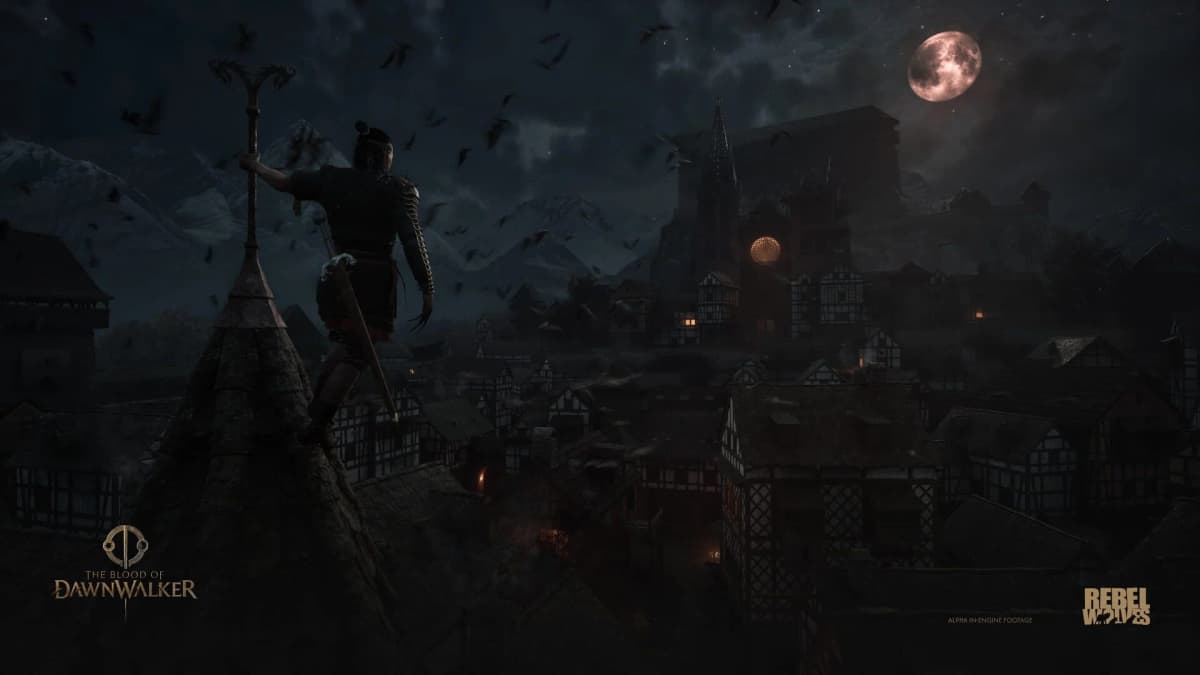
By tying the 30-day structure to consequences, Rebel Wolves is effectively saying that role-playing is not just about choosing dialogue tone or talent points. It is about accepting that you cannot be everywhere, save everyone, and vacuum up every reward on a first run. That is a much older-school RPG instinct dressed in expensive modern presentation.
And yes, that means some players are going to bounce off it hard. They will want the map scrubbed clean. They will want perfect outcomes. They will want a safety net. The uncomfortable observation here is that Dawnwalker may be at its best precisely when it refuses to behave like a checklist theme park.
It gets more interesting once day and night stop being cosmetic
The timer mechanic would already be enough to distinguish the game, but Rebel Wolves is layering it onto a protagonist who changes with the clock. Coen is a half-human, half-vampire hybrid, with day and night affecting traversal, combat, and available abilities. That means time is not just narrative pressure. It is also buildcraft, route planning, and encounter preparation.
That is where the design starts to look less like a gimmick and more like a systems RPG. If each 24-hour day is divided into eight segments, and those segments determine when certain actions happen and what version of Coen you are effectively playing, then planning becomes part of the fantasy. You are not merely choosing what to do. You are choosing when to do it because the “when” changes the outcome.
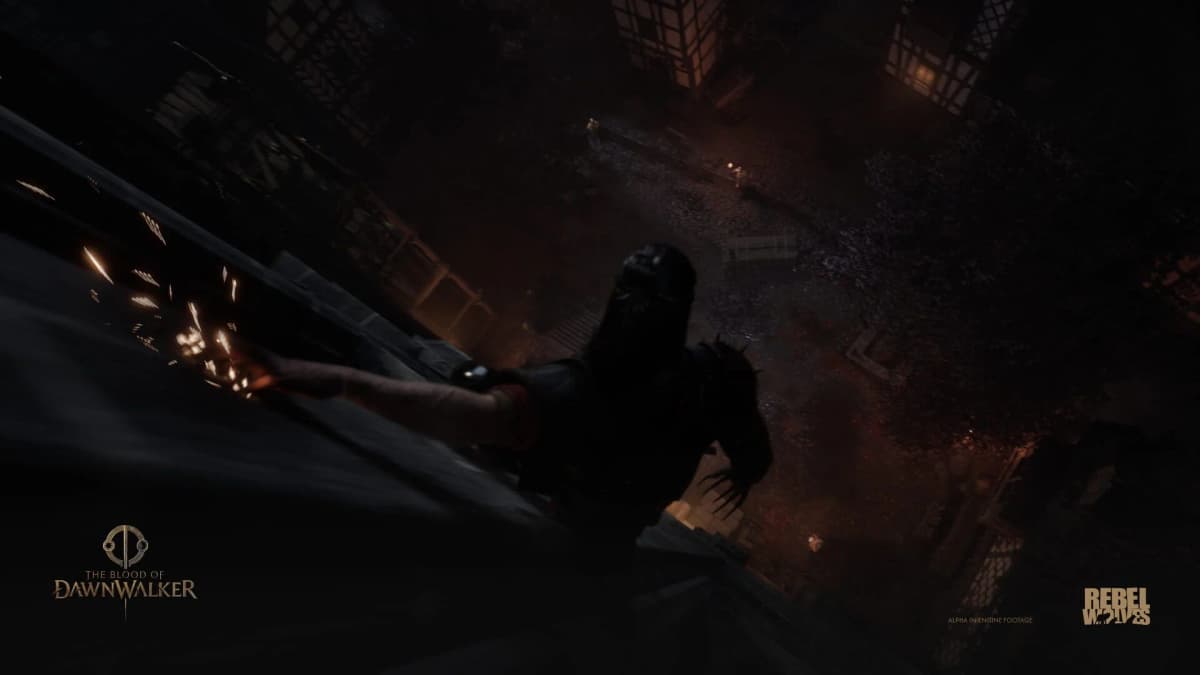
That opens the door to the kind of reactive quest design RPG fans keep asking for and rarely get. A noble’s political meeting during daylight is one thing. Hunting a target after dark when your vampire side is stronger is another. If the world state, enemy behavior, and your own capabilities are all moving together, then time stops being a menu number and starts being the central axis of the game.
That said, this is also where the whole thing could go sideways. Reactive systems sound incredible in previews. They get messy fast if the feedback is unclear. If players lose quests without understanding why, or if the game fails to communicate how much a decision costs in time, the system will feel arbitrary instead of elegant. The difference between “my choices mattered” and “the game wasted my run” is usually UI clarity and encounter readability. That’s not glamorous, but it is the make-or-break issue.
The real question is whether consequence will feel earned
The most promising detail so far is that running out of time apparently does not simply mean a blunt game over. Instead, the story changes. That is exactly the right call. Hard fail states in long-form RPGs often just teach players to reload and play conservatively. Branching forward, even into uglier outcomes, is what makes consequence believable.
There is also something quietly bold in the suggestion that skilled players may be able to skip huge amounts of content and head for the finish early. If that holds up, Rebel Wolves is not just making a narrative sandbox. It is building a game where sequence, confidence, and system mastery genuinely matter. That gives the world a speedrun logic, a replay logic, and a role-play logic all at once. Most “choice-driven” RPGs cannot manage even one of those cleanly.
The question I would put to the studio is simple: how often will consequences feel like meaningful world simulation, and how often will they just be content lockouts with prettier framing? Because players can tell the difference immediately. If a village falls because you chased power elsewhere, that is compelling. If a quest disappears because an invisible meter ticked behind the curtain, that is just bureaucracy with fangs.

What to watch before calling this a revolution
Three things matter from here. First, how clearly the game communicates time costs and state changes. Second, whether alternate outcomes are substantial enough to reward replay instead of just exposing cut branches. Third, whether the combat and exploration are strong enough to support multiple runs, because a reactive structure collapses fast if the minute-to-minute play is merely decent.
There is a release date on the board for September 3, 2026, which means the next meaningful checkpoints are obvious: hands-on previews with longer play sessions, direct examples of quests resolving without player intervention, and footage that shows how those eight daily segments actually shape decision-making. That is the material that will tell us whether this is a genuinely reactive RPG or just a very marketable timer wrapped around conventional quest design.
Right now, though, the premise deserves more credit than the usual skeptical shrug. Not because every ambitious system lands. They absolutely do not. But because The Blood of Dawnwalker is at least attacking a real problem in the genre. Open worlds have become enormous, frictionless, and weirdly consequence-free. Turning time into a finite resource is one of the few ways to make choice matter again without faking it.
If Rebel Wolves pulls this off, the 30-day limit will not be the thing that scares players away. It will be the reason the world feels alive in the first place.
FinalBoss // Gear
Level up your setup
01Top-rated gaming headsetson Amazon→02High-refresh gaming monitorson Amazon→03Gaming chairson Amazon→04Discounted game keyson Kinguin→Affiliate links · As an Amazon Associate, FinalBoss earns from qualifying purchases.
Want to Level Up Your Gaming?
Get access to exclusive strategies, hidden tips, and pro-level insights that we don't share publicly.
Ultimate Gaming Strategy Guide + Weekly Pro Tips