
The Blood of Dawnwalker finally has a release date: September 3, 2026, unless you are staring at a storefront that says September 2 because time zones still exist and digital stores remain weirdly bad at this. The more important part is not the date. It is that Rebel Wolves is betting its entire debut RPG on a mechanic most big-budget open-world games are too cowardly to touch: time that actually matters.
This is the first game from Rebel Wolves, the studio built by former CD Projekt Red developers including Witcher 3 director Konrad Tomaszkiewicz, and you can already see the pitch taking shape. Yes, it is a dark fantasy action RPG. Yes, it has vampires. Yes, the comparisons to The Witcher are going to follow this game around until launch and probably well after. But the system worth watching is the so-called “soft 30-day” structure, where time advances through meaningful actions and quests rather than just standing around waiting for sunrise. That is either a smart antidote to checklist-bloat open worlds, or the exact kind of ambitious friction that players love in theory and resent in practice.
Table of Contents (5)
The release date matters less than what Rebel Wolves is promising around it
Officially, The Blood of Dawnwalker launches on PS5, Xbox Series X|S, and PC on September 3, 2026. That date was confirmed by Rebel Wolves and Bandai Namco during the April 28 reveal push, and it has since been repeated across platform channels. A couple of store listings showing September 2 do not look like a contradiction so much as the usual regional rollover nonsense. Unless the studio says otherwise, September 3 is the date to keep in your head.
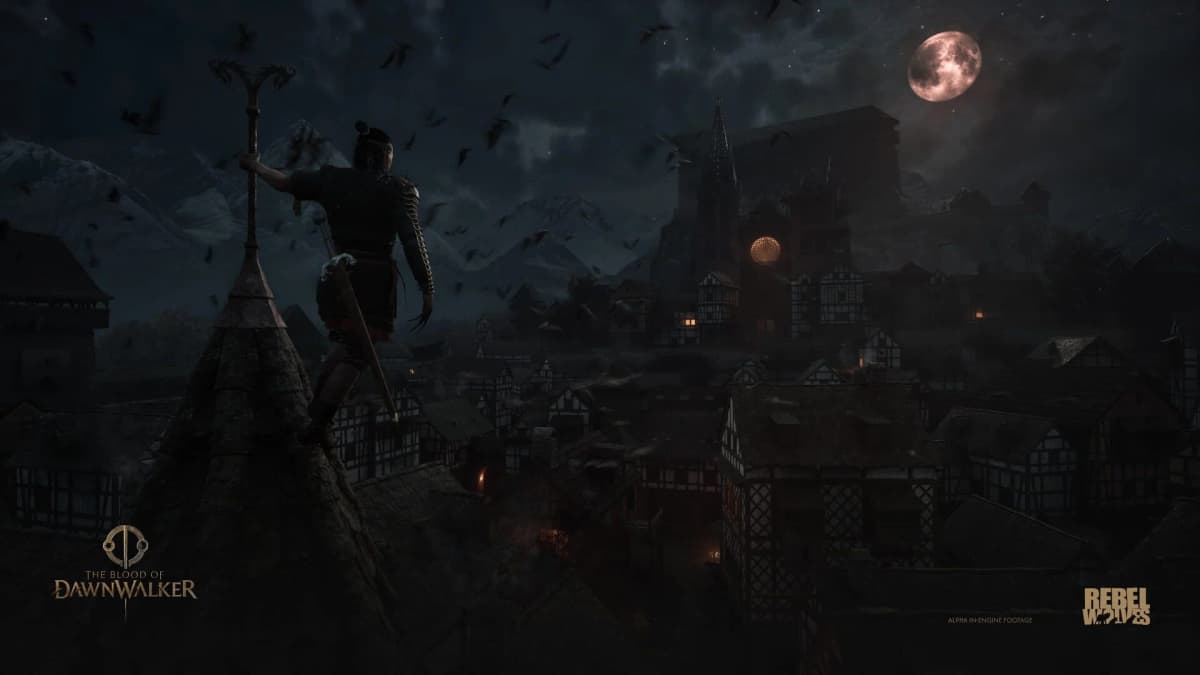
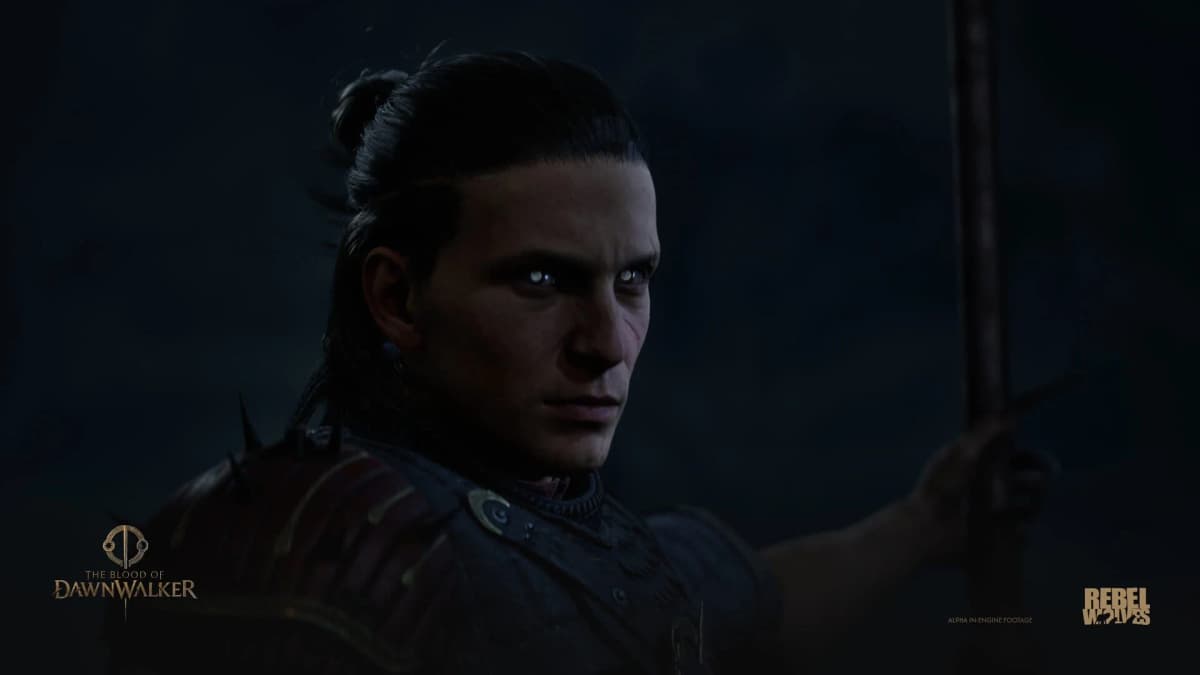
The headline-friendly version of the game is easy enough to sell. You play Coen, a “Dawnwalker” who exists between states: human by day, vampiric by night. The setting is 14th-century dark fantasy, with plague-era misery, political rot, and bloodsuckers embedded in the social structure. In other words, it is very aware of what audience it is courting. Former Witcher talent making a morally messy fantasy RPG with monsters and consequence-driven quests is not exactly a subtle pitch.
Most outlets will stop there and call it promising. That is the safe read. The more honest read is that Rebel Wolves is not just trying to make “another Witcher-style RPG.” It is trying to solve a problem that genre has had for years: open worlds keep telling players that choices matter while designing around infinite slack. If everyone can be saved eventually, if every urgent problem can wait 40 hours while you clean up side markers, then urgency is theater. Dawnwalker seems built around removing some of that comfort.
The day/night vampire form is cool; the real point is pressure
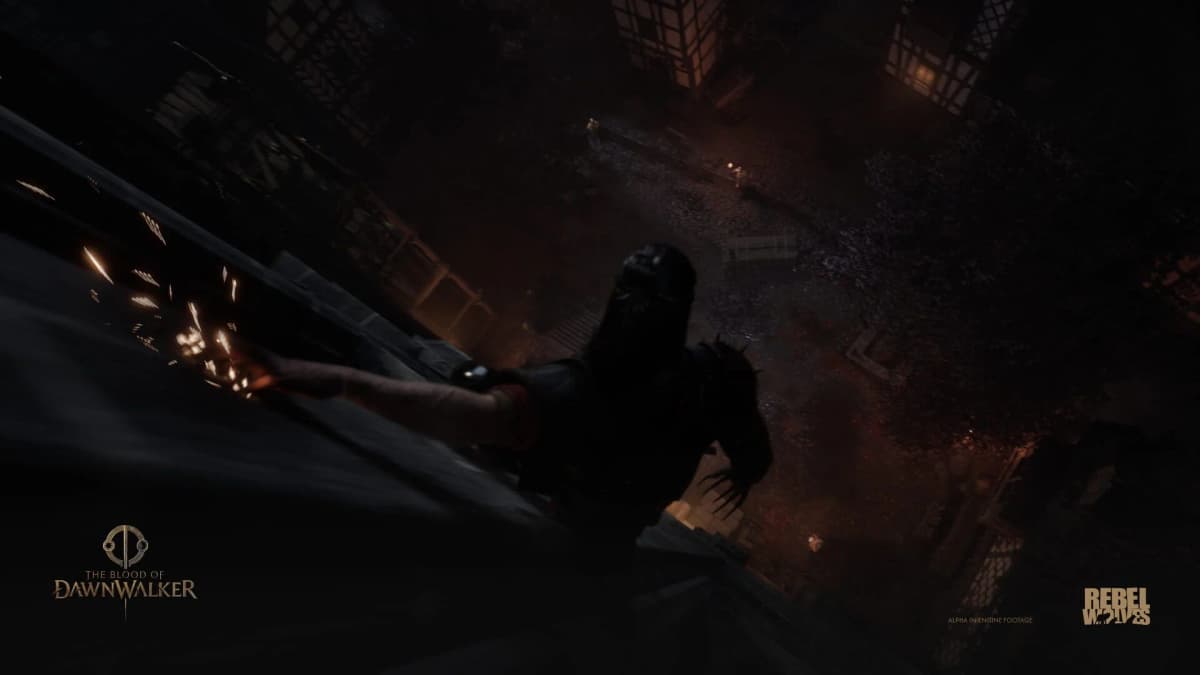
Coen’s day/night split is the obvious hook. By day, he is functionally human. By night, he shifts into a more vampiric form, with different combat options, traversal possibilities, and social implications. Rebel Wolves has also described him as sun-tolerant, which neatly avoids the old vampire fiction problem where half your game design gets locked behind “sorry, the hero explodes outdoors.”
That part sounds great on a trailer beat sheet. Human in the sunlight, monster in the dark, two movesets, two rhythms, two ways of navigating the world. Done right, it gives the RPG something most class trees do not: identity that changes how you actually play from hour to hour. Done badly, it becomes a gimmick where daytime is the boring admin mode and nighttime is where the real game lives.
The reason this system matters is because it appears tied directly to the game’s broader time-as-a-resource design. You are not just swapping forms for spectacle. You are deciding what to do with limited progression windows, which paths to prioritize, and what kind of monster Coen is becoming. That is where the design starts sounding less like a marketing bullet point and more like a genuine structural choice.
The 30-day timer is the bold part, and also the dangerous part
Rebel Wolves has framed Dawnwalker as a narrative sandbox with a soft 30-day timeline. The key word there is “soft.” Based on currently available details, time does not seem to tick down because you spent too long browsing your inventory or walking in circles. It advances through completed quests and meaningful decisions. That is a much smarter version of a timer than the one most players are already preparing to hate.
Still, let’s call this what it is: a risk. RPG players say they want consequence. What they often want is the feeling of consequence with a hidden safety net. This system sounds like it may actually force trade-offs. Save one person, lose another. Chase one lead, let another situation worsen. Miss content not because you failed a skill check, but because you chose a direction and lived with it.
That is the kind of design people praise once it becomes a cult favorite and punish immediately if it gets in the way of completionist habits. We have seen versions of this tension before. Dead Rising built identity around time pressure. Pathologic weaponized it. Even Majora’s Mask remains beloved partly because its clock creates meaning, not despite it. But AAA-adjacent RPGs rarely commit to that pressure anymore because it scares publishers, and frankly, it scares marketing departments that want a giant “play that said you want” slogan.
The uncomfortable question Rebel Wolves still needs to answer is simple: how punitive is this, really? “Soft timer” can mean elegant narrative momentum, or it can mean a game that quietly punishes curiosity. There is a big difference between “your choices close some doors” and “you needed outside research to understand why half a questline vanished.” If the studio gets that balance wrong, all the cool vampire stuff will be reduced to discourse about missable content and restart anxiety.
This is also a debut studio asking for a lot of trust
Rebel Wolves has the exact kind of pedigree publishers love to put in bold text: veterans from CD Projekt Red, leadership tied to The Witcher 3, big fantasy RPG ambitions, Unreal Engine 5 visuals. That buys attention. It does not buy automatic confidence. The industry is littered with new studios founded by famous alumni who discovered that making one great game at a major developer and building a sustainable studio from scratch are not remotely the same challenge.
That does not mean Dawnwalker is in trouble. It means pedigree should be treated as context, not proof. What the game has shown so far is legitimately interesting: a Carpathian-inspired setting, vampires integrated into the social and political fabric of the world, a progression path reportedly tied to feeding and corruption, and an infamy-like system where your behavior can trigger stronger responses from enemies and the world around you. Those are good signs because they suggest the studio is thinking in systems, not just cinematics.
But this is also the exact stage where RPGs are best at sounding brilliant. The hard part is whether all these systems collide in ways that create stories rather than friction. Plenty of games promise “branching consequences.” Far fewer can survive players trying to break them for 60 hours.
What to watch before launch
- How the studio explains the 30-day structure in practical terms. Players need examples, not vibes.
- Whether day and night are equally developed play states, or if one clearly gets the good abilities and better encounters.
- How failure states work. Missing content can be exciting; feeling blindsided is not.
- Whether previews focus on actual systemic reactivity or keep hiding behind lore and atmosphere.
- Performance on console. Unreal Engine 5 plus ambitious open-world design is not a combination that earns blind faith anymore.
Right now, The Blood of Dawnwalker looks more interesting than most dark fantasy RPG reveals because it is at least trying to put mechanical teeth behind its themes. The release date is settled. The premise is strong. The real test is whether Rebel Wolves can make time pressure feel like drama instead of hassle. If it can, this stops being “that ex-Witcher vampire RPG” and becomes something rarer: an open-world game willing to tell you that you cannot do everything, and mean it.
FinalBoss // Gear
Level up your setup
01Top-rated gaming headsetson Amazon→02High-refresh gaming monitorson Amazon→03Gaming chairson Amazon→04Discounted game keyson Kinguin→Affiliate links · As an Amazon Associate, FinalBoss earns from qualifying purchases.
Want to Level Up Your Gaming?
Get access to exclusive strategies, hidden tips, and pro-level insights that we don't share publicly.
Ultimate Gaming Strategy Guide + Weekly Pro Tips