
The Blood of Dawnwalker finally has a firm launch window, and the date itself is almost the least interesting part. Yes, Rebel Wolves’ vampire RPG is set for September 3, 2026 on PS5, Xbox Series X/S, and PC – with some storefronts showing September 2 because digital stores still love turning time zones into free confusion. But the real hook is the system wrapped around that date: a 30-day in-game clock and a day/night transformation loop that turns time into your most valuable resource. That is the part worth paying attention to, because it is where this game stops looking like “ex-Witcher devs making a dark fantasy RPG” and starts trying something nastier.
Table of Contents (5)
September 2 or 3 is a store problem, not the actual headline
The clean version is simple: the official release is September 3, 2026. That date has been echoed across publisher materials, Xbox listings, and broader reporting. Steam and PlayStation pages listing September 2 are very likely just a regional rollout issue, not a secret second launch. Anyone who has watched preload timers drift around midnight UTC has seen this movie before.
What matters more is that Rebel Wolves is planting this in the early fall slot with a game that clearly wants to be treated like a major RPG event, not a cult oddity. That confidence makes sense on paper. The studio is led by former CD Projekt Red talent, including The Witcher 3 game director Konrad Tomaszkiewicz, and Bandai Namco is publishing. In other words: this is not some vibes-heavy indie promising impossible systemic depth with six developers and a dream. This is a serious swing.
The obvious comparison is The Witcher, and plenty of outlets will stop there because “grim fantasy world, monster politics, story choices, veteran devs” is easy copy. But Dawnwalker looks less interested in copying Geralt’s road trip structure than in putting players under strategic pressure. That distinction matters.
The 30-day timer is either this game’s killer feature or its biggest risk
The headline mechanic is a 30-day in-game limit tied to progression. Not a real-time countdown. Not some mobile-style stamina nonsense. A structured time economy where quests, decisions, and movement through the world appear to push the clock forward. Rebel Wolves has framed time as a resource, which is exactly the right phrase. Resources force trade-offs. Trade-offs create role-playing. And role-playing, actual role-playing, has been getting sanded out of big-budget RPGs for years in favor of “do everything eventually.”
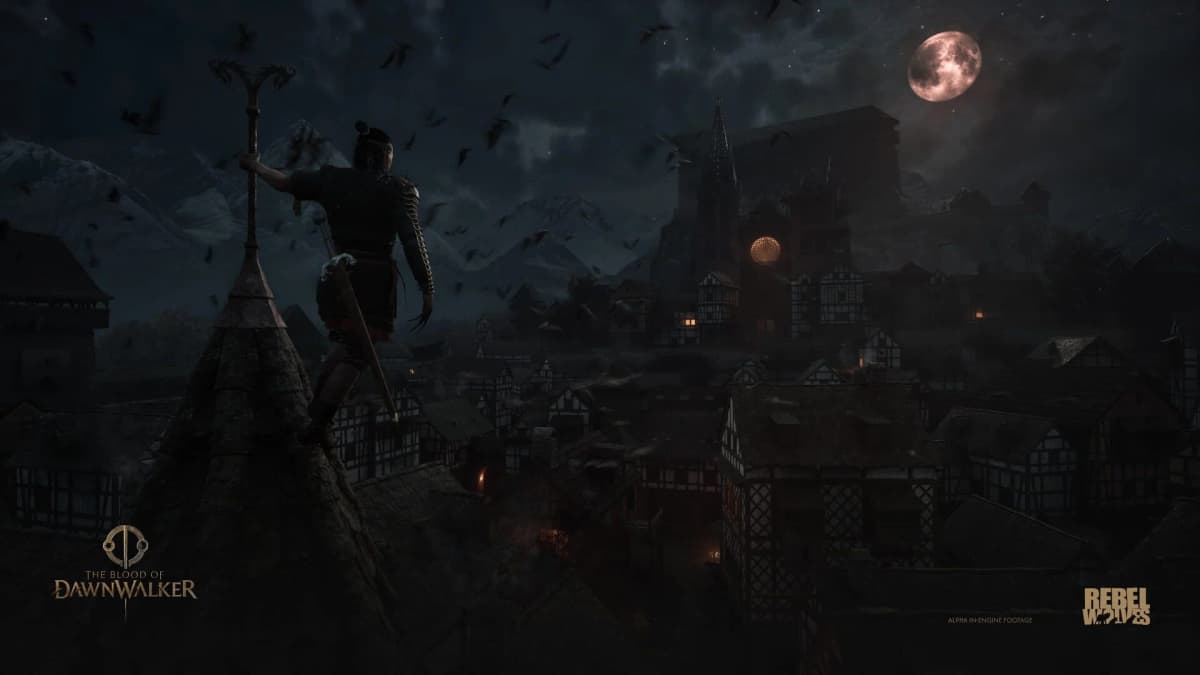
That is why this system is interesting. It suggests you are not meant to see every thread in one clean completionist sweep. You may have to choose who to save, what lead to chase, and which opportunities to let die on purpose. That is good design if the game is built around consequence. It is miserable design if it turns into fake urgency while the world waits politely for you to finish side content. The uncomfortable question Rebel Wolves will eventually need to answer is simple: how much of this timer is real friction, and how much is theater?
There is one especially bold wrinkle floating around the current coverage: after the prologue, players may be able to head straight toward the major endgame threat rather than clearing a traditional checklist first. If that holds, it tells you exactly what kind of RPG this wants to be. Not a guided park ride. More like a systems-driven campaign where knowledge, preparation, and nerve matter as much as level scaling. That is a strong idea. It also puts enormous pressure on encounter balance and quest readability, because the line between “player freedom” and “player wandering into nonsense” is very thin.
Day and night are not flavor here – they are the whole combat loop
Coen, the protagonist, is a Dawnwalker: human by day, vampiric by night. That is not just a lore hook for trailers. It appears to define traversal, stealth, combat, and progression. During the day, you are dealing with a more grounded, human toolset. At night, vampiric abilities open up, changing how you move and how you fight. Some reports have also pointed to feeding and corruption-style progression systems, which would make the usual power fantasy a little uglier and a little more interesting.
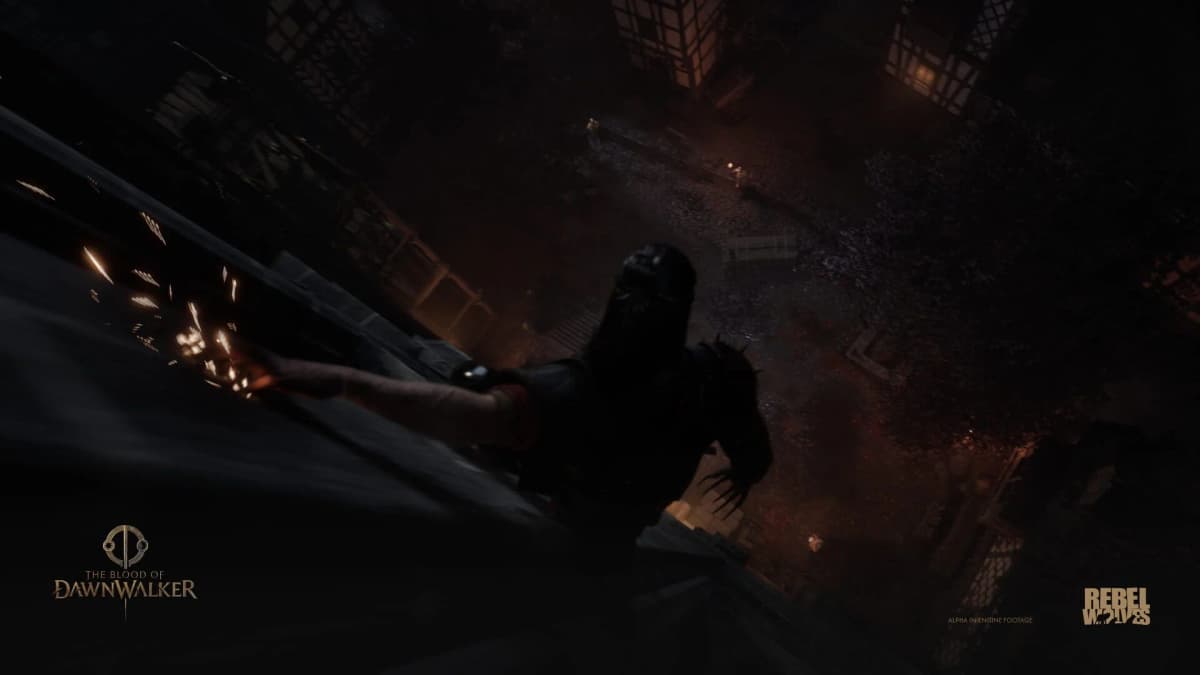
This is the part that could separate Dawnwalker from the pile of dark fantasy action RPGs that all claim “meaningful choice” and then hand you three dialogue options that lead to the same hallway. If the day/night split genuinely alters mission viability, enemy behavior, and route planning, players will be making decisions before the fight even starts. Do you infiltrate as a human in daylight because it keeps suspicion low? Do you wait for night because the vampire kit gives you better mobility and violence at the cost of control, visibility, or social consequences? That is a loop. That is texture.
And yes, there is some obvious risk here too. Split-form characters in RPGs can end up feeling like two half-finished kits awkwardly stapled together. We have seen games promise radical duality before and then quietly funnel every meaningful encounter toward one optimal playstyle. If nighttime Coen is clearly more effective in most situations, the “choice” collapses. If daytime play feels like mandatory waiting room content before the cool stuff, same problem. Rebel Wolves needs both halves of the identity to feel necessary, not just thematic.
This is Rebel Wolves telling you it wants consequence back in big-budget RPGs
The broader signal here is hard to miss. A lot of AAA RPGs have spent the last decade chasing scale, content volume, and player retention metrics. Bigger maps. Longer quest logs. More icons. More systems, but softer consequences. The Blood of Dawnwalker seems to be pushing the other way, or at least claiming to. Fewer safety nets. More tension. More acceptance that players will miss things, fail things, and live with outcomes.

That is refreshing, especially coming from developers with CD Projekt Red DNA, because the post-Witcher 3 industry learned the wrong lesson from that game. Too many studios copied the bloat and missed the authored consequence. Rebel Wolves looks like it knows the difference. The studio’s challenge now is proving that this is not just prestige-RPG marketing language wrapped around a fairly conventional open-world structure.
One more thing gamers should keep in the back of their heads: this is a new IP asking players to buy into a pretty demanding structure on day one, reportedly at full AAA pricing. That means the onboarding has to be excellent. If the timer, transformation rules, and quest consequences are not communicated clearly, the game could lose people fast for reasons that have nothing to do with difficulty and everything to do with readability.
What to watch before launch
- Whether Rebel Wolves clearly explains how the 30-day clock advances. If time moves on major quest completion rather than every minute of wandering, that dramatically changes the pressure level.
- How often day and night meaningfully alter mission design instead of just swapping animations and skill bars.
- Whether players can actually challenge late-game objectives early in a way that feels supported, not gimmicky.
- Hands-on previews focused on failure states. What happens when you run out of time, miss key objectives, or lean too hard into vampiric power?
The release date gives this thing a place on the calendar. The mechanics are what will decide whether it deserves a place in the conversation. Right now, The Blood of Dawnwalker looks promising for one specific reason: it is trying to make time, identity, and consequence hurt a little. Good. RPGs have been too comfortable lately. If Rebel Wolves can make that 30-day structure feel like pressure instead of punishment, this could be one of 2026’s smartest swings. If it cannot, the game risks becoming another very pretty “your choices matter” marketing campaign with fangs attached. The concept is strong enough that it deserves skepticism and attention in equal measure. That is usually where the interesting games live.
FinalBoss // Gear
Level up your setup
01Top-rated gaming headsetson Amazon→02High-refresh gaming monitorson Amazon→03Gaming chairson Amazon→04Discounted game keyson Kinguin→Affiliate links · As an Amazon Associate, FinalBoss earns from qualifying purchases.
Want to Level Up Your Gaming?
Get access to exclusive strategies, hidden tips, and pro-level insights that we don't share publicly.
Ultimate Gaming Strategy Guide + Weekly Pro Tips