
Table of Contents (8)
Resin 3D printing used to drive me mad. Then I tried the Creality Halot‑X1
My relationship with resin 3D printing has always been love-hate. I love the detail; I hate everything else. The sticky gloves, the drippy vat screws, the wrestling match to chisel a fragile miniature off a build plate at midnight… it all adds up. For tabletop stuff – D&D heroes, monsters, proxies for wargames – resin is still king, but every print felt like signing up for a chore.
The Creality Halot‑X1 is the first resin printer I’ve used that feels like it’s actually designed around that pain. Yes, on paper it’s a spec monster: 10.1in 16K mono LCD (15120 x 6230px), up to 170mm/h print speed, respectable 211.68 x 118.37 x 200mm build volume, automatic leveling, USB‑A and Wi‑Fi. All that’s great. But the reason I kept using it – and the reason I’d recommend it to beginners – is much simpler:
It makes resin printing less of a hassle.
Between the twist‑to‑release build plate, the raised‑vat motion system, sensible vat latches, and an optional resin feed/extractor, the Halot‑X1 attacks the mess from every angle. After a few weeks of running minis, terrain, and a couple of larger monsters through it, it’s the first resin machine I don’t groan about setting up.
Key takeaways after a few weeks with the Halot‑X1
- Genuinely beginner‑friendly: automatic leveling and a clean UI mean you can be printing minis the same evening you unbox it.
- Twist‑to‑release plate is a game changer: no more aggressive scraping, fewer “oops I snapped the sword” moments.
- Raised resin vat reduces chaos: the vat comes up to the plate instead of the plate plunging down, which cuts down on splashes and wobbles.
- 16K resolution looks fantastic: tiny details on RPG minis are crisp, though the upgrade over other high‑end machines is subtle.
- Optional resin feed is slow but life‑saving: it handles pouring and extracting resin for you, but it’s an extra purchase.
- Missing a few comforts: there’s no heated vat and no built‑in camera, which matters if you print in a cold room or love remote monitoring.
Setup & first impressions: from box to first mini
The first evening with any resin printer usually involves a lot of swearing and a YouTube crash course. With the Halot‑X1, I was pleasantly surprised by how uneventful it was.
Out of the box, there’s very little assembly: slip the vat into place, plug in the power, peel the film from the screen, and you’re basically good. The machine walks you through automatic leveling with a simple on‑screen wizard. I didn’t need a sheet of paper or to fiddle with screws under the plate – it’s effectively “true leveling‑free” from a user perspective. Hit a button, it does its thing, and you’re done.
The touchscreen interface is clean and surprisingly friendly if you’re new to resin. No walls of cryptic abbreviations, just obvious options for “Print”, “Tools”, and “Settings”. I loaded a USB stick with a pre‑supported D&D character mini, topped up the vat, hit print, and walked away half expecting the usual beginner drama – grinding Z‑axis noises, mis‑leveled plates, models welded to the FEP. Instead, it just… printed.
It’s a small thing, but that lack of friction at the start matters a lot if this is your first resin machine. There’s enough to learn already between slicers, supports, and post‑processing; having the printer itself behave is a relief.
The design that finally fights the mess
The more time I spent with the Halot‑X1, the more it felt like Creality had a whiteboard titled “Things people hate about resin printing” and just started ticking them off. Three design choices in particular made a difference: the raised‑vat motion system, the twist‑to‑release build plate, and those underrated vat latches.
Raised‑vat motion system
On most resin printers, the build plate plunges down into the vat like a mechanical guillotine. The Halot‑X1 flips that motion: the plate stays put and the vat travels up to meet it. Practically, that means less turbulence in the resin and fewer chances for a wobbly plate to introduce subtle layer shifts.
From a user perspective, it also just feels calmer. I noticed fewer little resin waves slapping the sides of the vat when the print started, and when the plate lifted at the end of a job, there was less dramatic dripping. Is it the kind of upgrade you can quantify in a household setting? Not really. But over multiple prints, it contributed to this general sense that the machine was in control instead of violently dunking my models.
Twist‑to‑release build plate
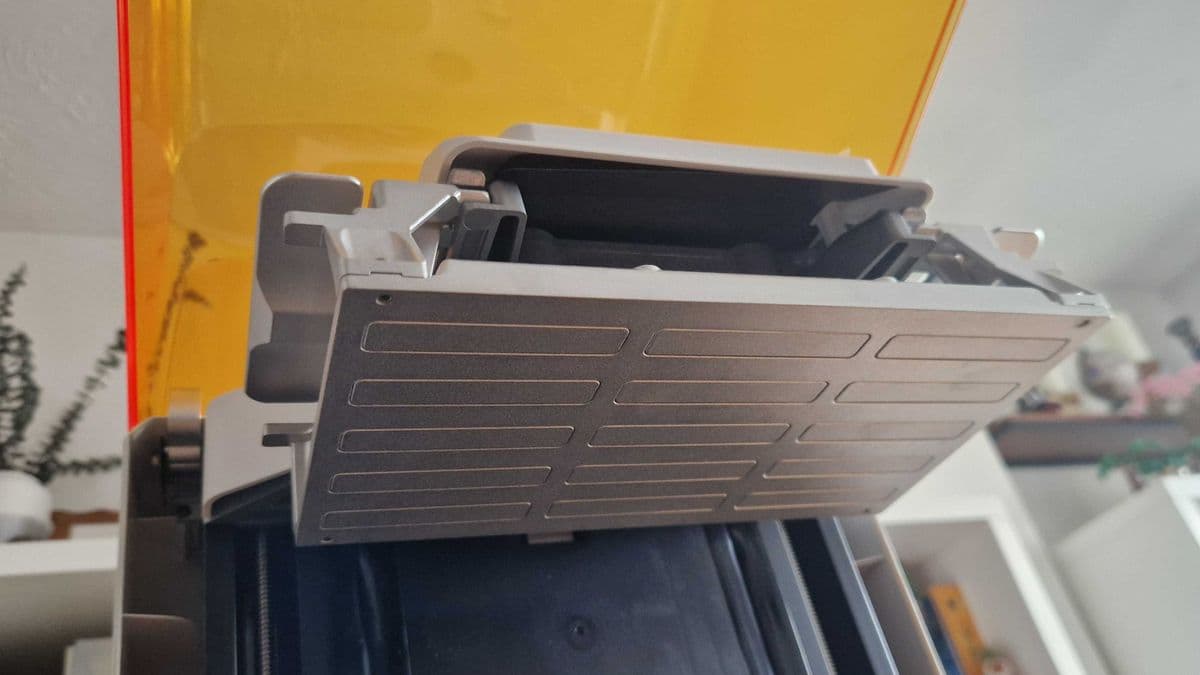
This is the star of the show. If you’ve ever jammed a metal scraper under a delicate resin mini and felt that horrible snap, you’ll understand why I’m so into this thing.
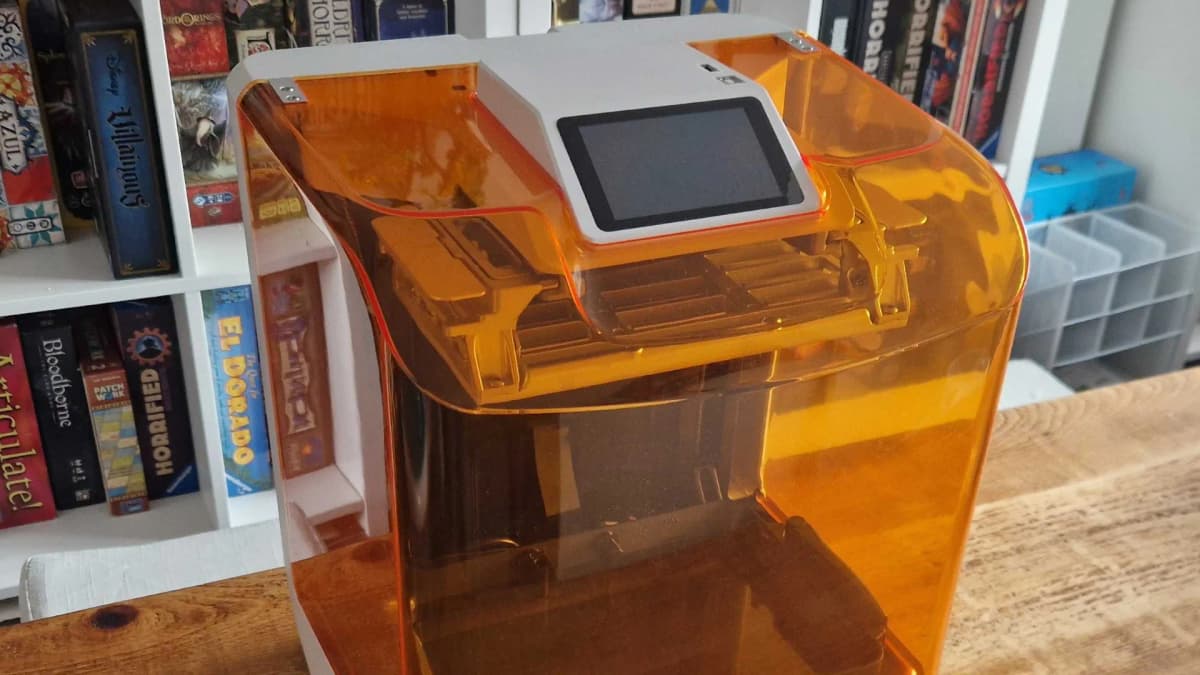
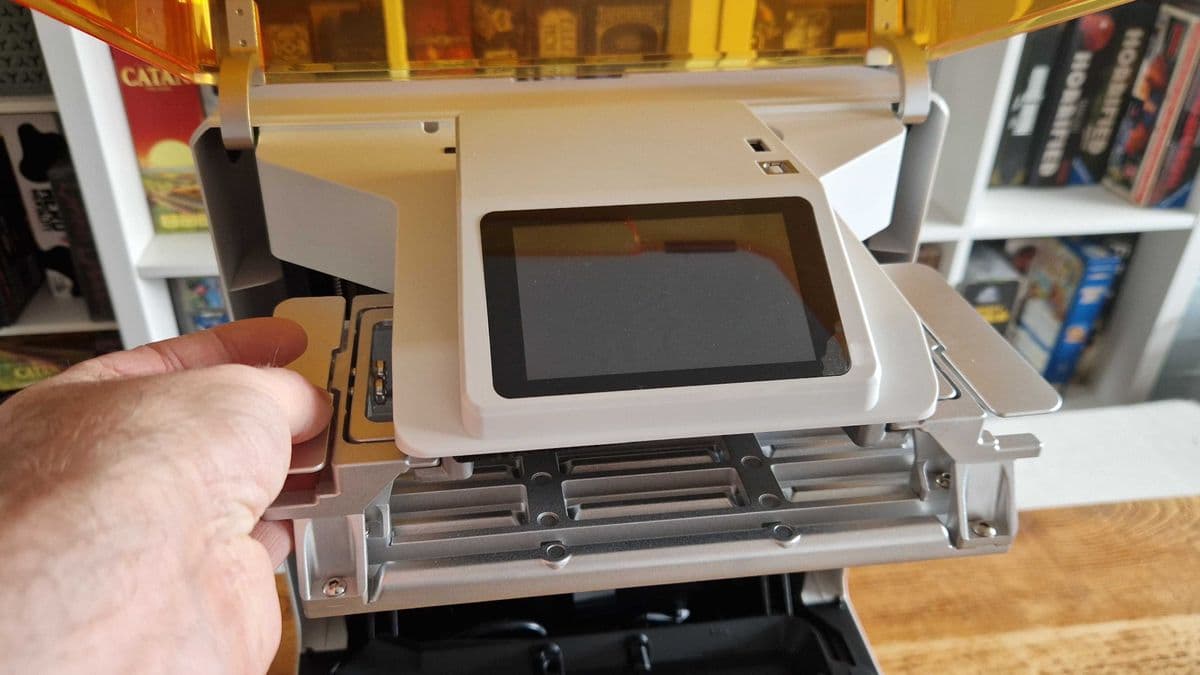
Instead of attacking your print at a shallow angle with a tool, the Halot‑X1’s plate lets you twist it slightly to flex the surface. That flex breaks the adhesion, and your models simply pop off with a gentle hand or a nudge from a plastic scraper. No gouged build plate, no chipped bases, and far fewer accidental war wounds to your minis.
My first big test was a chunky boss monster with a wide, flat base – the kind of thing that normally clings to a plate like its life depends on it. On my older printer, I practically had to pry that kind of model off in stages. On the Halot‑X1, a firm twist and a couple of taps later, it was in my gloved hand. That moment alone sold me on this design.
Vat latches instead of screws
This sounds boring, but it’s one of those quality‑of‑life tweaks you appreciate every single time you change resin. Rather than four fiddly screws you have to unscrew while resin slowly works its way down your forearm, the Halot‑X1 uses simple latches on the vat.
Flip, lift, done. It’s faster, it’s cleaner, and you’re much less likely to drop a resin‑coated screw onto your desk or carpet. Paired with the fact that the touchscreen is up away from the danger zone rather than directly under the drippy vat area, the whole machine feels like it’s consciously trying not to marinate itself in resin.
Optional resin feed/extractor
If you really hate dealing with bottles, Creality’s optional resin feed system plugs into the Halot‑X1 to add and remove resin automatically. It’s not included in the base package and it’s not fast – it takes its time pumping resin in and out – but it’s blissfully hands‑off.
I grew to love hitting a button and letting the system drain the vat instead of doing the careful “don’t spill, don’t spill” juggle back into a bottle. If you only ever use one or two resins, you can live without it. If you’re constantly swapping between colors or formulas, it quietly becomes one of the best parts of the workflow.
Print quality and speed: how good is 16K, really?
The Halot‑X1’s headline is its 16K (15120 x 6230px) monochrome LCD, stretched across a 10.1in screen. On paper, that means extremely small pixels and the potential for ultra‑fine detail, especially on the X and Y axes. In practice, it looks… excellent, but we’re very much in the realm of diminishing returns.
On 28–35mm tabletop minis, the difference between this and other modern high‑end resin printers (like the Elegoo Saturn 4 Ultra 16K) is minimal. Creases on cloaks, tiny pouches, individual fingers, facial lines – they all came out crisp and well‑defined. Layer lines were basically invisible at arm’s length. If you’re painting these models later, the limiting factor will be your brush control, not the printer.
Where the resolution really shows is on surfaces that usually give cheaper printers trouble: super fine textures on armor, embossed symbols on bases, tiny rivets on sci‑fi terrain. Those all survived the journey from STL to physical model intact. I printed several pieces from digital miniature studios that love to pack their sculpts with little greebles, and the Halot‑X1 handled them without smearing or softening.
Creality quotes speeds of up to 170mm/h, which is fast on paper. Realistically, your actual print times will depend on your layer height, exposure settings, and how tall your model is. Compared to my older mid‑range resin printer, the Halot‑X1 consistently finished jobs sooner – not instantaneously so, but enough that an overnight batch of minis became a late‑evening job instead.
The more important part, for me, was reliability. Over weeks of printing, the only failed or flawed prints I had were self‑inflicted: bad manual supports on custom Heroforge characters, or resin that hadn’t warmed up fully in my chilly workspace. When the model was pre‑supported and the resin was up to temperature, the Halot‑X1 just quietly did its job.
Cold rooms, missing heaters, and the realities of resin
That last point leads into one of the Halot‑X1’s weak spots: there’s no heated vat. The optional resin system can help with management, but it doesn’t fix temperature on its own. If, like me, you print in a drafty office that thinks it’s a fridge half the year, you’ll still need to warm your resin somehow – a small space heater, a dedicated resin warmer, or just storing bottles in a room that’s not arctic.
The printer itself coped with my cold environment better than expected. Even when the resin was a bit thicker than ideal, it still powered through a batch of terrain. But exposure times needed a nudge, and you’re always flirting with brittle results if you push your luck. A heated vat would have been the final piece of the comfort puzzle here, and its absence is noticeable if you don’t have a climate‑controlled hobby space.
The other missing creature comfort is a built‑in camera. Some filament machines now ship with cameras as standard so you can check in on prints via an app. The Halot‑X1 skips that entirely. If you like to monitor progress from the couch or office, you’ll have to rig up your own solution with a cheap webcam or just resign yourself to occasionally lifting the lid and peeking.
None of these are deal‑breakers, but they are worth knowing about up front. This is a machine that makes the physical workflow of resin printing far nicer, but it doesn’t try to be a fully “smart” printer in the way some high‑end filament machines are starting to.
Workflow, controls, and day‑to‑day use
Once you get past your first successful print, the Halot‑X1 settles into a surprisingly low‑stress rhythm. File transfer via USB is straightforward, and Wi‑Fi support means you’re not constantly playing musical chairs with memory sticks if your PC isn’t near the machine.
The on‑printer interface exposes the stuff you actually care about – current layer, remaining time, basic controls – without burying you in arcane tuning options. I appreciated being able to quickly re‑run the leveling routine after a few weeks of prints without diving into a manual. For beginners, that matters; there’s nothing scarier than a vaguely off‑level plate on a resin printer.
Day to day, the mess‑reduction design really adds up. Quick vat removals via latches. Fewer drips thanks to the raised‑vat motion. A twist plate that doesn’t turn every print removal into a mini‑boss fight. You still have to wear gloves, you still have to wash and cure your models, and you still have to dispose of resin safely – none of that goes away. But the number of “this is such a faff, why do I do this?” moments dropped significantly for me.
Who actually benefits most from the Halot‑X1?
By the end of my time with the Creality Halot‑X1, it was clear who this machine is really for.
- Tabletop gamers diving into resin for the first time
If you’re eyeing resin printing to pump out Warhammer proxies, D&D heroes, monsters, or custom tokens, this is a fantastic first printer. Automatic leveling, the forgiving hardware, and the print quality all work together to give you a good experience without demanding you become a full‑time print technician. - Hobbyists who already own an FDM printer
If you’ve been living in filament land – maybe on something like an Elegoo Centauri Carbon or similar – and want a resin sidekick purely for detail parts, the Halot‑X1 is a very comfortable transition. You’ll still have to adapt to the resin workflow, but the machine itself won’t be the source of your headaches. - Veteran resin users who hate the cleanup
If you already have a solid 8K/12K/16K resin printer and you’re happy with its mess level, the Halot‑X1 isn’t going to blow your mind on pure print quality. The jump won’t be night and day. But if your current setup constantly annoys you with stuck prints and vat screws, the twist plate and latches might be worth the upgrade alone.
On the flip side, if your main goal is printing huge cosplay armor pieces or big functional parts, you’re still better off with a large‑format filament printer. Resin’s strength is precision and surface quality, not giant helmets.
FinalBoss // Gear
Level up your setup
01Top-rated gaming headsetson Amazon→02High-refresh gaming monitorson Amazon→03Gaming chairson Amazon→04Discounted game keyson Kinguin→Affiliate links · As an Amazon Associate, FinalBoss earns from qualifying purchases.
Want to Level Up Your Gaming?
Get access to exclusive strategies, hidden tips, and pro-level insights that we don't share publicly.
Ultimate Reviews Strategy Guide + Weekly Pro Tips