
Ten years after The Division turned snowbound Manhattan into one of the most convincing apocalypse sandboxes we’ve seen, the franchise’s big anniversary move isn’t a new PC/console sequel – it’s a free-to-play mobile game. That tells you almost everything you need to know about where Ubisoft wants this series, and its revenue, to live.
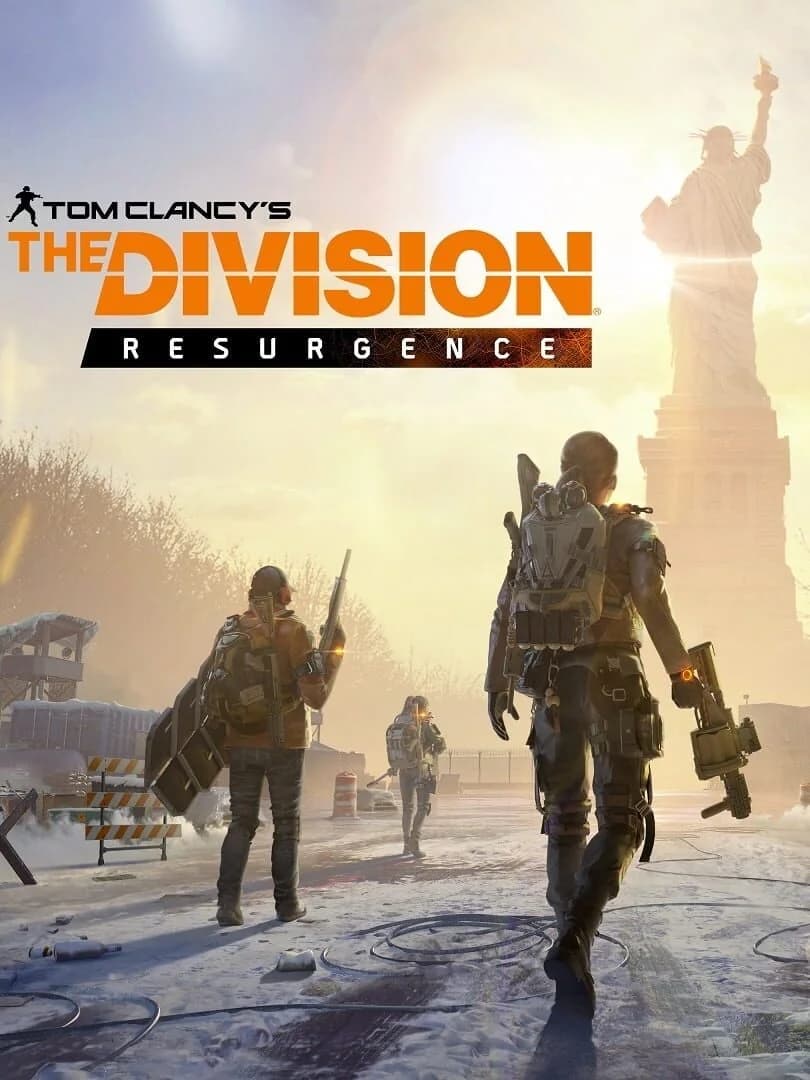
Tom Clancy’s The Division: Resurgence is now live worldwide on iOS and Android as a mobile-first, free-to-play third-person RPG shooter set between The Division and The Division 2. On paper, it’s “real” Division: open-world Manhattan, a full campaign, four-player co-op, PvP, and a Dark Zone-style PvPvE extraction mode. In practice, it’s also Ubisoft’s latest experiment in how far you can stretch a hardcore looter-shooter over touch controls and a live-service economy.
Table of Contents (7)
Key takeaways
- Resurgence is not a lightweight spin-off – it crams campaign, co-op, Conflict PvP and Dark Zone-style PvPvE into a sub-10GB mobile package.
- It lands exactly on the franchise’s 10-year mark, right after Ubisoft killed the Heartland spin-off – this is now the side pillar for The Division.
- Early impressions point to decent performance and controls, but clear visual downgrades and “free-to-play adjacent” progression clutter.
- The unanswered question is how aggressive the monetisation gets – and whether that rewrites what The Division means going forward.
Ten years later, The Division is a mobile game first
Resurgence isn’t dropping into a vacuum. It lands in March 2026, roughly a decade after the original game launched and after a messy few years for the brand. The Division 2 has quietly ticked along with seasonal updates, but the big “next step” – the free-to-play survival spin-off The Division Heartland – was canned as part of Ubisoft’s recent cutbacks.
So instead of a mid-budget PC/console experiment, the franchise’s new frontier is a mobile-first live service. That lines up neatly with the rest of the industry: Call of Duty, Warzone, PUBG, and even Rainbow Six are already fighting for daily-active-users on phones. Ubisoft looking at that pile of money and saying “our looter-shooter should be there too” is not a shock.
What’s different is how fully Resurgence commits. This isn’t a tactics spin-off or an auto-battler dressed in orange watch branding. It’s pitched as a standalone story set in post–Green Poison New York, between the events of the first two games. You’re a fresh Division agent dropped back into the city to push back familiar factions – Raiders, Rikers, Cleaners – plus a new group called the Freemen.
That timing in the lore is convenient. It lets Ubisoft recycle the most recognisable setting in the franchise – Manhattan in crisis – without trampling on The Division 2’s Washington storyline. It’s nostalgia with plausible deniability: you’re getting the Greatest Hits of snow, virus panic and iconic landmarks, but technically it’s “new story content.”

This is a full-fat Division – shrunk and sanded down
Strip away the mobile tag and the feature list is basically Division bingo.
- Open-world Manhattan during the Dollar Flu outbreak
- Solo or co-op play, up to four players
- A full campaign designed for mobile-first play sessions
- Five specialisations and chunky RPG progression
- Conflict PvP modes focused on objective control
- A Dark Zone-style PvPvE area with extraction-driven high-value loot
According to early hands-on impressions, including a review-in-progress from TheSixthAxis, Ubisoft has squeezed all of that into an Unreal Engine build that stays under 10GB. On modern phones that’s not nothing, but it’s also not “delete three other games” enormous by 2026 standards.
The compromises are exactly where you’d expect. Visuals are flatter, lighting is less moody, and the thick atmosphere that sold winter Manhattan the first time around just isn’t there at the same level. Pop-in is more visible. At a glance, it still reads as The Division – just the stripped-down, compressed version you’d expect from something that needs to run on a wide range of iOS and Android hardware.
Controls are a split story. Touch input is reportedly serviceable, with the usual virtual sticks and ability buttons, but it’s never going to match a mouse or a decent thumbstick for precision snap-cover shooting. Plug in a controller and reviewers are already saying it feels closer to home. Resurgence does support gamepads, and if you’re serious about PvP or Dark Zone extractions, that’s likely going to be the default for anyone playing on a tablet or docked phone.
Performance-wise, early reports suggest mid-generation Apple silicon handles it fine, while older and cheaper Android devices see more variance. That’s the tax of chasing “worldwide” – Ubisoft wants as many markets as possible, but Resurgence clearly targets relatively recent hardware. There are also the usual regional gaps: the game is branded as a global launch, but some countries are excluded.
Free-to-play progression is where things get murky
The real tension isn’t whether Ubisoft can cram a looter-shooter into 10GB. It’s whether they can do it as a free-to-play live service without breaking what made The Division’s grind compelling in the first place.
From the jump, Resurgence is built around long-term progression: five specialisations, gear to chase, builds to min-max. That’s the core loop fans know. But TheSixthAxis describes the systems layer as “cluttered” and very “free-to-play adjacent” – menus full of overlapping unlock tracks and currencies that feel more like a mobile RPG than a focused console shooter.
Ubisoft is promising ongoing post-launch content, which almost certainly means seasons, battle passes, cosmetic shops, and time-limited grinds. None of that is a problem on its own; Call of Duty: Mobile has been doing it for years without collapsing into full pay-to-win. The issue is how it intersects with power.
The Division’s Dark Zone works because loot is both dangerous and fair. If Resurgence ever lets you meaningfully skip that risk with a credit card – jumping gear levels, rolling perfect stats, or accessing meta-defining exotics through premium tracks – the whole thing falls apart. Even aggressive energy systems or stamina gating could quietly gut the “one more run” pull that kept people in Manhattan the first time.
Right now, Ubisoft’s messaging is vague where it matters most. We know it’s free-to-play, we know there’s “extensive progression,” we know post-launch support is planned. What we don’t have, yet, is a clear and transparent breakdown of what can only be earned and what can also be bought. Until that’s on the table, every shiny loot drop in Resurgence is going to raise the same silent question: did someone else pay to get here faster?
What this means for The Division 3
Resurgence also quietly rewrites expectations for where this franchise goes next.
Story-wise, it fills in the gap between games with a “newly activated agent in New York” angle that’s familiar enough to not scare off lapsed fans. That’s fine. The more interesting part is strategic: with Heartland dead and The Division 2 aging, this mobile project is now the experimental lab for everything The Division might become.
If Resurgence lands, Ubisoft suddenly has:
- A global funnel of players hitting Division systems for free on devices they already own
- A live-service platform to test seasonal structures, event pacing, and reward ladders
- Hard data on how far you can push monetisation before players walk
All of that will inform whatever “The Division 3” ends up being, if it happens. Best case, the mobile game is where Ubisoft learns to respect players’ time and wallets in a more competitive, unforgiving space. Worst case, Resurgence becomes the template for a future where the mainline games are designed from day one to mirror successful mobile spending patterns.
It’s also notable what Resurgence doesn’t do, at least for now. There’s no cross-progression with existing Division titles, no unified social hub, no shared inventory that turns this into some grand cross-platform ecosystem. This isn’t Destiny 2 streaming to your phone; it’s a parallel track. If it takes off, that split identity could become a strength – or a headache when fans start asking which version of The Division is “real.”
What to watch next
- Monetisation details in the first month: The opening battle pass, shop rotation, and any paid progression boosts will show Ubisoft’s real hand.
- Dark Zone balance complaints: If the subreddits and socials fill up with pay-to-win accusations around PvPvE extractions, that’s a red flag.
- Roadmap reveals: The first post-launch content update – new areas, missions, or factions – will confirm whether this is a serious long-term pillar or a glorified anniversary event.
- Performance on mid-range Android: As more devices hit the servers, we’ll see if “worldwide” really means playable for the broad audience Ubisoft is chasing.
- Signals about a mainline sequel: Any future Ubisoft earnings call that leans hard on Resurgence engagement numbers will quietly tell you how much hope is pinned on mobile versus a full Division 3.
TL;DR
The Division: Resurgence has launched worldwide on iOS and Android as a free-to-play, mobile-first take on Ubisoft’s looter-shooter, complete with campaign, co-op, PvP and a Dark Zone-style PvPvE mode. It’s a surprisingly complete slice of The Division shrunk into a sub-10GB mobile build, but early impressions point to visual downgrades and cluttered, “free-to-play adjacent” progression. The real test now is whether Ubisoft can resist turning that progression into a cash-driven shortcut factory – because whichever way Resurgence goes, the franchise is likely to follow.
FinalBoss // Gear
Level up your setup
01Mobile gaming controllerson Amazon→02Top-rated gaming headsetson Amazon→038BitDo controllerson Amazon→Affiliate links · As an Amazon Associate, FinalBoss earns from qualifying purchases.
Want to Level Up Your Gaming?
Get access to exclusive strategies, hidden tips, and pro-level insights that we don't share publicly.
Ultimate Gaming Strategy Guide + Weekly Pro Tips