
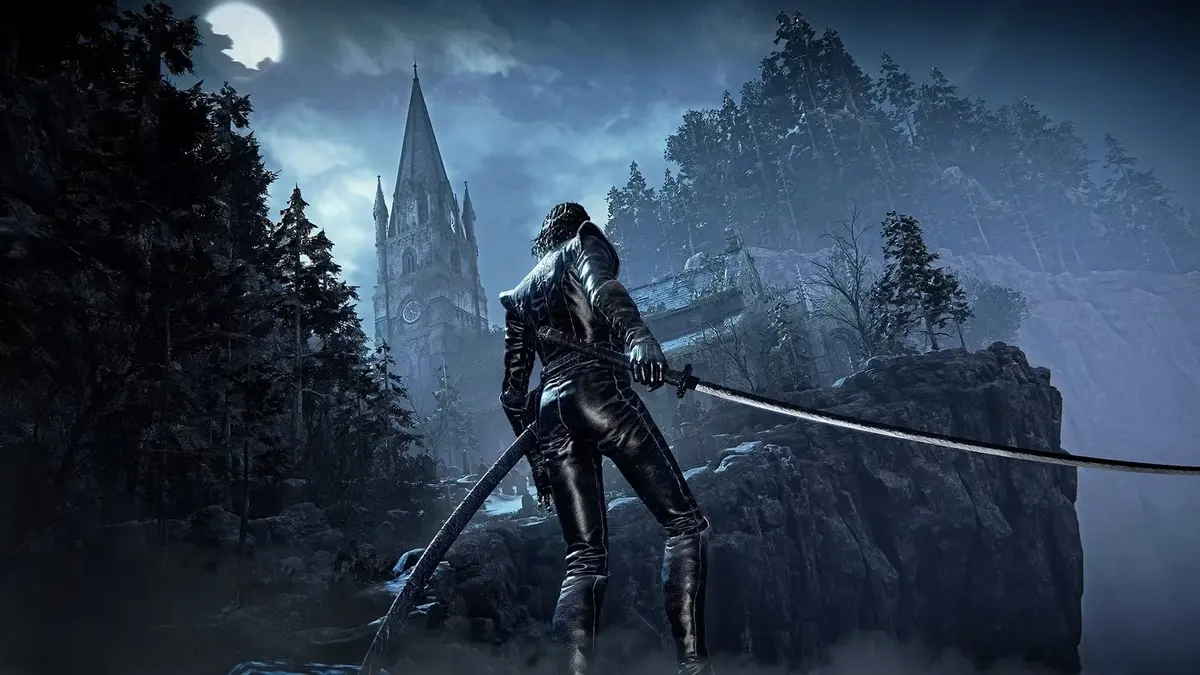
FromSoftware built its modern reputation on friction. Dark Souls and Elden Ring ask players to absorb failure, learn patterns, and return sharper. That philosophy works because those games make the player’s struggle legible. A boss kills you, and eventually you understand why. Competitive multiplayer produces a much uglier version of failure when a fresh player gets fed into a lobby with someone who has already mastered every movement option, map route, and ambush angle. There is no lesson there. There is only an exit menu.
That is why Hidetaka Miyazaki’s plan for The Duskbloods matters more than the usual pre-release promise about servers holding together. FromSoftware’s Nintendo Switch 2-exclusive PvPvE game will use ranked, skill-based matchmaking intended to place highly skilled players against similarly skilled opponents and newer players with other newcomers. Miyazaki’s stated goal is preventing lopsided matches before experienced players turn the game’s early population into target practice.
I think that is exactly the right call. I also think “ranked matchmaking” becomes empty promotional language if the August 21-24, 2026 Network Test only proves that eight people can enter the same match without disconnecting. The Duskbloods needs to prove that its matchmaking can protect a beginner’s first ten games, maintain reasonable queue times, and avoid handing veteran players easy alternate-account farming grounds. The system has to work when the honeymoon population fades, because that is when multiplayer games reveal what they really are.
Table of Contents (5)
FromSoftware Is Finally Treating Newcomer Protection as Design
The Duskbloods is built around competitive pressure from the opening bell. Eight players control vampiric Bloodsworn fighters, battling monsters, chasing objectives, and turning on one another across a match that runs for roughly 30 minutes. The structure moves through three phases of about eight minutes each before narrowing into a closed three-player PvP arena. Every finalist receives two lives, which gives the last battle a little room for comebacks instead of rewarding one clean opening ambush with an immediate trip back to the lobby.
That format sounds thrilling precisely because it can become brutal. A player who understands where to collect experience, when to capture a ritual, when to hunt another Bloodsworn, and when to preserve resources will enter that last arena far better equipped than someone still trying to learn the basic rhythm. The preview build lets Bloodsworn gain a new special ability at level 12, and players can reach roughly levels 17 to 20 by the final phase. Knowledge compounds quickly in a game built around repeated matches.
Skill-based matchmaking cannot erase that gap inside an individual match. It can stop the gap from becoming a permanent caste system. That distinction matters. A newcomer should lose because another new player made a better decision, landed a cleaner attack, or seized a ritual at the right moment. They should not lose because a veteran has spent weeks learning every efficient experience route and can dismantle a lobby while barely engaging with the game’s broader objectives.
For years, a loud part of the competitive audience has framed rookie stomping as a necessary rite of passage. It is lazy thinking. A thriving competitive game needs experts, but it also needs a stream of players who survive long enough to become experts themselves. If the opening experience feels rigged, players do not “get good.” They uninstall, move on, and leave the remaining population to cannibalize itself.
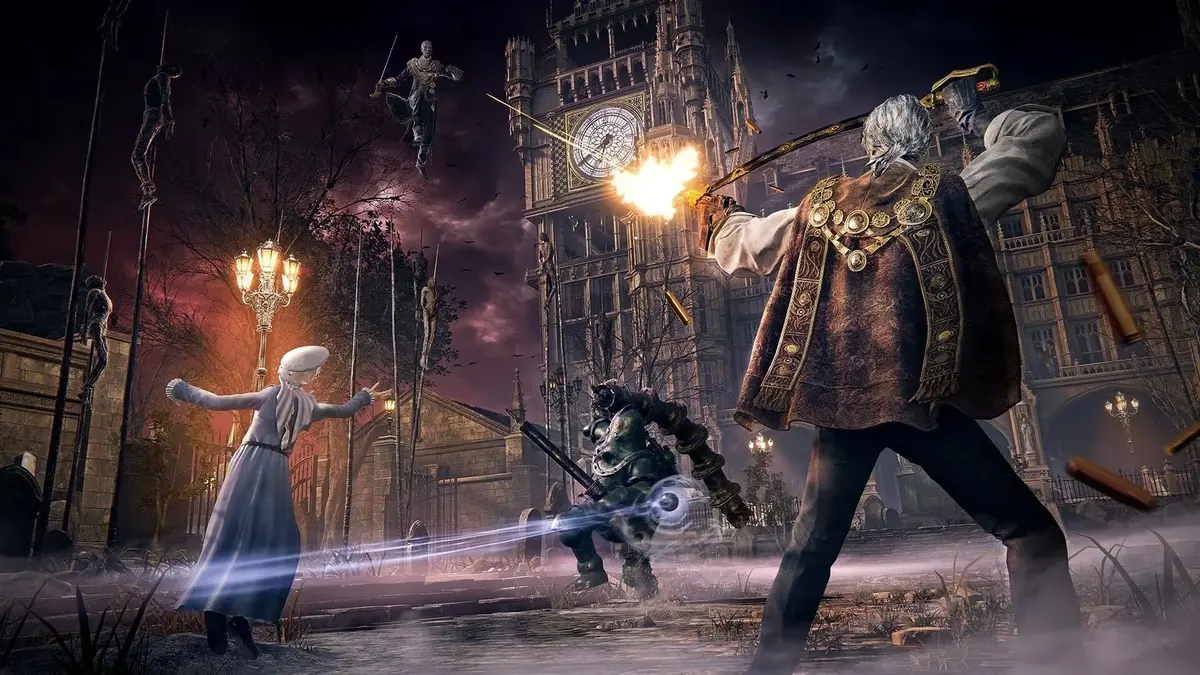
Virtue Gives The Duskbloods a Better Answer Than Pure Kill Counts
The more encouraging part of Miyazaki’s pitch is that The Duskbloods is not built around a simplistic rule where the best duelist automatically wins every meaningful reward. Its Battle of Virtue framing lets players earn Virtue through both PvP and PvE activity, with the final battle serving as the major exception. Each Bloodsworn has a Sigil, a personal objective that grants Virtue when completed. The system places strategy, positioning, monster hunting, exploration, and objective control alongside direct player kills.
That is a smart foundation for newcomer protection. A player with average mechanical execution can still make a useful call: avoid a bad fight, clear a dangerous PvE target, search for a helpful item or sidekick, or work toward a Sigil instead of chasing a Bloodsworn who obviously outclasses them. Those choices need to have real weight. Otherwise “indirect competition” becomes a consolation prize handed to players who cannot compete in the part that truly decides the match.
Ritual captures are the clearest example of why this could work. Capturing a ritual point awards Pledge Virtue, but it requires holding the action button for roughly 10 seconds. Another player can steal that ritual, stripping Virtue from the original capturer and taking it for themselves. That is a meaningful risk-reward decision. It creates chances for patience, timing, and opportunism to matter without asking every player to win a straight-up duel on demand.
The danger lies in tuning. If PvP kills generate vastly more Virtue than objectives, the smart play becomes hunting weaker players and the whole system collapses back into a slaughterhouse. If PvE and Sigils pay out too generously, skilled players may treat direct conflict as an inconvenience and the competitive tension evaporates. FromSoftware needs to make every route viable while ensuring the player who understands the match state best has an advantage. That is harder than building a deathmatch scoreboard, and it is also far more interesting.
The August Network Test Has Four Jobs
The global Network Test runs on Switch 2 from August 21 through August 24, with four official test windows listed in PDT. It gives FromSoftware a limited chance to observe a population that includes curious first-timers, multiplayer diehards, and people coming in solely because Miyazaki’s name is attached. Server stability matters, but the matchmaking data matters more. The test needs to expose whether the game is building fair matches or merely assembling bodies.
- Match quality: Fresh players need opponents who are close enough in ability for decisions to matter. A balanced loss can make someone immediately queue again. A match where one player dominates every encounter teaches nothing and poisons the first impression.
- Time to match: Tight skill buckets improve fairness, yet they can create miserable waits when the player base is thin. No public queue-time target exists. A system that protects newcomers only during a packed launch weekend has failed its real job.
- Early rank movement: The test will be too short to settle the larger problem of rank inflation, but it can reveal whether progression shoots players upward simply for playing. A ladder needs enough separation to keep new players out of veteran territory.
- Party behavior: No public rule explains how duos or other premade groups will be handled. If party play is part of the test, it must not drag a weaker player into a far stronger lobby solely because they joined a friend. If party play is absent, FromSoftware still needs a clear answer before launch.
Smurfing will remain the nastiest long-term stress test. Any game with ranked protection attracts skilled players who create fresh accounts to find easier matches, whether they call it helping a friend, warming up, or chasing clips. The Duskbloods cannot fully solve that problem with a single rule. Fast skill detection, meaningful placement behavior, and a willingness to move outliers quickly are the minimum. A rookie pool stays healthy only if it stops functioning as a private playground for people who already outgrew it.
Progression Must Respect Players Who Do Not Win Every Final Arena
Miyazaki has also said that story progression will not depend on winning every match. Story content and character customization can be earned through gameplay, giving players something tangible to work toward even when the final three-player brawl ends badly. That is another area where The Duskbloods is making a sensible choice.
Competitive games often confuse punishment with retention. They lock meaningful rewards behind victories, then act surprised when newer players become frustrated, quit, or turn toxic. The better approach is rewarding engagement across the whole match while keeping victory valuable. A player who made smart decisions, pursued their Sigil, contributed in PvE, captured a ritual, and reached the late game should leave with progress. The winner should receive the bigger payoff and the stronger status signal. Those ideas can coexist without reducing the final battle to decoration.
The six Bloodsworn available in the played build already offer enough moving parts for a beginner to learn, while the full release is planned to include 10. That roster growth makes onboarding a central issue, not a menu tooltip problem. Miyazaki has said Nintendo offered support with onboarding and tutorials, an area where FromSoftware has historically preferred players to discover systems through friction and repetition. For this game, clear teaching is a competitive advantage. A player cannot make a smart Virtue decision if the game has failed to explain why the decision matters.
Veterans Still Need a Reason to Stay
The strongest criticism of strict skill-based matchmaking is that it can make every match feel exhausting for high-level players. There is truth in that complaint. A veteran who has learned a Bloodsworn inside out will not enjoy spending every session in a sweat-soaked mirror match where every mistake gets punished instantly. But that discomfort is the cost of competitive integrity, and it beats solving veteran boredom by feeding them beginners.
FromSoftware has enough systems to give skilled players something richer than easy kills. The shifting Virtue objectives, stealable rituals, unique Sigils, PvE threats, late-match leveling, and three-player finale all create room for mastery beyond repeatedly flattening newcomers. High-level players should want difficult lobbies because difficult lobbies test whether their strategies hold up. A ranked system that gives them weaker opponents offers no lasting prestige. It gives them noise.
My line is simple: The Duskbloods should treat its Network Test as a fairness test first and a stress test second. Participants should pay attention to more than disconnects, frame drops, or whether a favorite Bloodsworn feels overpowered. They should track how quickly matches form, whether first-time players receive competitive lobbies, how often one player runs away with a phase, and whether Virtue objectives create genuine comeback routes.
If FromSoftware delivers on Miyazaki’s promise, The Duskbloods could give Switch 2 a competitive multiplayer game where losing teaches players how to improve instead of teaching them they never belonged in the lobby. That is the standard worth demanding from August 21 to 24, and it is the standard worth preserving after the launch crowd has moved on.
FinalBoss // Gear
Level up your setup
01Top-rated gaming headsetson Amazon→02High-refresh gaming monitorson Amazon→03Gaming chairson Amazon→04Discounted game keyson Kinguin→
Affiliate links · As an Amazon Associate, FinalBoss earns from qualifying purchases.
Want to Level Up Your Gaming?
Get access to exclusive strategies, hidden tips, and pro-level insights that we don't share publicly.
Ultimate Gaming Strategy Guide + Weekly Pro Tips