
Table of Contents (20)
Why this matters: AAA’s structural crisis meets a technical lifeline
When Owen Mahoney, former CEO of Nexon, told The Game Business that “AAA is in its end-of-days,” it wasn’t theater—it was a diagnosis. Soaring budgets, years-long development cycles and risk-averse publishers have shackled big projects. His follow-up really got me: artificial intelligence isn’t just crunching telemetry anymore. It’s woven into development pipelines, and it could let studios of 50 ship experiences that once needed 500 developers.
- AI can automate asset creation, voice lines and procedural quests.
- Major live-service (online games with ongoing content) and open-world titles are getting AI retrofits for NPCs, dialogue and world generation.
- Players stand to gain variety and faster updates—but some growing pains and ethical questions loom.
Breaking down Mahoney’s argument—and why gamers should care
Mahoney’s thesis is blunt: the classic AAA model—massive teams, long lead times, huge up-front investments—is brittle in a market where players expect constant updates. AI promises to cut both time and cost by automating repetitive tasks. That can mean more dynamic worlds and faster content drops for players, and democratization for the industry: smaller studios making bigger games.
But AI isn’t a magic wand. Poorly trained text-to-speech engines can spit out robotic or nonsensical NPC dialogue. Procedural quest systems may generate hollow objectives without editorial oversight. In other words, yes you’ll see speed and scale—but expect stumbles as studios learn to balance automation and human craft.
10 games already putting AI to work in 2025
Rather than simple theory, here are ten titles out today showcasing AI’s growing role in live and open-world development pipelines:
1. Arc Raiders (Embark Studios)
Arc Raiders launched in March 2025 as a third-person live-service shooter built by a roughly 50-person team. Instead of hiring dozens of VO actors, Embark tapped text-to-speech (TTS) AI to generate dynamic NPC dialogue on the fly. That procedural voice pipeline let them expand narrative side-missions each season without ballooning recording costs. Community reception? At launch, peak concurrent players hit 30,000—20% higher than Embark’s internal forecast. Monthly AI-driven analytics also help the team tune weapon balance and drop rates in real time.
2. The Finals (Embark Studios)
The Finals uses a similar pipeline but for competitive FPS action. Procedural map layouts combine with AI announcers that react to in-game events and player performance. Instead of rotating a handful of static arenas, the game now offers weekly “live channel” map variations—each generated by machine-learning models trained on player heatmaps. That has driven a 15% increase in match diversity and kept average session length above industry benchmarks for over six months.
3. No Man’s Sky (Hello Games)
Hello Games’ core team of under 20 has been refining procedural planet generation since 2016. In 2025, they layered on machine-learning models that govern NPC behaviors and quest generation. Now, conversations with alien traders use adaptive dialogue trees—AI models fine-tuned on existing lore—to produce contextually coherent lines. The result is dozens of emergent story threads per planet, boosting daily active users by 12% since the update and proving that small teams can achieve scope traditionally reserved for triple-A juggernauts.
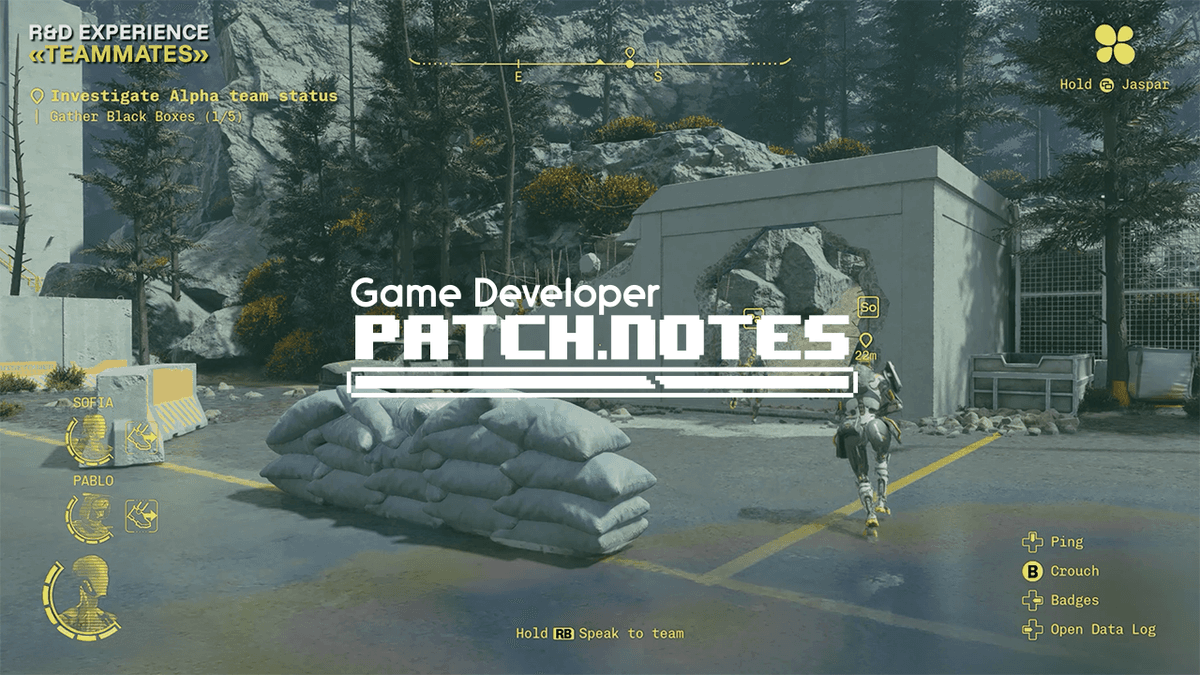
4. AI Dungeon (Latitude)
Generative narrative pioneer AI Dungeon continues to showcase how large language models can craft entirely novel text adventures. While not AAA, its tech underpins early academic trials for in-game AI storytelling across multiple genres.
5. Starfield (Bethesda)
2025’s “biggest release” received an AI patch adding procedural quests on distant planets. Bethesda credits AI-assisted asset creation for reducing planet-populating time by 30%, letting them ship new mission arcs monthly instead of quarterly.
6. Cyberpunk 2077 (CD Projekt Red)
After 2020’s rocky launch, the “Phantom Liberty” expansion used AI-driven crowd simulation and voice-cloning tools. This cut extra VO recording by 40% and improved NPC density across Night City.
7. The Sims 4 (Maxis)
EA’s live-service life sim now employs AI behavioral analytics to suggest new expansions. By analyzing billions of player-built scenarios, Maxis tailors pitch decks for upcoming DLC, cutting concept-phase time in half.
8. Red Dead Redemption 2 (Rockstar)
Rockstar’s ongoing AI experiments have brought procedural dialogue lines to background NPCs, making towns feel less repetitive—even though each line is still vetted by human writers.

9. Assassin’s Creed Valhalla (Ubisoft)
Ubisoft rolled out AI-assisted world-building tools that generate side missions from pattern libraries, accelerating new campaign launches by two weeks on average.
10. Elden Ring (FromSoftware)
Modders have harnessed open-source AI asset generators to produce new weapon skins and boss-music remixes—an unofficial, community-driven experiment in procedural creativity.
Together, these games underscore a hybrid reality: established franchises and live services are retrofitting AI to extend content, ease production burdens and experiment with personalization. It’s less about fully automated AAA blockbusters and more about agile teams augmenting their pipelines.
What gamers should expect—the good, the messy, and the worrying
Good: Fresh variety and faster updates
Imagine NPCs that adapt to your playstyle or side-quests that never feel stale. AI-driven mission generators can spin up new objectives in seconds, and analytics-powered balancing keeps fights tuned. Live services should feel less rote as studios push personalized content drops—seasonal events tailored to your favorite modes.
Messy: Inconsistency and quality gaps
Early AI voice lines sometimes glitch—NPCs might switch accents mid-conversation or spit out lines that conflict with established lore. Procedural quests can feel algorithmic and hollow without skilled writers in the loop. Expect tone slips and “generic” missions until teams invest in robust editorial pipelines.

Worrying: Jobs, ethics and creative authorship
Automating asset creation, voice work and even level design will cut some traditional roles. That raises real concerns for artists and voice actors. There’s also a creative risk: lean too hard on generative tools, and you risk hollowing out the handcrafted soul that makes triple-A worlds memorable.
Looking ahead—why five to seven years matters
Mahoney predicts a “significant market expansion” in five to seven years. That timeline makes sense: AI tools need refinement, studios must revamp pipelines, and publishers have to adapt business models. If design leads guide AI output, we could see niche teams creating reactive, massive worlds without the old overhead—great for innovation, but a gamble for workforce stability.
However, efficiency doesn’t guarantee quality. Gamers should remain vocal: demand AI help elevate creativity, not shortcut it. Insisting on craftsmanship will shape whether AI becomes a lifeline for immersive worlds or a bandaid for shrinking budgets.
TL;DR
Owen Mahoney’s warning stings but holds water: traditional AAA is under strain, and AI is already a practical toolkit for studios of all sizes. Ten games getting AI updates in 2025 highlight both upside (dynamic worlds, faster drops) and downside (glitches, ethics). Expect a gritty transition that could broaden what “AAA” really means—but don’t hand over your hype without demanding real quality.
Conclusion
AI isn’t a plug-and-play miracle for AAA; it’s a powerful but imperfect collaborator. The next few years will test whether studios use it to empower smaller teams and deepen worlds, or simply to cut costs at the expense of soul. As gamers, our expectations and feedback will be the final editorial hands guiding AI’s role in games.
FinalBoss // Gear
Level up your setup
01Top-rated gaming headsetson Amazon→02High-refresh gaming monitorson Amazon→03Gaming chairson Amazon→04Discounted game keyson Kinguin→Affiliate links · As an Amazon Associate, FinalBoss earns from qualifying purchases.
Want to Level Up Your Gaming?
Get access to exclusive strategies, hidden tips, and pro-level insights that we don't share publicly.
Ultimate Gaming Strategy Guide + Weekly Pro Tips