
The Guild – Europa 1410 brings the dynasty sim back to basics — can Ashborne stick the landing?
Game intel
The Guild – Europa 1410
Forge your path to power in medieval Europe. Choose your profession and master trade, politics, and intrigue to climb the social ladder and found a dynasty. Se…
Europa 1410 is the right pitch – now prove the systems can carry it
The Guild is one of those series that lives rent-free in my brain. I lost weekends to Europa 1400, juggling a bakery, a dubious “security” side hustle, and an unhealthy obsession with town elections. So when THQ Nordic and Ashborne Games announced The Guild – Europa 1410 with a flashy live-action trailer and promises of a “return to roots,” it genuinely caught my attention. The trailer’s got everything – sieges, schemers, romance, even a raven – but the real question isn’t costuming. It’s simulation: will the day-to-day grind of running a dynasty finally feel alive again?
Key Takeaways
- “Back to roots” is the right move after The Guild 3’s meandering systems — but it demands ruthless focus on AI, economy balance, and political depth.
- Trade, crime, and politics form a promising triangle of playstyles if consequences actually ripple through generations.
- Up to 12-player multiplayer is ambitious; stability, desync resistance, and clear victory conditions will make or break it.
- Ashborne’s Last Train Home showed craft and historical fidelity, but a living-sim sandbox is a different beast technically.
Returning to the roots: what that actually means
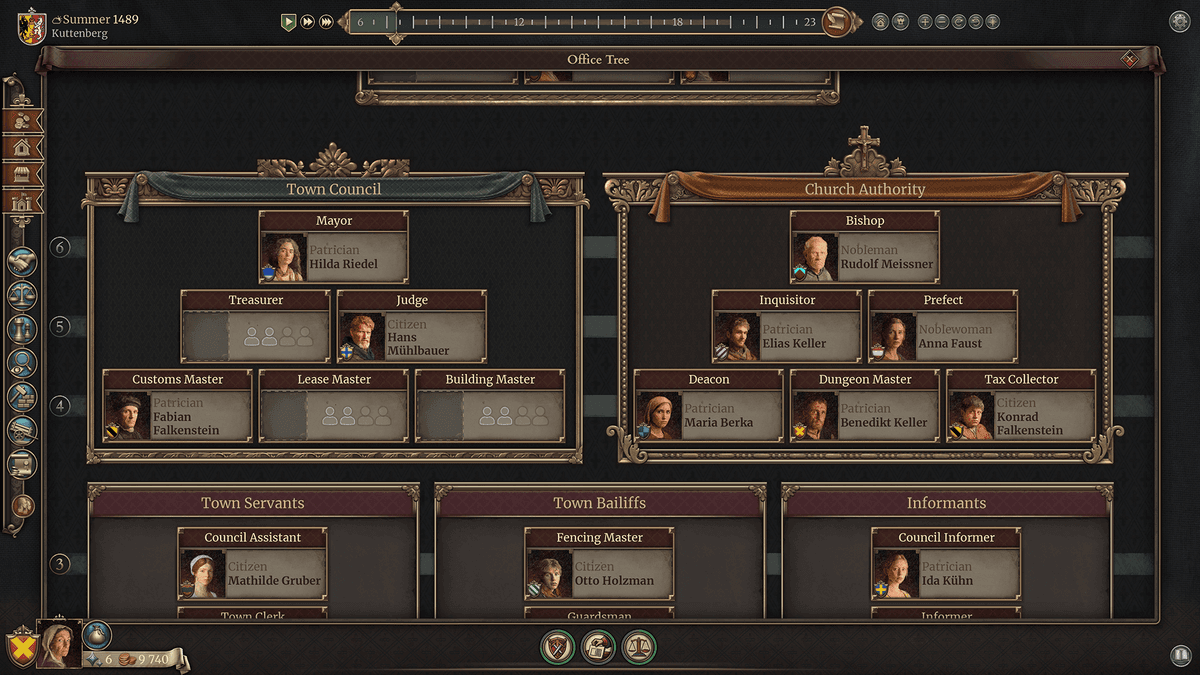
Europa 1410 explicitly nods to the original Europa 1400: start small, build a trade or craft business, secure offices, and lock down your family’s future. That’s the right core. The feature list hits the familiar notes: profession-driven production (blacksmith, alchemist, tailor), a crime path (pickpockets, kidnappings, cart ambushes), and a political ladder where bribery and blackmail coexist with “legitimate” popularity. Crucially, it mentions evidence and courts — a subtle promise that actions leave paper trails and payback.
If you played the older games, you know the magic isn’t a single system; it’s how they collide. Your bakery’s night shift funds a smear campaign that swings a council vote that installs a judge who conveniently ignores the incriminating letter in your rival’s cart. That kind of emergent messiness is where The Guild sings. The press beats say immersion and “state-of-the-art graphics,” but visuals aren’t the sticking point. It’s AI routines, job queues, office elections, and how often the city surprises you without breaking.
The big swing: 12-player multiplayer
Multiplayer up to 12 players is a bold promise. On paper, it’s perfect: The Guild is basically engineered for betrayal-laced dinner-table stories. Ambushing a friend’s cart, dragging them to court, or dueling at dawn sounds like appointment gaming. The flip side is technical reality. Sim sandboxes chew through CPUs, and desyncs are the genre’s final boss. If Ashborne can deliver stable long sessions with autosaves that don’t choke and a UI that keeps track of who did what to whom, Europa 1410 could become a cult-favorite Friday-night game. If not, it’s a lobby simulator with great vibes.
Crime, trade, politics — the triangle only works if consequences stick
The feature rundown splits cleanly into three playstyles. The trade pillar is about profession identity and scaling your workshop into a city-defining enterprise. The crime pillar is the spicy route: robberies, scouting, kidnappings. The politics pillar is the glue — offices that amplify your reach, decisions that tilt laws, and the ever-present risk of evidence boomeranging back at you.
The trick is generational memory. If my corrupt constable era leaves behind enemies who target my heirs, that’s meaningful legacy. If a well-placed blackmail letter can swing an office today but ruin a family name a decade later, you’ve got the narrative engine The Guild needs. The press language hints at choices “rippling through future generations,” which is precisely the promise that separates this series from a simple city builder. Now the team has to show how robust that ripple actually is.
Want to Level Up Your Gaming?
Get access to exclusive strategies, hidden tips, and pro-level insights that we don't share publicly.
Ultimate Gaming Strategy Guide + Weekly Pro Tips
Why Ashborne’s track record gives cautious optimism
Ashborne Games earned real goodwill with Last Train Home — a historical RTS that cared about period detail and human stakes. That attention to authenticity bodes well for a medieval simulation where the vibe of the streets matters. But let’s be honest: this is a tougher technical challenge. You’re not scripting tactical encounters; you’re nurturing a city-wide ant farm of agents, schedules, and economies. The studio’s cinematic flair (those live-action trailers) is fun, yet the credibility here will come from mundane stuff: pathfinding that doesn’t choke in market squares, elections that aren’t coin-flip RNG, and a tutorial that teaches without smothering.
What we still need to see
- Real UI/UX: one-screen clarity on your dynasty, businesses, rivals, and pending schemes. The Guild lives or dies on readability.
- Meaningful courts: evidence chains, witnesses, counter-bribes, and reputational fallout that lasts across generations.
- Economic texture: scarcity, seasonal demand, and logistics that make route planning matter beyond “spam the best good.”
- Multiplayer proof: a live demo showing late-game stability, save/load reliability, and guardrails to curb griefing without neutering drama.
- Scope and maps: how many cities, how varied are districts, and do cities evolve meaningfully over decades?
There’s a Steam wishlist live, which confirms PC as the first stop. Platforms beyond that haven’t been named yet, and there’s no release window. That’s fine. I’d rather they take the time to nail systems than rush another “almost there” sandbox into the wild.
TL;DR
The Guild – Europa 1410 says all the right things: back to the series’ core, robust trade/crime/politics, and a daring 12-player mode. If Ashborne marries historical polish with hard-nosed systems design — sticky consequences, stable netcode, smart AI — we’re looking at the true heir to Europa 1400. Until we see gameplay that proves the city breathes on its own, keep the hype measured and the wishlist ready.