
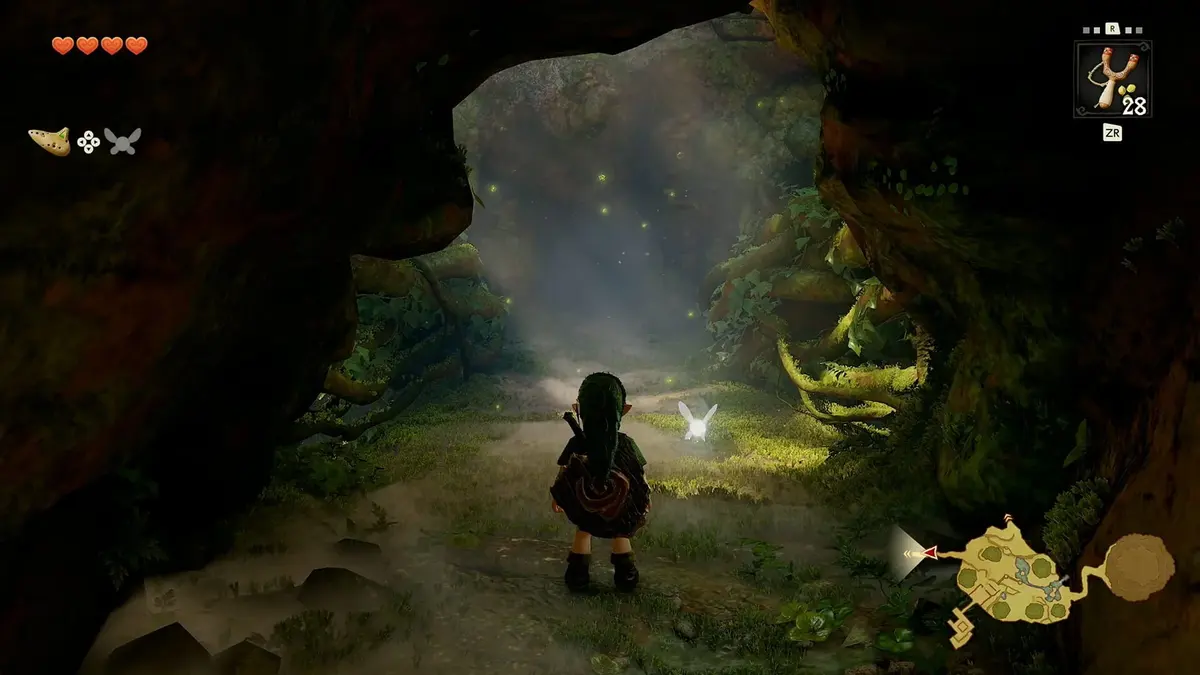
October 17, 2026 update: In the 1998 N64 original, running toward a ledge was often enough to make Link jump. The Switch 2 remake puts jumping on a button, changing an action that returning players could previously leave to muscle memory. That shift extends into familiar spaces: even collecting the Kokiri Sword now involves a differently positioned chest and a deliberate jump.
IGN’s October 14 preview, updated October 17, identifies 29 changes following more than an hour of hands-on play. The additions below expand our remake buying coverage with the differences that matter for navigation, puzzle-solving and combat. Spoilers follow for early-game discoveries and Forest Temple puzzles and encounters.
Table of Contents (6)
Manual jumping changes how you approach familiar rooms
The remake adds manual jumping, a hold-to-dash action and freely controlled camera movement. Together, these give you more direct control over crossing Hyrule and examining dungeon geometry. Returning players should relearn their approaches to ledges rather than carry over the N64 version’s automatic-jump habits.
The Kokiri Sword chest illustrates how the rooms accommodate those controls. Its old position in a back corner has been replaced by a raised platform in the middle of the room, with the rolling boulder still circling the area. Reaching the chest now requires a jump; remembering where to turn the original camera no longer solves the same problem.
Motion aiming supports weapons including the bow and slingshot, and items can be switched more quickly. These changes affect the actions between encounters as well as movement itself: surveying a room, lining up a shot and selecting the next tool all have revised controls.
The Forest Temple has revised puzzles and new return routes
The Forest Temple is the clearest reason to treat an N64 walkthrough as a broad route reference rather than a room-by-room solution. Several recognizable spaces have different mechanisms, access restrictions or clues.
- The torch puzzle loses its spinning platforms. Its redesigned setup requires a fresh reading of the room instead of repeating the original platform sequence.
- The final room before the boss adds torches. The rotating-cylinder wall puzzle remains, but the additional elements change what you need to examine.
- The giant block room gains guard rails. These prevent Link from jumping onto the block before it rises, closing off that approach.
- A new elevator provides a return shortcut. It can be activated after a block-pushing and ladder puzzle, letting you bypass repeated tunnels and ladders on later visits.
- The hookshot destination above the entrance changes. Look for a traditional target above the front door rather than aiming at the tree branch used in the original.
The green Poe’s sliding-block puzzle also loses its time limit. That removes the original countdown pressure from this particular sequence, while the decoy block receives a more involved design. You can spend longer examining the arrangement, but memorizing the old solution is a less dependable shortcut.
For repeat visits, the elevator is the change worth remembering. Activate it when you reach it: its purpose is to cut out the tunnels and ladders you would otherwise traverse again.
Combat changes affect safe ground, spell timing and warning cues
The revised Stalfos arena replaces its central hole with a shallow acid pool. Link takes damage in the acid, while the Stalfos can walk through it. Reinforcements emerge from the acid instead of arriving with a platform that fills the room, so the environmental hazard remains part of the fight.
Keep that difference in mind when positioning: the acid restricts your safe movement without forming an equivalent barrier for the enemies. An escape route that crosses the middle carries a cost even when the Stalfos can follow freely.
Din’s Fire now casts in real time. The N64 version froze the surrounding world during the spell; the remake lets the action continue. Account for nearby enemies before casting rather than treating the animation as a pause in their attacks.
Other encounters change the cues you need to read. A bright spotlight marks Link before a descending hand attack, then changes color before the hand swoops down. In the Great Deku Tree, a sword strike sends a Skulltula spinning to expose it, replacing the original behavior of waiting for it to reveal its weak spot.
The final Poe fight receives a new cinematic and a distinct pattern in each of its three rounds. Learning the first round therefore gives you only part of the encounter; watch what changes as the fight advances rather than expecting three repetitions of one routine.
Hyrule offers more guidance, while time keeps moving in towns
Threads of Time is the remake’s new progress tracker, recording story progress and displaying your next objective. For players returning between sessions, it provides a place to recover the current story direction without reconstructing it entirely from remembered conversations.
Environmental clues are more explicit in some locations. A cracked patch of ground in Hyrule Field marks a bomb-able hidden cave entrance, giving you a visible feature to investigate. Peahats also occupy more central positions in the field rather than remaining confined to its corners, changing which stretches of an otherwise familiar crossing bring you near enemies.
Time now continues to pass in towns, where the original paused the day-and-night cycle. Do not assume a lengthy visit to a settlement leaves the outside world at the same time of day. Castle Town also gains additional areas and shop-based minigames.
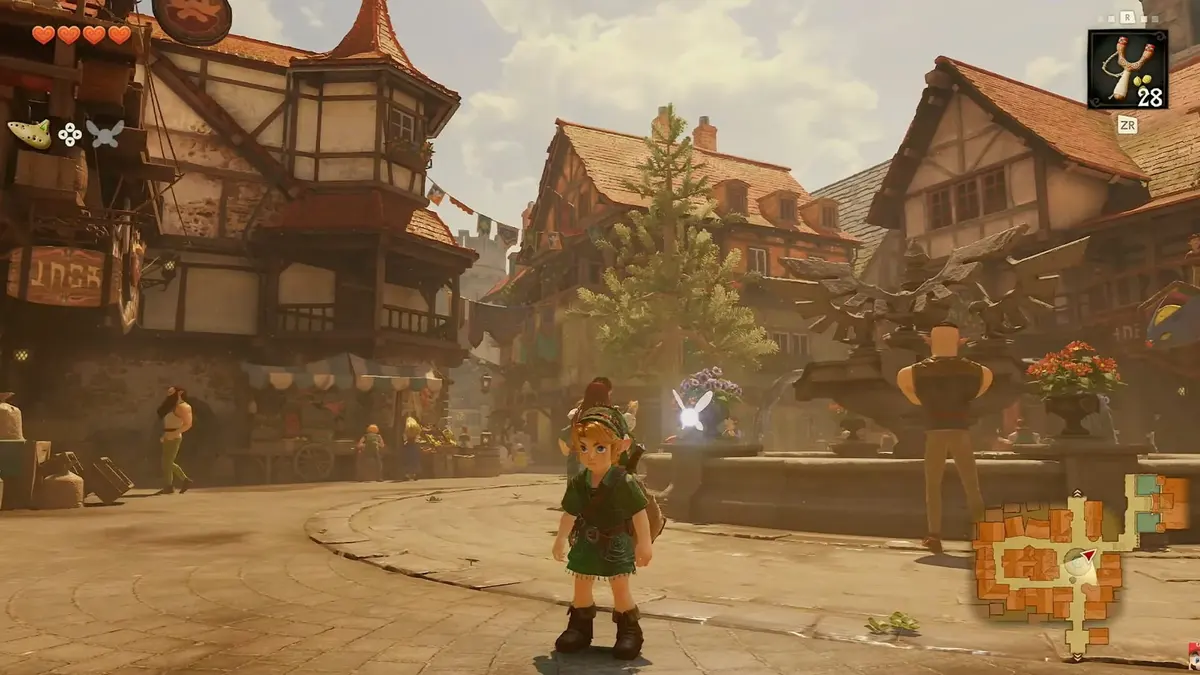
Expanded dialogue gives more space to the Kokiri shopkeeper, Mido’s rivalry with Link and snarkier player responses. A new blonde NPC in Castle Town warns against spending all your money at the market. Players can also hum learned songs for the Ocarina to play, adding another way to interact with the adventure’s music.
Early rewards and inventory capacity have changed
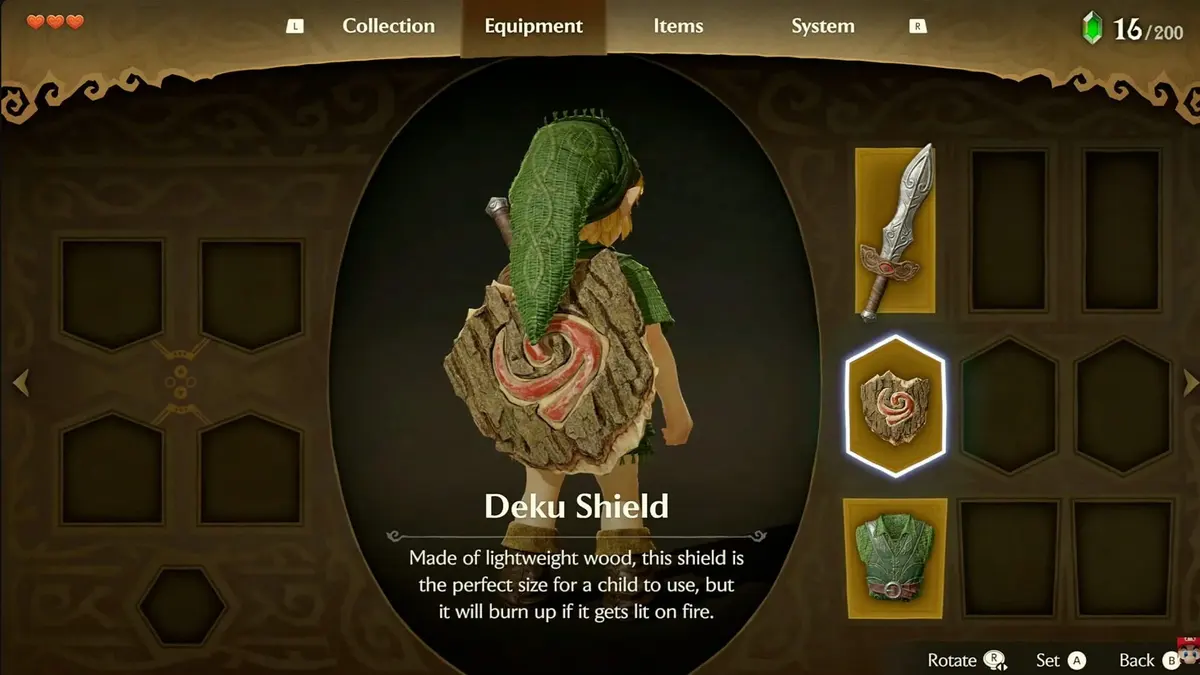
Some familiar early-game collection habits need updating. The starting wallet has a higher limit, the inventory displays an additional bottle slot, and a small Kokiri Forest rupee reward has moved away from its old platforming trigger.
| Feature | N64 original | Switch 2 remake |
|---|---|---|
| Starting wallet capacity | 99 rupees | 200 rupees |
| Bottle slots | Four | Five empty slots in the inventory |
| Stone platforms beside the Kokiri Forest shop | Jumping across awards five secret rupees | No five-rupee reward; additional blue rupees are scattered through the forest |
| Small chest in the Great Deku Tree’s slingshot room | A random recovery heart | Deku Nuts |
The 200-rupee figure is your starting wallet’s capacity, rather than an amount of money awarded at the beginning. For early collecting, skip repeating the shop-side platform sequence solely for its old payout and look for the blue rupees around the forest instead.
There is also a scarecrow training dummy to the right of the Kokiri Forest shop counter, where a villager teaches raising your defense. It is an early control lesson worth noticing alongside the changed movement and sword interactions.
What these changes mean before buying
The remake keeps the original adventure’s broad progression, with Hyrule’s major regions still separated by loading screens. Familiar geography remains useful, but individual rooms, combat spaces and puzzle mechanisms deserve another look. The changes pull in different directions: the green Poe puzzle removes a timer, while the Stalfos encounter preserves a damaging floor hazard and Din’s Fire no longer stops the action.
The Legend of Zelda: Ocarina of Time remake launches exclusively on Nintendo Switch 2 on November 5, 2026. Existing Zelda amiibo work alongside the new Young Link and Young Zelda figures and can provide helpful items or consumables. You can use figures you already own for that support.
For a returning player, the practical approach is to keep your knowledge of the adventure’s overall route and reassess the details on arrival. Check hookshot targets, activate the Forest Temple elevator and examine revised puzzle elements before following an old solution. The places are familiar; the inputs, hazards and room logic give you new things to learn.
FinalBoss // Gear
Level up your setup
01Best-selling Switch 2 gameson Amazon→02Switch 2 accessorieson Amazon→038BitDo controllerson Amazon→04Discounted game keyson Kinguin→Affiliate links · As an Amazon Associate, FinalBoss earns from qualifying purchases.
Want to Level Up Your Gaming?
Get access to exclusive strategies, hidden tips, and pro-level insights that we don't share publicly.
Ultimate Guide Strategy Guide + Weekly Pro Tips