
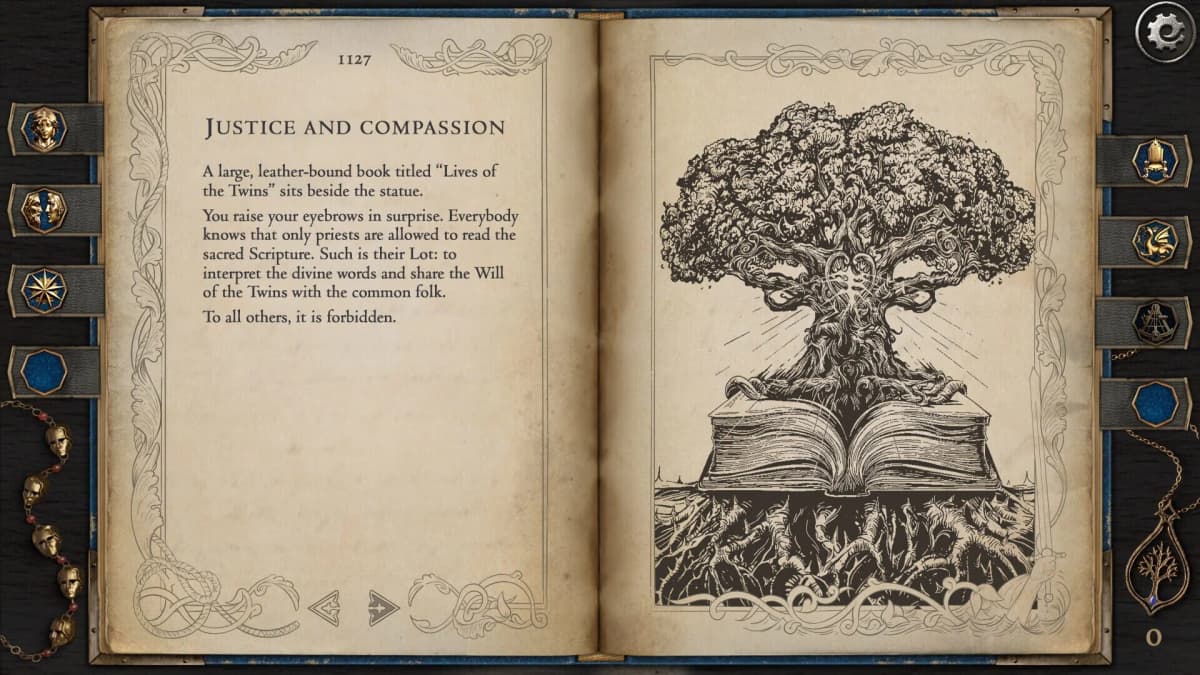
The safest way to approach The Life and Suffering of Prince Jerian is to choose a political and social direction early, then make every major chapter decision support it. Build around two compatible priorities-Progress, Equality, or Law-and develop the skill family that opens the conversations and actions your route needs. Trying to satisfy every faction, solve every problem, and raise every skill evenly is the fastest way to create a scattered run with fewer useful options later.
This walkthrough hub is designed for a first playthrough on PC and Steam. It focuses on the choices that matter most, the skill gates worth planning for, and the points where a chapter can push your story toward a more committed route. Use it as a decision framework rather than a script: follow a consistent route for cleaner outcomes, or deliberately break from it when you want to see how the Blessed Arknian Empire reacts to a different kind of prince.
Table of Contents (11)
Choose Your Route Before the First Major Lock-In
Prince Jerian’s story is built around competing ideas of how the empire should be governed. Your choices repeatedly circle three broad values, and they work best when treated as a long-term direction instead of isolated “good” answers.
- Progress: Favor reform, modernization, and solutions that move old institutions forward. This route suits players who want to challenge stagnant systems and pursue practical change.
- Equality: Support the rights and standing of commoners, the lotless, and lesser estates. This direction is strongest when you consistently take social inequality seriously rather than defending privilege when it becomes convenient.
- Law: Prioritize order, codification, duty, and obedience. This route rewards a prince who believes a stable empire needs rules that are clear and enforced.
You do not need to role-play Jerian as a single-note character. A law-focused ruler can still care about the lotless, and a reformer can value stability. The important part is knowing which value wins when a chapter forces a real tradeoff. If you choose Progress in one major conflict, Equality in the next, and strict Law in the third without a clear reason, later choices can feel disconnected because the run has no dependable political center.
Set a primary principle and a secondary principle before starting. Progress plus Equality is a natural reform-minded pairing; Law plus Equality supports ordered protections for people with less power; Progress plus Law creates a modernization route that values control and institutional reform. The more conflicting your priorities are, the more often you will need to accept an imperfect outcome.
Plan Skills as Doors, Not Scoreboards
The three skill families that matter most to a clean first run are Management, Scholarship, and Diplomacy. Treat them as keys to different kinds of solutions. A high number is useful only when it opens an action, argument, investigation, or political response that fits the route you are building.
- Management supports practical governance. Prioritize it when your Jerian intends to solve problems through administration, resources, organization, and the working machinery of the state.
- Scholarship supports knowledge-driven decisions. It is the best fit for players who want to understand systems, examine arguments carefully, and pursue informed reforms.
- Diplomacy supports persuasion and political handling. It matters when keeping relationships intact, defusing conflict, or winning support is more valuable than forcing an immediate result.
For a first route, focus on two of these families and let the third remain secondary. Spreading investment evenly may look safe, but it can leave you short of the threshold that matters when an important choice arrives. A Progress-and-Equality route usually benefits from keeping Scholarship or Diplomacy relevant, while a Law-centered run often has stronger reasons to maintain Management alongside its preferred secondary skill.
When a choice offers a skill-based answer, check whether it advances your established direction before choosing it. The skill option is not automatically the best option simply because it is gated. A Management answer that protects an arrangement your Equality route has opposed may still undermine the story you are trying to create.
Chapter 1: Lotless – Establish What Jerian Stands For
The opening section, Lotless, is where a first run needs its clearest internal rule. The early decisions introduce the social divisions that will define much of Jerian’s position in the Blessed Arknian Empire, particularly the gap between established power and people with fewer rights or less protection.
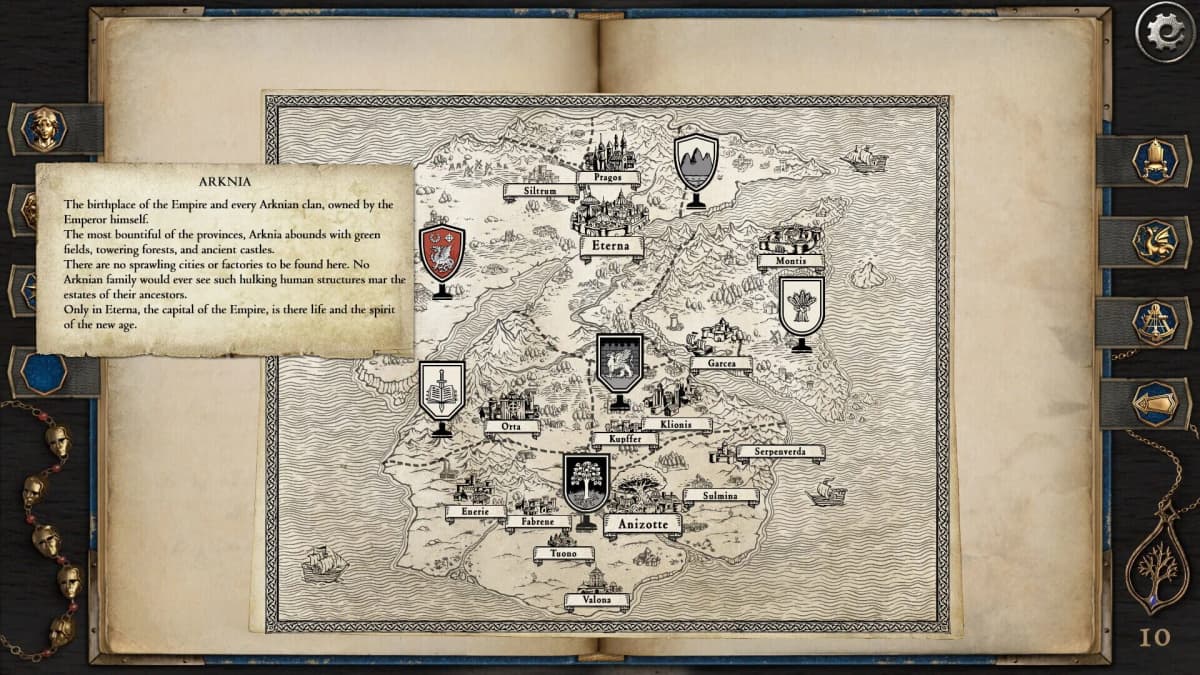
Do not treat the first chapter as disposable setup. Its choices establish the logic behind your later decisions: whether Jerian protects inherited order, pursues reform through institutions, or gives greater weight to people who lack status. You can make compromises, but record why you made them. A compromise that preserves the strength of a future reform is different from one that abandons your route for a short-term reward.
- Choose the principle that will define Jerian when social status and personal advantage conflict.
- Start favoring the two skill families that match that principle.
- Pay attention to which groups gain or lose standing through your actions.
- Avoid spending early choices on options that look broadly useful but do not support your intended political direction.
The common mistake in Lotless is trying to leave every door open. Choice-heavy RPGs reward commitment because later chapters build on the kind of character you have already presented to the world. An early decision may close off a possibility, but it can also make a later result more coherent and easier to pursue.
Chapter 2: The Heir — Turn a Theme Into a Route
The Heir is the point to stop thinking in broad ideals and start considering consequences. Jerian’s position carries more weight, which means decisions about reform, hierarchy, responsibility, and authority can no longer be treated as abstract preferences. This is where a route begins to feel locked in because the people around you can judge patterns in your conduct.
Before committing to a major choice in this chapter, use a simple three-part check:
- Does this choice support my primary principle? If it directly contradicts the route’s foundation, only take it when the long-term gain is clear.
- Does it strengthen a skill path I can continue supporting? A one-off result is less valuable than a door that stays open throughout the run.
- Can I accept the social or political cost? Every meaningful decision creates losers. Decide which cost your Jerian is willing to carry.
This chapter is also where it helps to distinguish between a decision that is morally satisfying and one that is strategically useful. A Law-driven Jerian may make a harsh choice to preserve a system he intends to codify more fairly later. An Equality-driven Jerian may accept a slow institutional win because an immediate confrontation would leave the lotless worse off. The route stays consistent when the reasoning stays consistent.
The Twins: Treat This Thread as a Route Checkpoint
When the story reaches The Twins, pause before choosing based on immediate sympathy, anger, or curiosity. This is the kind of story thread that works best as a checkpoint: review the choices that brought you there, identify the priority you have protected most often, and make the next major decision match that record.
For a Law route, ask whether the choice creates a durable and understandable order. For a Progress route, ask whether it clears the way for meaningful change rather than preserving a broken arrangement. For an Equality route, ask who receives protection, representation, or a genuine chance to improve their standing. Those questions will not remove the cost of the choice, but they stop a single emotional moment from pulling the entire run off course.
How to Handle Later Chapters Without Losing the Route
As the chapters continue, choices become harder because the game gives you less room to believe that every result can be ideal. That is intentional. The best way through later decisions is to keep a short route record outside the game: your primary value, secondary value, preferred skills, important allies or institutions you have supported, and compromises you have already accepted.
- Before a major decision: identify the likely value conflict—Progress versus Law, Equality versus privilege, reform versus stability.
- When a skill option appears: use it when it creates the kind of solution your Jerian would pursue, rather than selecting it automatically.
- After a consequence lands: adjust your future choices to account for it instead of trying to erase the result with an unrelated decision.
- When a route narrows: commit to the consequences. A shortened path is often the price of making earlier choices matter.
A failed or imperfect outcome does not always mean the run is ruined. It may be the consequence of prioritizing one principle over another. Restart only when the choice breaks the character you are trying to build or closes a route you specifically wanted to see. Otherwise, let the outcome stand and use it to sharpen Jerian’s next decision.
Following the Walkthrough Route Versus Making Your Own Choices
A structured walkthrough route is most useful when you want a consistent story and fewer surprise conflicts between your choices. It gives each chapter a purpose: early decisions prepare your skill doors, mid-game commitments reinforce your political direction, and later choices pay off the priorities you have maintained.
Following a recommended route also makes the game easier to read. If you are pursuing Progress and Equality, for example, you can immediately recognize when a decision asks you to sacrifice reform or the rights of lesser estates for stability. You may still choose that sacrifice, but it becomes a deliberate branch instead of an accidental detour.
Your own route is stronger when you are willing to accept a less tidy result. This is the better approach for a Jerian who changes over time, makes compromises under pressure, or discovers that his original beliefs cannot solve every problem in the empire. Keep the same chapter-by-chapter checklist, but replace “What does the route recommend?” with “What has this version of Jerian learned so far?”
What Sir Brante Players Should Carry Into Prince Jerian
Players coming from Sir Brante should bring one habit into The Life and Suffering of Prince Jerian: read each decision as part of a life path, not as a standalone test with one universally correct response. The important outcome is the accumulated shape of the character and the society around him.
That mindset matters even more when you are balancing reform, social equality, and legal order. A result can be costly, restrictive, or politically inconvenient while still fitting the route you have chosen. The goal is not to erase every hardship from Jerian’s story. It is to make sure those hardships come from decisions you understood and accepted.
Prince Jerian’s Place in The Life and Suffering Series
The Life and Suffering of Prince Jerian is an RPG set in the political and social world of the Blessed Arknian Empire. Developer Schisma Games is building the game with publisher 101XP, alongside the announced Kickstarter campaign for its official launch. Its choice-driven structure makes route planning especially valuable: major decisions can shape both Jerian’s personal story and the future direction of the empire.
Practical First-Run Checklist
- Pick one primary value: Progress, Equality, or Law.
- Choose a secondary value that can support it through difficult tradeoffs.
- Prioritize two skill families from Management, Scholarship, and Diplomacy.
- Use Lotless to establish Jerian’s social and political instincts.
- Use The Heir to turn those instincts into a committed route.
- Review your priorities before major decisions involving The Twins and later chapter lock-ins.
- Accept consequences that fit the run; restart only when a choice destroys the story you intended to pursue.
Final Route Recommendation
For the cleanest first playthrough, choose a Progress-and-Equality or Law-and-Equality direction, invest consistently in two skill families, and avoid changing Jerian’s principles for minor short-term gains. Once you understand where the major chapter choices lead, a second run can deliberately test the compromises, reversals, and harsher political outcomes that your first route avoided.
FinalBoss // Gear
Level up your setup
01Top-rated gaming headsetson Amazon→02High-refresh gaming monitorson Amazon→03Gaming chairson Amazon→04Discounted game keyson Kinguin→Affiliate links · As an Amazon Associate, FinalBoss earns from qualifying purchases.
Want to Level Up Your Gaming?
Get access to exclusive strategies, hidden tips, and pro-level insights that we don't share publicly.
Ultimate Guide Strategy Guide + Weekly Pro Tips