
Trophy lists in story-driven horror games often look harsher than they really are. The Midnight Walk seems to follow that pattern. Based on the currently available community-backed methods, the safest and most efficient route is a single story playthrough while collecting what you can, followed by chapter select cleanup for anything you missed. That matters because it changes how you should approach the whole game: this is less about extreme mechanical difficulty and more about not overlooking specific scenes, prompts, and chapter-locked interactions.
If you want the short version up front, here it is: finish the story, do not panic over early misses, and keep a short checklist for the few trophies that are easy to overlook. The trophy path appears forgiving enough that you are not being asked to execute a perfect blind run. You are being asked to recognize when The Midnight Walk hides a trophy inside a scripted moment, a menu option, or a one-off interaction.
Table of Contents (11)
How The Midnight Walk trophy route works
The most important thing to understand is the role of a trophy guide in this game. In some games, a guide exists to help you survive brutal encounters or optimize a demanding build. Here, the guide’s main job is different: it helps you map where the game places its trophy triggers. Current guidance points to a route built around story progression, collectibles, and a handful of chapter-specific actions.
That is why the route is described as more guide-dependent than skill-dependent. Available trophy solutions repeatedly point to fixed chapters and set-piece interactions. In practical terms, that means the biggest threat to your platinum attempt is not getting hard-locked by difficulty. It is missing a prompt, walking past a collectible, or forgetting to revisit a chapter after the credits.
Just as important, current guides agree that missables are manageable. You can miss collectibles during your main run and return through chapter select afterward. That makes a huge difference to your planning. Unless later patches change how chapter select behaves, there is no strong reason to restart the whole game because of one missed item or scene.
The best platinum route: story first, cleanup second
If your goal is efficiency, the cleanest route is to play through the story once while staying alert for collectibles and trophy scenes, then use chapter select after completion to finish whatever remains. That approach minimizes backtracking and avoids the common mistake of overcorrecting too early.
- Play through the story normally, but pay attention. Do not speedrun your first pass if you care about trophies.
- Collect what you see. Even if you miss some items, reducing the cleanup list still saves time later.
- Make a note of chapter-specific trophies. Some are tied to precise interactions rather than general progression.
- Finish the game before major cleanup. Chapter select is the safety net that keeps the route efficient.
- Use chapter select for mop-up. This is the backbone of the current trophy route.
This route also performs well for players who do not want constant spoiler-heavy checking. You can keep a light checklist for the known problem trophies, enjoy the main run, and only switch into full cleanup mode once the game opens the structure back up through chapter select.
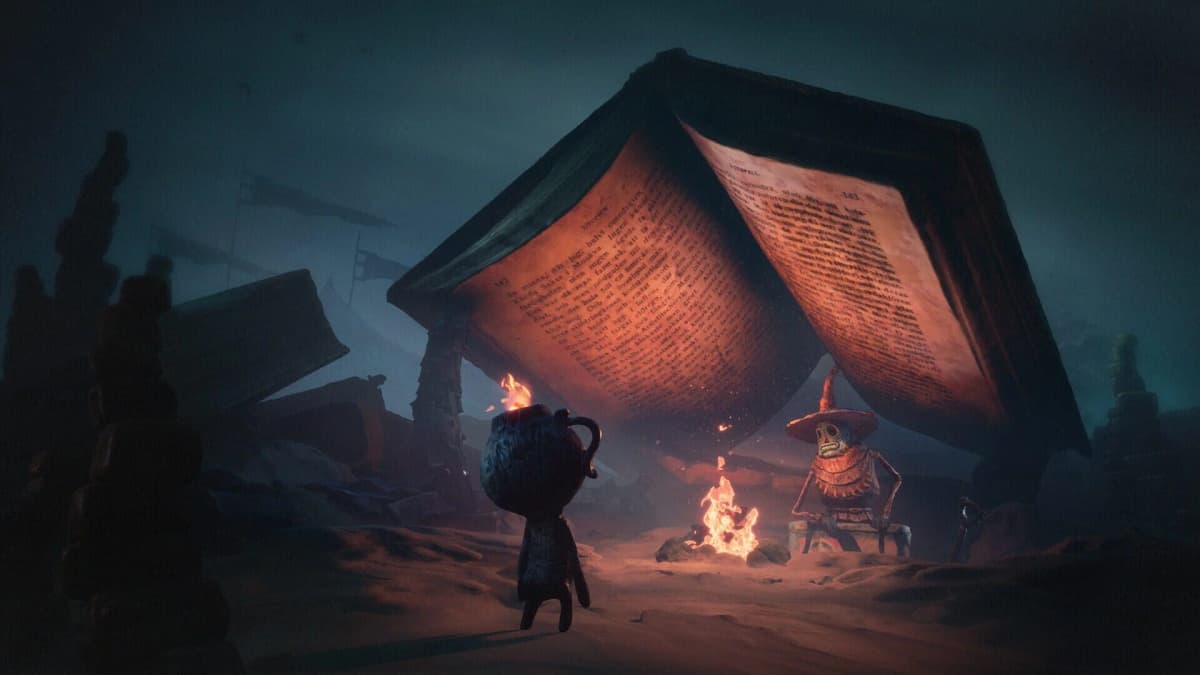
The trophies you should flag before you start
Stay in Housy for 10 minutes
This is one of the easiest trophies in the game and also one of the easiest to forget. The available method says you can earn it straight from the main menu through Story → Visit Housy. Then you simply stay there for 10 minutes.
What makes this trophy important is not difficulty. It is route discipline. Because it does not require puzzle solving, combat execution, or chapter progression, it is the kind of trophy that slips through the cracks if you assume everything meaningful happens inside normal story flow. Put it on your checklist early and clear it whenever you want a guaranteed free pickup.
The BURN choice trophy
One trophy is tied to selecting the BURN option with X. That sounds trivial, and that is exactly why players can miss it. In a game where many trophies feel collectible- or chapter-oriented, it is easy to stop reading prompts carefully and treat choice moments as flavor.
The practical takeaway is simple: when the game presents an explicit interaction or decision prompt, slow down and read it. The trophy route in The Midnight Walk appears to include these small branching moments, and missing one is much more annoying than handling it correctly the first time.
Mind Over Body in Chapter 2
Mind Over Body is one of the clearer examples of how this game hides trophies inside scripted chapter scenes. Current guides agree that it happens in Chapter Two, The Tale of the Loathsome Molgrim, after you reach Nobodyville and interact with the guillotine area near the council of heads.
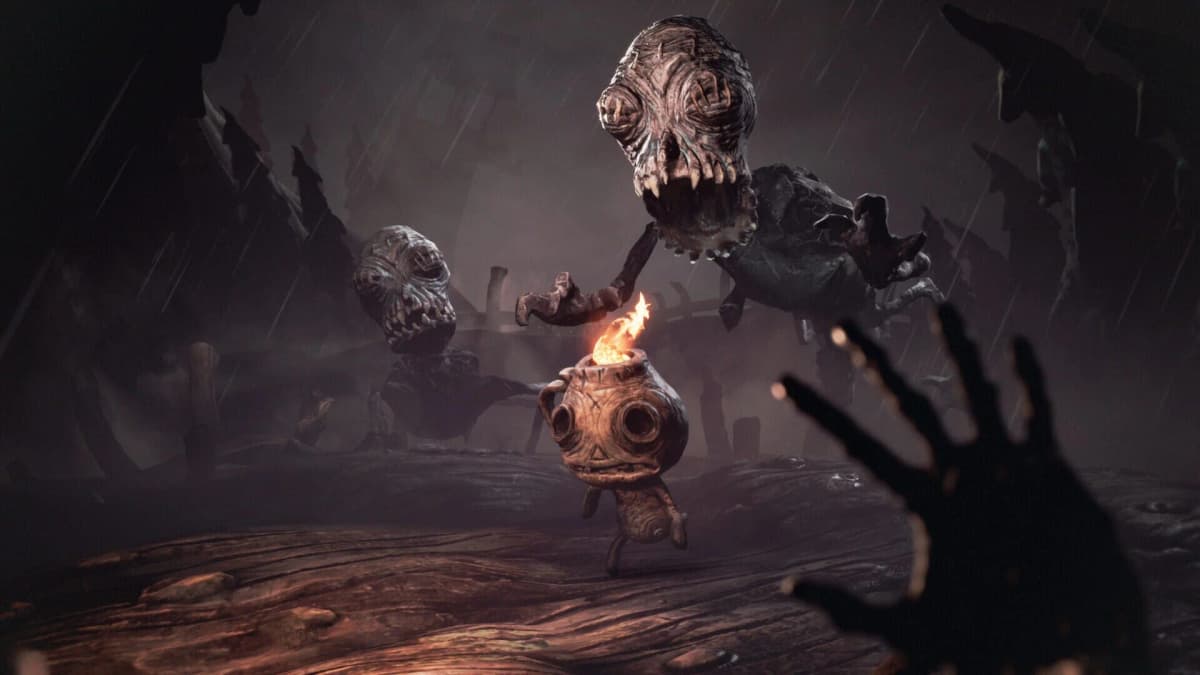
There is a little guide-to-guide variance in how the setup is described. One explanation emphasizes solving the Rite of Fire puzzle to access Nobodyville before the guillotine sequence. Another summarizes it more briefly as entering the relevant room and waiting for Potboy to trigger the scene. The key point is that the outcome is consistent even if the wording differs: this is the Chapter 2 guillotine gag trophy near the council of heads.
So if you are cleaning up Chapter 2, do not just sprint through Nobodyville looking for generic pickup items. Slow down when you reach the guillotine setup and let the scene fully play out. Scripted trophies often fail for players who move on too quickly or assume the trigger is just “enter the area.”
The Chapter 4 Grinner face shot
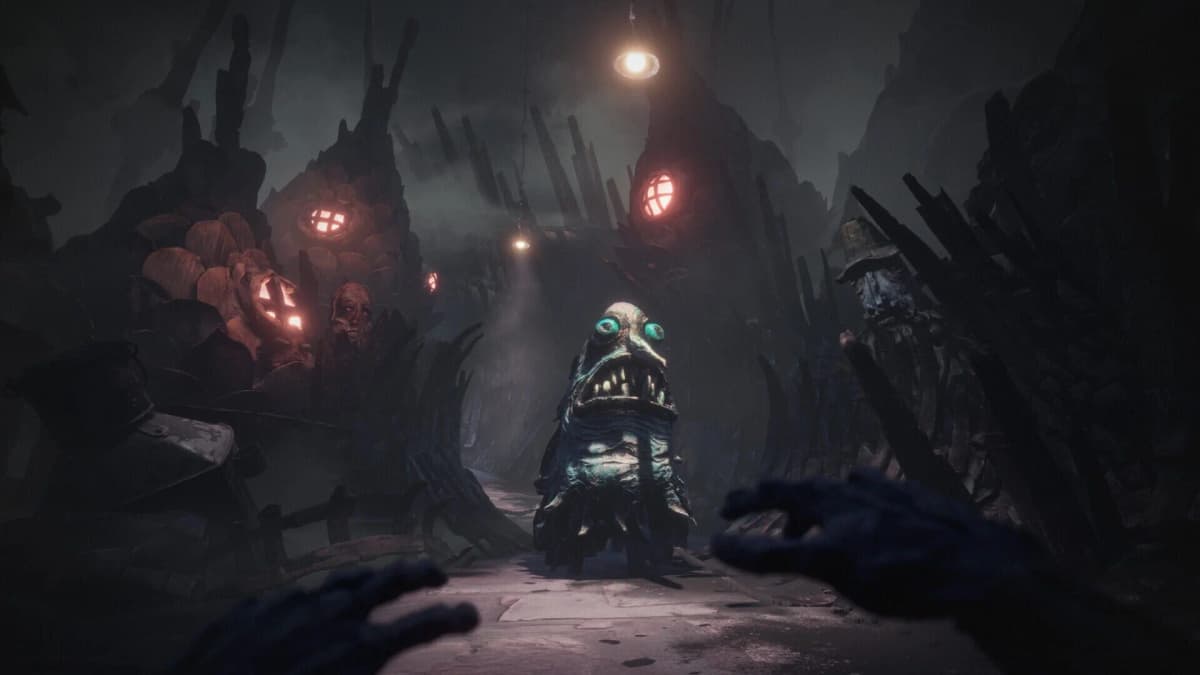
Another trophy that deserves a pre-run note comes in Chapter 4. The current method says you need to shoot a Grinner in the face, specifically after the second projector in the sewer area with blue candles. This is a good example of a trophy that is less about raw combat strength and more about enemy positioning and timing.
The important detail is to bait the Grinner into exposing its face before firing. If you treat it like a normal fight and blast away without setting up the angle, you may clear the encounter without meeting the trophy condition. That makes it one of the few places where precision matters more than simply winning the encounter.
Why chapter select changes the whole difficulty curve
Chapter select is the reason the trophy path feels approachable. Without it, The Midnight Walk would push much harder into old-school missable territory, where one forgotten scene in Chapter 2 could force a full restart. With it, the route becomes cleaner and much less punishing.
That does not mean you should ignore everything on the first run. It means you should use the first run efficiently and trust the cleanup system to cover mistakes. In practice, chapter select serves three roles:
- Collectible recovery for anything you missed naturally.
- Trophy-specific cleanup for scenes like Mind Over Body.
- Reduced backtracking pressure, since you do not need a perfect blind route.
The one caution here is uncertainty. Current sources strongly support story-first plus chapter-select cleanup, but they do not fully settle whether any late patches have changed collectible counts, chapter ordering behavior, or the most optimal final route. So the conservative recommendation remains the same: finish the story, then clean up with chapter select rather than assuming an ultra-tight single-run route is fully solved.
Common mistakes that waste time
- Restarting too early. If you miss a collectible or a scene, the current evidence says chapter select should let you recover it later.
- Ignoring prompts. The BURN trophy is the perfect example of a small interaction that matters.
- Rushing scripted comedy or set-piece scenes. Mind Over Body is tied to a specific gag sequence, not just a location marker.
- Treating combat trophies like general combat. The Chapter 4 Grinner trophy depends on exposing the face first.
- Forgetting menu-based trophies. The Housy 10-minute trophy is easy only if you remember it exists.
Most of these mistakes come from assuming the trophy list behaves like a harder action game. It does not. The available evidence suggests a trophy structure centered on discovery, timing, and chapter awareness.
How hard is the platinum, really?
Early public trophy-tracking data points to a platinum that is not trivial, but also not defined by the hardest individual tasks. One data point places Fade Away at 14.0% rarity, while Mind Over Body sits much higher at 37.5%. That gap suggests a familiar pattern: many players are seeing and earning the more visible chapter trophies, while fewer are finishing the entire cleanup path.
That does not automatically mean the platinum is mechanically difficult. It more likely supports the idea that completion depends on thorough routing. In other words, the final barrier looks like follow-through more than execution. Players who use a checklist, respect chapter-specific triggers, and save cleanup for chapter select should have a much smoother time than players trying to brute-force everything from memory.
Recommended checklist before your cleanup run
- Confirm you have finished the main story before large-scale cleanup.
- Use
Story → Visit Housyfor the 10-minute idle trophy if you have not done it already. - Review any choice-based scenes, especially the BURN prompt.
- Revisit Chapter 2 / Nobodyville for Mind Over Body if it is still missing.
- Revisit Chapter 4 for the Grinner face shot trophy if needed.
- Then finish remaining collectibles through chapter select instead of replaying the whole game.
FinalBoss // Gear
Level up your setup
01Top-rated gaming headsetson Amazon→02High-refresh gaming monitorson Amazon→03Gaming chairson Amazon→04Discounted game keyson Kinguin→
Affiliate links · As an Amazon Associate, FinalBoss earns from qualifying purchases.
Want to Level Up Your Gaming?
Get access to exclusive strategies, hidden tips, and pro-level insights that we don't share publicly.
Ultimate Guide Strategy Guide + Weekly Pro Tips