
The Occultist hitting PS5 isn’t just “another horror game on the Store” – it’s a very specific kind of experience: a short, focused, first-person investigation with no combat, one big supernatural gadget, and a lot of walking through beautifully miserable places. If you’re about to drop $30 on it, you need to know which side of that line you’re on.
Table of Contents (9)
Key takeaways for PS5 players
- It’s an investigation-first horror game, not an action game – expect walking, reading, sneaking, and puzzle-solving, not fighting.
- The mystical pendulum is the main mechanic, letting you reveal hidden clues, spirit trails, and interact with the environment in five distinct ways.
- Stealth, not combat: you’re vulnerable, so encounters are about avoiding threats and using the environment, not shooting your way out.
- Roughly seven hours long, with a linear story on the island of Godstone, built around atmosphere, voice work, and a macabre cult mystery.
- On PS5 via PlayStation Store for around $29.99, with a Deluxe Edition if you care about extras like soundtrack and art.
A paranormal case built for headphones and a dark room
The Occultist comes from DALOAR and Daedalic Entertainment as a first-person “psycho-horror” investigation game. You play as Alan Rebels, a paranormal investigator heading to the fog-soaked island of Godstone to find his missing father. Naturally, the island is abandoned, naturally there’s a cult, and naturally things went very wrong between the late 1800s and the mid-20th century.
If the name Alan Rebels does nothing for you, the voice behind him probably will: Doug Cockle, better known as Geralt from The Witcher. The writing leans into memory, guilt, and unreliable perception, and Cockle’s gravelly delivery carries a lot of the weight. This is the kind of game where the monologue in a corridor matters more than what’s at the end of it.
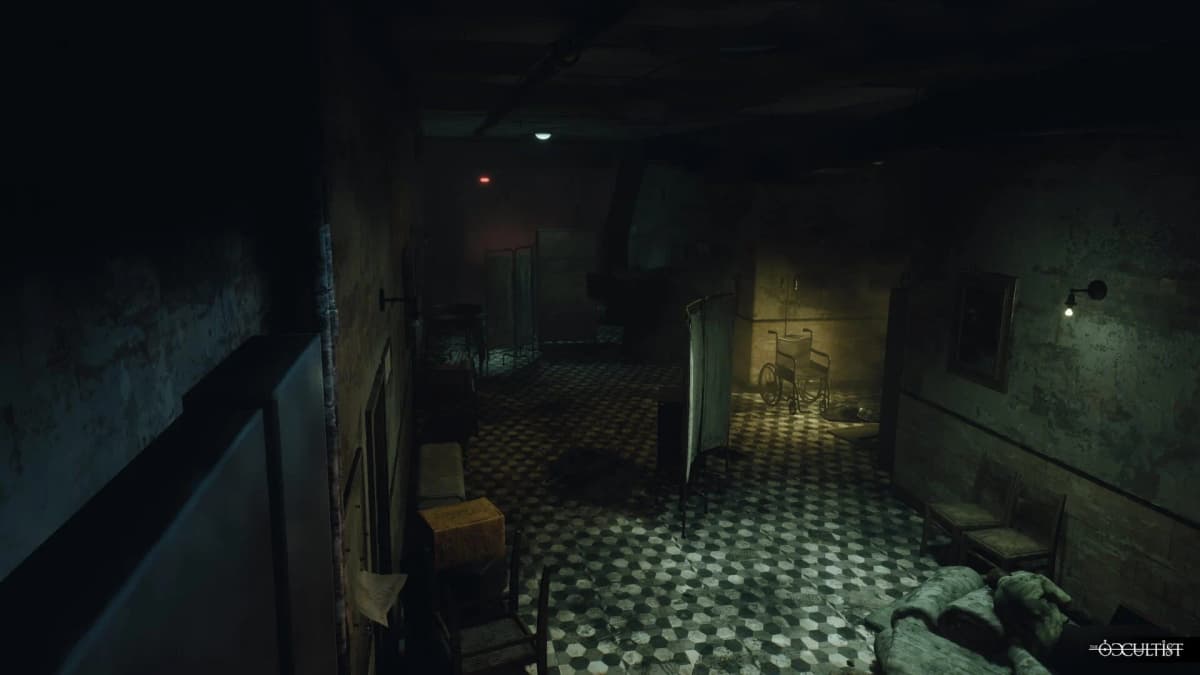
Structurally, The Occultist sits closer to a horror-leaning walking sim than a survival horror title. Think Layers of Fear, Amnesia’s slower stretches, or Observer – not Resident Evil. You move through distinct, tightly designed locations on Godstone Island: houses and barns, a hospital, an orphanage, a cemetery, and manor estates. A walkthrough hub on PC clocks the whole thing at roughly seven hours, which tracks with the “one long evening or two short ones” pacing.
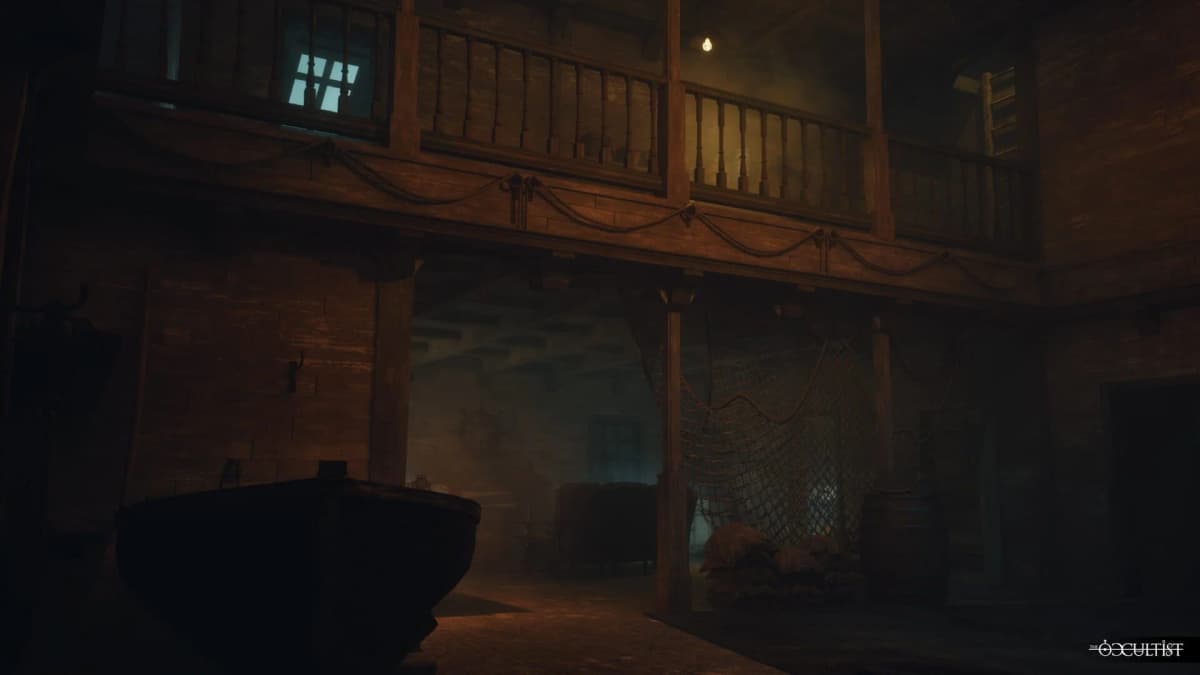
On a technical level, the PC version has already been praised for its Unreal Engine 5 presentation: heavy fog, dense interiors, and lighting that makes every doorway feel like a bad idea. On PS5, that should translate into a game that lives or dies on mood, not spectacle – more “claustrophobic dread” than “showpiece for your OLED”. This is the rare horror release where the marketing tagline might as well be what German outlets have been using: paranormal investigator, pendulum-puzzles, stealth exploration.
The soundtrack, by Pepe Herrero, leans into that same vibe – less jump-scare stingers, more slow-burn unease. Between that and Cockle’s performance, The Occultist is clearly built around the classic horror combo: good audio and your imagination doing most of the work.
The pendulum is the star – when the game lets it be
The hook that sets The Occultist apart from a dozen other “lonely guy on a cursed island” games is Alan’s mystical pendulum. It’s your Swiss Army knife for the supernatural: the game gives it five different functions, each tied to a way of seeing or manipulating the world.
Used right, the pendulum can:
- Reveal hidden objects and clues that don’t exist in the “normal” layer of reality.
- Highlight spirit trails – think ghostly footprints or energy paths that lead you to the next clue.
- Expose blood traces or past events, turning mundane spaces into crime scenes from decades ago.
- Trigger environmental changes, opening paths or altering the space in ways that go beyond simple key-and-door puzzles.
- Shift perception, giving you a kind of “vision mode” you’ll rely on to piece together what actually happened on Godstone.
Early impressions from PC players and critics line up on one thing: when the game leans on that pendulum, it’s at its best. Walking into an apparently empty room, switching modes, and suddenly realizing there’s a whole other layer of reality scribbled on the walls is exactly what you want from a paranormal investigator fantasy.
The uncomfortable detail – the one PR won’t highlight – is that the pendulum reportedly shows up less aggressively in the later parts of the game. Reviews mention that its functions aren’t exploited as deeply as they could be once you’re past the first big chunk of the story. On PS5, that means you should calibrate expectations: this isn’t a full-blown “pendulum-vania” where every location becomes a fiddly multi-layer puzzle box. It’s more linear, more curated, and occasionally more conventional than the premise suggests.
Mechanically, it also means this is not a game about system mastery. You’ll be cycling through pendulum modes to find the right “lens” for each scene, not crafting elaborate solutions from a giant toolkit. That’s not a flaw if you’re here for story and mood – but if you read “five abilities” and pictured immersive-sim-style problem solving, dial that down.
No combat, all consequences: how stealth shapes the horror
The other big decision: there is no direct combat. Alan isn’t a Doom Slayer, he’s a guy with a haunted pocket watch. The Occultist leans on exploration and stealth: you’re meant to feel vulnerable, not empowered.
That plays out in a few ways:
- Encounters are about avoidance. You’ll be watching patrol patterns, using cover, and picking your moments to move, not swinging weapons.
- Failure is usually binary. If something catches you, you’re in trouble – there’s no “chip away at its health bar and heal through it” fallback.
- Exploration has teeth. Opening a door or triggering a vision with the pendulum isn’t just lore, it can put you in danger depending on where you are in the story.
The upside: when you combine a no-combat rule with good audio and tight level design, you can get tension that’s hard to match in shooters. Every creak in the orphanage, every echo in the hospital, carries the threat of “you’re going to have to sneak past something ugly in here.” For players who bounced off modern horror because it all turned into gunplay by hour three, The Occultist is almost a course correction.
The risk – and this is where I’m cautious – is that stealth-heavy walking sims can collapse fast if enemy behavior is too simple or too trial-and-error. We’ve all played the horror game where you die three times learning a monster’s route, then never feel scared of it again. Early PC coverage hasn’t screamed “broken stealth” or “unfair checkpoints”, but it also hasn’t sold the stealth as deeply systemic. Expect more scripted tension than sandboxy cat-and-mouse.
So if your horror sweet spot is Outlast, Amnesia: The Bunker, or Alien: Isolation-level systems, The Occultist is likely a step gentler and more guided. If you’d rather creep through a story than wrestle with dynamic AI, that’s a feature, not a bug.
Story, structure, and how long it actually lasts
The narrative frame is straightforward: missing father, cursed island, cult experiments spanning from the 19th century to around 1950. The interesting part is how the game plays with memory and fragmented perception. The cinematic launch trailer and press materials lean hard into flashes of the past cutting into the present – essentially using the pendulum as an excuse to jump between time layers without breaking first-person immersion.
PC players report that the story does stick the landing, which matters a lot when you’re asking people to buy a game that’s “only” around seven hours long. There’s not much padding: you move from location to location as the investigation unfolds, with a clear forward push rather than a bunch of open-world side noise.
If you’ve been burned by bloated horror campaigns that drag their third act out, this is the opposite problem. The Occultist is compact. For some, that’s a win: all killer, minimal filler. For others, the pendulum mechanic and premise may feel like they deserved a bigger, more mechanically dense game. Know which kind of player you are before buying.
PS5 versions, pricing, and what you’re paying for
On PS5, The Occultist is available digitally via the PlayStation Store. The standard price sits around $29.99 / €29.99 at launch, positioning it firmly in that indie “premium, but not full AAA” band.
There’s also a Deluxe Edition, which typically bundles in things like the digital soundtrack and art extras rather than major gameplay content. Given that Pepe Herrero’s score and the art direction are two of the game’s standout elements, that’s not the worst upsell in the world – but it’s also not mandatory for understanding or enjoying the story. If you’re budget-conscious, the base version is the actual game; the Deluxe is for people who know they’ll want to live in this world a bit longer after the credits.
For context, you’re paying roughly the cost of a midrange horror film ticket plus snacks for something that can fill a weekend evening. Compared to other narrative PS5 horror titles in that price range, The Occultist leans heavier on investigation tools and lighter on action. If that alignment fits your taste, the price is reasonable; if you want replayability, branching narratives, or combat depth, you’re not getting much of that here.
One thing I’ll flag: the PS5 version is launching day-and-date with the full release across platforms, so you’re not getting a post-launch “definitive” patch baked in by default. Performance and polish should be fine given the scope, but it’s worth keeping an eye on first-week impressions to see how PS5 handles things like loading, frame pacing, and any UE5-specific weirdness.
Who The Occultist is actually for
Strip away the marketing, and The Occultist on PS5 is for a very specific player:
- You want story-first horror – characters, mystery, and atmosphere matter more than skill trees or boss fights.
- You’re into walking sims and investigative adventures and don’t consider “no combat” a negative.
- You like paranormal investigation fantasies where your tools meaningfully change how you read the environment.
- You’re fine with a 7-hour, mostly linear experience that you’ll probably only play once, but remember for the vibes.
If you primarily play horror for mechanical challenge, reactive AI, or replayable systems, this is probably a pass or a deep-sale pick. If you’re still thinking about games like What Remains of Edith Finch, SOMA, or Observer because of how they felt rather than what you “did”, The Occultist is much closer to that mental shelf.
What to watch next
A few concrete things worth watching over the next few weeks:
- PS5 technical impressions – Does the console version hold 60fps? Any streaming hitches in large interiors? Early Digital Foundry-style breakdowns or community reports will matter.
- Player response to the pendulum – Do people still love the mechanic in the final chapters, or does it fade into the background as some PC critics hinted?
- Patch notes from DALOAR / Daedalic – If they start tweaking stealth behavior, checkpoint frequency, or pendulum usability, that’ll tell you which pain points surfaced post-launch.
- Discount cadence – Daedalic titles often hit sales relatively quickly; if you’re on the fence, watching the first major PlayStation Store promotion after launch isn’t a bad strategy.
If those first waves of PS5 impressions match the PC buzz – strong atmosphere, good performance, and a satisfying ending with only minor mechanical underuse – The Occultist will settle nicely into that niche of “short, smart horror adventure” the console actually needs more of.
TL;DR
The Occultist has launched on PS5 as a roughly seven-hour, first-person paranormal investigation game where you use a mystical pendulum to uncover a cult’s grim history on the island of Godstone. It matters because it doubles down on atmosphere, stealth, and a unique investigative tool instead of combat, giving PS5 players a focused horror story rather than another action-heavy thriller. Watch early PS5 impressions for performance and how well the pendulum mechanic holds up in the late game before deciding whether to buy at full price or wait for a discount.
FinalBoss // Gear
Level up your setup
01Best-selling PS5 gameson Amazon→02DualSense controllerson Amazon→03PS5 SSD upgrades (M.2 NVMe)on Amazon→04Discounted game keyson Kinguin→Affiliate links · As an Amazon Associate, FinalBoss earns from qualifying purchases.
Want to Level Up Your Gaming?
Get access to exclusive strategies, hidden tips, and pro-level insights that we don't share publicly.
Ultimate Gaming Strategy Guide + Weekly Pro Tips