
Table of Contents (9)
The night I realized The Order: 1886 wasn’t the disaster everyone promised
I remember exactly how I first played The Order: 1886, because it felt like I was committing a crime against “serious gamer” culture. It was late 2016, PS4 era in full swing, and I’d grabbed a used copy for basically pennies. By then the game had already become a meme: “trash exclusive”, “tech demo”, “corridor simulator”, the infamous order: 1886 exclusivo people threw around as shorthand for what a PlayStation blockbuster shouldn’t be.
I went in ready to hate it. Expected a five-hour slideshow with some sad excuses for shootouts in between. And yeah, a lot of the complaints were real. The shooting is stock-standard cover-fire-repeat. The QTEs are pure 2010s nonsense. The lycan fights are scripted to hell and back. None of that surprised me.
What did surprise me was this: around three hours in, I realized I wasn’t bored. I wasn’t hate-playing. I was into it. The world, the pacing, the insane level of visual polish for 2015 hardware – it all clicked more than it had any right to. I finished it in one sitting and went to bed thinking, “Okay, this is not some secret masterpiece… but how the hell did this become the poster child for ‘garbage exclusive’?”
Fast forward to 2026. After a decade of open-world bloating, live service fatigue, and “content roadmaps” that feel like project plans, I replayed The Order on PS5. And that feeling hit even harder: this thing absolutely got stabbed for the wrong reasons.
In 2015, The Order was guilty of one crime: it didn’t fit the script
The context around this game matters more than people like to admit. The Order: 1886 dropped in February 2015 as a full-price PS4 exclusive. That sentence alone carried a ton of baggage back then. It wasn’t just “a new game”, it was supposed to be a standard-bearer for the console. The kind of thing fanboys throw around in arguments with powerpoints of resolution and frame rate.
But the industry mood in 2015 was very specific: value was measured in hours, maps, systems, and “emergent gameplay”. The open-world gold rush was in full swing. If your big-budget game didn’t have crafting, side quests, upgrade trees, collectibles, and at least one hunting mini-game, you were treated like you’d shown up to a Marvel premiere wearing jeans and a band t-shirt.
Into that climate walks The Order: 1886 – linear, short, heavily scripted, obsessed with cinematic presentation, and very obviously more interested in looking like a film than playing like a sandbox. And it dared to ask full AAA price for a 5-7 hour campaign with basically no replayability. Of course people came at it with knives drawn.
Reviews hammered it. IGN dropped a 6.5/10 for prioritizing cutscenes over mechanics. Other outlets took turns calling it a “tech demo disguised as a game”. On forums it was open season: “trash with pretty graphics”, “walking QTE”, “the reason you never buy launch exclusives”. Once that narrative locked in, it became the default opinion. If you said you liked it, you were the weirdo with “low standards”.
I’m not pretending critics were blind. They saw what was actually there. The problem is that the way we were all framing “what a AAA exclusive should be” left zero room for a game that wanted to be a short, tightly directed blockbuster first and an intricate playground second.
Let’s be blunt: as an action game, The Order is mid
Before anyone screams “apologist”, I’ll say it myself: The Order: 1886 is not a great shooter. I’ve sunk disgusting hours into stuff like Vanquish, Doom Eternal, and a pile of character action and fighting games. I care a lot about tight mechanics. And on that front? The Order shows up with a cheap plastic fork to a sword fight.
The cover system is boilerplate: pop out, shoot, duck back, slowly shuffle along. There’s a pseudo-bullet-time mechanic that feels like it exists purely because “that’s what third-person shooters were doing”. Enemy AI mostly exists to stand up and get headshotted. The few lycan encounters you’d expect to be dynamic monster hunts are tightly scripted dance routines.
The QTEs are the worst offenders. Perfectly choreographed sequences undercut by button prompts that feel like producer-mandated “interactivity”. They constantly interrupt the flow, and not in an interesting, cinematic way – more like a panicked reminder that, yes, you are technically still playing a video game.
Stack it up next to something like Vanquish and the argument is over in seconds. Vanquish is wild, expressive, mechanically daring, and still feels fresh. The Order feels safe and conservative in pure gameplay terms. It’s not in the same league, and pretending otherwise would be dishonest.
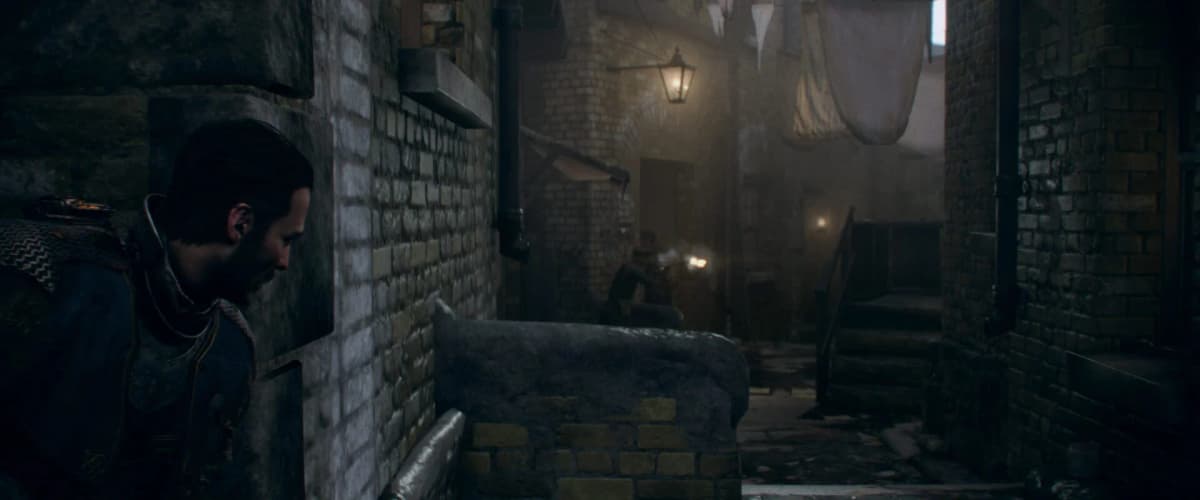
But here’s the thing: insisting that every big-budget game has to compete in that lane is part of how we buried The Order in the first place. We judged it by a standard it wasn’t even trying to hit.
Where The Order absolutely nailed it (and why it stuck with me)
Strip away the expectations of “the next big system-heavy exclusive” and look at what The Order was actually doing. As a directed, cinematic experience, it goes hard.
Visually, it was borderline witchcraft in 2015. The lighting, the volumetric fog rolling through industrial London alleyways, the cloth simulation on those absurdly detailed coats, the grime on every brick — it’s still impressive on a PS5 in 2026. The aspect ratio, the depth of field, the way the camera moves: it absolutely commits to feeling like a big-budget film you’re walking through.
The setting does a ton of heavy lifting. Alternate-history, steampunk-ish Victorian London with Knights of the Round Table reimagined as immortal-ish enforcers hunting lycans and dealing with class conflict? That’s a hell of a pitch. It’s not fully realized — that’s part of the frustration — but the texture of that universe is strong. Airships looming over whitechapel slums, Tesla-style weaponry humming in dimly lit workshops, aristocrats dripping with corruption while half-breeds prowl the shadows.
And yeah, the infamous “just a tech demo” game actually has memorable moments. Storming the airship with the thermite rifle, creeping through foggy streets with that oppressive soundtrack humming underneath, small character beats during quieter conversations — there are sequences I can recall more vividly than large chunks of open-world behemoths I’ve spent fifty hours in.
Performance-wise, it’s solid. The cast sells the gravitas without drifting into full parody, and the direction is confident. You can tell Ready at Dawn knew exactly what vibe they wanted: self-serious pulp, dripping atmosphere, and the feeling that every room exists in a coherent physical world, not as a bullet sponge arena thrown together for a checklist.
Most importantly, the pacing hits a note that aged better than anyone expected. You get in, get a focused 6-ish hours of story, and get out. No sidequests. No “come back every day for your login reward”. No open map begging you to hoover up feathers, trinkets, or audio logs to unlock the “true” ending. It’s a one-and-done ride — and in 2026, that feels almost rebellious.
Most importantly, the pacing hits a note that aged better than anyone expected. You get in, get a focused 6-ish hours of story, and get out. No sidequests. No “come back every day for your login reward”. No open map begging you to hoover up feathers, trinkets, or audio logs to unlock the “true” ending. It’s a one-and-done ride — and in 2026, that feels almost rebellious.
🎮 Get This Game at the Best Price
Compare prices instantly and save up to 80% on Steam keys with Kinguin — trusted by 15+ million gamers worldwide.
*Affiliate link — supports our independent coverage at no extra cost to you
The open-world hangover makes The Order look better than ever
Back when The Order launched, its biggest sin was being short and linear. In a world obsessed with “more content”, that was treated as a rip-off. But look at where that mentality dragged us.
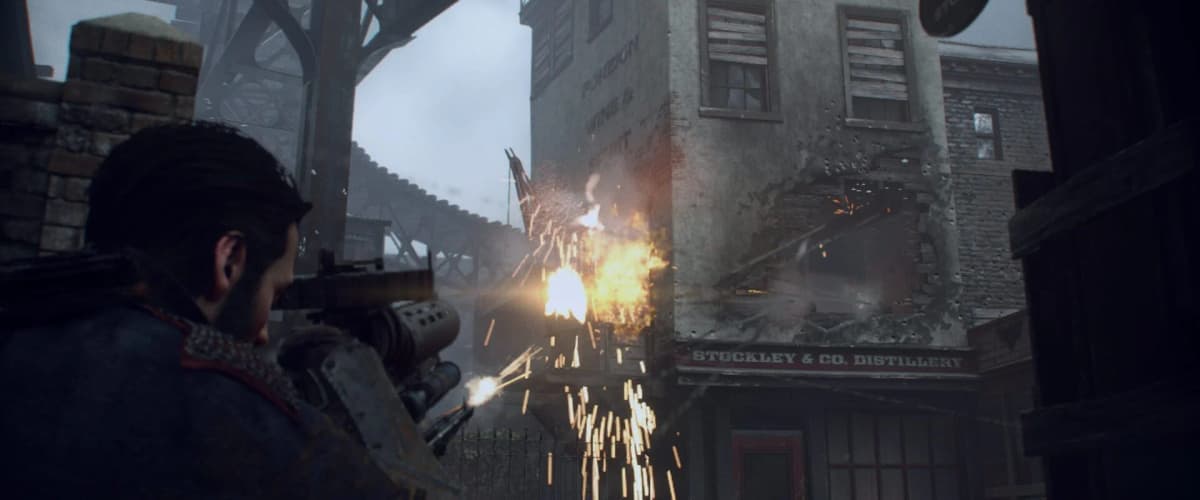
The last generation and a half have drowned us in bloated open worlds and hybrid everything-burgers terrified of leaving any niche unserved. There are games I respect on paper — Assassin’s Creed entries, sprawling RPGs, “cinematic + live service” hybrids — that I simply didn’t finish because the thought of checking one more icon off a map felt like work.
I’ve been playing long enough to remember when Shenmue felt bold for slowing you down, making you inhabit a place instead of sprinting between objectives. I love deep systems and expressive gameplay, but I also miss big-budget titles willing to pick a lane and stick to it. Not everything needs to be a theme park.
That’s exactly where The Order feels refreshing now. It doesn’t care about your build diversity. It’s not afraid of being “just” a straight line. It wants to show you a specific story, in a specific world, at a specific pace. It wants to be a slick two-hour film stretched to six hours of interactive spectacle, not an eighty-hour lifestyle choice.
When I look at modern blockbusters that clearly want to “appeal to everyone”, I see the seams. Design-by-committee pacing, safe genre mixes, and lopsided structures where horror, action, RPG, stealth, and exploration all exist but none of them really stand out. Versus that, a flawed but committed game like The Order feels almost honest. It might fail, but at least it fails while knowing what it wants to be.
The price-length discourse poisoned it from day one
None of this erases the elephant in the room: The Order launched as a full-price, new-release PS4 exclusive that most people finished in a weekend. In 2015, with digital refunds not really part of the console vocabulary yet, that stung. And Sony absolutely set it up to be judged harshly by pushing it as a flagship release.
The length vs. price argument hijacked the conversation from the start. Every discussion turned into a math equation: “60 dollars divided by 6 hours equals 10 dollars an hour, that’s robbery” versus “quality over quantity”. It’s not that length was the only issue — the shallow combat, heavy QTE reliance, and lack of replay hooks were real problems — but the obsession with hours warped everything around it.
Once the narrative solidified as “overpriced tech demo”, nuance died. The idea that a game can be flawed, mechanically limited, and still worthwhile for what it does well got drowned in console war noise and outrage about perceived value. The Order didn’t just underperform; it became a cautionary tale, a punchline any time someone mentioned cinematic linear games.
The fallout was brutal. Sales didn’t justify a sequel for Sony. Ready at Dawn had talked about expanding the universe — there were whispers of a The Order: 1887 or prequels that could dig deeper into that world. Instead, the studio pivoted into VR, did excellent work on Lone Echo, got acquired by Meta, and then got shut down in 2024. The IP is effectively a dead end. Those ideas, that London, that weird Knights-vs-lycans setup — all left on the cutting room floor of history.
Was that purely The Order’s fault? No. But being branded the “ultimate PS4 exclusive failure” did it no favors. We didn’t just criticize a game; we helped slam the door on a potentially interesting franchise before it had a chance to fix its mistakes.
Failed experiment or lost template?
When I look back now, I see The Order less as a disaster and more as an experiment that didn’t fully land — the kind of experiment we weirdly don’t allow big-budget games to make anymore. Indie titles get to be short, focused, and unapologetically linear. AA games can take weird swings. But AAA exclusives? Those are expected to be Swiss Army knives: multiplayer hooks, 40-hour campaigns, upgrade systems, New Game+, endgame content, the works.
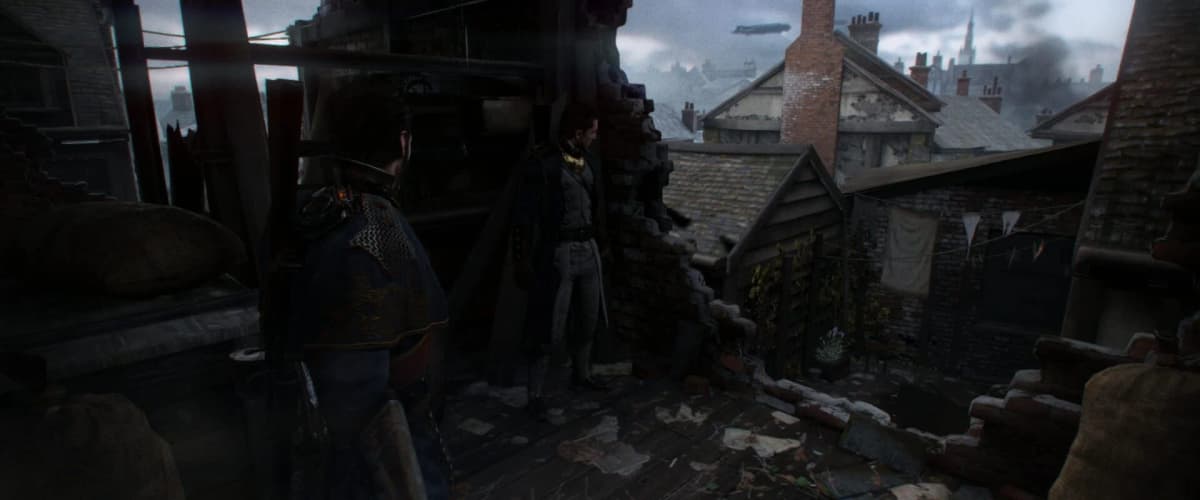
Here’s where I plant my flag: I’d rather a game like The Order: 1886 swing for something specific and miss in half the areas than watch yet another super-polished content factory nail every box on a template and leave zero mental footprint.
The Order is full of visible seams — abrupt pacing shifts, undercooked mechanics, narrative threads clearly left hanging for a sequel that never came. But those seams are attached to ambition. When I replay it now, I can practically see the outlines of what Ready at Dawn wanted the franchise to be. That’s more stimulating, to me, than a dozen safe, sprawling open worlds where my main memory is “nice map, I guess”.
And no, that doesn’t magically transform it into some misunderstood masterpiece. It just means I refuse to flatten it into “garbage with nice graphics”. It sits in a more interesting middle ground: a stylish, flawed blockbuster that came out at the worst possible time to be exactly what it was.
Why The Order still matters in 2026
Replaying The Order in 2026 didn’t make me discover some hidden genius. It did something more mundane but more important: it reminded me that it’s okay to like imperfect games without rewriting history to pretend they were secretly incredible.
I can say, in the same breath, that The Order: 1886 is shallow as a shooter and that I genuinely enjoy blasting through its campaign every few years. I can admit that its narrative doesn’t fully pay off, while still being obsessed with its rain-soaked, soot-covered London. I can roll my eyes at the QTEs and then immediately get sucked back in by a gorgeously framed shot of an airship drifting through the clouds.
What annoys me isn’t that people criticized it. The criticism was deserved. What annoys me is how quickly we jumped from “this has problems” to “this is trash and should be erased from the conversation”. Because when that’s the standard, we end up with safer and safer blockbusters that are terrified of making strong, divisive choices.
If anything, The Order is a quiet reminder of a lane the industry has mostly abandoned: the expensive, laser-focused, 6-8 hour single-player exclusive that lives or dies on presentation and vibe more than systems. Imagine if Sony greenlit another crack at that idea today, but with the mechanical confidence of their current first-party output. That’s the reality we lost when we collectively decided this game was nothing but a meme.
So no, I’m not going to stand here and call The Order: 1886 a secret masterpiece. It’s not. But I’m also not going to keep pretending it was the “ultimate PS4 failure” people still joke about. It’s a flawed, fascinating snapshot of a moment when our expectations for exclusives were so narrow that anything outside the template got chewed up and spat out.
And eleven years later, when I’d kill for more big-budget games that dare to be finished in a single weekend without burying me under a to-do list, that failed little experiment looks a lot less like a disaster and a lot more like something we should have appreciated — and iterated on — instead of throwing in the bin.
FinalBoss // Gear
Level up your setup
01Top-rated gaming headsetson Amazon→02High-refresh gaming monitorson Amazon→03Gaming chairson Amazon→04Discounted game keyson Kinguin→Affiliate links · As an Amazon Associate, FinalBoss earns from qualifying purchases.
Want to Level Up Your Gaming?
Get access to exclusive strategies, hidden tips, and pro-level insights that we don't share publicly.
Ultimate Gaming Strategy Guide + Weekly Pro Tips