
About three hours into The Outer Worlds 2, I hit the moment that made me think, “Oh. Obsidian finally did it.” Not because of a big twist, not because of some flashy gun or set piece, but because of a single grayed-out dialogue option staring back at me, mocking the build I’d foolishly committed to at character creation.
I’ve been chasing the Fallout: New Vegas high for more than a decade. The first Outer Worlds had the tone, but not the teeth. Avowed didn’t get there either. The Outer Worlds 2, though? This is the first time since New Vegas that an Obsidian RPG has made me genuinely nervous about my choices, in the best way.
Set in a new galaxy, you’re an Earth Directorate agent shipped to the Arcadia colony to investigate violent rifts tearing reality open. Faster-than-light travel, the pride of Arcadia, is probably to blame. Corporations, cults, and would-be philosopher-kings all want a piece of the catastrophe. It’s classic Obsidian: a galaxy on fire, and you’re the poor idiot holding a leaky extinguisher.
The funniest part is that this whole hyper-capitalist nightmare comes from a studio owned by one of the biggest corporations on Earth. Obsidian knows exactly how ironic that is and leans into it hard. The “consumerism” flaw you get for owning the Premium Edition, the end-credits gag where the Xbox logo mutates into Spacer’s Choice’s cheery exploitation mascot-none of it is subtle, but it is sharp and often laugh-out-loud funny.
Table of Contents (9)
Key takeaways from my time in Arcadia
- Choice and consequence are the real stars; quests bend hard around your build and your morals.
- The reworked flaws and traits system is brilliant, dangerous, and hugely replayable.
- Companions (especially Niles and Marisol) are strong enough to drive your decisions.
- Gunplay feels snappier than the first game, but combat is still shallow and too easy.
- The final third drags with weaker quests and bloated firefights, but the ending payoffs mostly land.
Crash-landing in Arcadia: first impressions
I played on PC with a 1440p ultrawide monitor and a high-end rig, and my first hour was that classic Obsidian stumble into chaos. You wake up, get briefed in the most condescending corporate tone imaginable, and are immediately dropped into a conflict way above your pay grade. Within 30 minutes I’d lied on an official report, accidentally helped a local gang, and annoyed my handler back at the Directorate-all because my build pushed me toward smooth-talking over subtlety.
The new galaxy setting helps a lot. The Outer Worlds 2 doesn’t feel chained to the first game. Arcadia and its surrounding systems are in open crisis: Auntie’s Choice, a grotesquely cheerful mega-corp, is trying to monetize the rifts, while the Order of the Ascendant, a cult of statisticians and predictive models, believes it can mathematically shepherd civilization through the disaster. Everyone else is just trying not to die, or trying to find a way to profit before they do.
The writing lands immediately. Corporate slogans are weaponized. Safety briefings double as threats. NPCs slip between deadpan humor and existential dread like it’s just part of the dress code. Even when the stakes ramp up, Obsidian keeps the jokes coming without deflating the drama. The tone is very New Vegas: bleak, funny, and quietly furious about the systems chewing everyone up.
Character builds, flaws, and the joy of really bad decisions
My first real mistake happened before I even stepped off the tutorial ship. I saw the “Dumb” trait-huge stat penalties, five skills completely locked out for the whole run—and thought, “Perfect. I’ll be a lovable idiot professor who smashes things with a giant hammer and talks his way out of trouble.”
On paper, I didn’t need Guns, Explosives, or Leadership if I was going melee and leaning into Speech. About four hours later, staring at the perk tree, I realized I had locked myself out of some of the best Speech perks in the game because they were tied to Leadership. No re-spec. No take-backs. I had hard-baked my own suffering into the campaign.
That’s when The Outer Worlds 2 clicked. The game doesn’t just encourage commitment to a build—it forces it. Traits and flaws are not small nudges; they fundamentally shape what you can and cannot do. And the new flaws system is much smarter than in the first game.
Instead of mostly bland numerical penalties, flaws in this sequel are bespoke bundles of pros and cons that trigger based on your behavior. Get hit by rift anomalies a lot? You might pick up a mutation that warps your perception but boosts your damage in certain conditions. Spend too much time being a corporate simp? You risk a flaw that makes you easier to bribe but more persuasive with suits.
Many of them are tied to very specific actions or habits. I never managed to unlock the Sungazer flaw, which permanently messes with your vision in exchange for a modest buff, because I apparently don’t stand around staring into the sun enough. Knowing those little oddities are out there is half the fun. You can hunt for them deliberately… or just let the game quietly judge your worst tendencies.
What I loved—and mildly resented—is how unapologetic the design is. Some flaws are so punishing the game literally flashes a warning saying, “Maybe don’t pick this on your first run.” Yet that same courtesy doesn’t exist for starting traits like Dumb, which can wreck an entire branch of your build. It’s cruel, but it’s the kind of cruelty that makes replays exciting rather than optional.
Across 40-ish hours and two different characters (my tragic idiot professor and a paranoid hacker who never met a locked door she didn’t love), I kept running into skill checks and dialogue options I couldn’t touch. They stayed grayed out, taunting me. Fix this reactor if you had enough Engineering. Convince this fanatic to stand down if you’d invested in Intimidate. The Outer Worlds 2 constantly reminds you that you can’t be good at everything, and the game is stronger for it.
Quests, factions, and consequences that actually bite
The hallmark of a good Obsidian RPG is when two players compare notes and realize they essentially played different games. The Outer Worlds 2 absolutely hit that mark for my group. Talking with friends after finishing Eden and Dorado, our paths through the same main questlines barely resembled each other.
The quest design bends around your build in clever ways. On Eden, my melee-focused idiot professor couldn’t hack a security grid, so I wound up brokering an uneasy truce between two local factions to get them to fight each other for access. On Dorado, my second character silently rewired the same system, slipped past everyone, and never even learned those factions existed. Same objective, totally different stories, different intel, and different people angry at me later.
Side quests aren’t just filler either; they often plug directly into major plot branches. A seemingly throwaway mission helping researchers with rift data turned out to unlock a radically different route through a late-game main quest, bypassing a huge combat slog. The game never highlighted that connection in the log. I only realized it when an NPC said, “You already know my work; we can skip the briefing.”
Each major planet ends with a big, unmistakable choice—think the “nuke town or don’t” moment from Fallout 3, but reframed around control of entire colonies or the fate of a crucial resource. Eden and Dorado handle this brilliantly: you’re weighing Auntie’s Choice’s ruthless profit machine against the Order of the Ascendant’s cold, mathematical governance. Neither is clean. One run I propped up the Order, rationalizing that predictive rule-by-equation beat cartoonish corporate greed. Another run I sold my soul to Auntie’s because, frankly, the pay and firepower were better.
The important part: those decisions don’t just pop up in a slide show at the end. I watched towns shift into company towns. I came back to a settlement I’d “strategically sabotaged” hours earlier and found the streets patrolled by new guards, old vendors gone, and remaining NPCs quietly furious with me.
And if you push far enough into moral ugliness, your crew will call you on it. The game doesn’t bluff about companions leaving; they really can walk. I tested the limits once with a particularly ruthless choice on Dorado, and the dressing-down I got in the ship afterward felt earned. One companion gave me a strained, “I’m not sure I recognize you anymore,” and another threatened to bail outright if I didn’t start picking my battles more carefully.
Companions worth rearranging your plans for
Obsidian’s at its best when companions feel like real people rather than quest dispensers, and The Outer Worlds 2 largely nails this. You can take two of six companions into the field at any time, swapping them on the ship between missions. Depending on your choices, though, you might never meet them all—or you might indirectly kill them before they ever join.
My core duo for most of the game was Niles and Marisol. Niles has kid-brother energy: desperate for approval, constantly cracking jokes, and visibly trying to figure out who he is in this warped system. I’d finish a tense negotiation and he’d quietly ask if we “did the right thing,” even when the XP and loot were flowing. His personal questline, dealing with his family’s history with the Directorate, ended up being one of my favorite arcs, and I definitely delayed main story objectives just to see it through.
Marisol is the opposite: a stone-cold assassin who’s long past pretending the galaxy is fair. She’s pragmatic to the point of brutality and will absolutely call you out if you start playing hero while making compromises behind the scenes. Running her quest while aligned with the Order of the Ascendant led to some memorably uncomfortable conversations where my supposed “rational choices” didn’t look so clean when she laid out the body count.
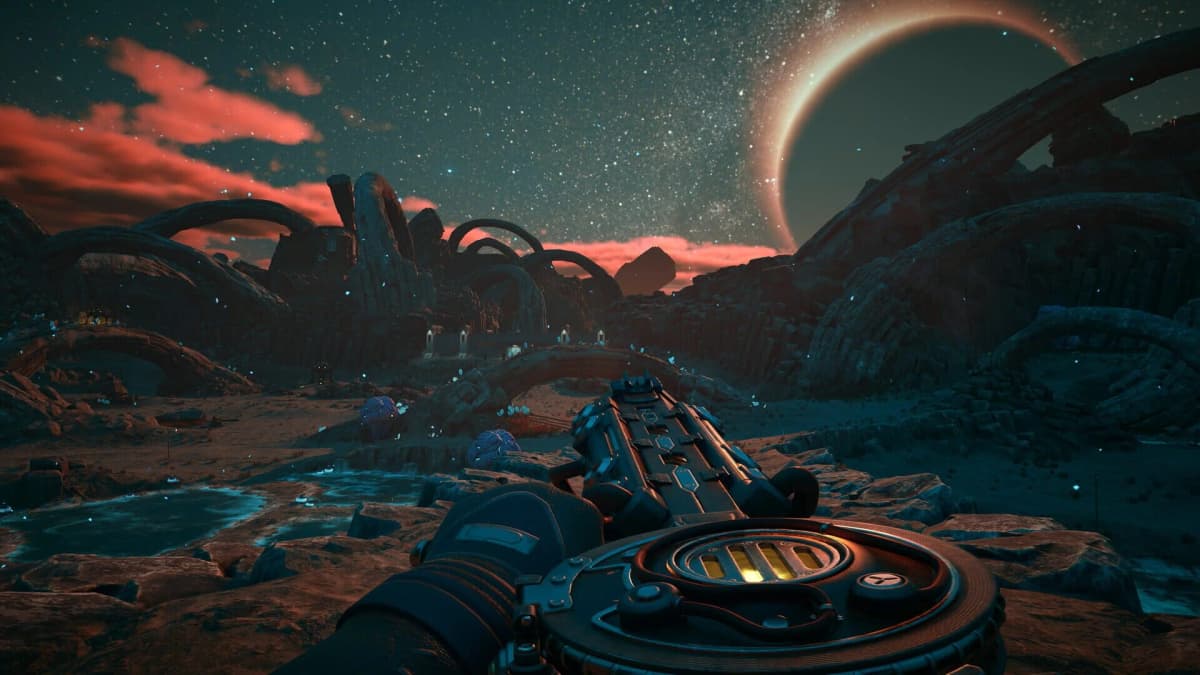
The others are just as sharply drawn. Aza, a fervent cultist who literally worships the rifts, reframed the entire anomaly crisis as a kind of religious awakening; Tristan, a Protectorate arbiter, sees everything through the lens of law and precedent. On one run I accidentally got Aza killed because of a choice in the main quest. On another, Tristan never joined because I’d undermined his faction too thoroughly early on. That kind of missable content feels risky on paper, but in practice, it made the world feel genuinely reactive.
Companion banter in the field is plentiful, and their combat abilities are useful without turning them into walking nukes. More importantly, they have strong opinions, and the game lets those opinions strain your relationship instead of softening every edge. When one of them finally tells you they’re done and walks off the ship, it stings.
Planets, pacing, and a weak final stretch
The planetary structure is tighter than the first game’s, and the early areas in particular are excellent. Eden and Dorado are dense, layered spaces full of overlapping quests, environmental shortcuts, and weird little stories about how regular people cope while two super-factions play tug-of-war with reality itself.
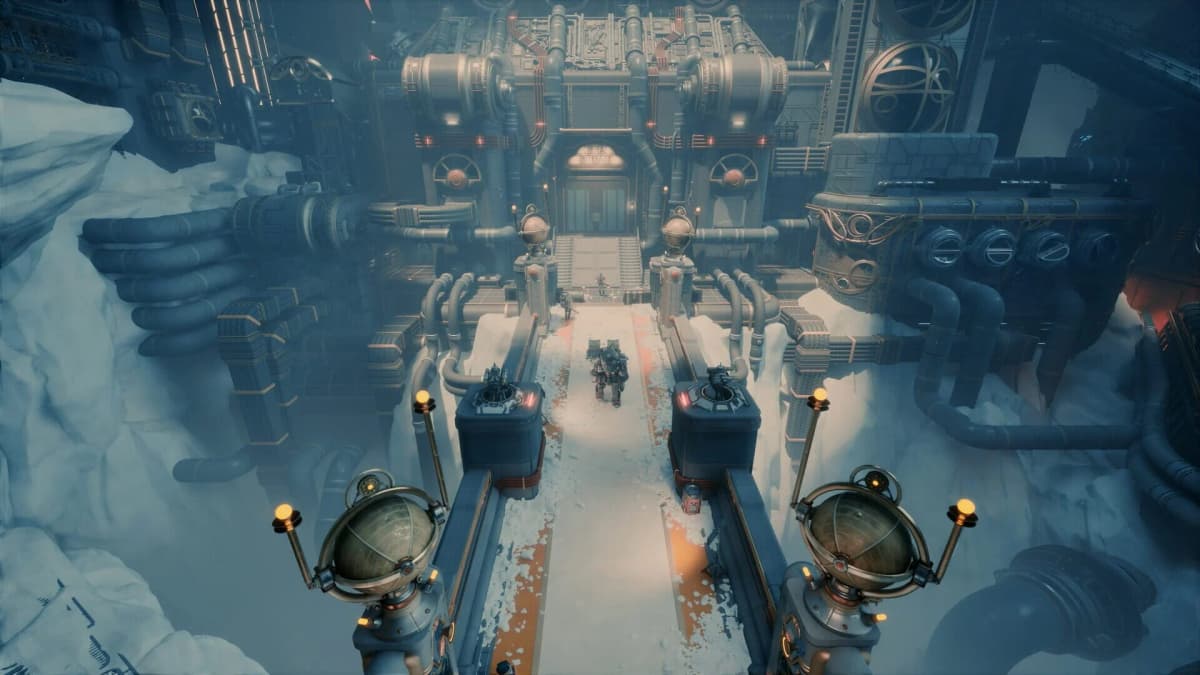
Unfortunately, the final third doesn’t quite keep that momentum. Cloister, a large, icy world that serves as one of the late-game hubs, looks striking in screenshots but feels much emptier in practice. There are long stretches of trudging across frostbitten nothing toward yet another combat-heavy objective, and the number of alternate quest solutions drops off noticeably.
By the time I hit the last couple of main missions, the game leaned too hard on straightforward shootouts, often without the same branching paths that defined the earlier acts. The narrative payoffs mostly work, especially if you’ve invested in your faction of choice and your companions, but the road to the finale is more combat corridor than tangled RPG knot.
Combat: better guns, same brain-dead firefights
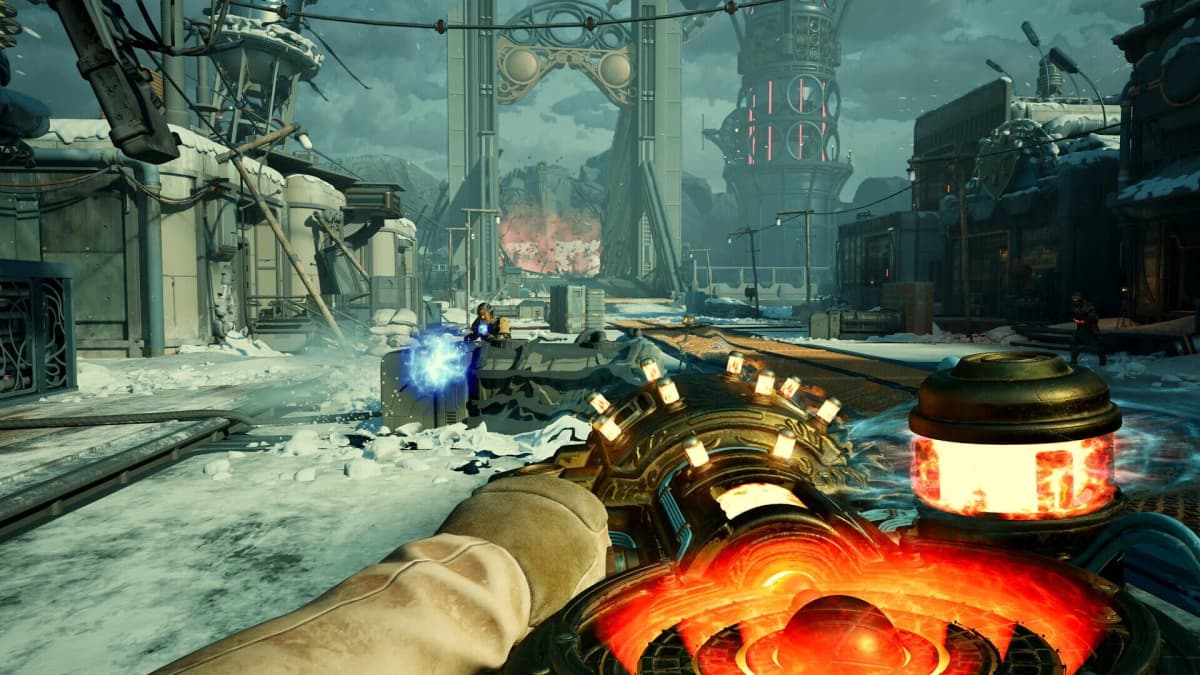
Mechanically, the shooting is miles ahead of the first Outer Worlds. Weapons feel weightier, recoil is satisfying, and hit reactions sell the impact. On a pure “does this feel good to fire?” level, Obsidian did the work.
The problem is everything around that core feel. Enemies are often classic RPG bullet sponges with questionable AI. On the default difficulty, if you’re even remotely on-level, most encounters boil down to “point reticle in rough direction, hold trigger until numbers stop coming out.” My melee professor shredded entire groups while my companions soaked up aggro. My hacker build bristling with clever combat perks? She rarely needed any of them.
The systems that should deepen fights—hacking auto-mechanicals to turn them, setting elaborate traps, abusing environmental hazards—are frequently unnecessary. I grabbed perks that improved my chances of flipping bots mid-battle, thinking I’d lean into that fantasy, and then almost never bothered because my upgraded rifle and Marisol’s headshots finished things faster.
There’s a full crafting system here as well: workbenches where you can tinker with weapons, cook up consumables, and mod armor to suit your playstyle. On normal difficulty, I barely touched it. I’d visit a bench every few hours, slap a damage buff on my favorite melee weapon, and call it a day. Gear upgrades felt nice but rarely essential, which undercuts the satisfaction of engaging with that layer.
Cranking up the difficulty helps a bit; enemies get deadlier, and ignoring systems becomes riskier. But even then, the underlying design is still very “Fallout 3 era”: arenas of enemies waiting to be deleted rather than responsive challenges that force improvisation. Given how bold the game is with its narrative and build systems, the conservative combat stands out.
Performance and PC experience
The Outer Worlds 2 runs on Unreal Engine 5, which has been a mixed bag for PC lately. Surprisingly, this one treated my machine well. At 1440p on max settings (ray tracing off), I was consistently sitting above 100fps, with only minor hitches in dense hub areas.
There is a hardware ray tracing toggle, but it’s the classic trade: noticeably worse performance for barely perceptible visual gain. Turning it on chopped my frame rate nearly in half while adding some extra reflections I only noticed when I went hunting for them. I turned it off and never looked back.
On the PC features side, this is thankfully not another barebones port. Ultrawide support works properly, HUD and FOV sliders behave like they should, and HDR is functional without hours of tweaking. Given how many big-name releases still ship without proper ultrawide or HDR support—looking at you, recent FromSoftware PC ports—that baseline competence is genuinely appreciated.
Who The Outer Worlds 2 is really for
If what you’ve missed most since New Vegas is that feeling of your build, your lies, and your moral compromises rippling through the world, The Outer Worlds 2 gets very close to scratching that itch. It’s not as sprawling as a full Bethesda-style sandbox, but the density of reactive content per square meter is impressive.
Players who love tinkering with weird character builds, replaying quests from different angles, and arguing with companions about awful decisions are going to have a great time here. The reworked flaws and traits alone practically beg for at least two runs: a “canonical” hero (or anti-hero) and a completely deranged experiment.
However, if you’re mainly here for crunchy, tactical combat, this isn’t the game to convert you. The gunplay feels better, no question, but fights rarely demand real strategy, and the encounter design doesn’t keep up with modern shooters or more hardcore action RPGs. You can absolutely spec into combat and have fun, but the systems around violence feel like they’re propping up the story rather than standing on their own.
FinalBoss // Gear
Level up your setup
01Top-rated gaming headsetson Amazon→02High-refresh gaming monitorson Amazon→03Gaming chairson Amazon→04Discounted game keyson Kinguin→Affiliate links · As an Amazon Associate, FinalBoss earns from qualifying purchases.
Want to Level Up Your Gaming?
Get access to exclusive strategies, hidden tips, and pro-level insights that we don't share publicly.
Ultimate Reviews Strategy Guide + Weekly Pro Tips