
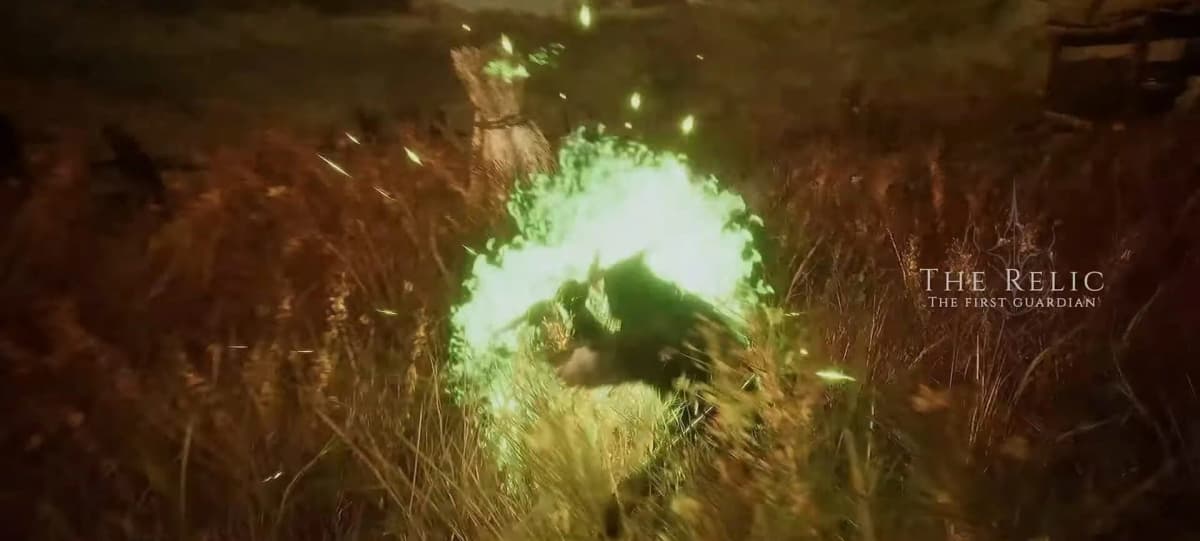
I felt the best and worst of The Relic: First Guardian inside the same Brutal fight: I slipped through a heavy swing, punished the opening with a flashy Relic skill, and watched a huge chunk vanish from the boss’s health bar. Seconds later, I lost my target as the lock-on snapped away, the camera swung behind a wall, and I ate a hit I had no way to read. I enjoyed the first half of that exchange. I resented the second half enough to stop trusting the game.
I found a boss-heavy action RPG with a real combat pulse, a striking Korean-folklore atmosphere, and a world I wanted to explore. I also found a $49.99 launch game whose camera, technical instability, repetitive spaces, and muddled storytelling keep tearing that potential apart. I cannot recommend The Relic: First Guardian at launch.
Table of Contents (7)
Key Takeaways
- I enjoyed the weight of its weapons, the timing of its dodges, and the visual punch of its Relic powers.
- I found the combat system far more forgiving than the usual stamina-driven Soulslike formula, with attacks free from stamina costs and ordinary enemies staying dead after I cleared them.
- I watched the camera and lock-on turn readable boss encounters into unfair messes, especially in confined arenas and encounters with several enemies.
- I grew tired of repetitive environments, repeated dodge-and-punish rhythms, unstable performance, and story scenes weakened by awkward localization and voice work.
- I would wait for substantial patches and a discount before considering it, even if I primarily wanted a mid-budget action game with boss fights.
I Found Real Energy in the Weapon Combat
I entered Arsiltus as the amnesiac First Guardian, following the guidance of a dark maiden through a continent ruined after the Great Relic’s destruction unleashed the Void. I liked that premise immediately. I found the ruined landscapes, corrupted creatures, and mournful boss stories far more distinctive than another pile of generic dark-fantasy rubble, and I kept noticing the melancholy running through the world’s Korean-inspired imagery.
I also enjoyed the combat whenever the game gave me room to focus. I had light and heavy attacks across different weapons, each carrying a different rhythm and reach, while Relic powers gave my builds their flashy finishing moves and high-commitment bursts of damage. I felt properly rewarded when I pressed an opening instead of waiting forever for a safe poke. I could dodge through an attack, close the gap, chain a weapon skill, and make a boss stagger under the pressure.
I appreciated the less punishing progression structure, too. I did not manage stamina for every sword swing; I spent it on defensive actions and evasions. I cleared regular enemy groups without expecting them to repopulate every route. I spent more time adjusting my weapon and Relic setup than grinding for levels, which gave the early game a brisk forward pull.
I would call that structure Soulslike-flavored rather than a strict Soulslike experience. I felt less pressure from death and checkpoints, and I found the game more interested in getting me back into its next big encounter than making me retrace a dangerous route. I liked that accessibility in principle. I needed the bosses to carry the challenge, though, and their quality varied too wildly for that burden.
The Camera Made Me Doubt Fights I Should Have Learned
I could forgive a demanding boss. I could forgive a boss that killed me because I mistimed a dodge, got greedy with a combo, or misunderstood a delayed attack. I could not forgive the camera for withholding the information I needed to make a decision.
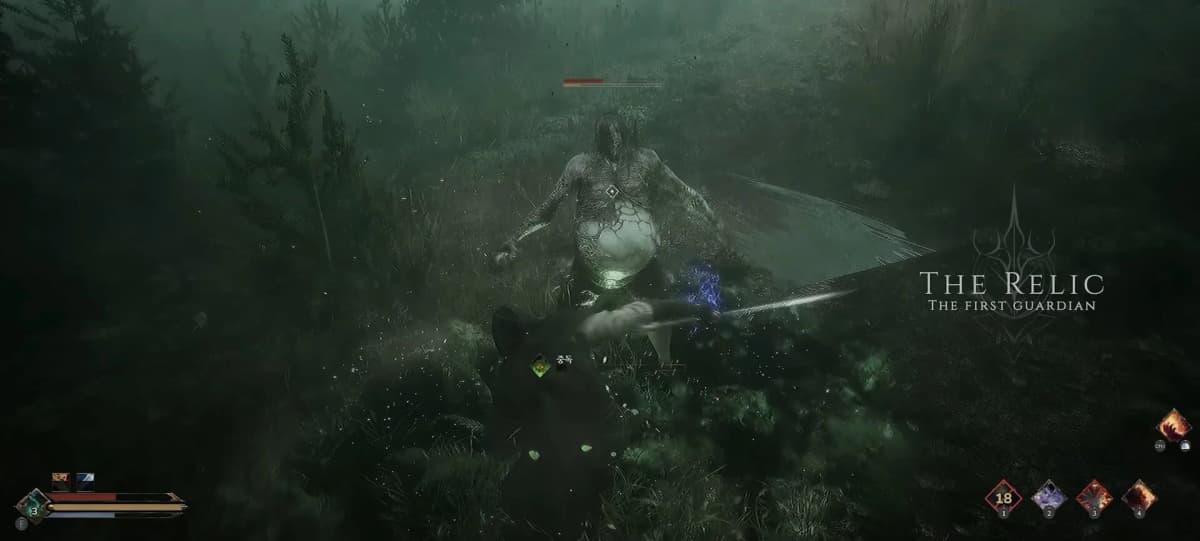
I repeatedly watched the lock-on break, choose the wrong enemy, or lose its grip when a boss moved near the edge of the arena. I repeatedly fought the camera itself in narrow spaces, where it swung too close to my character or planted the action behind scenery. I had encounters where a clean dodge and a clean punishment felt fantastic, then I had nearly identical encounters where the targeting failed and the same boss felt cheap.
I found that inconsistency devastating because The Relic: First Guardian asks me to study tells, spacing, and openings. I could not build reliable muscle memory when the game kept changing what I could see and what I could target. I stopped treating every death as a lesson because too many of them came from a broken view of the fight rather than a bad decision from me.
I faced more than 70 Brutals across the game’s broad boss-focused structure, and I enjoyed enough of their visual designs to wish I could recommend the package. I found several fights satisfying in isolation, especially when I had a clear arena and a boss whose attack strings gave me room to answer aggressively. I also found too many encounters built around the same dodge, punish, retreat routine. I kept seeing promising mechanics repeat without gaining enough complexity to sustain the long campaign.
I Loved Arsiltus More Than I Understood Its Story
I kept returning to Arsiltus because I liked its atmosphere. I found genuine sadness in the broken relics, ruined settlements, corrupted figures, and tragic framing around the Brutals. I felt the game reaching for a mythic weight that suited its setting, and I enjoyed uncovering fragments of a land trying to survive after the Void swallowed its future.
I struggled to hold onto the actual narrative because I found the delivery fragmented and underwritten. I heard dialogue that lacked the dramatic force the scenes demanded, and I read localization that frequently pulled me out of the moment. I wanted the dark maiden’s guidance, the First Guardian’s lost identity, and the relic-hunting journey to form a stronger emotional thread. I instead spent much of the campaign piecing together a story that never earned the gravity of its own world.
I also grew weary of the environments. I found moments of visual beauty, particularly when the game let a ruined horizon or a corrupted landmark dominate the frame, but I moved through too many spaces that blurred together. I felt the semi-open structure stretch its ideas thin, and I rarely found the exploration rewards strong enough to make repeated scenery feel purposeful.
I Could NotSeparate the Combat Problems From the Technical Problems
I encountered janky visual presentation and performance instability often enough that I stopped treating them as isolated blemishes. I felt the technical roughness most sharply during combat, where a stutter, an erratic camera move, or an awkward control response could poison a moment that should have been tense and satisfying. I found the game asking for precision while failing to provide a stable enough foundation for that precision.
I played the PlayStation 5 version, and I would not advise anyone to assume a different platform will solve the experience’s deeper problems. I would expect a strong PC to soften parts of the performance burden, but I would still avoid treating hardware power as a fix for unreliable targeting, repetitive encounter design, or uneven presentation. I found the core frustrations woven into the game’s systems rather than confined to a single technical setting.
I felt the roughness more keenly because the game occasionally looked gorgeous. I saw an evocative dark-fantasy action RPG fighting to emerge through the instability, and I had enough good duels to understand why the combat hooked me in short bursts. I never got the consistency required for those bursts to become a satisfying full campaign.
I Would Only Recommend It to the Most Patient Combat Experimenters
I would steer players who demand clean camera control, dependable lock-on, polished performance, and sharply communicated stories away from The Relic: First Guardian. I found its failures too fundamental for that audience. I could not recommend paying full price for a game whose central boss encounters can collapse because I lost sight of the enemy.
I would reserve a cautious future recommendation for players who enjoy experimenting with weapons, chasing stylish skills, and tolerating mid-budget roughness in exchange for a distinctive setting. I found enough satisfying action here to believe patches could improve the experience’s standing. I would still wait until those patches exist and the price reflects the game’s uneven state.
Bottom Line
I found The Relic: First Guardian caught between a good action game and a broken launch product. I enjoyed its weapon variety, Relic skills, aggressive boss-fight rhythm, and melancholy Korean-folklore atmosphere. I could not overlook the camera failures, unreliable lock-on, performance problems, repetitive environments, shallow long-term combat patterns, and confused story delivery.
I rate The Relic: First Guardian a 4/10. I would avoid it at $49.99 and revisit it only after major technical fixes or a deep sale. I found a worthwhile combat foundation underneath the wreckage, but I spent too much time fighting the game’s systems to call the journey through Arsiltus worthwhile today.
FinalBoss // Gear
Level up your setup
01Top-rated gaming headsetson Amazon→02High-refresh gaming monitorson Amazon→03Gaming chairson Amazon→04Discounted game keyson Kinguin→
Affiliate links · As an Amazon Associate, FinalBoss earns from qualifying purchases.
Want to Level Up Your Gaming?
Get access to exclusive strategies, hidden tips, and pro-level insights that we don't share publicly.
Ultimate Reviews Strategy Guide + Weekly Pro Tips