
Table of Contents (7)
The co-op update Riftbreaker fans have been asking for actually landed
This caught my attention because The Riftbreaker has always felt like the rare game that deserved co-op but didn’t have it. It’s a crunchy cocktail of twin-stick action, base-building pressure, and swarm defense that I sank a ridiculous number of hours into at launch back in 2021. Exor Studios has finally pushed Update 2.0 live on PC, and it’s not just “now with friends.” This is a fundamental rework with new endgame, new enemies, new systems, and a fresh performance pass. It’s free, which matters, and the studio says consoles and the Windows Store version will follow later.
- Up to 4-player online co-op across the full campaign and Survival.
- Expanded endgame with Megastructures that reshape late-game goals.
- Loot and weapon systems rebalanced to encourage build variety.
- Engine-level performance gains aimed at huge bases and bigger swarms.
Breaking down what’s new (and why it matters)
Co-op is the headliner: four players can run the entire campaign and Survival Mode together, including the prologue. If you’ve ever micromanaged power grids, liquid logistics, and wall junctions while fending off an Omega-tier stampede, you know how much smoother that gets when someone else can kite enemies while you rewire the fusion setup. The big question is implementation: Who owns the save? Can players drop in and keep personal progression? How’s host migration handled, and is there cross-play? Exor doesn’t specify here, so we’ll be stress-testing the netcode and desync protection in the wild.
The other pillar is an Expanded Story Campaign that kicks in after the original main missions. Megastructures-massive, upkeep-heavy projects-become the new centerpiece, pushing your economy and logistics to their limits. This is the kind of long-term objective The Riftbreaker needed. Late-game previously drifted into “optimize and wait for the next wave”; having mega builds with real passive bonuses gives veteran players a reason to rethink base layouts and production chains instead of coasting on overbuilt turrets.
Omega creatures, loot drops, and the new power curve
Enemy variety gets a serious spike with Omega-strain creatures. These are buffed variants with elemental twists and extra abilities designed to force arsenal diversity. If you learned to lean on one or two “meta” guns, expect to swap more often-and in co-op, that means squad loadouts start to matter. It’s a smart way to keep combat punches fresh without throwing in cheap difficulty spikes.
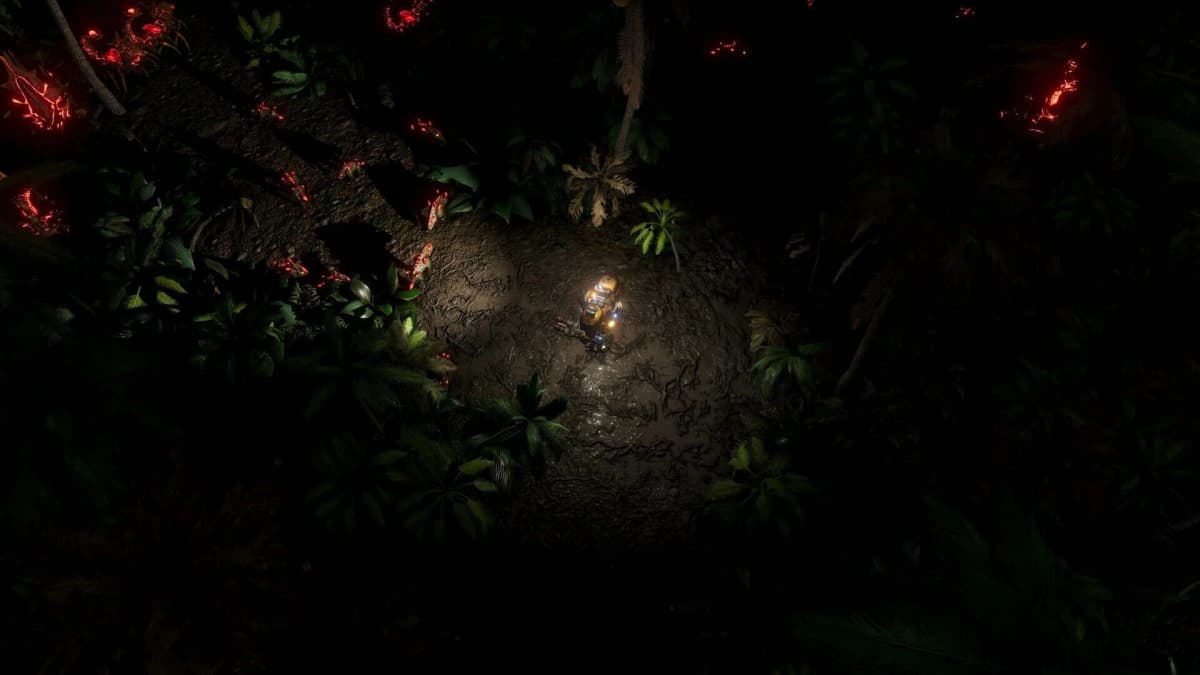
The loot system is the biggest philosophical shift. Instead of crafting being the only path, you’ll now find weapons, mech upgrades, and items as drops from enemies, Biocaches, and Bioanomalies. Some loot can outpace your research tier, which is equal parts exciting and risky. On the plus side, this injects discovery and spikes of power into a previously linear progression. On the caution side, any game that bolts loot onto a deterministic crafting tree has to avoid turning into a grind treadmill. Exor says you can dismantle junk for resources and that loot pools scale with research, which should curb dilution—if the drop rates and affix pools are tuned tight.
Weapons and mods have been rebalanced across the campaign, with previously weak options buffed and some functional tweaks (the Root Gun and Laser get called out). I’m absolutely here for build diversity—Riftbreaker’s combat sings when you’re swapping between utility tools and big burst options—so long as they didn’t just buff everything into purple-number soup. The studio’s track record on tuning (see their meticulous patching of X-Morph: Defense and early Riftbreaker updates) gives me cautious optimism.
Randomized missions and research costs: smarter loop, possible friction
Once you clear a biome’s main missions, a new generator opens up endless exploration maps and resource-rich outposts. That’s a great fix for the “I need titanium but don’t want to replay the same map” problem. The key will be variety: tileset remixing only goes so far; meaningful modifiers and bespoke objectives are what keep repeat runs interesting, especially in a group.
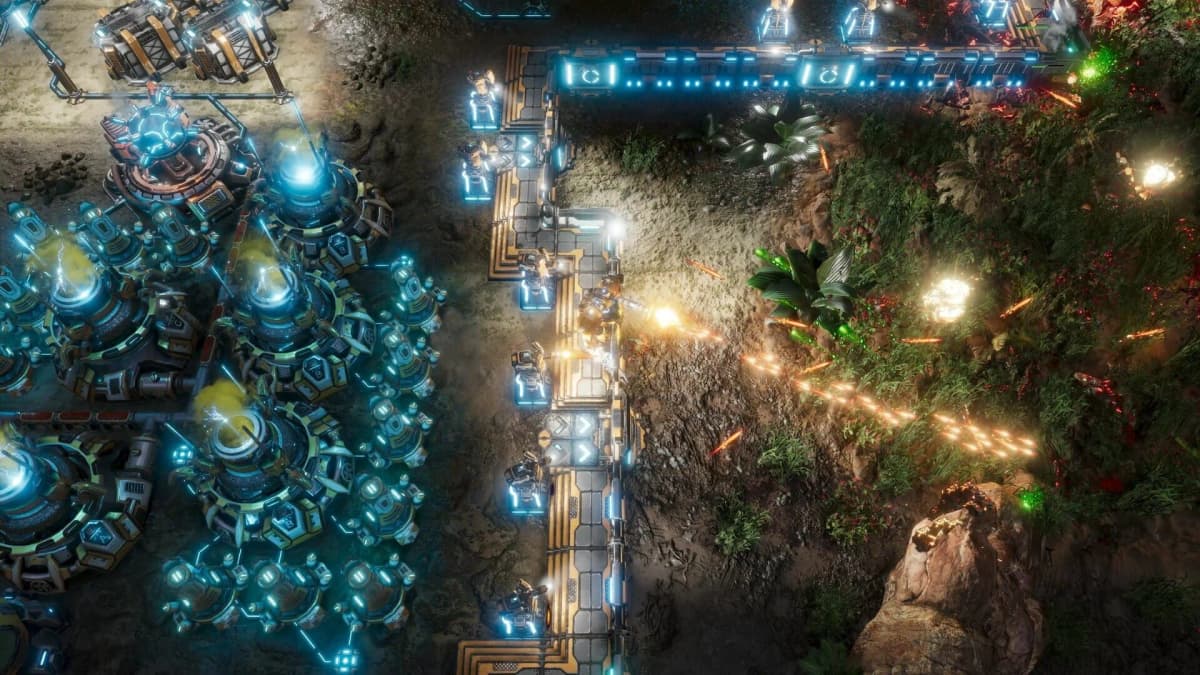
Research in campaign now costs resources upfront in addition to time. On paper, that’s a good counterweight to the new ways you’ll be drowning in materials. In practice, it can also halt momentum in co-op if the group has to babysit queues while the host scrapes for carbonium. The fact that difficulty is now both rebalanced and customizable is a nice pressure valve—tone it down for casual co-op nights, crank it up for sweaty Survival sessions.
Performance, platforms, and value
Exor claims “massive” performance gains after reworking the engine. That’s huge for this game in particular—late-game bases with thousands of entities and swarms could chew through frames on mid-tier rigs. If the optimization holds, it won’t just look better; it’ll change what’s viable to build. PC players get it now; console and Windows Store versions are “later,” which likely means certification wrangling and extra QA for network play. No date yet, so if you’re on PS5 or Xbox Series X|S, temper expectations and watch for parity notes.
The update is free, and the base game is currently running its deepest discount to date (55% off for a limited two-week window), with DLC discounted too. That’s a strong “come back or jump in” moment—rare to see a studio overhaul this much without a paywall. Also worth calling out: the expanded arc is fully voiced, with Francesca Meaux and Ryan Laughton returning as Ashley and Mr. Riggs. Small touch, big continuity win.
The gamer’s perspective
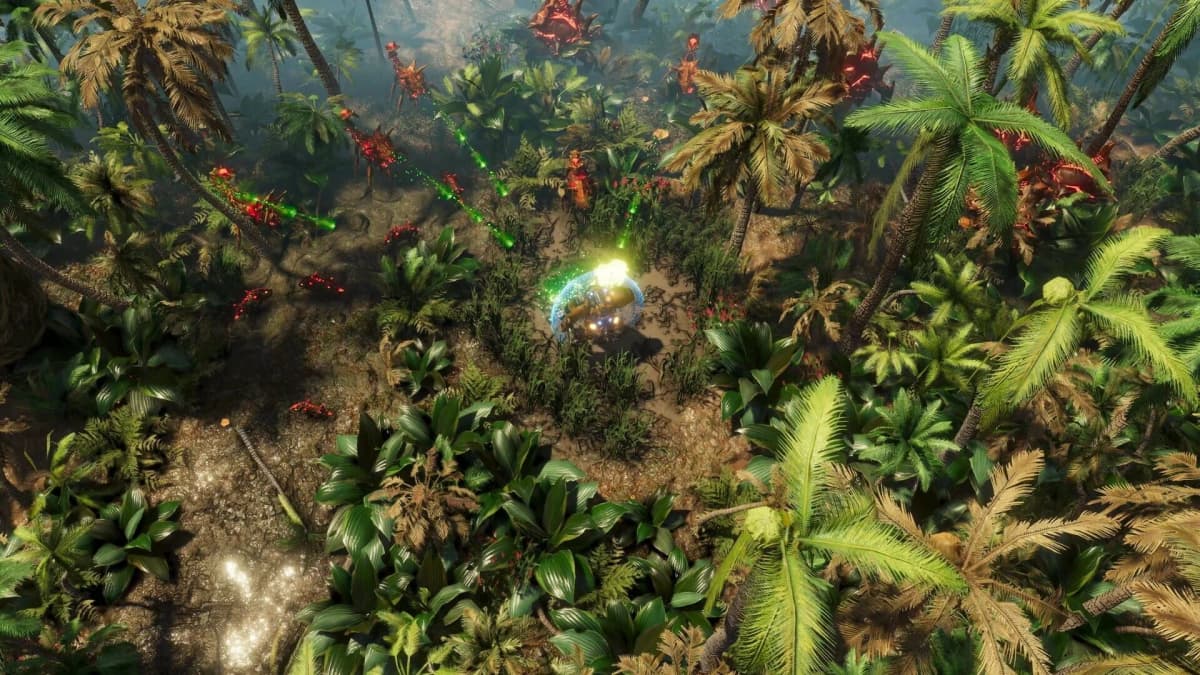
Update 2.0 reads like Exor doubling down on what The Riftbreaker does best—pressure, planning, and explosive payoffs—while admitting the original had soft spots in late-game motivation and build diversity. The only red flags are the usual ones: unknowns around co-op stability, the risk of loot bloat, and whether research/resource pacing feels fair in a squad. But given the studio’s history—from Zombie Driver’s post-launch support to the systems-obsessed tinkering in The Riftbreaker’s earlier patches—this feels like a “play it this weekend” moment if you’ve ever clicked with the genre.
TL;DR
The Riftbreaker 2.0 is a substantial, free overhaul: full-campaign four-player co-op, a new Megastructure-driven endgame, loot and weapon reworks, randomized missions, and performance boosts. PC players can dive in now; console and Windows Store versions will follow. It looks like the game’s best form yet—now it just needs the co-op tech to hold under pressure.
FinalBoss // Gear
Level up your setup
01Top-rated gaming headsetson Amazon→02High-refresh gaming monitorson Amazon→03Gaming chairson Amazon→04Discounted game keyson Kinguin→Affiliate links · As an Amazon Associate, FinalBoss earns from qualifying purchases.