
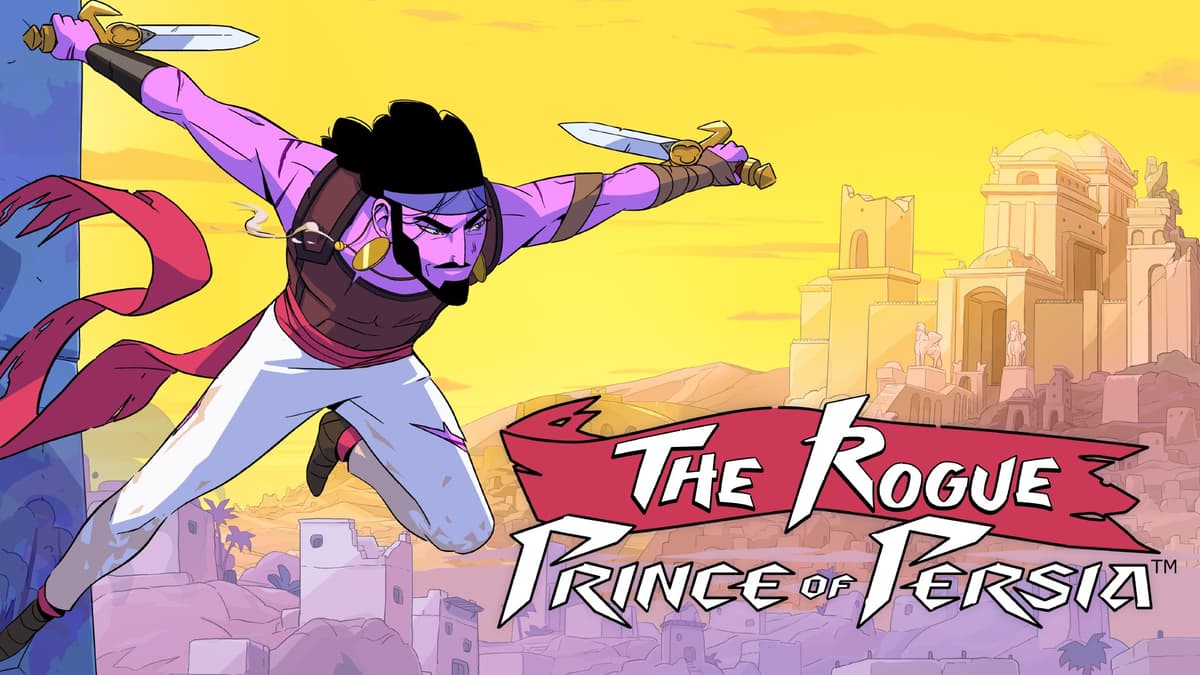
The Rogue Prince of Persia 1.0 lands on Game Pass — here’s what actually changed
Game intel
The Rogue Prince of Persia
The Rogue Prince of Persia is a 2D action-platformer developed by Evil Empire in collaboration with Ubisoft. The game combines fast-paced parkour movement with…
The Rogue Prince of Persia hits 1.0 – why this drop matters now
This one grabbed me for two reasons: Evil Empire’s post-Dead Cells pedigree, and a day-one Xbox Game Pass drop that puts a slick 2D roguelike in front of millions overnight. On August 20, 2025, The Rogue Prince of Persia left early access and launched on PS5, Xbox Series X|S, and PC, with Switch and the inevitable “Switch 2” versions due later this year. Evil Empire says they folded in a year of community feedback to get here – which is exactly the promise you want to hear from a roguelike that lives or dies on feel and iteration.
- It’s on Game Pass day one, lowering the barrier for a genre that benefits from “try-it-and-see.”
- Movement-first combat is the hook: wall-runs, vaults, and those delicious enemy-kicking setups.
- A full year of updates means 1.0 arrives with more biomes, weapons, and balance passes than most launches.
- Big question: does progression stay meaningful after the first dozen clears, or does repetition creep in?
Breaking down the 1.0 launch
Version 1.0 lands on PS5, Xbox Series X|S, and PC storefronts, and it’s included in Xbox Game Pass for console, PC, and cloud. Switch and Switch 2 ports are slated for later in 2025 – smart, because this is the kind of “one more run” game that thrives handheld if performance holds. The early access run that started in May 2024 was unusually active: more than a dozen sizeable updates touching biomes, enemy sets, medallions (build modifiers), and difficulty tuning. Evil Empire also showed a rare bit of self-awareness early on, famously delaying the early access launch to avoid colliding with Hades II’s surprise drop. That set the tone: read the room, iterate fast, don’t be precious.
Evil Empire’s roguelike chops show — mostly
If you played Dead Cells during its golden years, you’ve seen how Evil Empire operates: tight feedback loops, frequent updates, and a willingness to nerf sacred cows when a meta calcifies. That DNA is visible here. The Prince moves like a dream — wall-running into a vault over a spear guy to boot him into spikes never gets old — and the medallion system gives you meaningful build expression without drowning you in stat soup. The Oasis hub, Soul Cinders for permanent unlocks, and the Memory Board that tracks story breadcrumbs make failure feel like forward motion.
Where I’m watching closely is late-game variety. The genre’s bar is high thanks to Hades and Dead Cells: after 20-30 hours, you need either narrative momentum, wild synergy chase, or fresh modifiers that actually change how you route rooms. 1.0 adds more weapons and biomes, but the real test is whether medallion combos and enemy variants keep your brain in that sweet improvisation zone. If the best play is always “kick, dash, reset,” the shine will fade.
How it actually plays: parkour-first combat
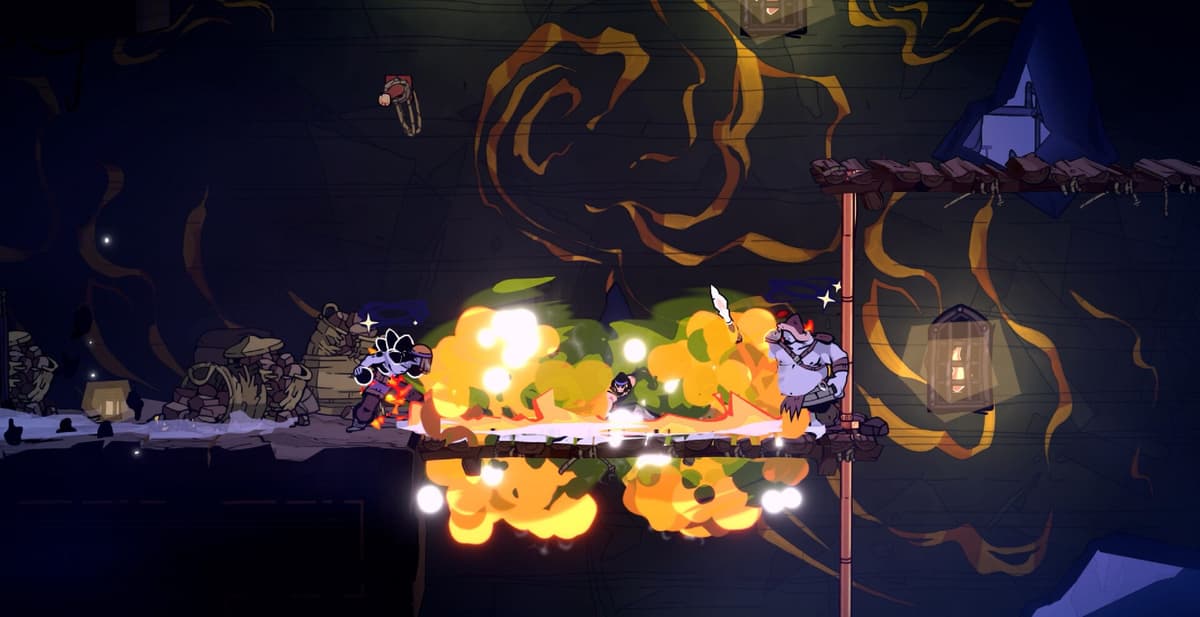
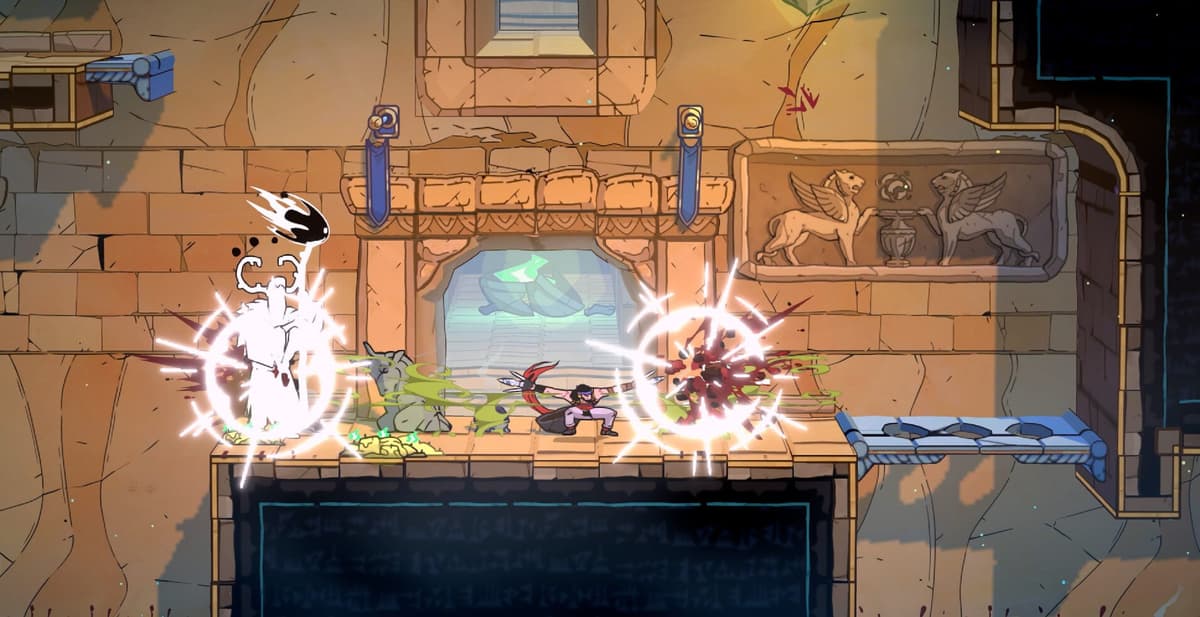
This isn’t just a sword game with jumps. Movement is the primary verb. You chain wall-runs, pole swings, vaults, and kicks to control space, then weave in primary/secondary weapon swaps mid-string. Think Dead Cells’ pace, but with a Prince of Persia brain that wants you above, behind, or through enemies rather than face-tanking. Runs tend to land in the 15-45 minute range depending on your unlocks and risk appetite, and the “return to the Oasis” loop softens permadeath enough that newcomers won’t bounce off.
Level generation leans into traversal puzzles and hazard funnels (spikes, saws, pits) that reward positioning. The best moments are slapstick-meets-surgical: vault an axeman, tag a ranged add with a quick swap, then punt the elite into a trap to end the room in one satisfying sequence. It’s readable, fast, and, crucially, repeatable — the hallmark of a good roguelike is wanting another go to perfect the route you just botched.
The gamer’s perspective: value, platforms, and caveats
On PS5 and Series X|S, the high, steady framerate sells the parkour. If you’re coming from Ubisoft Montpellier’s brilliant The Lost Crown earlier this year, dial expectations: that’s a crafted metroidvania; this is a run-based grinder. Game Pass is the killer move — if you’re roguelike-curious, there’s no reason not to give it an evening. On PC, expect a wide hardware net and the usual community heatmaps on builds within a week.
Concerns? A couple. First, identity: Prince of Persia’s narrative legacy can clash with the roguelike loop, and while the Memory Board helps, don’t expect a character drama on Hades’ level. Second, longevity: 1.0 ships robust, but the ceiling depends on post-launch mutators, challenge modes, and truly divergent medallions. Evil Empire’s track record suggests steady support; the hope is “meaningful expansions, not busywork grinds.” Finally, Switch and Switch 2: handheld is the dream scenario, but if performance wobbles, the whole movement-first design suffers. Hold out for impressions if portable is your priority.
Why this is a smart move for the Prince
Ubisoft’s been testing what “Prince of Persia” means in 2025. The Lost Crown re-established the 2D throne with precision platforming; The Rogue Prince of Persia pushes the brand into the evergreen roguelike space where systems and feel matter more than lore. If you want the series’ acrobatic heart with modern run-based design, this is the play. If you want a scripted epic, the long-delayed Sands of Time remake remains the wildcard.
TL;DR
The Rogue Prince of Persia’s 1.0 nails movement-first combat and arrives fat with a year of community-tuned updates. It’s a perfect Game Pass “just try it” pick and a promising home for PoP’s parkour. The big test is late-game variety and handheld performance later this year — if those land, this one’s in the roguelike rotation for a long while.