
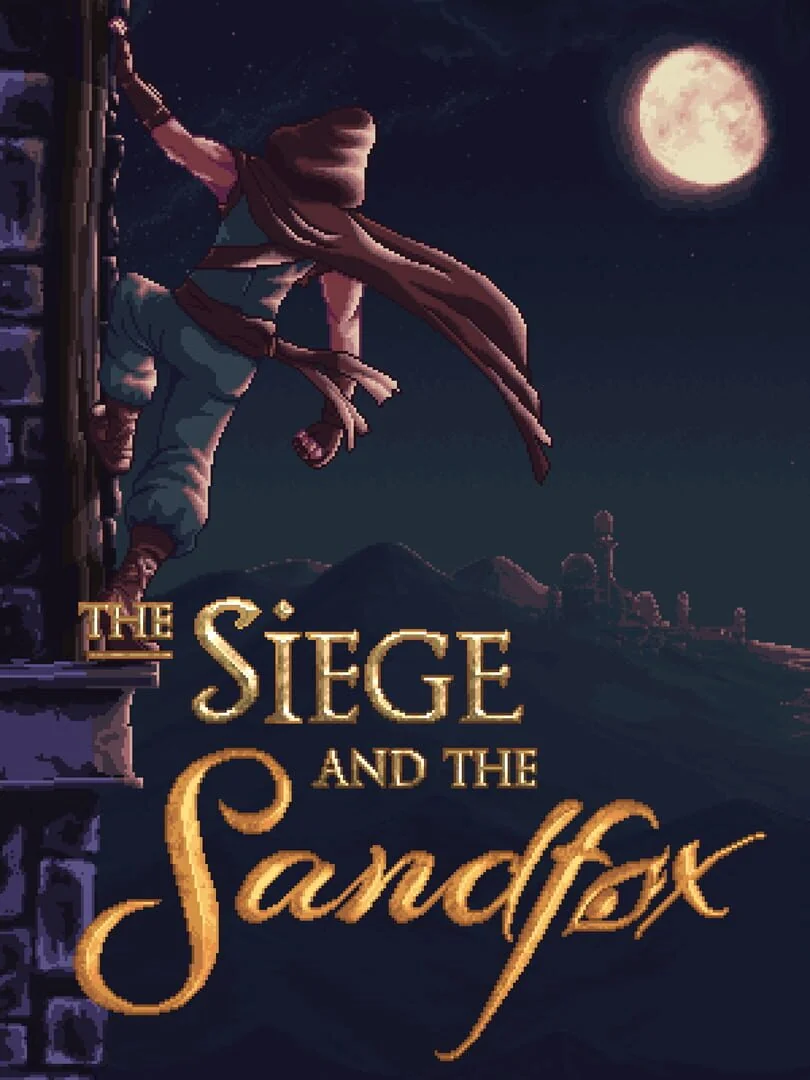
The Siege and the Sandfox Redefines Combat-Free Metroidvania
Cardboard Sword’s inaugural release swaps blade clashes for acrobatic escapes, intricate puzzles and luminous hand-painted pixels, carving out a unique identity in stealth-driven Metroidvania design.
Key Takeaways
- No combat, all evasion: Master timing, positioning and momentum rather than swords or spells.
- Painterly pixel art: Each sprite is hand-painted and enhanced by Unreal Engine’s dynamic lighting.
- Vertical, puzzle-packed parkour: Multi-layered levels challenge your wits as much as your reflexes.
- Indie studio, AAA pedigree: Creators bring experience from Forza, Elite: Dangerous and LittleBigPlanet.
Game Specifications
| Publisher | PLAION |
|---|---|
| Release Date | May 20, 2025 |
| Genres | 2D, Stealth, Metroidvania |
| Platforms | PC (Steam, Epic, GOG, Humble) |
| Price | $14.99, no microtransactions |
Overview
Set in a sun-drenched city of spired rooftops and labyrinthine catacombs, The Siege and the Sandfox challenges players to slip past guards rather than confront them. Cardboard Sword has stripped away combat entirely, placing parkour and stealth at the forefront. Every environment is a playground of wall-runs, tightrope walks and shadowed alcoves, transforming movement into a strategic resource.
Evasion-Focused Design
Creative Director Anna Leclerc describes the core philosophy: “We wanted every encounter to feel like a dance. If you’re spotted, you’re forced to improvise—vault fences, slide under barriers or dive into darkness. Mistakes carry real consequences.” The absence of weapons amplifies tension. A single mistimed jump can send you plummeting into a mob of patrolling sentinels, turning a routine traverse into a high-stakes gamble.
Puzzle-Driven Parkour
The game’s architecture invites you to rethink each route. Early stages introduce basic maneuvers—wall jumps, ledge hangs and momentum leaps—while later levels weave these moves into multi-part puzzles. Chain a ceiling swing into a grappling hook retract to bypass a collapsing floor. Unlockable goggles reveal hidden pathways in shadowy ruins, adding a Metroid-style exploration layer. “Our testers discovered shortcuts we’d never intended,” says Level Designer Marcus Reed. “It’s incredibly rewarding to see emergent strategies.”
Painterly Pixels & Dynamic Lighting
Every frame is a hand-crafted painting. Background artists spent months refining textures on mossy brick, weathered tiles and phosphorescent fungi. These assets are then placed under Unreal Engine’s dynamic lighting system, creating pools of light that guide or mislead you. Sound Designer Lina Höglund complements the visuals with subtle ambient cues—distant bell chimes, dripping water and the faint hum of magic in sealed chambers.
Narrative & Worldbuilding
The story unfolds without lengthy cutscenes. Through environmental storytelling, you piece together the fall of a once-thriving desert metropolis and the Sandfox’s quest to liberate its people. Scrawled notes on walls, broken statues and flickering oil lamps hint at a corrupt ruling order and a forgotten rebellion. Optional side missions reveal characters’ backstories, offering deeper insight for completionists.
Developer Insights
Co-founder and Technical Director Johan Evans, who previously worked on LittleBigPlanet, notes, “We borrowed from AAA workflows—rigorous playtesting, iterative feedback loops and a polished toolchain—while retaining indie agility. That mix helped us refine the core movement until it felt fluid and intuitive.”
Community Reception & Future Updates
Early access playtesters praised the game’s fresh approach. Speedrunners are already sharing “ghost runs” that slice through levels in under two minutes, while stealth purists discuss optimal routes on community forums. Cardboard Sword plans two free DLC packs: one adds a time-trial challenge mode and another introduces a boss arena where you evade relentless mechanized sentries.
Conclusion
At $14.99 and free of microtransactions, The Siege and the Sandfox is a bold reimagining of Metroidvania stealth. By removing combat, Cardboard Sword spotlights movement as a puzzle in itself. This innovative spin could influence future indies to explore what happens when you subtract core mechanics rather than pile them on. In the evolving Metroidvania landscape, sometimes less truly is more.